


The Portable Veblen
Elizabeth McKenzie, 2016
Penguin
448 pp.
ISBN-13: 9781594206856
Summary
Nominated, 2016 National Book Awards
An exuberant, one-of-a-kind novel about love and family, war and nature, new money and old values by a brilliant New Yorker contributor.
The Portable Veblen is a dazzlingly original novel that’s as big-hearted as it is laugh-out-loud funny. Set in and around Palo Alto, amid the culture clash of new money and old (antiestablishment) values, and with the specter of our current wars looming across its pages, The Portable Veblen is an unforgettable look at the way we live now.
A young couple on the brink of marriage—the charming Veblen and her fiance Paul, a brilliant neurologist—find their engagement in danger of collapse. Along the way they weather everything from each other’s dysfunctional families, to the attentions of a seductive pharmaceutical heiress, to an intimate tete-a-tete with a very charismatic squirrel.
Veblen (named after the iconoclastic economist Thorstein Veblen, who coined the term “conspicuous consumption”) is one of the most refreshing heroines in recent fiction. Not quite liberated from the burdens of her hypochondriac, narcissistic mother and her institutionalized father, Veblen is an amateur translator and “freelance self”; in other words, she’s adrift.
Meanwhile, Paul—the product of good hippies who were bad parents—finds his ambition soaring. His medical research has led to the development of a device to help minimize battlefield brain trauma—an invention that gets him swept up in a high-stakes deal with the Department of Defense, a Bizarro World that McKenzie satirizes with granular specificity.
As Paul is swept up by the promise of fame and fortune, Veblen heroically keeps the peace between all the damaged parties involved in their upcoming wedding, until she finds herself falling for someone—or something—else. Throughout, Elizabeth McKenzie asks: Where do our families end and we begin? How do we stay true to our ideals? And what is that squirrel really thinking?
Replete with deadpan photos and sly appendices, The Portable Veblen is at once an honest inquiry into what we look for in love and an electrifying reading experience. (From the publisher.)
Author Bio
• Birth—February 24, 1958 (?)
• Raised—near Los Angeles, California, USA
• Education—B.A., University of California-Santa Cruz; M.A., Stanford University
• Currently—lives in Santa Cruz, California
Elizabeth McKenzie is the author of the novel The Portable Veblen (2016), the collection, Stop That Girl (2005), short-listed for The Story Prize, and the novel MacGregor Tells the World (2007), a Chicago Tribune, San Francisco Chronicle and Library Journal Best Book of the year.
Her work has appeared in The New Yorker, Atlantic Monthly, Best American Nonrequired Reading, and the Pushcart Prize anthology, and has been recorded for NPR’s Selected Shorts. She was an NEA/Japan US-Friendship Commission Fellow in 2010.
She received her BA from University of California-Santa Cruz and her MA from Stanford. She was an assistant fiction editor at The Atlantic and currently teaches creative writing at Stanford's school of continuing studies. (Adapted from the publisher.)
Book Reviews
One of the great pleasures of reading Elizabeth McKenzie is that she hears the musical potential in language that others do not—in the manufactured jargon of economics, in the Latin taxonomy of the animal kingdom, even in the names of our own humble body part.... Her dialogue has real fizz and snappity-pop. It leaves a bubbled contrail. Ms. McKenzie's ear is not her only asset. There is also her angled way of seeing things. The hats on all of her characters sit slightly askew. The Portable Veblen, Ms. McKenzie's second novel, may be her most cockeyed concoction to date…. It's a screwball comedy with a dash of mental illness; a conventional tale of family pathos; a sendup of Big Pharma; a meditation on consumption, marriage, the nature of work….The Portable Veblen is a novel of such festive originality that it would be a shame to miss.
Jennifer Senior - New York Times Book Review
Irresistibly comedic…. McKenzie…has an appealingly light, playful touch…. The Portable Veblen is about how very squirrelly family dysfunction can be—and about how, as many of us never get tired of reading, love sometimes can conquer all.
Seattle Times
[A] funny, philosophical novel…. Oddball characters and plot turns abound, including talking squirrels and bureaucratic ironies worthy of Catch-22. But a sober question occupies its core: Do our parents' best intentions do us harm?
Minneapolis Star Tribune
A wild ride that you will not want to miss…rambunctious and sober, hilarious and morbid, [with] strong echoes of Joseph Heller and Kurt Vonnegut….This unforgettable novel offers a heartfelt and sincere investigation into the paradoxical nature of love, familial as well as romantic.
Elizabeth Rosner, San Francisco Chronicle
A sweet, sharply written, romantic comedy about the pitfalls of approaching marriage…. McKenzie imbues her characters with such psychological acuity that they, as well as the off-kilter world they inhabit, feel fully formed and authentic…. With its inspired eccentricities and screwball plot choreography, McKenzie’s novel perceptively delves into that difficult life stage when young adults finally separate—or not—from their parents. In the end, The Portable Veblen is a novel as wise as it is squirrely.
Maureen Corrigan, NPR’s Fresh Air
A smart charmer about a brainy off-center couple who face up to their differences—and their difficult, eccentric families—only after they become engaged…. [The Portable Veblen] is ultimately a morality tale about the values by which we choose to live…McKenzie’s delightfully frisky novel touts…a world in which "underdogs and outsiders" like Thorstein Veblen, her appealing cast of oddballs and nonconformists, and even bushy-tailed rodents feel "free to be themselves."
NPR.org
Modern romance, Big Pharma, and one very intuitive squirrel collide in McKenzie’s clever, winningly surreal novel…. McKenzie has a pitch-perfect ear for a certain kind of California kookery…. It’s hard not to be charmed by Veblen’s whimsy.
Entertainment Weekly
Ambitious…. [McKenzie’s domestic scenes] accurately and funnily capture the complexities of modern families, made knotty by the work we’re encouraged to do in our individual lives. Think The Corrections meets The Wallcreeper—where the warring wants of career-centric success and familial harmony converge, tension and comedy emerge.
Huffington Post
No matter how many novels you’ve read, it’s safe to say you’ve never read a novel like The Portable Veblen. The book] brings together its disparate themes and worlds with confidence and dexterity, [making the standard well-made novel seem as timid as—well, as a squirrel.
Slate
(Starred review.) [O]ffbeat and winning.... McKenzie writes with sure-handed perception, and her skillful characterization means that despite all of Veblen’s quirks—she’s an amateur Norwegian translator with an affinity for squirrels—she’s one of the best characters of the year. McKenzie’s funny, lively, addictive novel is sure to be a standout.
Publishers Weekly
(Starred review.) McKenzie skewers modern American culture while quoting from a panoply of voices, with Frank Zappa, Robert Reich, and, of course, Thorstein Veblen among them. The result is a wise and thoroughly engaging story in a satirical style comparable to the works of Christopher Moore and Carl Hiaasen. —Susanne Wells, Indianapolis P.L.
Library Journal
(Starred review.) The reader can't help rooting [the young couple] on. McKenzie's idiosyncratic love story scampers along on a wonderfully zig-zaggy path, dashing and darting in delightfully unexpected directions as it progresses toward its satisfying end and scattering tasty literary passages like nuts along the way.
Kirkus Reviews
Discussion Questions
We'll add the publisher's questions if and when they're made available. In the meantime, use these LitLovers talking points to kick off a discussion for The Portable Veblen...then take off on your own:
1. Describe Veblen Amundsen-Hovda. What do you think of her?
2. Describe Paul Vreeland. What do you think of his character? Is he sympathetic? If you didn't find him so at first, did you change your mind by the end of the novel? Or not.
3. Talk about Veblen and Paul's relationship. How are the two different from one another—consider the disparity between their values, desires and approaches to life. Why are they drawn to each another? What do you predict for the long-term?
4. Both Veblen and Paul have complicated families. Talk about the parents, and Justin, and the roles they play in this book. Do you find them funny or irritating...or what? Is there a "villain" among the bunch? Or not really.
5. At one point, when talking of Veblen and her mother, Paul tells Veblen:
Somehow I got the feeling she was jealous of you and that you try to avoid having her feel that way because it ruptures the equilibrium you're desperate to maintain for some reason. And that maybe you feel like you have to have a strange life so that you don't surpass her.
Is Paul correct in his assessment? Veblen thinks at first that he might be right, but then thinks, no, he's not. What do you think?
6. Okay...talk about the squirrels. What is Veblen attached to them? What does her relationship with the particular squirrel reveal about her? Is it part of the book's charm ...or a gag that feels drawn-out, over-the-top? Up to you.
7. The book is described as funny, even hilarious, and quirky. What do you find funny? Consider, for instance, Veblen's conversations with her mother, or the first time Paul meets Melanie and she hands him the list of all her illneses she's preapred in advance. Or dropping off the package in the park, the "errand" that Paul's parents undertake when Veblen first meets them.
8. In what way is the book more than a love story? In addition to, say, its critique of the military-pharmaceutical complex, what are some of its other concerns?
9. One of the conflicts in the book is the consideration of marriage vs. independence. How do those competing ideas play out in the book? Where do you fall on the subject?
10. In considering Veblen's eccentricity and her father's madness, McKenzie seems to be blurring the distinctions between the two. Where do you think she draws the line?
11. Consider Veblen's name and her namesake, Thorstein Veblen. Why is Veblen (the heroine) drawn to Veblen (the scholar-writer)? In what way does the latter reflect this work's thematic concerns?
(Questions by LitLovers. Please feel free to use them, online or off, with attribution. Thanks.)
Portnoy's Complaint
Philip Roth, 1969
Knopf Doubleday
289 pp.
ISBN-13: 9780679756453
Summary
Portnoy's Complaint is the famously outrageous confession made to his analyst by Alexander Portnoy, the Huck Finn of Newark, who is thrust through life by his unappeasable sexuality, yet held back at the same time by the iron grip of his unforgettable childhood. Thirty years after it was first published, Portnoy's Complaint remains a classic of American literature, a tour de force of comic and carnal brilliance, and probably the funniest book about sex ever written. It was recently designated one of the hundred best books of the twentieth century by the Modern Library judges. (From the publisher.)
Author Bio
• Birth—March 19, 1933
• Where—Newark, New Jersey, USA
• Education—B.A., Bucknell University; M.A.,
University of Chicago
• Awards—the most awarded US writer—see below
• Currently—lives in Connecticut
After many years of teaching comparative literature—mostly at the University of Pennsylvania—Philip Roth retired from teaching as Distinguished Professor of Literature at Hunter College in 1992. Until 1989, he was general editor of the Penguin book series Writers from the Other Europe, which he inaugurated in 1974 and which introduced the work of Bruno Schultz and Milan Kundera to an American audience.
His lengthy interviews with foreign authors—among them Primo Levi, Ivan Klima, and Aharon Appelfeld—have appeared in the New York Review of Books, the London Review of Books, and the New York Times Book Review. Roth was born in Newark, New Jersey, in 1933 and has lived in Rome, London, Chicago, and New York. He now resides in Connecticut. (From the publisher.)
More
Philip Roth's long and celebrated career has been something of a thorn in the side of the writer. As it is for so many, fame has been the proverbial double-edged sword, bringing his trenchant tragic-comedies to a wide audience, but also making him a prisoner of expectations and perceptions. Still, since 1959, Roth has forged along, crafting gorgeous variations of the Great American Novel and producing, in addition, an autobiography (The Facts) and a non-fictional account of his father's death (Patrimony: A True Story).
Roth's novels have been oft characterized as "Jewish literature," a stifling distinction that irks Roth to no end. Having grown up in a Jewish household in a lower-middle-class sub-section of Newark, New Jersey, he is incessantly being asked where his seemingly autobiographical characters end and the author begins, another irritant for Roth. He approaches interviewers with an unsettling combination of stoicism, defensiveness, and black wit, qualities that are reflected in his work. For such a high-profile writer, Roth remains enigmatic, seeming to have laid his life out plainly in his writing, but refusing to specify who the real Philip Roth is.
Roth's debut Goodbye, Columbus instantly established him as a significant writer. This National Book Award winner was a curious compendium of a novella that explored class conflict and romantic relationships and five short stories. Here, fully formed in Roth's first outing, was his signature wit, his unflinching insightfulness, and his uncanny ability to satirize his character's situations while also presenting them with humanity. The only missing element of his early work was the outrageousness he would not begin to cultivate until his third full-length novel Portnoy's Complaint—an unquestionably daring and funny post-sexual revolution comedy that tipped Roth over the line from critically acclaimed writer to literary celebrity.
Even as Roth's personal relationships and his relationship to writing were severely shaken following the success of Portnoy's Complaint, he continued publishing outrageous novels in the vein of his commercial breakthrough. There was Our Gang, a parodic attack on the Nixon administration, and The Breast, a truly bizarre take on Kafka's Metamorphosis, and My Life as a Man, the pivotal novel that introduced Roth's literary alter ego, Nathan Zuckerman.
Zuckerman would soon be the subject of his very own series, which followed the writer's journey from aspiring young artist with lofty goals to a bestselling author, constantly bombarded by idiotic questions, to a man whose most important relationships have all but crumbled in the wake of his success. The Zuckerman Trilogy (The Ghost Writer, Zuckerman Unbound, and The Counterlife) directly parallels Roth's career and unfolds with aching poignancy and unforgiving humor.
Zuckerman would later reemerge in another trilogy, although this time he would largely be relegated to the role of narrator. Roth's American Trilogy (I Married a Communist, the PEN/Faulkner Award winning The Human Stain, and The Plot Against America), shifts the focus to key moments in the history of late-20th–century American history.
In Everyman (2006), Roth reaches further back into history. Taking its name from a line of 15th-century English allegorical plays, Everyman is classic Roth—funny, tragic, and above all else, human. It is also yet another in a seemingly unbreakable line of critical favorites, praised by Kirkus Reviews, Booklist, Publishers Weekly, and The Library Journal.
In 2007's highly anticipated Exit Ghost, Roth returned Nathan Zuckerman to his native Manhattan for one final adventure, thus bringing to a rueful, satisfying conclusion one of the most acclaimed literary series of our day. While this may (or may not) be Zuckerman's swan song, it seems unlikely that we have seen the last Philip Roth. Long may he roar. (Author bio from Barnes & Noble.)
Literary Awards
Philip Roth is one of the most celebrated living American writers. Two of his works of fiction have won the National Book Award (Goodbye, Columbus; Sabbath's Theater); two others were finalists. Two have won National Book Critics Circle awards (Patrimony; Counterlife); again, another two were finalists. He has also won three PEN/Faulkner Awards (Operation Shylock, The Human Stain, and Everyman) and a Pulitzer Prize for Fiction for his 1997 novel, American Pastoral. In 2001, The Human Stain was awarded the United Kingdom's WH Smith Literary Award for the best book of the year. In 2002, he was awarded the National Book Foundation's Award for Distinguished Contribution to American Letters. Literary critic Harold Bloom has named him as one of the four major American novelists still at work, along with Thomas Pynchon, Don DeLillo, and Cormac McCarthy. In May 2006, he was given the PEN/Nabokov Award, and in 2007 the first PEN/Saul Bellow Award — both for lifetime achievement.
The May 21, 2006 issue of the New York Times Book Review announced the results of a letter that was sent to what the publication described as "a couple of hundred prominent writers, critics, editors and other literary sages, asking them to please identify 'the single best work of American fiction published in the last 25 years." Of the 22 books cited, six of Roth's novels were selected: American Pastoral, The Counterlife, Operation Shylock, Sabbath's Theater, The Human Stain, and The Plot Against America. The accompanying essay, written by critic A.O. Scott, stated, "If we had asked for the single best writer of fiction of the past 25 years, [Roth] would have won." ("More" and "Awards" from Wikipedia.)
Book Reviews
Philip Roth...has finally come up with the existentially quintessential form for any American-Jewish tale bearing—or baring—guilt.... The result is not only one of those bullseye hits in the ever-darkening field of humor, a novel that is playfully and painfully moving, but also a work that is certainly catholic in appeal, potentially monumental in effect—and, perhaps more important, a deliciously funny book, absurd and exuberant, wild and uproarious.
Josh Greenfield - New York Times
Roth's barbric yawp of a book ws a literary instance of shock and awe, a dirty comic masterpiece that can stand with Tristam Shandy.... It's also...tender and charitable, and just toward the main character. How else to describe a book that...discovers exactly the most painful question about relations between children and parents. "Doctor what should I rid myslef of, tell me, the hatred...or the love?"
Richard Lacayo - Time (From "100 best English-language novels from 1923 to present.")
It's actually a book about enmeshment and one's relationship with one's parents.... These days, all mothers are Jewish mothers. That is the way you're suposed to mother...to be warm and inviting and caressing.... I found Portnoy to be funny and angry and compassionate—and most of all searching. This is a character who is in deep conflict because he wants to change.
Alana Newhouse - National Public Radio
Roth is the bravest writer in the United States. He's morally brave, he's politically brave. And Portnoy is part of that bravery.
Cynthia Ozick - Newsday
Touching as well as hilariously lewd.... Roth is vibrantly talented...as marvelous a mimic and fantasist as has been produced by the most verbal group in human history
Alfred Kazin - New York Review of Books
Simply one of the two or three funniest works in American fiction.
Chicago Sun-Times
Discussion Questions
1. After Portnoy was published, many Jewish critics felt it demeaned the Jewish family and culture. Do you agree or disagree. Do you find Roth's depiction of the Portnoy family mean-spirited...or humorously loving?
2. Roth writes about a Jewish boy growing into manhood, but a New York Times reviewer (see above) calls it a "catholic" work in that it deals with universal, not just Jewish, themes. Agree or disagree? How so?
3. What is Alexander's issue with is family? Why his resentment? From where does his sense of guilt stem? Is he self-loving or self-loathing?
4. Discuss the character of Mrs. Portnoy—what kind of mother and wife is she? (See Alana Newhouse's comments on NPR above)
5. Alexander eventually finds his way to Israel. What does he seem to be searching for...what understanding does he reach?
6. Do you find the book is funny?
(Questions by LitLovers. Please feel free to use them, online or off, with attribution. Thanks.)
top of page


The Portrait of a Lady
Henry James, 1881
~ 640 pp. (Varies by publisher.)
Summary
One of the great heroines of American literature, Isabel Archer, journeys to Europe in order to, as Henry James writes in his 1908 Preface, "affront her destiny."
James began The Portrait of a Lady without a plot or subject, only the slim but provocative notion of a young woman taking control of her fate. The result is a richly imagined study of an American heiress who turns away her suitors in an effort to first establish—and then protect—her independence.
But Isabel’s pursuit of spiritual freedom collapses when she meets the captivating Gilbert Osmond.
"James’s formidable powers of observation, his stance as a kind of bachelor recorder of human doings in which he is not involved," writes Hortense Calisher, "“make him a first-class documentarian, joining him to that great body of storytellers who amass what formal history cannot." (From the Modern Library edition.)
Author Bio
• Birth—April 15, 1843
• Where—New York, New York, USA
• Death—February 28, 1916
• Where—London, England, UK
• Education—Attended schools in France and Switzerland;
Harvard Law School
• Awards—British Order of Merit from King George V
Henry James was an American-born writer, regarded as one of the key figures of 19th-century literary realism. He was the son of Henry James, Sr. and the brother of philosopher and psychologist William James and diarist Alice James.
James alternated between America and Europe for the first 20 years of his life, after which he settled in England, becoming a British subject in 1915, one year before his death. He is primarily known for the series of novels in which he portrays the encounter of Americans with Europe and Europeans.
James contributed significantly to literary criticism, particularly in his insistence that writers be allowed the greatest possible freedom in presenting their view of the world. James claimed that a text must first and foremost be realistic and contain a representation of life that is recognisable to its readers. His theatrical work is thought to have profoundly influenced his later novels and tales.
Life
James was born in New York City into a wealthy family. His father, Henry James Sr., was one of the best-known intellectuals in mid-19th-century America. In his youth James traveled back and forth between Europe and America. At the age of 19 he briefly attended Harvard Law School, but preferred reading literature to studying law. James published his first short story, A Tragedy of Error, at age 21, and devoted himself to literature. In 1866–69 and 1871–72 he was a contributor to The Nation and Atlantic Monthly.
Among James's masterpieces are Daisy Miller (1879) and The Portrait of a Lady (1881). The Bostonians (1886) is set in the era of the rising feminist movement. What Maisie Knew (1897) depicts a preadolescent girl who must choose between her parents and a motherly old governess. In The Wings of the Dove (1902) an inheritance destroys the love of a young couple. James considered The Ambassadors (1903) his most "perfect" work of art. James's most famous novella is The Turn of the Screw, a ghost story in which the question of childhood corruption obsesses a governess. Although James is best known for his novels, his essays are now attracting a more general audience.
James regularly rejected suggestions that he marry, and after settling in London proclaimed himself "a bachelor." F. W. Dupee, in several well-regarded volumes on the James family, originated the theory that he had been in love with his cousin Mary ("Minnie") Temple, but that a neurotic fear of sex kept him from admitting such affections.
James's letters to expatriate American sculptor Hendrik Christian Andersen have attracted particular attention. James met the 27-year-old Andersen in Rome in 1899, when James was 56, and wrote letters to Andersen that are intensely emotional: "I hold you, dearest boy, in my innermost love, & count on your feeling me—in every throb of your soul". In a letter from May 6, 1904, to his brother William, James referred to himself as "always your hopelessly celibate even though sexagenarian Henry". How accurate that description might have been is the subject of contention among James's biographers, but the letters to Andersen were occasionally quasi-erotic: "I put, my dear boy, my arm around you, & feel the pulsation, thereby, as it were, of our excellent future & your admirable endowment." To his homosexual friend Howard Sturgis, James could write: "I repeat, almost to indiscretion, that I could live with you. Meanwhile I can only try to live without you."
He corresponded in almost equally extravagant language with his many female friends, writing, for example, to fellow-novelist Lucy Clifford: "Dearest Lucy! What shall I say? when I love you so very, very much, and see you nine times for once that I see Others! Therefore I think that—if you want it made clear to the meanest intelligence—I love you more than I love Others."
Work
James is one of the major figures of trans-Atlantic literature. His works frequently juxtapose characters from the Old World (Europe), embodying a feudal civilization that is beautiful, often corrupt, and alluring, and from the New World (United States), where people are often brash, open, and assertive and embody the virtues—freedom and a more highly evolved moral character—of the new American society. James explores this clash of personalities and cultures, in stories of personal relationships in which power is exercised well or badly.
Critics have jokingly described three phases in the development of James's prose: "James the First, James the Second, and The Old Pretender" and observers do often group his works of fiction into three periods. In his apprentice years, culminating with the masterwork The Portrait of a Lady, his style was simple and direct (by the standards of Victorian magazine writing) and he experimented widely with forms and methods, generally narrating from a conventionally omniscient point of view. Plots generally concern romance, except for the three big novels of social commentary that conclude this period. In the second period, as noted above, he abandoned the serialised novel and from 1890 to about 1897[citation needed], he wrote short stories and plays. Finally, in his third and last period he returned to the long, serialised novel.
More important for his work overall may have been his position as an expatriate, and in other ways an outsider, living in Europe. While he came from middle-class and provincial belongings (seen from the perspective of European polite society) he worked very hard to gain access to all levels of society, and the settings of his fiction range from working class to aristocratic, and often describe the efforts of middle-class Americans to make their way in European capitals. He confessed he got some of his best story ideas from gossip at the dinner table or at country house weekends. He worked for a living, however, and lacked the experiences of select schools, university, and army service, the common bonds of masculine society. He was furthermore a man whose tastes and interests were, according to the prevailing standards of Victorian era Anglo-American culture, rather feminine, and who was shadowed by the cloud of prejudice that then and later accompanied suspicions of his homosexuality.
Major Novels
Although any selection of James's novels as "major" must inevitably depend to some extent on personal preference, the following books have achieved prominence among his works in the views of many critics. James believed a novel must be organic. Parts of the novel need to go together and the relationship must fit the form. If a reader enjoys a work of art or piece of writing, then they must be able to explain why. The very fact that every reader has different tastes, lends to the belief that artists should have artistic freedom to write in any way they choose to talk about subject matter that could possibly interest everyone.
The first period of James's fiction, usually considered to have culminated in The Portrait of a Lady, concentrated on the contrast between Europe and America. The style of these novels is generally straightforward and, though personally characteristic, well within the norms of 19th century fiction. Although the book shows some signs of immaturity—this was James's first serious attempt at a full-length novel—it has attracted favourable comment due to the vivid realisation of the three major characters.
Although Roderick Hudson featured mostly American characters in a European setting, James made the Europe–America contrast even more explicit in his next novel. In fact, the contrast could be considered the leading theme of The American (1877). This book is a combination of social comedy and melodrama concerning the adventures and misadventures of Christopher Newman, an essentially good-hearted but rather gauche American businessman on his first tour of Europe.
Washington Square (1880) is a deceptively simple tragicomedy that recounts the conflict between a dull but sweet daughter and her brilliant, domineering father. The book is often compared to Jane Austen's work for the clarity and grace of its prose and its intense focus on family relationships. James was not particularly enthusiastic about Jane Austen, so he might not have regarded the comparison as flattering. In fact, James was not enthusiastic about Washington Square itself. He tried to read it over for inclusion in the New York Edition of his fiction but found that he could not. So he excluded the novel from the edition.
In The Portrait of a Lady (1881) James concluded the first phase of his career with a novel that remains his most popular piece of long fiction. The narrative is set mainly in Europe, especially in England and Italy. Generally regarded as the masterpiece of his early phase, The Portrait of a Lady is described as a psychological novel, exploring the minds of his characters, and almost a work of social science, exploring the differences between Europeans and Americans, the old and the new worlds.
The Bostonians (1886) is a bittersweet tragicomedy that centres on Basil Ransom, an unbending political conservative from Mississippi. The storyline concerns the contest between Ransom and Olive for Verena's allegiance and affection, though the novel also includes a wide panorama of political activists, newspaper people, and quirky eccentrics.
James followed with The Princess Casamassima (1886), the story of an intelligent but confused young London bookbinder, Hyacinth Robinson, who becomes involved in far left politics and a terrorist assassination plot. The book is something of a lone sport in the Jamesian canon for dealing with such a violent political subject. But it is often paired with The Bostonians, which is also concerned with political issues.
Just as James was beginning his ultimately disastrous attempt to conquer the stage, he wrote The Tragic Muse (1890). This novel offers a wide, cheerful panorama of English life and follows the fortunes of two would-be artist. The book reflects James's consuming interest in the theatre and is often considered to mark the close of the second or middle phase of his career.
Criticism, Biographies and Fictional Treatments
James's work has remained steadily popular with the limited audience of educated readers to whom he spoke during his lifetime, and remained firmly in the British canon, but after his death American critics, such as Van Wyck Brooks, expressed hostility towards James's long expatriation and eventual naturalisation as a British citizen. Oscar Wilde once criticised him for writing "fiction as if it were a painful duty".
Despite these criticisms, James is now valued for his psychological and moral realism, his masterful creation of character, his low-key but playful humour, and his assured command of the language.
Early biographies of James echoed the unflattering picture of him drawn in early criticism. F.W. Dupee, as noted above, characterised James as neurotically withdrawn and fearful, and although Dupee lacked access to primary materials his view has remained persuasive in academic circles, partly because Leon Edel's massive five-volume work, published from 1953 to 1972, seemed to buttress it with extensive documentation.
The published criticism of James's work has reached enormous proportions. The volume of criticism of The Turn of the Screw alone has become extremely large for such a brief work. The Henry James Review, published three times a year, offers criticism of James's entire range of writings, and many other articles and book-length studies appear regularly.
Legacy
Perhaps the most prominent examples of James's legacy in recent years have been the film versions of several of his novels and stories. Three of James's novels were filmed: The Europeans (1978), The Bostonians (1984) and The Golden Bowl (2000). The Iain Softley-directed version of The Wings of the Dove (1997) was successful with both critics and audiences. Agnieszka Holland's Washington Square (1997) was well received by critics, and Jane Campion tried her hand with The Portrait of a Lady (1996) but with much less success.
Most of James's work has remained continuously in print since its first publication, and he continues to be a major figure in realist fiction, influencing generations of novelists. James has allowed the genre of the novel to become worthy of a literary critic's attention. James has formulated a theory of fiction that many today still discuss and debate.
In 1954, when the shades of depression were thickening fast, Ernest Hemingway wrote an emotional letter in which he tried to steady himself as he thought James would: "Pretty soon I will have to throw this away so I better try to be calm like Henry James. Did you ever read Henry James? He was a great writer who came to Venice and looked out the window and smoked his cigar and thought." The odd, perhaps subconscious or accidental allusion to "The Aspern Papers" is striking. More recently, James' writing was even used to promote Rolls-Royce automobiles: the tagline "Live all you can, it's a mistake not to", originally spoken by The Ambassadors' Lambert Strether, was used in one advertisement. This is somewhat ironic, considering the novel's sardonic treatment of the "great new force" of mass marketing. (Adapted from Wikipedia.)
Book Reviews
(Older works have few, if any, mainstream press reviews online. See Amazon and Barnes & Noble for helpful customer reviews.)
Portrait is James's most famous work, and Isabel Archer his most famous heroine. This is Henry James at his best. (Jamesian scholars would rise up in arms at that, but they won't be reading this, I can assure you.)
We follow a beautiful, intellectually gifted young American woman, who longs for experience of the wider world, especially the world of Europe. A large inheritance offers her the freedom she needs to gain the experience she wants.
But inexperience breeds innocence and innocence can lead to naivety—and naivety is dangerous. Traveling to Florence, Isabel's friend Madame Merle introduces her to Gilbert Osmond, a man of refined and sophisticated tastes. Intelligent as she is, Isabel is too trusting—unable to grasp Osmond's true nature or the true nature of his friendship with Madame Merle. Nothing is quite what it seems, and Isabel is no match for the pair who easily manipulate her to their own ends. Not until it's too late does Isabel realize how much of her treasured independence she has sacrificed—and what it has cost her.
Very much a Jamesian theme, this novel pits the open innocence of Americans against the deca-dence of Europeans. We also see how someone young and unformed—viewing life through the prism of a romantic imagination and believing in the right to individualism—becomes a victim of her own willfulness.
It's a chilling, wonderful story! And the big question for discussion groups is why Isabel makes the decision she does at the end. I'll say no more so as not to spoil the read. You might also show clips from the 1996 film version with Nicole Kidman and John Malkovich. (No, do not watch the film in lieu of the book.)
A LitLovers LitPick (Sept. 09)
Discussion Questions
Use our LitLovers Book Club Resources; they can help with discussions for any book:
• How to Discuss a Book (helpful discussion tips)
• Generic Discussion Questions—Fiction and Nonfiction
• Read-Think-Talk (a guided reading chart)
Also consider these LitLovers talking points to help get a discussion started for The Portrait of a Lady:
1. In terms of plot, Lord Warburton is set up to fall in love with Isabel: he is uncertain what kind of woman he would find interesting enough to marry, is told about and warned off Isabel, jokingly, by Mr. Touchett, and there upon meets the young woman in question. What is it about Isabel that appeals to Warburton? Why does he whisper to Ralph Touchett that he has found his idea of an interesting woman?
2. Women who display independence and individualism seem to be an oddity in England. What early hints are we given that Isabel might upset long established social strictures by her insistence on her own freedom?
3. How would you describe the relationship that develops between Ralph and Isabel? What kind of character is Ralph?
4. Isabel is a bit of narcissist, wrapped up in herself. Talk about Isabel's sense of herself and, for instance, her desire to feel suffering. Don't neglect the alleged "ghost" she desires to see at Gardencourt. Also, what are Isabel's political views and how do they compare with those of Warburton's?
5. A major theme explored in Henry James's novels is the difference between American and European cultures and sensibilities. How do those differences play out in this novel? Consider the differences, for instance, between Isabel and Warburton's sisters, the Misses Molyneux (notice that James gives them no first names).
6. What does Henrietta Stackpole observe while visiting Gardencourt? What perspective does she bring to life among the aristocrats? What prompts her comment that Europe has changed Isabel? What does she mean? Why is she (Henrietta) pressing for Isabel to accept Goodwood?
7. Why does Isabel reject both Warburton's and Casper Goodwood's proposals of marriage?
8. Why does Ralph request that his father leave Isabel half of his fortune? Why does Isabel, later in San Remo, tell Ralph that she thinks the fortune may be bad for her? In what way, eventually, does this inheritance place Isabel in jeopardy?
9, Discuss Madame Merle—her talents, personality, her attitudes toward her own life, society, and money. What does Mrs. Touchett think of her and what do Ralph and Isabel think of her? American born, where does Merle stand in the American vs. European dichotomy that Henry James sets up.
10. What attracts Isabel to Gilbert Osmond? What does Ralph think of think of him? Which endangers Isabel more—her fortune or her overly romantic imagination?
11. Talk about the way that Merle and Osmond manipulate Isabel. Why is Isabel so oblivious to their schemes? Notice, though, Isabel's thoughts when she arrives at Osmond's villa: that it would be a very difficult place to get out of. In what way does James use a person's surroundings as an indication of his character?
12. Talk about Pansy, as well as her developing relationship with Isabel. How does Isabel view Osmond's daughter? How has her father treated her?
13. Why does Isabel accept Osmond's proposal while having refused the two other men? What do both Mrs. Touchett and Ralph warn her about—and how does Isabel defend her decision?
14. Three years into Isabel and Osmond's marriage, what has happened? What is the couple's relationship? How does Osmond treat Isabel? And where does Madam Merle stand in all of this—what do we eventually come to learn about her and Osmond's history?
15. Finally, Isabel returns to England to be with Ralph as he dies. Why does Isabel see the ghost this time? And most important, why does Isabel make the decision she does at the end?
(Questions by LitLovers. Please feel free to use them, online or off, with attribution. Thanks.)
top of page
The Position
Meg Wolitzer, 2005
Simon & Schuster
320 pp.
ISBN-13: 9780743261807
Summary
Sex, love, the 1970s, and one extraordinary family that lived to tell the tale.
Crackling with intelligence and original humor, The Position is a masterful take on sex and the suburban American family at the hilarious height of the sexual revolution and throughout the thirty-year hangover that followed. Meg Wolitzer, the author of the much-acclaimed novel The Wife (named a notable book of the year by the New York Times Book Review, Los Angeles Times, Washington Post, and Newsday), takes another huge step forward with this new book and showcases her distinctive voice, pitch-perfect observations, electric wit, and depth of emotion.
In 1975, suburban parents Paul and Roz Mellow write a Joy of Sex-type book called Pleasuring: One Couple's Journey to Fulfillment, which becomes a surprise runaway bestseller. The Position opens with the four Mellow children, aged six to fifteen, at the moment when they see the mortifying book (and the graphic, pastel illustrations of their parents' creative, vigorous lovemaking) for the very first time — an experience that will forever complicate their ideas about sex, parents, families, and themselves. The book brings a strange celebrity and small fortune ("sex money" the children call it) to the Mellows and ultimately changes the shape of the family forever.
Thirty years later, as the now-dispersed family members argue about whether to reissue the book, we follow the complicated lives of each of the grown children as they confront their own struggles with love, work, sex, death, and the indelible early specter of their erotically charged parents.
Some novels are about family, and others are about sex. The Position is about sex within the context of a family. Insightful, witty, panoramic, and heartbreaking, it is a compulsively readable novel about an eternally mystifying subject: how a group of people growing up in one house can become so very different from one another. (From the publisher.)
Author Bio
• Birth—May 28. 1959
• Where—Brooklyn, New York, USA
• Education—B.A., Brown University
• Awards—National Endowment for the Arts grant, 1994; Best
American Short Stories, 1999; Pushcart Prize; 1998
• Currently—New York, New York
Meg Wolitzer grew up around books. Her mother, Hilma Wolitzer, published two novels while Meg was still in school, and weekly trips to the library were a ritual the entire family looked forward to. Not surprisingly, Meg served as editor for her junior high and high school literary magazines. She graduated from Brown University in 1981. One year later, she published her debut novel, Sleepwalking, the story of three college girls bonded by an unhealthy fascination with suicidal women poets. It marked the beginning of a successful writing career that shows no sign of slacking.
Over the years, Wolitzer has proven herself a deft chronicler of intense, unconventional relationships, especially among women. She has explored with wit and sensitivity the dynamics of fractured families (This Is Your Life, The Position); the devastating effects of death (Surrender, Dorothy), the challenges of friendship (Friends for Life), and the prospective minefield of gender, identity, and dashed expectations (Hidden Pictures, The Wife, The Ten-Year Nap, The Interestings).
In addition to her bestselling novels, Wolitzer has written a number of screenplays. Her short fiction has appeared in The Best American Short Stories and The Pushcart Prize, and she has also taught writing at the University of Iowa Writers' Workshop and at Skidmore College.
Extras
From a Barnes & Noble interview:
• First of all, I am obsessed with playing Scrabble. It relaxes me between fits of writing, and I play online, in a bizarro world of anonymous, competitive players. It's my version of smoking or drinking—a guilty pleasure. The thing is, I love words, anagrams, wordplay, cryptic crossword puzzles, and anything to do with the language.
• I also love children's books, and feel a great deal of nostalgia for some of them from my own childhood (Harriet the Spy and The Phantom Tollbooth among others) as well as from my children's current lives. I have an idea for a kids' book that I might do someday, though right now my writing schedule is full up.
• Humor is very important to me in life and work. I take pleasure from laughing at movies, and crying at books, and sometimes vice versa. I also have recently learned that I like performing. I think that writers shouldn't get up at a reading and give a dull, chant-like reading from their book. They should perform; they should do what they need to do to keep readers really listening. I've lately had the opportunity to do some performing on public radio, as well as singing with a singer I admire, Suzzy Roche, formerly of the Roches, a great group that started in 1979. Being onstage provides a dose of gratification that most writers never get to experience.
• But mostly, writing a powerful novel—whether funny or serious, or of course both—is my primary goal. When I hear that readers have been affected by something I've written, it's a relief. I finally have come to no longer fear that I'm going to have to go to law school someday....
• When asked what book most influenced her career as a writer, here is her response:
Mrs. Bridge by Evan S. Connell—this is the perfect modern novel. Short, concise, moving, and about a character you come to care about, despite her limitations. It reminds me of life. It takes place over a span of time, and it's hilarious, tragic, and always stirring.
(Author bio and interview from Barnes & Noble.)
Book Reviews
At one point, Michael complains about his mother: "that combination of hypersensitivity and pushiness—what could you do with it?" As an authorial presence, Wolitzer is motherly in the best way: engaged, caring, but never intrusive or judgmental. She may love all of the seven children of her novels equally, but The Position is certainly her richest and most substantial.
Lisa Zeidner - Washington Post
Neurotic siblings and embarrassing parents are familiar (even required) elements of the literature of suburban nostalgia and malaise. Wolitzer (Surrender, Dorothy; The Wife) doesn't tamper with these basic ingredients in her latest novel, but she gives them a titillating twist. Paul and Roz Mellow are enthusiastically in love-so much so that in 1975 they write a how-to sex book, Pleasuring, that features illustrations of them in every imaginable position. The book becomes a runaway bestseller. When the children find the book and read it together, they're forever traumatized, in ways both serious and comedic. Flash forward 30 years: Paul and Roz are long divorced and remarried, and Paul, in particular, remains bitter; the grown children fumble through their lives on the eve of the publisher's reissue of the sex classic. The oldest, Holly, has settled into late motherhood after a lifetime of nomadic drug-taking; uptight Michael suffers from chronic depression; Dashiell, a gay Log Cabin Republican speechwriter, is diagnosed with Hodgkin's disease; and insecure late-bloomer Claudia returns to her Long Island hometown to finally figure out how to be a fully functioning adult. If the characters are rather stock, and the musings on love, sex and family familiar, Wolitzer nevertheless bestows her trademark warmth and light touch on this tale of social and domestic change.
Publishers Weekly
What are the consequences for their children when Paul and Roz Mellow write a Joy of Sex-like guide illustrated with pastel renderings of their own coupling?
Library Journal
In Wolitzer's slyly comic sixth, a couple publishes Pleasuring: One Couple's Journey to Fulfillment, with illustrations of the authors in various positions including the gymnastic "Electric Forgiveness," "a wonderful way to achieve climax quickly and lovingly after a scene of anger or stress." Things begin in November 1975 when Roz and Paul Mellow's four children—teenagers Holly and Michael and their siblings Dashiell, eight, and Claudia, six—go through their parents' book together in the family den in suburban Wontauket. Their "orchestra seats for the primal scene" ensure that none of them will be the same. Weaving together the stories of the four and their now-divorced parents, Wolitzer (The Wife, 2003, etc.) covers a wide swath of pop culture, from Claudia's fascination with troll dolls to Dashiell's discovery that he's gay (and Republican), Michael's antidepressant-induced sexual dysfunction, and the downward trajectory of Holly, the oldest, who, after decades of drug-taking, emerges miraculously as a still attractive fortysomething nursing mother unwilling to deal with her family except from a distance. The thirtieth anniversary reissue of Pleasuring brings the family back into conflict. Roz, remarried and teaching at Skidmore, is all for it, wanting the attention and the royalties. Paul, retired in Florida with a long-suffering second wife, resists. We learn that Paul was originally Roz's psychoanalyst (he was ousted from the profession) and that Roz left Paul for the illustrator of Pleasuring, who sketched the two for months and then declared his love. While Michael tries to convince his father to go along with the deal, his lover Thea plays Dora in a play based on the Freudian case study and starts an affair with her female costar; Dashiell gets Hodgkin's and needs a stem-cell transplant; and Claudia meets David Gupta, whose parents live in her old house, and begins her first true love affair. Immensely readable, if occasionally flat. Wolitzer is best when she stirs the pot of familial and generational tensions.
Kirkus Reviews
Discussion Questions
1. Why did Paul and Roz Mellow keep a copy of Pleasuring where they knew the children could, and most likely would, find it? Did they fully understand the consequences of how the book might affect their children, especially 6-year-old Claudia and 8-year-old Dashiell?
2. Roz "had once read a line in a book that she'd never forgotten: Women have sex so they can talk, and men talk so they can have sex" (240). Using examples from the story, discuss the different ways in which men and women view sex, relationships, and the ways in which the two intersect.
3. How does looking at the book—and seeing their parents in this way — impact each of the Mellow children? What do their reactions reveal about their individual personalities? When they're re-introduced 28 years later in Chapter 2, is it apparent how the book has affected them even in adulthood?
4. How did growing up on the grounds of a psychiatric institution affect Roz, both physically and emotionally, including the incident with Warren Keyes when she was nine years old?
5. How did Paul and Roz's relationship develop from analyst and patient to lovers? What did they see in one another? What did each one get from the relationship?
6. Why do you suppose the author chose to have Thea starring in a play about Sigmund Freud, the most famous of psychoanalysts, and his patient Dora?
7. Claudia and Michael each take a trip—Michael to Florida to visit his father and Claudia to their hometown of Wontauket. How do these trips turn out different than Claudia and Michael expected? What motivates Claudia to visit her childhood home on Swarthmore Circle?
8. Claudia says to David, "I wanted to do this film because elementary school was a time when I was happy. I didn't mean for it to have all this pathos. But here it is" (183). Making the film gives Claudia a window into the past. What did she expect to find, and what does she actually discover?
9. Holly's road from adolescence to her early forties has brought her to a place where she never envisioned herself — the wife of a wealthy doctor living in an affluent Los Angeles suburb. Why did she marry Marcus? Has having a family of her own brought her closer to her parents and siblings or driven her further away?
11. Until John Sunstein confessed his love to Roz, she had always thought of him as "the artist" or "the man behind the easel." What makes her see him in a different light? How does she decide in those few moments in the bathroom that she returns his feelings? If they had met under more traditional circumstances, would they have fallen in love?
12. What is Paul's reaction when he discovers that Roz is having an affair with John Sunstein? Paul "could never figure out what that quiet, inarticulate artist possessed that he lacked, and he could never accept it" (254). What does Roz find in her relationship with Jack that was lacking in her marriage to Paul?
13. At the dinner party to celebrate the anniversary edition of Pleasuring, the Mellow family, with the exception of Holly, is brought together for the first time in many years. What does this scene reveal about the characters? Does it bring closure to a family that was irrevocably changed because of the very book they're celebrating? Why did Paul change his mind about reissuing Pleasuring?
14. The title of the book refers to a sexual position, called Electric Forgiveness, that Paul and Roz Mellow created. Discuss the instances in the story where the position is mentioned, and its significance, including the concluding scene with Claudia and David. Why do you suppose the author chose The Position as the title?
15. In what ways do early experiences with sex affect people's entire lives, and can you think of some other novels in which children are exposed to the world of adult sexuality?
(Questions issued by publisher.)
top of page
Possession: A Romance
A.S. Byatt, 1990
Knopf Doubleday
576 pp.
ISBN-13: 9780679735908
Summary
Winner, 1991 Booker Prize
Possession is an exhilarating novel of wit and romance, at once an intellectual mystery and a triumphant love story. As a pair of young scholars research the lives of two Victorian poets, they uncover their letters, journals, and poems, and track their movements from London to Yorkshire—from spiritualist seances to the fairy-haunted far west of Brittany. What emerges is an extraordinary counterpoint of passion and ideas. (From the publisher.)
More
Roland Michell and Maud Bailey, two rather unfulfilled young literary scholars, unexpectedly become figures of romance as they discover a surprising link between the two poets on whom they are authorities.
Byatt deftly plays with literary genres—Romantic quest, campus satire, detective story, myth, fairy tale—as Maud and Roland become deeply involved in the unfolding story of a secret relationship between the Victorian poets Randolph Henry Ash and Christabel LaMotte.
The young people's quest inevitably attracts the jealous attention of the competitive academic world, and all too soon the quest becomes a chase. Byatt's staggering technical ambition and her powerful romantic vision are tributes to the great Victorian age, which the novel brings to life. (From the publisher.)
The 2002 film stars Gwyenth Paltrow, Aaron Eckhart, Jeremy Northam and Jennifer Ehle. (Turgid, a good description.)
Author Bio
• Aka—Antonia Susan Drabble Byatt
• Birth—August 24, 1936
• Where—Sheffield, England, UK
• Education—B.A., Cambridge University; undergraduate
work, Bryn Mawr College (USA) and Oxford University
• Awards—Booker Prize
• Currently—lives in London, England, and France
Dame Antonia Susan Duffy, DBE, known as A. S. Byatt is an English novelist, poet and Booker Prize winner. In 2008, The Times newspaper named her on their list of The 50 greatest British writers since 1945.
Byatt was born as Antonia Susan Drabble, the daughter of John Drabble and Kathleen Bloor, a scholar of Browning. Byatt was educated at Sheffield High School and the Quaker Mount School, and noted in an interview in 2009 "I am not a Quaker, of course, because I'm anti-Christian and the Quakers are a form of Christianity but their religion is wonderful—you simply sat in silence and listened to the nature of things." She went on to Newnham College, Cambridge, Bryn Mawr in the United States, and Somerville College, Oxford. Sister to novelist Margaret Drabble and art historian Helen Langdon, Byatt lectured in the Department of Extra-Mural Studies of London University (1962–71), the Central Saint Martins College of Art and Design and from 1972 to 1983 at University College London.
Writing
The story of a young girl growing up in the shadow of a dominant father, Byatt's first novel, The Shadow of the Sun was published in 1964. Her novel The Game (1967), charts the dynamics between two sisters and the family theme is continued in her quartet: The Virgin in the Garden (1978), Still Life (1985), Babel Tower (1996) and A Whistling Woman (2002). Still Life won the PEN/Macmillan Silver Pen Award in 1989.
Her quartet of novels is inspired by D. H. Lawrence, particularly The Rainbow and Women in Love. Describing mid-20th-century Britain, the books follow the life of Frederica Potter, a young female intellectual studying at Cambridge at a time when women were heavily outnumbered by men at that university, and then tracing her journey as a divorcee with a young son making a new life in London. Byatt says some of the characters in her fiction represent her "greatest terror which is simple domesticity [...] I had this image of coming out from under and seeing the light for a bit and then being shut in a kitchen, which I think happened to women of my generation." Like Babel Tower, A Whistling Woman touches on the utopian and revolutionary dreams of the 1960s. She describes herself as "a naturally pessimistic animal": "I don't believe that human beings are basically good, so I think all utopian movements are doomed to fail, but I am interested in them."
She has written critical studies of Iris Murdoch, who was a friend, mentor and a significant influence on her own writing. In those books and other works, Byatt alludes to, and builds upon, themes from Romantic and Victorian literature. She conceives of fantasy as an alternative to, rather than an escape from, everyday life, and it is often difficult to tell when the fantastic in her work actually represents the eruption of psychosis. "In my work", she notes "writing is always so dangerous. It's very destructive. People who write books are destroyers." Possession (1990) parallels the emerging relationship of two contemporary academics with the past of two (fictional) nineteenth century poets whom they are researching. It won the Man Booker Prize in 1990 and was made into a film in 2002. Her novel Angels & Insects also became a successful film, nominated for an Academy Award (1995). The Children's Book was shortlisted for the 2009 Man Booker Prize and won the James Tait Black Memorial Prize.
On the role of writing in her life, she says: "I think of writing simply in terms of pleasure. It's the most important thing in my life, making things. Much as I love my husband and my children, I love them only because I am the person who makes these things. I, who I am, is the person that has the project of making a thing. Well, that's putting it pompously—but constructing. I do see it in sort of three-dimensional structures. And because that person does that all the time, that person is able to love all these people."
Personal life
A. S. Byatt married Ian Charles Rayner Byatt in 1959 and had a daughter, as well as a son who was killed in a car accident at the age of 11. The marriage was dissolved in 1969. She has two daughters with her second husband Peter John Duffy.
Byatt has famously been long engaged in a feud with her novelist sister Margaret Drabble over the writerly appropriation of a family tea-set. The pair seldom see each other and don't read each other's books.
Prizes and awards
1986 PEN/Macmillan Silver Pen Award, for Still Life
1987 Hon. Dlitt, Bradford
1990 Booker Prize for Fiction, Possession: A Romance
1990 CBE
1990 Irish Times International Fiction Prize Possession: A Romance
1991 Commonwealth Writers Prize (Eurasia Region, Best Book) Possession
1991 Honorary Doctorate from the University of York
1991 Honorary Doctorate from the University of Durham
1992 Honorary Doctorate from the University of Nottingham
1993 Honorary Doctorate from the University of Liverpool
1994 Honorary Doctorate from the University of Portsmouth
1995 Honorary Doctorate from the University of London
1995 Premio Malaparte (Italy)
1995 Aga Khan Prize for Fiction, The Djinn in the Nightingale's Eye
1998 Mythopoeic Fantasy Award for Adult Literature, The Djinn in the Nightingale's Eye
1999 DBE
1999 Hon. DLitt from the University of Cambridge
2000 Hon. Fellow, London Institute
2000 Honorary Doctorate from the University of Sheffield
2004 Honorary Doctorate from the University of Kent
2004 Fellow, University College London
2002 Shakespeare Prize (Germany)
2007 Honorary degree from the University of Winchester.
2009 Blue Metropolis International Literary Grand Prix[6] (Canada)
2009 Man Booker Prize, The Children's Book (shortlist)
2010 Honorary Doctorate from the Leiden University
2010 James Tait Black Memorial Prize, The Children's Book
Book Reviews
This cerebral extravaganza of a story zigzags with unembarrassed zest across an imaginative terrain bristling with symbolism and symmetries, shimmering with myth and legend, and haunted everywhere by presences of the past.... Possession is eloquent about the intense pleasures of reading. And, with sumptuous artistry, it provides a feast of them.
Sunday Times (London)
Byatt is the most formidably equipped of contemporary novelists.... The great merit of [her] writing...is that it continually engages the reader's mind.
Daily Telegraph (UK)
...A.S. Byatt's wonderfully extravagant novel...accomplishes its essential purpose. It makes one read and reflect on language and consider what it meant to another age. As Maud says to Roland, "we have to make a real effort of imagination to know hwat it felt like to be them, here, believeing in these things".... In Possession, Ms. Byatt has made that effort. And to a remarkable degree succeeded.
Christopher Lehmann-Haupt - New York Times
A masterpiece of wordplay and adventure, a novel that compares with Stendhal and Joyce.
Los Angeles Times
Two contemporary scholars, each studying one of two Victorian poets, reconstruct their subjects' secret extramarital affair through poems, journal entries, letters and modern scholarly analysis of the period.... [A]n ambitious and wholly satisfying work, a nearly perfect novel.
Publishers Weekly
(Audio version.) This Booker Prize-winning novel is a good candidate for an oral reading, and Virginia Leishman performs beautifully. A wonderful mix of poetry and posturing literary criticism, part mystery, part romance, this tale is an entertaining juxtaposition of the 19th and 20th centuries. Leishman's reading emphasizes this contrast as she elegantly modulates poetry and then clips her words in a businesslike manner when reading the 20th-century analyses of 19th-century poetry. Maud Bailey and Roland Mitchell, scholars of Christabel Lamotte and Randolph Henry Ash, are brought together and to life through the letters, diaries, and poetry of the two poets. Uncertain of their own identities, Bailey and Mitchell can easily lose themselves in the study of literature. We become as involved as the scholars through a judicious sampling of belles lettres and literary criticism, until finally Lamotte and Ash materialize and speak for themselves. The supporting characters are humorous stereotypes that Leishman portrays with various accents and annoying drawls to match their idiosyncrasies. Highly recommended. —Juleigh Muirhead Clark, John D. Rockefeller Jr. Lib., Williamsburg, VA
Library Journal
Discussion Questions
1. What is the significance of the novel's title? Do you think it has more than one meaning? What does the concept of "possession" mean to the novel's various characters, both modern and Victorian? How can possession be seen as the theme of the book?
2. Ash is nicknamed "the Great Ventriloquist" but this sobriquet could as easily be applied to Byatt herself. Why does Byatt use poetry to give away so many clues to the story? Are the poems a necessary and integral part of the novel or would it have worked just as well without them? Do you find that the poems in the novel succeed in their own right as poetry?
3. All the characters' names are carefully chosen and layered with meaning. What is the significance behind the following names: Roland Michell, Beatrice Nest, Sir George Bailey, Randolph Ash, Maud Bailey, Christabel LaMotte, Fergus Wolff? (Clues to the last three may be found in the poetry by Tennyson, Yeats, and Coleridge cited below.) Do any other names in the novel seem to you to have special meanings? How do the names help define, or confuse, the relationships between the characters?
4. The scholars in the novel see R. H. Ash as a specifically masculine, Christabel LaMotte as a specifically feminine, type of poet, just as Robert Browning and Christina Rossetti, the poets on whose work Ash's and LaMotte's are loosely based, were considered to be extreme examples of the masculine and feminine in literature. Do you feel that such a classification is valid? What is there about Ash's and LaMotte's diction and subject matter that fulfills our ideas of "masculine" and "feminine"? Do the poets themselves consciously enact masculine and feminine roles? Do you find that Christabel's poetry is presented as being secondary to Ash's? Or that the work of the two poets is complementary?
5. Ellen Ash wrote her journal as a "defence against, and a bait for, the gathering of ghouls and vultures" [p. 501]. Mortimer Cropper is literally presented as a ghoul, robbing the poet's grave. Beatrice Nest, on the other hand, wishes to preserve Christabel's final letter to Randolph unread. What is the fine line, if any, between a ghoulish intrusion upon the privacy of the dead, and the legitimate claims of scholarship and history? As much as the scholars have discovered, one secret is kept from them at the end and revealed only to the reader. What is that secret and what difference does it make to Roland's future?
6. Freedom and autonomy are highly valued both by Christabel and Maud. What does autonomy mean to each of these characters? In Christabel's day, it was difficult for women to attain such autonomy; is it still difficult, in Maud's? What does autonomy mean to Roland? Why does mutual solitude and even celibacy assume a special importance in his relationship with Maud?
7. The moment of crisis in the poets' lives, 1859, was a significant year, as it saw the publication of Charles Darwin's Origin of Species. The theory of natural selection delivered a terrible blow to the Victorians' religious faith and created a climate of uncertainty: "Doubt," says Christabel, "doubt is endemic to our life in this world at this time" [p. 182]. How does Byatt compare this spiritual crisis with that which has befallen Roland and Maud's generation, who are taught to believe that the "self" is illusory [p. 459]?
8. The fluffy Beatrice Nest is scorned by the feminist scholars who crave access to Ellen Ash's journal. Yet in her way Beatrice is as much a victim of "patriarchy" as any of the Victorian women they study. What is the double standard at work among these politically minded young people? Can Beatrice be seen as a "superfluous woman," like Blanche and Val? What, if anything, do these three women have in common?
9. Ash writes "Swammerdam" with a particular reader, Christabel LaMotte, in mind. Is Christabel's influence on Ash evident in the poem, and if so, how and where? How, in the poem, does Ash address his society's preoccupation with science and religion? How does he address his and Christabel's conflicting religious ideas? How does Christabel herself present these ideas in Melusine?
10. Why is Christabel so affected by Gode's tale of the miller's daughter? What are its parallels with her own life?
11. The fairy Melusine has, as Christabel points out, "two aspects—an Unnatural Monster—and a most proud and loving and handy woman" [p. 191]. How does Christabel make Melusine's situation a metaphor for that of the woman poet? Does Christabel herself successfully defy society's strictures against women artists, or does her awareness of the problem cripple her, either professionally or emotionally? At the end of her life she wonders whether she might have been a great poet, as she believes Ash was, if she had kept to her "closed castle" [p. 545]. What do you think?
12. Roland and Maud believe they are taking part in a quest. This is a classic element of medieval and nineteenth-century Romance, of which they are well aware. Aside from the quest, what other elements of Romance can be found in Maud and Roland's story? In Christabel and Randolph's? What other genres are exploited in the novel?
13. When he returns to his flat at the end of the novel, Roland decides there is "no reason why he should not go out into the garden" [p. 514]. What is the emotional significance of his finally entering the garden?
Poems that will enrich your understanding of Possession: Robert Browning, "Childe Roland to the Dark Tower Came," "My Last Duchess," "Porphyria's Lover," "Caliban Upon Setebos," "Bishop Blougram's Apology," "Mr. Sludge, the 'Medium'," "Andrea del Sarto," and "Fra Lippo Lippi"; Samuel Taylor Coleridge, "Christabel"; Andrew Marvell, "To His Coy Mistress," "The Garden"; Petrarch, Rime Sparse; Christina Rossetti, Poetical Works; Alfred, Lord Tennyson, "Merlin and Vivien" from Idylls of the King, In Memoriam, "Maud," "Mariana," "The Lady of Shallott"; W.B. Yeats, The Rose.
(Questions issued by publisher.)
top of page


The Possibility of You
Pamela Redmond, 2012
Simon & Schuster
384 pp.
ISBN-13: 9781451616422
Summary
1916. It was the one thing Bridget was supposed to never let happen. But no matter how many times she replayed the steps in her head, she couldn’t reanimate the small pale boy who lay limp in her arms.
1976. Billie felt as if she’d been wrenched in half more surely than when the baby had been cut from her body. But she felt something else too: happy to think only of her own needs, her own tears. So light she could float away, somewhere no one would ever find her.
The present. Even if Cait never found her birth mother, even if she decided not to have this baby, to leave her lover and kiss her parents good-bye, she was surrounded by so much emotion, so many questions, that she felt as if she might never be free again. Can we ever atone for the sins of the past? Or does each generation of women invent itself anew?
In a complex and beautifully told masterpiece set against key moments for women in the last century, New York Times bestselling author Pamela Redmond intertwines the heartrending stories of Bridget, Billie, and Cait, and explores the ways in which one woman’s choices can affect her loved ones forever. As these three women search for identity and belonging, each faces a very personal decision that will reverberate across generations, tearing apart families, real and imaginary, perfect and flawed, but ultimately bringing them together again. (From the publisher.)
Author Bio
Pamela Redmond (also, Pamela Redmond Satran) is the author of six novels and the creator of the online fictional world Ho Springs. Her books have been published around the world and optioned for film and television by Steven Spielberg and by ABC.
A New York Times bestselling humor writer and a columnist for Glamour, Pamela Redmond Satran wrote the article "30 Things Every Woman Should Have and Should Know By The Time She’s 30," which became an internet sensation often credited as Maya Angelou’s "Best Poem Ever" and published as a book in 2012. She is the coauthor with Linda Rosenkrantz of eight books on names and the developer of the popular website Nameberry.
Read more about Pamela Redmond Satran’s other work at her general website.
Pamela Redmond and her husband Richard Satran, an editor for Reuters, live in Montclair, New Jersey and are the parents of a daughter, Rory, and sons Joe and Owen. (Adapted from the author's website.)
Book Reviews
Redmond’s latest novel takes place against the backdrop of 20th-century American feminism, following three generations of women struggling with unplanned pregnancies, broken homes, family tragedies, and the lifelong consequences of bad choices. In the present day, Cait, a globe-trotting reporter, gets pregnant after a one-night stand, forcing her to confront the decision her mother made 35 years ago to put her up for adoption. In 1976, orphaned and impoverished Billie is taken in by her eccentric grandmother Maude—a woman she’d long thought dead—and slowly uncovers the torrid circumstances of her family’s estrangement. And in 1916, Irish nanny Bridget works for Maude, a suffragist and socialite too busy to care for her infant son. When the baby contracts polio, Bridget and Maude’s relationship takes a perverse turn that will influence their families for generations. Redmond has written a crisply paced novel, but she also traffics in stereotypes and sentimentality and makes a misstep in turning real-world feminist icons—including Margaret Sanger, Beatrice Hinkle, and Patti Smith—into minor characters to explore modern sexual politics. Despite effective layers of suspense and intrigue, the story fails to overcome its shortcomings.
Publishers Weekly
Separated by decades, three women face difficult choices about motherhood. Redmond (Babes in Captivity, 2004, etc.) keeps her heroines' stories separate for most of the novel, but readers will decipher the heavy-handed connections early on. Present-day Cait, now in her 30s, has been raised lovingly by her adoptive parents, middle-class, suburban Catholics. When she finds herself pregnant and in love with a fellow journalist she's met while searching for a missing child—unbelievably sensitive Martin is married but his wife is a shrew and may be cheating on him too—she decides she must find her birth mother. In 1976 California, 19-year-old Billie is orphaned when her drugged-out father dies, but she finds letters that lead her to her wealthy grandmother Maude, a selfish but charming old woman dependent on her housekeeper Bridget. Billie moves into Maude's Manhattan mansion as Maude's heir. She also begins to sleep with her African-American bisexual best friend Jupe. When she gets pregnant, medical student Jupe says he's not ready to have a baby. Billie gives birth, suffers postpartum depression, is disowned by racist Maude and leaves the baby girl with Bridget. In 1916, Bridget is a newly arrived Irish nanny caring for Maude's first son. A former Ziegfeld girl now married to a wealthy Jewish candy manufacturer, Maude runs in a suffragette circle and pays little attention to her baby, but when he dies suddenly she is distraught. Bridget is her main support, but Bridget is being wooed by George, Maude's former chauffeur. Maude fires Bridget when she becomes pregnant and marries George. After his death in World War I, Bridget and her son are penniless. Maude takes her back on the condition that she can raise Bridget's son as her own. By the time modern Cait has her baby, she is in the bosom of her family, genetic and adoptive. The message is not subtle: Adoption is good, abortion should be a legal choice but is basically bad, men can be nice but are basically irrelevant.
Kirkus Reviews
Discussion Questions
1. Why does Cait’s unexpected pregnancy inspire her to search for her birth mother? How does the fact of her own adoption influence her feelings about being pregnant and the possibility of having a child?
2. Motherhood is a central theme in the story. Of the characters that are mothers, whom did you find to be the most empathetic? How about the least? What does it take to make someone a mother—is it a genetic bond? or an emotional one?—and why?
3. How does Cait’s life—emotionally, socially, and economically—compare to Billie’s when she was faced with an unplanned pregnancy more than thirty years earlier? Given Billie’s situation, was her decision to leave her daughter and seek a new life for herself understandable? Why or why not?
4. Describe Bridget’s relationship with Maude, both before and after Floyd’s death. Why do you think Bridget remains with Maude for so many years? How would you define their relationship in one word?
5. The scene in which Cait finally meets Billie is the only one told from both characters’ perspectives. How does having each of their viewpoints enhance the story? During their conversation, what does Cait come to realize about her past and her future? What is her opinion of Billie?
6. In what ways does Cait’s search for her birth mother give her a new understanding about Vern and Sally, her adoptive parents? How does her relationship with Sally, in particular, change over the course of the story?
7. From physical appearances and sexual preferences to upbringings and ambitions, Billie and Jupe appear to embody “nothing but contradictions” (p. 15). What accounts for their close friendship? How does Billie so misjudge their relationship?
8. How does the issue of race play out in the novel? Discuss the scene on pages 163–173 when Jupe joins Billie, Bridget, and Maude for dinner. Afterward, Jupe disagrees with Billie that Bridget is the more racist of the two older women—and that Maude, in fact, was not being “really nice” throughout the evening as Billie believed (p. 173). Whose perception of the situation is more accurate? How so?
9. Discuss the historical aspects of the story, including the suffragist movement and the Heterodoxy Club, birth control restrictions, divorce laws, the attitude toward Irish immigrants, and the polio epidemic. What, if anything, did you learn that surprised you?
10. The Possibility of You spans nearly a hundred years. What were the most dramatic changes from generation to generation in terms of choices and opportunities for women, including those related to marriage and motherhood? What things have remained essentially the same?
(Questions issued by publisher.)
The Post-Birthday World
Lionel Shriver, 2007
HarperCollins
528 pp.
ISBN-13: 9780061187896
Summary
In this eagerly awaited new novel, Lionel Shriver, the Orange Prize-winning author of the international bestseller We Need to Talk About Kevin, delivers an imaginative and entertaining look at the implications, large and small, of whom we choose to love. Using a playful parallel-universe structure, The Post-Birthday World follows one woman's future as it unfolds under the influence of two drastically different men.
Children's book illustrator Irina McGovern enjoys a quiet and settled life in London with her partner, fellow American expatriate Lawrence Trainer, a smart, loyal, disciplined intellectual at a prestigious think tank. To their small circle of friends, their relationship is rock solid. Until the night Irina unaccountably finds herself dying to kiss another man: their old friend from South London, the stylish, extravagant, passionate top-ranking snooker player Ramsey Acton. The decision to give in to temptation will have consequences for her career, her relationships with family and friends, and perhaps most importantly the texture of her daily life.
Hinging on a single kiss, this enchanting work of fiction depicts Irina's alternating futures with two men temperamentally worlds apart yet equally honorable. With which true love Irina is better off is neither obvious nor easy to determine, but Shriver's exploration of the two destinies is memorable and gripping. Poignant and deeply honest, written with the subtlety and wit that are the hallmarks of Shriver's work, The Post-Birthday World appeals to the what-if in us all. (From the publisher.)
Author Bio
• Birth—May 18, 1957
• Where—Gastonia, North Carolina, USA
• Education—B.A., Barnard College; M.F.A., Columbia
University
• Awards—Orange Prize
• Currently—lives in London, England.
Lionel Shriver (aka Margaret Ann Shriver) is an American journalist and author born to a deeply religious family (her father is a Presbyterian minister). At age seven, Shriver decided she would be a writer. At age 15, she informally changed her name from Margaret Ann to Lionel because she did not like the name she had been given, and as a tomboy felt that a conventionally male name fitted her better.
Shriver was educated at Barnard College, Columbia University (BA, MFA). She has lived in Nairobi, Bangkok and Belfast, and currently in London. She is married to jazz drummer Jeff Williams.
Writing
Shriver had published six novels before the 2003 We Need to Talk About Kevin. She called it as her "make or break" novel., referring to the years of "professional disappointment" and "virtual obscurity" preceding it.
Its publication in 2003, We Need to Talk About Kevin made Shriver a household name. Beautiful and deeply disturbing, the novel asks one of the toughest questions a parent can ask of themselves: have I failed my child? When Kevin Khatchadourian murders nine of his classmates at school, his vibrant mother Eva is forced to face, openly, her son's monstrous acts and her role in them.
Interestingly enough, her agent rejected the manuscript. Shriver shopped her book around on her own, and eight months later it was picked up by a smaller publishing company. The book created a good deal of controversy, but achieved success through word of mouth. As Publisher's Weekly comments, "A number of fictional attempts have been made to portray what might lead a teenager to kill a number of schoolmates or teachers, Columbine style, but Shriver's is the most triumphantly accomplished by far." Kevin won Shriver the 2005 Orange Prize.
Her experience as a journalist is wide having written for the Wall Street Journal, Financial Times, New York Times, Economist, contributed to the Radio Ulster program Talkback and many other publications. In July 2005, Shriver began writing a column for the Guardian, in which she has shared her opinions on maternal disposition within Western society, the pettiness of British government authorities, and the importance of libraries (she plans to will whatever assets remain at her death to the Belfast Library Board, out of whose libraries she checked many books when she lived in Northern Ireland).
The Post-Birthday World was issued in 2007. The novel uses a parallel-universe structure follows one woman's future as it unfolds under the influence of two drastically different men. In 2010 Shriver released So Much for That, which was subsequently named a finalist for the National Book Award in fiction. Her work The New Republic came out in 2012, and Big Brother, inspired by the morbid obesity of one of her brothers, in 2013. (Adapted from Barnes & Noble and Wikipedia [retrieved 6/11/2013].)
Book Reviews
Although the decision to depict Ramsey and Lawrence as such polar opposites makes for a schematic story line, this flaw is steamrollered by Ms. Shriver’s instinctive knowledge of her heroine’s heart and mind and her ability to limn Irina’s very different relationships with these two men. Relying on the same gift for psychological portraiture that she used in her award-winning 2003 novel, We Need to Talk About Kevin, Ms. Shriver makes palpable both Irina’s magnetic attraction to Ramsey and the ease and comfort she feels with Lawrence.
Michiko Kakutani - New York Times
Lionel Shriver's wonderful new novel, her latest since the prize-winning We Need to Talk About Kevin, creates parallel universes that indulge all our what-if speculations. Spared any fork-in-the-road choices, Irina McGovern, a children's book illustrator, can have her beefcake and eat it too. A professional, independent woman not enamored of feminist bumper stickers, Irina admits, "The only thing I can't live without is a man." In this case, Shriver grants her two.
Mameve Medwed - Washington Post
Shriver is very obviously a perceptive observer and clever chronicler of the human condition, in all its messy, unresolved glory.
Sunday Times (London)
Shriver writes with much intelligence and wryness....The twofold nature of the plot...makes for enlightening reading.
Christian Science Monitor
Extraordinary...Before it was co-opted and trivialized by chick lit, romantic love was a subject that writers from Flaubert to Tolstoy deemed worthy of artistic and moral scrutiny. This is the tradition into which Shriver’s novel fits.
Entertainment Weekly
The smallest details of staid coupledom duel it out with a lusty alternate reality that begins when a woman passes up an opportunity to cheat on her longtime boyfriend in Shriver's latest (after the Orange Prize-winning We Need to Talk About Kevin). Irina McGovern, a children's book illustrator in London, lives in comfortable familiarity with husband-in-everything-but-marriage-certificate Lawrence Trainer, and every summer the two have dinner with their friend, the professional snooker player Ramsey Acton, to celebrate Ramsey's birthday. One year, following Ramsey's divorce and while terrorism specialist "think tank wonk" Lawrence is in Sarajevo on business, Irina and Ramsey have dinner, and after cocktails and a spot of hash, Irina is tempted to kiss Ramsey. From this near-smooch, Shriver leads readers on a two-pronged narrative: one consisting of what Irina imagines would have happened if she had given in to temptation, the other showing Irina staying with Lawrence while fantasizing about Ramsey. With Jamesian patience, Shriver explores snooker tournaments and terrorism conferences, passionate lovemaking and passionless sex, and teases out her themes of ambition, self-recrimination and longing. The result is an impressive if exhausting novel.
Publishers Weekly
Irena is saddled with the responsibility of taking out an old friend for his birthday.... To Irena's surprise, she feels an urgent attraction to Ramsey on their evening out and is stuck with the inevitable question: should she or shouldn't she? ... In alternating chapters, she details what happens when Irena takes the erotic plunge with Ramsey and then what happens when she doesn't. The technique works surprisingly well. Sometimes one story is more engaging than the other, but the two versions are seamlessly knit, and in the end both are convincing and beautifully told. Highly recommended. —Barbara Hoffert
Library Journal
A layered and unflinching portrait of infidelity—with a narrative appropriately split in two.... Shriver pulls off a tremendous feat of characterization: Following Irena across 500-plus pages and two timelines offers remarkable insight into her work habits, her thought processes, the way she argues with friends and family, the small incidents of everyday life that make her feel either trapped or free. Better yet, the author is more interested in raising questions about love and fidelity than in pat moralizing. Readers will wonder which choice was best for Irena, but Shriver masterfully confounds any attempt to arrive at a sure answer.
Kirkus Reviews
Discussion Questions
1. In The Post-Birthday World, we get to see Irina lead two very different lives based on a choice she makes between two men. Have you ever wondered what your life would be like had you chosen a different path?
2. In each universe that Irina inhabits, she is drawn to the man she let go. Do we always want what we can't have? Why are the choices that we didn't make so appealing in retrospect?
3. In the characters of Lawrence and Ramsey, Irina is offered the choice between two opposites: where Lawrence is predictable, Ramsey is wild; where Ramsey is extravagant, Lawrence is disciplined. Do you think that by casting the men so differently Shriver is portraying general male stereotypes, or is there some truth in these characters? What are the pros and cons of each man as a partner? Do women prefer one type to another at different times in their lives? Why?
4. Is Irina the same person in her relationship with Lawrence as she is in her relationship with Ramsey? Do you think that the person you're with determines the person you are, or would you be the same person no matter with whom you're in a relationship?
5. Irina is happy and unhappy in both universes, with both men. Who do you think Irina is happiest with? If she had both men before her and could see her different lives with each, which man would she choose? Which man would you choose to be with?
6. Irina is a self-sufficient and highly successful woman, yet throughout The Post-Birthday World she believes that her ultimate happiness will come from a man. Does Irina's recognition that she needs a man in her life characterize her as a throwback to a pre-feminist era, or can she need a man in her life and still be self-actualized?
7. Children are completely absent from this story. How does this affect the characters, their decisions, and their relationships?
8. How much of our choice about the person we end up in a relationship with has to do with fate and how much has to do with the decisions we make over the course of our lives? And are the decisions you might make in your 20s different from the choices you'd make in your 30s, 40s, or 50s?
(Questions issued by publisher.)
top of page


The Postmistress
Sarah Blake, 2010
Penguin Group USA
326 pp.
ISBN-13: 9780399156199
Summary
Filled with stunning parallels to today's world, The Postmistress is a sweeping novel about the loss of innocence of two extraordinary women-and of two countries torn apart by war.
On the eve of the United States's entrance into World War II in 1940, Iris James, the postmistress of Franklin, a small town on Cape Cod, does the unthinkable: She doesn't deliver a letter.
In London, American radio gal Frankie Bard is working with Edward R. Murrow, reporting on the Blitz. One night in a bomb shelter, she meets a doctor from Cape Cod with a letter in his pocket, a letter Frankie vows to deliver when she returns from Germany and France, where she is to record the stories of war refugees desperately trying to escape.
The residents of Franklin think the war can't touch them—but as Frankie's radio broadcasts air, some know that the war is indeed coming. And when Frankie arrives at their doorstep, the two stories collide in a way no one could have foreseen.
The Postmistress is an unforgettable tale of the secrets we must bear, or bury. It is about what happens to love during war-time, when those we cherish leave. And how every story—of love or war—is about looking left when we should have been looking right. (From the publisher.)
Author Bio
• Birth—December 10, 1960
• Where—New York, New York, USA
• Education—B.A., Yale University; M.A., San Francisco State University; Ph.D., New York University
• Currently—lives in Washington, DC
Born in New York City, Sarah Blake has a BA from Yale University and a PhD in English and American Literature from New York University. She is the author of a chapbook of poems, Full Turn (Pennywhistle Press, 1989); an artist book, Runaway Girls (Hand Made Press, 1997) in collaboration with the artist, Robin Kahn; and two novels. Her first novel, Grange House, (Picador, 2000) was named a "New and Noteworthy" paperback in August, 2001 by the New York Times. Her second novel, The Postmistress, was by Amy Einhorn Books/Putnam in February 2010. Her essays and reviews have appeared in Good Housekeeping, US News and World Reports, the Chicago Tribune and elsewhere.
Sarah taught high school and college English for many years in Colorado and New York. She has taught fiction workshops at the Fine Arts Works Center in Provincetown, MA, The Writer's Center in Bethesda, MD, the University of Maryland, and George Washington University. She lives in Washington, DC.
Extras
From a 2009 Barnes & Noble interview:
• In the three summers while I was in college, I tried out three different lives in my summer jobs—full immersion: intern at an Art Auction house in NYC; kitchen girl at a dude ranch in Montana; jewelry store clerk in a tiny shop on an island off the coast of Sicily. I took the immersion a little too close to heart for my mother—after the second summer, in my incarnation as a cowgirl, I announced I was thinking about quitting college, marrying the cowboy I was dating there, and becoming a rancher. How could I not? The cowboy left me love letters hidden in the horn of my saddle.
• I am a big gardener and re-arranger of furniture. The two are inextricably related, in my mind, to my writing. When I can't figure out a scene, or when I'm stumped as to why a character makes a certain choice—I go out and dig, and plot and plan and rearrange. In the winter, handily, there are similar chances to plot and plan and rearrange inside the house. When I get an idea in my head about how a room might look, I am completely obsessed with trying it out, right then and there. One night I was certain that the problem with our living room was the rug and that the answer to the problem lay upstairs on the third floor in my son's bedroom. Never mind that it was eleven o'clock and he was fast asleep, and the bed he slept in lay squarely on top of the rug. I jimmied and lifted and snatched the rug out from under the sleeping child, hauled it down the three flights, and then lifted and lowered and hauled the furniture around down in the living room. By the time my husband came home at midnight, I had just finished rolling the rug out in the living room. We both stared at it. It was completely and totally wrong.
• I come from a big family of singers—around the campfire, in a cappella groups in school, in the back of the car—and I love to sing, love to hear singing. Similarly, I grew up listening to grown ups talking at dinner, extending dinner late into the night, all of us ranged around a big table in the house my grandparents bought in the "30s in Maine. My idea of happiness is just that: many faces, many generations, much discussion, candles and talk while the dishes shift in the sink.
• I love fog. I love rain. I love the moment right after a play ends—the second of pure silence when everyone in the theatre, actors and audience, are joined—before the clapping starts and the actors bow and we pick up our lives again.
• When asked what book most influenced her life as a writer, here is her response:
There are all the books I read curled up on a couch in summer childhood—all the "Little House" books, The Secret Garden, The Little Princess, The Wolves of Willoughby Chase, A Wrinkle in Time—that gave me worlds right there where I sat, while the hot wind of New Haven drifted over the window sill. That feeling of reading worlds, of diving down below the surface of my own life made me a reader, an irredeemable bookworm.
But it was To the Lighthouse by Virginia Woolf that made me want to become a writer. I read her sentences—all the beauty and the longing in them—and I simply wanted to write them myself. The way her characters thought and moved, the light and sound she captured of a summer day—all this I wanted to make mine. She showed me how to capture what she calls "moments of being"—clear, resonant times in our lives of pure beauty, caught just as they vanish.
(Author bio and interview from Barnes & Noble.)
Book Reviews
A book that hits hard and pushes buttons expertly.... The real strength of The Postmistress lies in its ability to strip away readers' defenses against stories of wartime uncertainty and infuse that chaos with wrenching immediacy and terror. Ms. Blake writes powerfully about the fragility of life and about Frankie's efforts to explain how a person can be present in one instant and then in the next, gone forever.
Janet Maslin - New York Times
It is, perhaps, the middle third of The Postmistress that is most poignant and authentic and, I believe, gets at the heart of Blake's intention for this novel: the idea that Americans were not paying attention between 1933 and 1941. In this section, Frankie travels on trains across France in 1941 with Jewish refugees trying to reach Spain or Portugal or a boat west to the Americas. Frankie is using a recording technology, Blake admits in an author's note, that wouldn't have been available to her for another two years, but her interviews with the families are profoundly affecting, and the tension is riveting as each visa is checked. The stakes are high for these refugees, and here the novel soars.
Chris Bohjalian - Washington Post
Splendid novel about the power of words to change people and the world.... The Postmistress possesses the sentimental quaintness of the 2008 hit The Guernsey Literary and Potato Peel Pie Society, but its spark comes from its enduring message about the need for humanity to step up and fight anyone and anything that threatens our fragile moral code.... In 2010, The Postmistress may stand alone, as did Kathryn Stockett's The Help (also published by Amy Einhorn) in 2009, as a refreshingly honest novel about how a handful of people can help change the world.
USA Today
The Postmistress, its cover emblazoned with a glowing blurb from The Help's Kathryn Stockett, will likely be snapped up by book clubs. There's both exquisite pain and pleasure to be found in these pages, which jump from the mass devastation in Europe to the intimate heartaches of an American small town. As a war rages, and the baby in Emma's belly grows, Frankie and Iris must answer an impossible question: When and how, if at all, should life-altering news be delivered? The ending is a bit of a miss. One final tragedy seems unnecessarily cruel. But in a novel about war, perhaps that is the point. A-
Karen Valby - Entertainment Weekly
Weaving together the stories of three very different women loosely tied to each other, debut novelist Blake takes readers back and forth between small town America and war-torn Europe in 1940. Single, 40-year-old postmistress Iris James and young newlywed Emma Trask are both new arrivals to Franklin, Mass., on Cape Cod. While Iris and Emma go about their daily lives, they follow American reporter Frankie Bard on the radio as she delivers powerful and personal accounts from the London Blitz and elsewhere in Europe. While Trask waits for the return of her husband—a volunteer doctor stationed in England—James comes across a letter with valuable information that she chooses to hide. Blake captures two different worlds—a naïve nation in denial and, across the ocean, a continent wracked with terror—with a deft sense of character and plot, and a perfect willingness to take on.
Publishers Weekly
Frankie Bard is a young female reporter in London during the Blitz, working with the likes of Edward R. Murrow and Eric Severeid. Her broadcasts make an impression on the residents of Franklin, MA —Dr. Will Fitch and wife Emma, garage owner Harry Vale, and postmaster Iris James—who in 1940–41 don't know how or if the war will affect them. Harry is sure the Germans are about to land on their beach, while, hearing Frankie talk of an orphaned boy, Emma and Will don't feel the news goes far enough. Iris insists that "there is an order and a reason" to everything, and "every letter sent...proves it." First novelist Blake doesn't let her work fall prey to easy sentimentality; this story is harsh and desperate, as indeed is war, but her writing is incisive and lush: a house missing a piece of mortar, "as if it had been bitten"; a distracted Iris, with "sand…dribbling out of the bag of her attention." Verdict: Even readers who don't think they like historical novels will love this one and talk it up to their friends. Highly recommended for all fans of beautifully wrought fiction. —Bette-Lee Fox, Library Journal
Library Journal
Three women on the eve of America's involvement in World War II consider the volatile nature of truth in the face of tragedy. Iris James is postmistress for the town of Franklin on the tip of Cape Cod. Everyone's secrets pass through her hands, but Iris, a 40-year-old virgin, reveres the ethical standards her position confers, order imposed on the chaos. New to Franklin in September 1940 is Emma, young Dr. Will Fitch's bride, an orphan who hopes that marriage and the close community will bring her the family she's missed. While residents enjoy the quiet of fall on the Cape—everyone but Harry Vale, who perches on the upper floor of Town Hall looking out to sea for U-boats—they listen to the radio broadcasts of Frankie Bard, a pioneering female American journalist covering the Blitz in London. Her report about an orphaned boy prompts Will, reeling from the recent death of a patient during childbirth, to go to London and help the wounded in penance. Frankie briefly meets Will in a bomb shelter, where he makes a disturbing confession: He can't return to his life on the Cape; the war and his usefulness during it have made him happy. Upper-crust Frankie is also exhilarated by the war, but as she and Will exit the shelter the next morning, she sees him hit and killed by a taxi. Frankie's boss, Ed Murrow, sends her to the continent to interview Jewish refugees fleeing Germany; she also witnesses executions and realizes the enormity of the task ahead. Back on the Cape, Emma, heavily pregnant, doesn't know what to make of Will's disappearance. But Iris does; she confiscated the letter informing Emma of Will's death. Then Frankie shows up, surprised that everyone thinks Will is still alive. The loose ends that plague every tale and the fractional nature of knowing are the central themes of this narrative, which plays with the idea of storytelling. Quietly effective work from first novelist Blake.
Kirkus Reviews
Discussion Questions
1. Much of The Postmistress is centered on Frankie’s radio broadcasts—either Frankie broadcasting them, or the other characters listening to them. How do you think the experience of listening to the news via radio in the 1940s differs from our experience of getting news from the television or the internet? What is the difference between hearing news and seeing pictures, or reading accounts of news? Do you think there is something that the human voice conveys that the printed word cannot?
2. “Get in. Get the story. Get out.” That is Murrow’s charge to Frankie. Does The Postmistress make you question whether it’s possible to ever really get the whole story? Or to get out?
3. When Thomas is killed, Frankie imagines his parents sitting miles away, not knowing what has happened to their son and realizes there is no way for her to tell them. Today it is rare that news can’t be delivered. In this age of news 24/7, are we better off?
4. Seek Truth. Report it. Minimize Harm. That is the journalist’s code. And it haunts Frankie during the book. Why wasn’t Frankie able to deliver the letter or tell Emma about meeting Will? For someone whose job was to deliver the news, did she fail?
5. If you were Iris, would you have delivered the letter? Why or why not? Was she wrong not to deliver it? What good, if any, grew up in the gap of time Emma didn’t know the news? What was taken from Emma in not knowing immediately what happened?
6. In the funk hole, Will says that “everything adds up”, but Frankie disagrees, saying that life is a series of “random, incomprehensible accidents”. Which philosophy do you believe? Which theory does The Postmistress make a better case for?
7. After Thomas tells his story of escape, the old woman in the train compartment says “There was God looking out for you at every turn.” Thomas disagrees. “People looked out. Not God.” He adds, “There is no God. Only us.” How does The Postmistress raise the questions of faith in wartime? How does this connect to the decisions Iris and Frankie make with regard to Emma?
8. Why do you think Maggie’s death compels Will to leave for England?
9. The novel deals with the last summer of innocence for the United States before it was drawn into WWII and before the United States was attacked. Do you see any modern-day parallels? And if so, what?
10. What are the pleasures and drawbacks of historical novels? Is there a case to be made the The Postmistress is not about the 1940’s so much as it uses the comfortable distance of that time and place in order to ask questions about war? About accident? Aren’t all novels historical? Why or why not?
11. We know that Emma was orphaned, that Will’s father had drinking problems, that Iris’s brother was killed in the First War, and that Frankie grew up in a brownstone in Washington Square. How do these characters’ backgrounds shape the decisions that they make? And if we didn’t have this information, would our opinion of the characters and their actions change?
12. Early in the novel, Frankie reflects on the fact that most people believed that “women shouldn’t be reporting the war.” Do you think that Frankie’s gender influences her reporting? How does Frankie deal with being a female in a male-dominated field? And do you think female reporters today are under closer scrutiny because of their gender?
13. Why does Otto refuse to tell the townspeople that he’s Jewish? Do you think he’s right not to do so?
14. Why is the certificate of virginity so important to Iris? What does it tell us about her character?
15. When Frankie returns to America, she doesn’t understand finds it impossible to grasp that people are calmly going about their lives while war rages in Europe. What part does complacency play in The Postmistress?
16. Discuss the significance of the Martha Gellhorn quote at the beginning of the book, “War happens to people, one by one. That is really all I have to say, and it seems to me I have been saying it forever.” What stance towards war, and of telling a war story does this reveal? How does it inform your reading of The Postmistress?
(Questions issued by publisher.)
Postmortem: (Kay Scarpetta Mysteries #1)
Patricia Cornwell, 1990
Simon & Schuster
352 pp.
ISBN-13: 9781439148129
Summary
Winner, 1991 Edgar Award and Macavity Award for Best First Mystery
Under cover of night in Richmond, Virginia, a human monster strikes, leaving a gruesome trail of stranglings that has paralyzed the city. Four women with nothing in common, united only in death. Four brutalized victims of a brilliant monster—a "Mr. Nobody", moving undetected through a paralyzed city, leaving behind a gruesome trail of carnage...but few clues.
Medical examiner Kay Scarpetta suspects the worst: a deliberate campaign by a brilliant serial killer whose signature offers precious few clues. With With skilled hands and an unerring eye, she calls on the latest advances in forensic research to unmask the madman. But this investigation will test Kay like no other, because it's being sabotaged from within and someone wants her dead. (From the publisher.);
Author Bio
• Birth—June 9, 1956
• Where—Miami, Florida, USA
• Education—B.A., Davidson Colege; King College
• Awards—Edgar Award; Gold Dagger
• Currently—lives in Boston, Massachusetts, & New York City
Patricia Cornwell writes crime fiction from an unusually informed point of view. While many writers are, as she says, conjuring up "fantasy" assumptions regarding what really goes into tracking criminals and examining crime scenes, Cornwell really does walk the walk, which is why her novels ring so true.
Before becoming one of the most widely recognized, respected, and read writers in contemporary crime fiction, she worked as a police reporter for the Charlotte Observer and as a computer analyst in the chief medical examiner's office in Virginia. During this period of her life, Cornwell observed literally hundreds of autopsies. While the vast majority of people would surely regard such work unsavory beyond belief, Cornwell was acquiring valuable information that would not only help her write the groundbreaking 2002 study Portrait of a Killer: Jack the Ripper—Case Closed but would also enrich her fiction with uncommon authenticity.
"Most of these crime scene shows...are what I call ‘Harry Potter' policing," she said in a candid, heated interview. "They're absolutely fantasy. And the problem is the general public watches these, 60 million people a week or whatever, and they think what they're seeing is true." If Cornwell comes off as a bit vehement in her criticism of television shows meant to simply entertain, that's just because she takes her work so seriously.
Not that Cornwell's novels are ever anything short of entertaining, even if their grisly details may require extra-strong stomachs of her readers. She has created a tremendously well-defined and complex character in her favorite fictional crime solver Dr. Kay Scarpetta. Cornwell introduced medical examiner Scarpetta in her first novel, Postmortem in 1990. Today, Scarpetta is still cracking cases and cracking open cadavers. (She has even inspired a cook book called Food to Die For: Secrets from Kay Scarpetta's Kitchen.) In addition, Cornwell writes more lighthearted cop capers in her "Andy Brazil & Judy Hammer" series.
Extras
• Cornwell knows what its like to shatter records. Her debut, Postmortem, was the only novel by a first-time author to ever win five major mystery awards in a single year.
• Cornwell may be a former crime solver, but she shudders to think that her books could actually contribute to crime. In fact, she says she has received "thank you" notes from prisoners who claim they have gleaned information from her books that might help them cover their tracks while committing future crimes.
• If parody is indeed the sincerest form of flattery, then Cornwell has a fan in Chris Elliott. The professional wisenheimer published a hilarious takeoff on her true crime book Portrait of a Killer called The Shroud of the Thwacker. (From Barnes & Noble.)
Book Reviews
Postmortem is a cunning, powerful, emotional and clever debut from a woman who is now the most successful (not to mention wealthy!) female crime writer in the world. With this book Cornwell pretty much created an entire new genre, and blew out the gates for a new generation of writers to follow her through. None of them are quite as good, though.... The plotting here is slick and easy, the personal contexts and conflicts nudge the quality even higher, and the writing has autumnal grace in it. She can also find the stark bleak poetry of a dead body.
Mystery Ink Online (website)
Cornwell, a former reporter who has worked in a medical examiner's office, sets her first mystery in Richmond, Virginia. Chief medical officer for the commonwealth of Virginia, Dr. Kay Scarpetta, the narrator, dwells on her efforts to identify "Mr. Nobody,'' the strangler of young women. The doctor devotes days and nights to gathering computer data and forensic clues to the killer, although she's hampered by male officials anxious to prove themselves superior to a woman. Predictably, Scarpetta's toil pays off, but not before the strangler attacks her; a reformed male chauvinist, conveniently nearby, saves her. Although readers may be naturally disposed to admire Scarpetta and find the novel's scientific aspect interesting, they are likely to be put off by her self-aggrandizement and interminable complaints, annoying flaws in an otherwise promising debut.
Publishers Weekly
Discussion Questions
Use our LitLovers Book Club Resources; they can help with discussions for any book:
• How to Discuss a Book (helpful discussion tips)
• Generic Discussion Questions—Fiction and Nonfiction
• Read-Think-Talk (a guided reading chart)
Also consider these LitLovers talking points to help get a discussion started for Postmortem:
1. The most talked about features of the Scarpetta series are the gruesomely morbid descriptions of Kay's work in the medical examiner's lab—slicing and dicing corpses. Do you feel the graphic details add to or detract from her story telling?
2. Kay Scarpetta is skilled in the examiner's lab, as well as in her home kitchen and garden—a perfectionist, though not perfect. Discuss Kay as a character. Is she likable, admirable, capable of friendship and intimacy? Does Cornwell sacrifice character development for plot?
3. Talk about Lucy and her relationships with both her mother and her aunt. Does Lucy intrigue you or irritate you? Discuss her role in the plot.
4. Was the ending satisfying—does the story lead up to it organically, or was it completely unexpected? Did you suspect someone else along the way?
5. Cornwell says she received criticism from women who felt it was wrong for Kay to be rescued by a male. What do you think?
6. This could also be a good book to kick off a discussion on the progress of women. When Cornwell first wrote Postmortem in the late 1980's, publishers objected to Kay's role as a medical examiner, an unusual—and inappropriate—role for a woman. Nearly 20 years, 14 books, and 5 tv serials later, female medical examiners are no longer unusual. How did we get here—and what was gained...or lost along the way?
7. Critics have also raised questions about the possibility of Cornwall's books, particularly this one about a serial killer, spawning copycat crimes. Cornwall defends her books, point-ing out that, historically, copy cats have been spurred more by tv coverage of school shootings than by books. Do you agree or disagree?
(Questions by LitLovers. Please feel free to use them, online or off, with attribution. Thanks.)
top of page
The Power and the Glory
Graham Greene, 1940
Penguin Group USA
240 pp.
ISBN-13: 9780142437308
Summary
In a poor, remote section of southern Mexico, the Red Shirts have taken control. God has been outlawed, and the priests have been systematically hunted down and killed. Now, the last priest strives to overcome physical and moral cowardice in order to find redemption. (From the publisher.)
This is the second of four in what are considered Graham Greene's explicitiy Catholic novels. The other three are Brighton Rock (1938), The Heart of the Matter (1948), and The End of the Affair (1951).
Author Bio
• Birth—October 2, 1904
• Where—Berkhamstd, England, UK
• Death—April 3, 1991
• Where—Vevey, Switzerland
• Education—Oxford University
• Awards—Hawthornden Prize; Companion
of Honour; Chevalier of the Legion of
Honour; Order of Merit.
Known for his espionage thrillers set in exotic locales, Graham Greene is the writer who launched a thousand travel journalists. But although Greene produced some unabashedly commercial works—he called them "entertainments," to distinguish them from his novels—even his escapist fiction is rooted in the gritty realities he encountered around the globe. "Greeneland" is a place of seedy bars and strained loyalties, of moral dissolution and physical decay.
Greene spent his university years at Oxford "drunk and debt-ridden," and claimed to have played Russian roulette as an antidote to boredom. At age 21 he converted to Roman Catholicism, later saying, "I had to find a religion...to measure my evil against." His first published novel, The Man Within, did well enough to earn him an advance from his publishers, but though Greene quit his job as a London Times subeditor to write full-time, his next two novels were unsuccessful. Finally, pressed for money, he set out to write a work of popular fiction. Stamboul Train (also published as The Orient Express) was the first of many commercial successes.
Throughout the 1930s, Greene wrote novels, reviewed books and movies for the Spectator, and traveled through eastern Europe, Liberia, and Mexico. One of his best-known works, Brighton Rock, was published during this time; The Power and the Glory, generally considered Greene's masterpiece, appeared in 1940. Along with The Heart of the Matter and The End of the Affair, they cemented Greene's reputation as a serious novelist—though George Orwell complained about Greene's idea "that there is something rather distingué in being damned; Hell is a sort of high-class nightclub, entry to which is reserved for Catholics only."
During World War II, Greene was stationed in Sierra Leone, where he worked in an intelligence capacity for the British Foreign Office under Kim Philby, who later defected to the Soviet Union. After the war, Greene continued to write stories, plays, and novels, including The Quiet American, Travels with My Aunt, The Honorary Consul, and The Captain and the Enemy. For a time, he worked as a screenwriter for MGM, producing both original screenplays and scripts adapted from his fiction.
He also continued to travel, reporting from Vietnam, Haiti, and Panama, among other places, and he became a vocal critic of U.S. foreign policy in Central America. Some biographers have suggested that his friendships with Communist leaders were a ploy, and that he was secretly gathering intelligence for the British government. The more common view is that Greene's leftist leanings were part of his lifelong sympathy with the world's underdogs—what John Updike called his "will to compassion, an ideal communism even more Christian than Communist. Its unit is the individual, not any class."
But if Greene's politics were sometimes difficult to decipher, his stature as a novelist has seldom been in doubt, in spite of the light fiction he produced. Kingsley Amis, Evelyn Waugh, and R. K. Narayan paid tribute to his work, and William Golding prophesied: "He will be read and remembered as the ultimate chronicler of twentieth-century man's consciousness and anxiety."
Extras
• Greene's philandering ways were legendary; he frequently visited prostitutes and had several mistresses, including Catherine Walston, who converted to Catholicism after reading The Power and the Glory and wrote to Greene asking him to be her godfather. After a brief period of correspondence, the two met, and their relationship inspired Greene's novel The End of the Affair.
• Greene was a film critic, screenwriter, and avid moviegoer, and critics have sometimes praised the cinematic quality of his style. His most famous screenplay was The Third Man, which he cowrote with director Carol Reed. Recently, new film adaptations have been made of Greene's novels The End of the Affair and The Quiet American. Greene's work has also formed the basis for an opera: Our Man in Havana, composed by Malcolm Williamson. (From Barnes & Noble.)
Book Reviews
(Older works have few, if any, mainstream press reviews online. See Amazon and Barnes & Noble for helpful customer reviews.)
Brilliant.... a splendid achievement.
Atlantic Monthly
As brilliantly written as it is magnificently conceived.
Chicago Sun
The book should attract...not only those who read for diversion and excitement, but those, too, who read for the pleasure of superb writing and shrewd contriving of story.
Chicago Tribune
Discussion Questions
Use our LitLovers Book Club Resources; they can help with discussions for any book:
• How to Discuss a Book (helpful discussion tips)
• Generic Discussion Questions—Fiction and Nonfiction
• Read-Think-Talk (a guided reading chart)
Also consider these LitLovers talking points to help get a discussion started for The Power and the Glory:
1. Why has this Mexican state outlawed the practice of Catholicism? What is its argument against the religion?
2. Why is Father Jose's presence tolerated by the state? What purpose does he serve for the government? What comparisons can you make between him and the Whiskey Priest?
3. Discuss the complicated character of the whiskey priest. What keeps him from leaving for another state, one more tolerant of Catholicism? Why does he continue to minister to the peasants despite the risk to his life? How does he view those he is so determined to serve?
4. In what way is the priest tormented by his faith...or lack thereof? What is the nature of his self-doubt?
5. What do you make of the fact that many have been executed as a result of their involvement with the priest, while the priest himself flees. Is the priest's sense of guilt justified...or not?
6. Talk about the priest's nemisis—the lieutenant? What are his motives for pursuing the priest? How would you describe him—as purely evil...or a more complicated character?
7. Follow-up to Questions #3 and #4: Graham Greene has given readers a priest who is hardly an exemplar among his peers. For what purposes would the author have created such a character—with his many failings—as the novel's hero. Why does the priest remain nameless throughout the novel?
8. Is the whiskey priest a martyr? Why does he himself not believe he is one? What does he mean when he says, "I don't think martyrs are like this"? What qualifies one as a true martyr?
9. What is the symbolic significance of the priest's misplaced Bible and other religious paraphernalia? What is symbolic about trading his clothes and donning those of a peasant?
10. Do you think Greene intended the priest to be a Christ figure? Do you see him as such? Why...or why not?
11. The culmination of the novel occurs in the jail cell. What revelation comes to the whiskey priest? What is the irony of an imprisoned body vs. the spirit?
12. How does the author portray Mexico? How does he use the setting of Mexico as an atmospheric/thematic backdrop for the novel?
13. What do you make of the fact that in 1953, 13 years after it was published, a Vatican curia condemned the novel and asked Greene to make revisions? Apparently the Vatican took issue with the corrupted character of the whiskey priest. (Greene made no revisions.)
14. Greene's novel explores the tension between belief and nonbelief. How does the story come to grips with that dichotomy? What is the central "message"? Is it one of hope...or despair?
15. Has reading this book altered, in any way, your faith, or your understanding of faith?
(Questions by LitLovers. Please feel free to use them, online or off, with attribution. Thanks.)
top of page (summary)


The Power of One
Bryce Courtenay, year
Random House
544 pp.
ISBN-13: 9780345410054
Summary
Based on Bryce's own childhood experiences in South Africa this is his debut novel celebrating the power of one individual to profoundly change a life.
In 1939, as Hitler casts his enormous shadow across the world, the seeds of apartheid take root in South Africa. There, a white South African boy is born. When his mother suffers a breakdown, the boy is taken to his grandfather's farm where he is raised by his beloved Zulu nanny, Mary Mandoma.
Eventually the youngster is sent to an Afrikaans boarding school. As the only English-speaking student, he is bullied and beaten by an older student known as The Judge. It is there he is given the name"Pisskop," a derogatory term used by Afrikaaners during the Boer War. Later he adopts the name P.K.—or Peekay—the name he calls himself throughout the book
Despite the hardships, Peekay manages to become a gifted student, musician, and boxer. His precocious talents are nurtured by a series of teachers, mentors, and friends, who introduce him to a world of magic, myth, and inspiration.
When he wins a scholarship to an exclusive secondary school, Peekay befriends Hymie Levy (Morrie in US editions), a wealthy loner and the school's "token Jew." Drawn to help the downtrodden Peekay and Hymie, found a school for Black South Africans. Hymie also joins Peekay in several scams and becomes his boxing manager.
Throught his early years, which have been marked by humiliation and abandonment, Peekay embarks on an epic journey through a land of tribal superstition and modern prejudice where he will learn the power of words, the power to transform lives, and the power of one. (Adapted from the publisher and the author's website.)
Author Bio
• Birth—August 14, 1933
• Where—Johannesburgh, South Africa
• Death—November 22, 2012
• Where—Canberra, Australia
• Education—N/A
Bryce Courtenay was a South African novelist who also held Australian citizenship. He is one of Australia's best-selling authors, notable for his book The Power of One.
Background
Arthur Bryce Courtenay was born in Lembombo Mountains, South Africa, the son of Maude Greer and Arthur Ryder. Ryder was married with six children, and lived with his family, but also maintained a relationship with Greer, with whom he already had a daughter, Rosemary. Maude Greer gave the surname Courtenay to both her children. Bryce spent most of his early years in a small village in the Lebombo Mountains in the Limpopo province. He later attended King Edward VII School.
In 1955, while studying journalism in London, Courtenay met his future wife, Benita Solomon, and they emigrated to Sydney in 1958. They married in 1959 and had three sons.
Courtenay entered the advertising industry and, over a career spanning 34 years, was the Creative Director of McCann Erickson, J. Walter Thompson, and George Patterson Advertising. His award-winning campaigns included Louie the Fly, the original Milkybar Kid commercial and the Australian Labor Party's 1972 election campaign, It's Time.
Along with Geoff Pike, Bryce Courtney invented the Cadbury Yowie, a chocolate that contained a children's toy, typically an Australian or New Zealand native animal.
On 1 April 1991, his son Damon, who was born with the blood condition haemophilia, died at age 24 from AIDS-related complications, contracted through a blood transfusion.
Courtenay and Benita divorced in 2000, ending their 42-year marriage. Benita Courtenay died on 11 March 2007, at the age of 72, four months after being diagnosed with acute myeloid leukaemia. Bryce later lived in Canberra with his second wife, Christine Gee.
Writing
His novels are primarily set in Australia, his adopted country, or South Africa, the country of his birth. His first book, The Power of One, was published in 1989 and, despite Courtenay's fears that it would never sell, quickly became one of Australia's best-selling books by any living author. The story was made into a film, and was being re-released in an edition for children.
Courtenay was one of Australia's most commercially successful authors. He built up this success over the long term by promoting himself and developing a relationship with readers as much as marketing his books; for instance, he gave away up to 2,500 books free each year to readers he met in the street.
The Power of One is the only one of his books published in the United States. Courtenay claimed this was because "American publishers for the most part have difficulties about Australia; they are interested in books in their own country first and foremost. However, we receive many e-mails and letters from Americans who have read my books, and I am hoping in the future that publishers will recognize that there is a market for all my books in the U.S."
Death
In September 2012, Courtenay announced that he was suffering from terminal gastric cancer and that his last book would be Jack of Diamonds. He died in November at his Canberra home. (Adapted from Wikipedia. Retrieved 9/15/2015.)
Book Reviews
The Power of One has everything: suspense, the exotic, violence; mysticism, psychology and magic; schoolboy adventures, drama.
New York Times
Marvelous.... It is the people of the sun-baked plains of Africa who tug at the heartstrings in this book. . . . [Bryce] Courtenay draws them all with a fierce and violent love.
Washington Post Book Wor
Unabashedly uplifting...asserts forcefully what all of us would like to believe: that the individual, armed with the spirit of independence–"the power of one"–can prevail.
Cleveland Plain Dealer
Totally engrossing...[presents] the metamorphosis of a most remarkable young man and the almost spiritual influence he has on others.... Peekay has both humor and a refreshingly earthy touch, and his adventures, at times, are hair-raising in their suspense.
Los Angeles Times Book Review
Episodic and bursting with incident, this sprawling memoir of an English boy's lonely childhood in South Africa during WW II pays moderate attention to questions of race but concerns itself primarily with epic melodrama.
Publishers Weekly
(Grade 6-up) The book packs a powerful emotional punch, evoking horror, laughter, and empathy. It is a condensed version of the first part of Courtenay's adult book of the same title, and the ending feels artificial and unresolved. In all, this is an extraordinary and unusual survival story. — Sue Giffard, Ethical Culture Fieldston School, New York City
School Library Journal
Discussion Questions
Use our LitLovers Book Club Resources; they can help with discussions for any book:
• How to Discuss a Book (helpful discussion tips)
• Generic Discussion Questions—Fiction and Nonfiction
• Read-Think-Talk (a guided reading chart)
Also, consider these LitLovers talking points to help start a discussion for The Power of One:
m. Talk about the the book's title. Author Bryce Courtenay once commented that...
[People] think it's all about the individual discovering a wonderful inner strength, the mantra of 'the power of one.' But the title comes from and is for the power of one teacher. It is about how one teacher can lift a child out of an impossible environment and allow him or her to have an education, to change their life.
But according to "reader theory," readers' interpretations are not necessarily incorrect; in fact, they are often entirely valid ways of seeing literature. It turns out that words mean different things to different people—even authors have no monopoly on how people read and interpret their writings. So...how do YOU interpret the book's title: what does "the power of meaning" signifiy to you?
m. In what way does Peekay's childhood shape the young man he becomes? How wold you desccribe him as a character? What do you admire about him?
m. The book pits poses two distinct visions of life—the mystical vs. logic and rational. What are the benefits of each way of seeing the world? How do the book's characters line up in representing this dichotomy. Does Peekay choose one approach over the other? How do you approach your own life?
m. Follow-u to Question 3: Talk about the ways in which Doc influences Peekay. At one point we are told that "Doc was calm and reason and order." Yet Doc tells Peekay that mystery should trump logic when truth is not at stake. What does he mean?
m.
(Questions by LitLovers. Please feel free to use them, online or off with attribution. Thanks.)


The Power Trip
Jackie Collins, 2013
Publisher
512 pp.
ISBN-13: 9780312569839
Summary
A sexy, sun-drenched thriller set on a state-of-the-art luxury yacht off the coast of Cabo San Lucas. The Power Trip—it’s the journey of a lifetime. Take if it you dare…
Come aboard the Bianca’s maiden voyage. Here you’ll meet Aleksandr Kasianenko, a billionaire Russian oligarch, and his sexy supermodel girlfriend, for whom the yacht is named.
Other couples in tow include Hammond Patterson, a driven Senator, and his lovely but unhappy wife, Sierra; Cliff Baxter, a bachelor movie star, and his ex-waitress girlfriend, Lori; Taye Sherwin, a famous black UK footballer, and his interior designer wife, Ashley; Luca Perez, a Latin singing sensation with his older decadent English boyfriend, Jeromy; and Flynn, a maverick journalist, with his Asian renegade female friend, Xuan.
You’ll also meet Russian mobster Sergei Zukov, a man with a grudge against Aleksandr, and Sergei’s Mexican beauty-queen girlfriend, Ina, whose brother, Cruz, is a master pirate with orders to take the Bianca and its illustrious guests for ransom. Ahoy! (From the publisher.)
Author Bio
• Birth—October 4, 1937
• Where—London, England, UK
• Education—left high school
• Awards—Order of the British Empire (OBE)
• Currently—lives in Los Angeles, California USA
Jacqueline Jill Collins OBE is an English novelist. She is the younger sister of actress Joan Collins. She has written 30-some novels, all of which have appeared on the New York Times bestsellers list.
From Beverly Hills bedrooms to a raunchy prowl along the streets of Hollywood; from glittering rock parties and concerts to stretch limos and the mansions of power brokers—Jackie Collins chronicles the real truth from the inside looking out. Jackie Collins has been called a "raunchy moralist" by the late director Louis Malle and "Hollywood’s own Marcel Proust" by Vanity Fair magazine.
She is known for giving her readers an unrivalled insider’s knowledge of Hollywood and the glamorous lives and loves of the rich, famous, and infamous. “I write about real people in disguise,” she says. "If anything, my characters are toned down—the truth is much more bizarre."
In total, her books have sold over 500 million copies and have been translated into 40 languages. Eight of her novels have been adapted for the screen, either as films or television mini-series.
Early life
Collins was born in 1937 in London, the younger daughter of Elsa Bessant and Joseph William Collins (died 1988), a theatrical agent whose clients included Shirley Bassey, The Beatles and Tom Jones. Collins' South African-born father was Jewish and her British mother was Anglican. A middle child, Collins has an elder sister, actress Joan Collins (b. 1933) and 2 younger brothers, Bill and Joshua.
Collins was expelled from school at age 15 after which she threw her school uniform into the Thames. During this period she reportedly had a brief affair with Marlon Brando, who was 29 at the time.
Like her sister, Collins began appearing in acting roles in a series of British B movies in the 1950s. She also made appearances in the 1960s ITC television series Danger Man and The Saint before giving up an on-screen career. Since then, she has played herself in a few television series, including Minder in 1980.
Early writing career
Collins' first novel, The World Is Full of Married Men, was published in 1968. Romance writer Barbara Cartland called it "nasty, filthy and disgusting." It was banned in Australia and South Africa, but the scandal bolstered sales in the US and the UK. Collins' second novel, The Stud, was published in 1969 and followed the sexually charged affairs of married Fontaine Khaled, who owns a fashionable London nightclub. It also made the bestseller lists.
Her third novel was published in 1971: Sunday Simmons & Charlie Brick, (published under the title The Hollywood Zoo in the UK and then retitled Sinners worldwide in 1984). It was Collins' first novel set in the US and also made the bestseller lists.
Lovehead followed in 1974 (retitled as The Love Killers in 1989). This novel was Collins' first foray into the world of organized crime—a genre that would later prove to be extremely successful for her. The plot concerned the organised murder of women's rights activist and feminist Margaret Lawrence Brown. Three women plan revenge on the mobster responsible, Enzio Bassalino.
Following this, Collins published The World Is Full Of Divorced Women (unrelated to her first novel) in 1975, and then her longest novel, Lovers & Gamblers, in 1977 which told the story of rock/soul superstar Al King.
In the late 1970s, Collins made a foray into writing for the screen. In 1978, she co-wrote the screenplay for the film version of her 1969 novel The Stud, which starred her older sister Joan as the gold-digging adulteress Fontaine Khaled. Following this, Collins wrote the screenplay for the film adaptation of her first novel The World Is Full Of Married Men, which was released in 1979. She also released her seventh novel, The Bitch (a sequel to The Stud), which was also made into a successful film the same year, with Joan Collins reprising the role. Also in 1979, Collins wrote an original screenplay (not based on any of her novels) for the film Yesterday's Hero.
Mid-career books
In the 1980s, Collins and her family moved to Los Angeles on a full-time basis. She described her next novel Chances, published in 1981, as her first "Harold Robbins-type" novel. It was also the first novel to introduce her character, Lucky Santangelo, the "dangerously beautiful" daughter of a one-time gangster Gino Santangelo.
While living in the hills above Sunset Boulevard, Collins collected the knowledge and experience to write her most successful novel, Hollywood Wives, published in 1983. The novel hit the New York Times bestseller list at number one, and went on to sell 15 million copies worldwide. Marketed as a "scandalous expose," the novel placed Collins in a powerful position and made her a celebrity of almost equal status to sister Joan, whose own career had taken an upwards direction with her role in the hit television drama Dynasty. In 1985, Hollywood Wives was also made into a hugely successful television mini-series, produced by Aaron Spelling and starring Candice Bergen, Stefanie Powers, Angie Dickinson, Anthony Hopkins, Suzanne Somers and Rod Steiger.
In 1985 she wrote Lucky (the sequel to Chances), which was followed by Hollywood Husbands in 1986 and Rock Star in 1988.
In 1990, Collins published her third Lucky Santangelo novel, Lady Boss; she also wrote and co-produced the television mini-series Lucky Chances, combining the first two Lucky Santangelo novels. Nicolette Sheridan starred in the lead role along with Sandra Bullock.
In 1992, Collins was widowed when Oscar Lerman, her husband of 26 years, died of cancer. Around this time, she also wrote and produced another mini-series based on her third Lucky Santangelo novel Lady Boss (with Kim Delaney now playing the lead role).
Collins went on to pen several more bestsellers: American Star (1993), Hollywood Kids (1994) and the fourth Santangelo novel, Vendetta: Lucky's Revenge (1996).
In 1998, Collins made a foray into talk-show television with the series Jackie Collins' Hollywood, but this was unsuccessful. She then released a new novel, Thrill (1998), and also wrote a four-part series of mini-novels to be released in a newspaper every six weeks called L.A. Connections, introducing a new heroine, investigative journalist Madison Castelli. The fifth Lucky Santangelo novel, Dangerous Kiss, was published in 1999.
Later works
The 2000s turned out to be Collins' busiest time and she published eight bestsellers, more than any other decade in her career. In 2000, Collins brought back the character of Madison Castelli in a new novel, Lethal Seduction. In 2001 she published Hollywood Wives: The New Generation, which itself was later turned into a television movie starring Farrah Fawcett, Melissa Gilbert and Robin Givens. (Collins was credited as Executive Producer.)
A new Madison Castelli novel, Deadly Embrace, came out in 2002 with Hollywood Divorces in 2003. In 2004, Collins hosted a series of television specials, Jackie Collins Presents, for E! Entertainment Television.
Collins continued with Lovers & Players in 2006 and the sixth Lucky Santangelo novel, Drop Dead Beautiful, in 2007. Her most recent novels include Married Lovers (2008), about the affairs of a female personal trainer named Cameron Paradise. This was followed in 2009 by Poor Little Bitch Girl, which features Bobby Santangelo Stanislopoulos (son of Lucky Santangelo and Dimitri Stanislopoulos) as a major character. The novel contains small cameo appearances by Lucky Santangelo.
In 2010, Paris Connections, a direct-to-DVD movie adapted from Collins' L.A. Connections series of mini-novels was made by Amber Entertainment in association with the UK supermarket chain Tesco. The movie stars Charles Dance, Trudie Styler, and Nicole Steinwedell as Madison Castelli. Collins served as co-producer, and three more Connections movies with the Madison Castelli character are planned.
Although Collins initially said on her official website that there would probably be no more Lucky Santangelo novels after Drop Dead Beautiful, in 2011 she published the seventh book in the series, Goddess of Vengeance. Also according to her official website, she is currently writing a play entitled Jackie Collins' Hollywood Lies.
Collins' 29th novel, titled The Power Trip, was published in 2013. The 2014 Confessions of a Wild Child, serves as a prequel to the popular Santangelo series and chronicles the teenage years of Lucky and her brother Dario.
Jackie Collins was appointed Officer of the Order of the British Empire (OBE) in the 2013 Birthday Honours for services to fiction and charity. (Adapted from the publisher and Wikipedia. Retrieved 9/24/2013.)
Book Reviews
In Collins’s latest, five couples are invited aboard Russian billionaire Aleksandr Kasianenko’s yacht to celebrate the birthday of his supermodel girlfriend, Bianca.... After the guests spend days lounging and dining in luxury on the Sea of Cortez, the ship is stormed by pirates, leading to a fantastical denouement. Climbing aboard with this sea of extravagant creatures, whose sexual tastes lie on the fringe of raunchy, is abashedly rousing, and what more could one hope for from Collins?
Publishers Weekly
Starting with a bang...a steamy soap opera set on the Sea of Cortez.... [L]ots of romantic drama on the tropical waters, but readers familiar with Collins know to expect plenty of X-rated scenes. They also know to expect brief chapters that keep the story moving...and lots of surprises. Collins more than delivers on all fronts.
Library Journal
Readers come to [Collins'] books expecting sex, glamour, and a glimpse into the lifestyles of the rich and famous, and that’s precisely what her newest delivers.... Tp this romantic intrigue, Collins adds a hijacking plot so that the final act reads like an action movie, complete with high-speed boat chases and Somali pirates. Classic Collins at her best. —Patty Wetli
Booklist
A birthday cruise on the Sea of Cortez with some of the most beautiful people in the world is threatened first by personal intrigues and then by pirates.... Collins returns with an impossibly glamorous cast vacationing on the Bianca, a yacht named for billionaire Russian businessman Aleksandr Kasianenko's mistress.... Collins toggles rapidly between plotlines, keeping the action moving and the sex abundant. Glitzy and exciting.
Kirkus Reviews
Discussion Questions
1. The Power Trip takes you on a journey with a group of people—most of them famous and rich. As their journey progresses what shifts do you see in their relationships?
2. In the first half of The Power Trip you meet all the couples who are about to be invited on a fabulous luxury cruise on Alexsandr Kasianko’s fantastic yacht to celebrate his girlfriend, supermodel, Bianca’s 30th birthday. Which couple strikes you as the most likable and why?
3. To what extent do you think Aleksandr’s feelings for Bianca are genuine, beyond loving the fact that she’s a world famous supermodel?
4. How do you feel about the relationship between cheating Senator Hammond Patterson and his lovely wife Sierra, whom he verbally abuses? At what point do you think she should divorce him?
5. Russian mobster, Sergei Zukov has an ax to grind. Is he justified in seeking revenge? Why or why not?
6. Do you think movie star Cliff Baxter’s feelings for his young girlfriend, Lori, are real, or is she just convenient arm-candy?
7. Beautiful and exotic locations are a big part of The Power Trip. While reading the book which scenes made you feel most transported to life on a yacht exploring uninhabited and glorious islands, and what makes that life so appealing?
8. Who is your favorite character in the book and why?
9. Who is your most hated and why?
10. Latin singing star Luca Perez is such a nice guy—too nice?
11. Who do you consider to be the real hero of the book? And would you like to read more about him in a future book?
12. True love. Does it truly exist between Flynn and Sierra? What evidence is there one way or the other?
13. Was your sympathy with the pirates or the passengers, and why?
14. Which character would you most like to spend the night with?
(Questions issued by publisher.)


Practical Magic
Alice Hoffman, 1995
Penguin Group USA
286 pp.
ISBN-13: 9780425190371
Summary
Practical Magic is a tale of two sisters, Gillian and Sally Owens, brought up by their two elderly guardian aunts in a world of spells and exotica from which they eventually escape—one by running away, the other by marrying—but which never escapes from them.
Many years go by before strange circumstances thrust them together again, and again they are in a world that blends the mundane and the mysterious, the familiar and the fantastic, the normal and the numinous.
Three generations of Owens women are then united in an experience of unexpected insight and revelation, teaching all of them that the perceptions provided by what is called the magical are rare and wonderful endowments. (From the publisher.)
Author Bio
• Birth—March 16, 1952
• Where—New York, New York, USA
• Education—B.A., Adelphi Univ.; M.A., Stanford Univ.
• Currently—lives in Boston, Massachusetts
Born in the 1950s to college-educated parents who divorced when she was young, Alice Hoffman was raised by her single, working mother in a blue-collar Long Island neighborhood. Although she felt like an outsider growing up, she discovered that these feelings of not quite belonging positioned her uniquely to observe people from a distance. Later, she would hone this viewpoint in stories that captured the full intensity of the human experience.
After high school, Hoffman went to work for the Doubleday factory in Garden City. But the eight-hour, supervised workday was not for her, and she quit before lunch on her first day! She enrolled in night school at Adelphi University, graduating in 1971 with a degree in English. She went on to attend Stanford University's Creative Writing Center on a Mirrellees Fellowship. Her mentor at Stanford, the great teacher and novelist Albert Guerard, helped to get her first story published in the literary magazine Fiction. The story attracted the attention of legendary editor Ted Solotaroff, who asked if she had written any longer fiction. She hadn't — but immediately set to work. In 1977, when Hoffman was 25, her first novel, Property Of, was published to great fanfare.
Since that remarkable debut, Hoffman has carved herself a unique niche in American fiction. A favorite with teens as well as adults, she renders life's deepest mysteries immediately understandable in stories suffused with magic realism and a dreamy, fairy-tale sensibility. (In a 1994 article for the New York Times, interviewer Ruth Reichl described the magic in Hoffman's books as a casual, regular occurrence — "...so offhand that even the most skeptical reader can accept it.") Her characters' lives are transformed by uncontrollable forces — love and loss, sorrow and bliss, danger and death.
Hoffman's 1997 novel Here on Earth was selected as an Oprah Book Club pick, but even without Winfrey's powerful endorsement, her books have become huge bestsellers — including three that have been adapted for the movies: Practical Magic (1995), The River King (2000), and her YA fable Aquamarine (2001).
Hoffman is a breast cancer survivor; and like many people who consider themselves blessed with luck, she believes strongly in giving back. For this reason, she donated her advance from her 1999 short story collection Local Girls to help create the Hoffman Breast Center at Mt. Auburn Hospital in Cambridge, MA
Extras
From a 2003 Barnes & Noble interview:
• Hoffman has written a number of children's books, including Fireflies: A Winter's Tale (1999), Horsefly (2000), and Moondog (2004).
• Aquamarine was written for Hoffman's best friend, Jo Ann, who dreamed of the freedom of mermaids as she battled brain cancer.
• Here on Earth is a modern version of Hoffman's favorite novel, Wuthering Heights.
• Hoffman has been honored with the Massachusetts Book Award for her teen novel Incantation.
• When asked what books most influenced her life or career, here's what she said:
Edward Eager's brilliant series of suburban magic: Half Magic, Magic by the Lake, Magic or Not, Knight's Castle, The Time Garden, Seven-Day Magic, The Well Wishers. Anything by Ray Bradbury, Shirley Jackson, J. D. Salinger, Grace Paley. My favorite book: Emily Brontë's Wuthering Heights.(Author bio and interview from Barnes & Noble.)
Book Reviews
Ms. Hoffman's trademark narrative voice is upbeat, breathless and rather bouncy. She creates vivid characters, she keeps things moving along, and she's not above using sleight of hand and prestidigitation to achieve her considerable effects. She plays tricks with the reader's expectations by suddenly shifting tenses or passing the point of view around the room like a football. At one brief but memorable juncture, we see things through the eyes of a magician's rabbit.
Mark Childress - New York Times Book Review
Magic, fantasy, and full-tilt love-at-first-sight have figured in all of Hoffman's sexy, funny, and endearing novels, but they blossom as they never have before in her latest effort, a tale about four generations of Massachusetts sisters.... Hoffman has created a cosmic romance leavened with just the right touch of pragmatism and humor.
Booklist
Her 11th novel is Hoffman's best since Illumination Night. Again a scrim of magic lies gently over her fictional world.... [T]here's plenty of steamy detail and a pervasive use of the f-word. The dialogue is always on target, particularly the squabbling between siblings, and, as usual, weather plays a portentous role. Readers will relish this magical tale.
Publishers Weekly
The book is reminiscent in places of Gwendolyn Brooks's tiny jewel of a poem, "Sadie and Maud," and even more of Sue Miller's poignant novel, For Love (1993). But even as Hoffman agrees with Brooks and Miller that "grief is everywhere," she administers that sweet antidote, a happy ending. Her women are possessed by love, and transformed.—Marya Fitzgerald, R.E. Lee High School, Springfield, VA
Library Journal
Discussion Questions
Use our LitLovers Book Club Resources; they can help with discussions for any book:
• How to Discuss a Book (helpful discussion tips)
• Generic Discussion Questions—Fiction and Nonfiction
• Read-Think-Talk (a guided reading chart)
Also consider these LitLovers talking points to help get a discussion started for Practical Magic:
1. You might talk about the way Hoffman brings together the ordinary and extraordinary: magic takes place in common, everyday settings—in most of her books, the suburbs. Is she suggesting that mystery and enchantment can be found everywhere?
2. Could you sympathsize with young Sally and Gillian's wish to escape their aunts' strange household and to live a life of normalcy?
3. In Practical Magic characters can never be done with the past, it always catches up. Is free-will in Hoffman's world subservient to destiny?
4. How does Hoffman dissolve the boundaries between the inner and outer realms in this novel? Is she suggesting that human passions, when unleashed, can become monstrous threats?
5. Practical Magic is often funny. Where and how does Hoffman achieve her humor? In other words, talk about the parts that made you laugh.
6. Have you read other novels by Alice Hoffman? If so, how does this one compare? If not, does Practical Magic inspire you to read her other works?
(Questions by LitLovers. Please feel free to use them, online or off, with attribution. Thanks.)
top of page (summary)

The Prague Sonata
Bradford Morrow, 2017
Grove / Atlantic
528 pp.
ISBN-13: 9780802127150
Summary
A literary quest novel that travels from Nazi-occupied Prague to turn-of-the-millennium New York as a young musicologist seeks to solve the mystery behind an eighteenth-century sonata manuscript.
Music and war, war and music—these are the twin motifs around which Bradford Morrow, recipient of the Academy Award in Fiction from the American Academy of Arts and Letters, has composed his magnum opus, The Prague Sonata, a novel more than a dozen years in the making.
In the early days of the new millennium, pages of a worn and weathered original sonata manuscript — the gift of a Czech immigrant living out her final days in Queens — come into the hands of Meta Taverner, a young musicologist whose concert piano career was cut short by an injury.
To Meta’s eye, it appears to be an authentic eighteenth-century work; to her discerning ear, the music rendered there is commanding, hauntingly beautiful, clearly the undiscovered composition of a master. But there is no indication of who the composer might be.
The gift comes with the request that Meta attempt to find the manuscript’s true owner — a Prague friend the old woman has not heard from since the Second World War forced them apart — and to make the three-part sonata whole again.
Leaving New York behind for the land of Dvorak and Kafka, Meta sets out on an unforgettable search to locate the remaining movements of the sonata and uncover a story that has influenced the course of many lives, even as it becomes clear that she isn’t the only one after the music’s secrets.
Magisterially evoking decades of Prague’s tragic and triumphant history, from the First World War through the soaring days of the Velvet Revolution, and moving from postwar London to the heartland of immigrant America, The Prague Sonata is both epic and intimate, evoking the ways in which individual notes of love and sacrifice become part of the celebratory symphony of life. (From the publisher.)
Author Bio
• Birth—April 8, 1951
• Where—Baltimore, Maryland, USA
• Raised—Littleton, Colorado
• Education—B.A., University of Colorado
• Awards—(see below)
• Currently—lives in New York City, New York
Bradford Morrow is an American professor of literature, a novelist, editor, poet, and children's book writer. His most recent novel, The Prague Sonata, was published in 2017.
Background
Morrow was raised outside of Denver, Colorado, in Littleton, where he developed a taste for travel. He spent the summer of 1967, before his senior year in high school, as a medical assistant with the Amigos de las Americas in Honduras. His senior year was spent in Cuneo, Italy, as an American Field Service exchange student. Even during college, at the University of Colorado, he took a year off to live in Paris.
Morrow did graduate work at Yale University, after which he headed to Santa Barbara, California, and worked as a bookseller. Later, in 1981, he moved to New York City where he began writing novels. He also founded the literary journal Conjunctions, which is now published by Bard College and which he still edits. Since 1990, Morrow has been a professor of literature at Bard and, over the years, taught writing at Brown, Columbia, and Princeton.
Works
Starting with his 1988 Come Sunday, Morrow has written a total of eight novels, three volumes of stories, five poetry collections, and a volume of essays. In addition to his continued editing of Conjunctions, he has also edited other works of poetry and essays, and he has contributed to some 20 anthologies.
Novels include: Come Sunday (1988), The Almanac Branch (1991), Trinity Fields (1995), Giovanni's Gift (1997), Ariel’s Crossing (2002), The Diviner's Tale (2011), The Forgers (2014), and The Prague Sonata (2017). Trinity Fields and Ariel’s Crossing are the first two volumes of his planned "New Mexico Trilogy."
Awards and recognition
2007 - Guggenheim Fellowship
2007 - PEN/Nora Magid Award (magazine editing)
2003 - O. Henry Prize (short story)
1998 - Academy Award: American Academy of Arts and Letters
In addition to his awards, Morrow has served as a member of the board of trustees for the PEN American Center (1998-2002) and as chair of the PEN Forums Committee. (Adapted from Wikipedia and the author's website. Retrieved 11/7/2017 .)
Book Reviews
Sonata takes place in two time frames — World War II and the year 2000 — and, like many dual-period novels, the earlier period is the more engaging. That’s not to say that the contemporary story is dull but that Meta, et al. lack the heft and urgency of the war-time characters: the existential threat back then was dire; not so, 60 years later. All in all, The Prague Sonata is a pleasurable read. Oh, and after you finish, you’ll most certainly want to visit Prague, a beautiful old European city lovingly depicted by Morrow. READ MORE …
Molly Lundqist - LitLovers
Music infuses Morrow’s descriptions of war, revolution, peace, love, friendship, and betrayal. Finely crafted storytelling.… The reading pleasure comes from both Meta’s pursuit and the prose, which brims with musical, historical, and cultural detail.
Publishers Weekly
In the pileup of coincidence and details, the language occasionally goes flat, but the narrative moves satisfyingly to the ending you'll know you want. Verdict: A big, fun, page-turning rush of a novel. —Barbara Hoffert
Library Journal
(Starred review.) [A] textured, style-rich historical novel.… [E]njoyable for anyone who loves a symphony of words. —Jen Baker
Booklist
The story, which runs a touch too long, takes a conventional whodunit twist with the introduction of a competing musicologist who wants the glory (and money) for himself.… [Nonetheless], an elegant foray into music and memory.
Kirkus Reviews
Discussion Questions
We'll add publisher questions if and when they're available; in the meantime, use our LitLovers talking points to help start a discussion for The Prague Sonata … then take off on your own:
1. In what way does Bradford Morrow's novel resemble a musical sonata, the object at the heart of its plot?
2. One of the difficult questions posed by The Prague Sonata is what should be done with unclaimed relics of war. Who rightfully owns them? Can music be stolen or misused? What are your thoughts after having read Morrow's novel?
3. Follow-up to Question 2: What is the significance of Werner Herzog's epigraph — "Eternity depends on whether people are willing to take care of something" — and how does it relate to The Prague Sonata?
4. If you have read Dan Brown's The Da Vinci Code or Inferno, do you recognize similarities in those books and this one, say, in terms of set-up and basic plot elements, character development, suspense, or style? In what ways do the novels differ?
5. What does the novel suggest, symbolically, about the power of music as it spans generations, war, and diaspora?
6. How familiar were you (are you) with the history of what is now the Czech Republic: its founding after World War I, the World War II years, its post-war years under communism, and now as a representative democracy?
(Questions by LitLovers. Please feel free to use them, online or off, with attribution. Thanks.)


A Prayer for Owen Meany
John Irving, 1989
Random House
627 pp.
ISBN-13: 9780062204097
Summary
In the summer of 1953, two eleven-year-old boys—best friends—are playing in a Little League baseball game in Gravesend, New Hampshire.
One of the boys hits a foul ball that kills the other boy’s mother. The boy who hits the ball doesn’t believe in accidents; Owen Meany believes he is God’s instrument. What happens to Owen, after that 1953 foul ball, is extraordinary and terrifying. (From the publisher.)
The 1998 film version is titled Simon Birch, starring Jim Carey, Ashley Judd, Joseph Mazzello, Oliver Platt, and Ian Michael Smith.
Author Bio
• Birth—March 2, 1942
• Where—Exeter, New Hampshire, USA
• Education—B.A., University of New Hampshire; M.F.A., Iowa Writers' Workshop
• Awards—American Book Award (Garp); Academy Award; Best Screenplay (Cider House)
• Currently—lives in Vermont
John Irving is an American novelist and Academy Award-winning screenwriter.
Irving achieved critical and popular acclaim in 1978 after the international success of The World According to Garp in 1978. A number of of his novels, such as The Cider House Rules (1985), A Prayer for Owen Meany (1989), and A Widow for One Year (1998), have been bestsellers. He won the Academy Award for Best Adapted Screenplay in 1999 for his script The Cider House Rules.
Early years and career
Irving was born John Wallace Blunt, Jr. in Exeter, New Hampshire, the son of Helen Frances (nee Winslow) and John Wallace Blunt, Sr., a writer and executive recruiter. The couple parted during pregnancy, and Irving grew as the stepson of a Phillips Exeter Academy faculty member, Colin Franklin Newell Irving (as well as the nephew of another faculty member, H. Hamilton "Hammy" Bissell). Irving attended Phillips Exeter and participated in school wrestling program, both as a student athlete and as assistant coach. Wrestling features prominently in his books, stories, and life.
Irving's biological father, a World War II pilot, was shot down over Burma in 1943, although he survived. Irving learned of his father's heroism only in 1981 and incorporated the incident into The Cider House Rules. He never met has father, however, even though on occasion Blunt attended his son's wrestling competitions.
Irving's published his first novel, Setting Free the Bears (1968) when he was only 26. The book was reasonably well reviewed but failed to gain a large readership. In the late 1960s, he studied with Kurt Vonnegut at the University of Iowa Writers' Workshop. His second and third novels, The Water-Method Man (1972) and The 158-Pound Marriage (1974), were similarly received. In 1975, Irving accepted a position as assistant professor of English at Mount Holyoke College.
World According to Garp
Frustrated at the lack of promotion his novels were receiving from Random House, his first publisher, Irving moved to Dutton. Dutton made a strong commitment to his new novel—The World According to Garp (1978), and the book became an international bestseller and cultural phenomenon. It was a finalist for the National Book Award for Fiction in 1979 but won the award the following year when the paperback edition was issued.
The film version of Garp came out in 1982 with Robin Williams in the title role and Glenn Close as his mother; it garnered several Academy Award nominations, including nominations for Close and John Lithgow. Irving makes a brief cameo in the film as an official in one of Garp's high school wrestling matches.
After Garp
Garp transformed Irving from an obscure, academic literary writer to a household name, and his subsequent books were bestsellers. The next was The Hotel New Hampshire (1981), which sold well despite mixed reviews from critics. It, too, was adapted to film, starring Jodie Foster, Rob Lowe, and Beau Bridges. Irving also received the 1981 O. Henry Award for "Interior Space," a short story published in Fiction magazine in 1980.
In 1985, Irving published The Cider House Rules. An epic set in a Maine orphanage, the novel's central topic is abortion. Many drew parallels between the novel and Charles Dickens' Oliver Twist (1838). It took Irving nearly 10 years to develop the screenplay for Cider House, and the film—starring Michael Caine, Tobey Maguire, and Charlize Theron—was released in 1998. It was nominated for several Academy Awards, including Best Picture, and earned Irving an Academy Award for Best Adapted Screenplay.
In 1989, four years after publishing Cider House, Irving came out with A Prayer for Owen Meany, also set in a New England boarding school (and Toronto). The novel was influenced by Gunter Grass's 1959 The Tin Drum, and contains allusions to Nathaniel Hawthorne's The Scarlet Letter and works of Dickens. Owen Meany was Irving's best selling book since Garp and, today, remains on many high school reading lists.
That book, too, was later adapted to film: the 1998 Simon Birch. Irving insisted that the title and character names be changed because the screenplay was "markedly different" from the novel. He is on record, however, as having enjoyed the film.
Other works
In addition to his novels, he has also published nonfiction: The Imaginary Girlfriend (1995), a short memoir focusing on writing and wrestling; Trying to Save Piggy Sneed (1996), a collection of his writings, which includes a brief memoir and short stories; and My Movie Business (1999), an account of the protracted process of bringing The Cider House Rules to the big screen,
In 2004 he published a children's picture book, A Sound Like Someone Trying Not to Make a Sound, illustrated by Tatjana Hauptmann. It had originally been included in his 1998 novel A Widow for One Year.
Life
Since the publication of Garp, which made him independently wealthy, Irving has been able to concentrate solely on fiction writing as a vocation, sporadically accepting short-term teaching positions —including one at his alma mater, the Iowa Writers' Workshop—and serving as an assistant coach on his sons' high school wrestling teams. (Irving was inducted into the National Wrestling Hall of Fame in 1992 as an "Outstanding American.")
Irving's four most highly regarded novels—The World According to Garp, The Cider House Rules, A Prayer for Owen Meany, and the 1998 A Widow for One Year—have been published in Modern Library editions. In 2004, a portion of A Widow for One Year was adapted into The Door in the Floor, starring Jeff Bridges and Kim Basinger.
On June 28, 2005, the New York Times published an article revealing that Until I Find You (2005) contains two elements about his personal life that he had never before discussed publicly: his sexual abuse at age 11 by an older woman, and the recent entrance in his life of his biological father's family.
Works
1968 - Setting Free the Bears
1972 - The Water-Method Man
1974 - The 158-Pound Marriage
1978 - The World According to Garp
1981 - The Hotel New Hampshire
1985 - The Cider House Rules
1989 - A Prayer for Owen Meany
1994 - A Son of the Circus
1995 - The Imaginary Girlfriend (non-fiction)
1996 - Trying to Save Piggy Sneed (collection)
1998 - A Widow for One Year
1999 - My Movie Business (non-fiction)
1999 - The Cider House Rules: A Screenplay
2001 - The Fourth Hand
2004 - A Sound Like Someone Trying Not to Make a Sound (Children's book)
2005 - Until I Find You
2009 - Last Night in Twisted River
2012 - In One Person
2015- Avenue of Mysteries
(Author bio adapted from Wikipedia. Retrieved 10/12/2015.)
Book Reviews
Roomy, intelligent, exhilarating and darkly comic.... Dickensian in scope.... Quite stunning and very ambitious.
Los Angeles Times Book Review
Irving's storytelling skills have gone seriously astray in this contrived, preachy, tedious tale of the eponymous Owen Meany, a latter-day prophet and Christ-like figure who dies a martyr after having inspired true Christian belief in the narrator, Johnny Wheelwright. The boys grow up close friends in a small New Hampshire town, where Owen's loutish parents own a quarry and where the fatherless Johnny, whose beloved mother never reveals the secret of his paternity, becomes an orphan at age 11 when a foul ball hit by Owen in a Little League game strikes his mother on the head, killing her instantly. The tragedy notwithstanding, Owen and Johnny cleave to a friendship sealed when Owen uses desperate means to keep Johnny from going to Vietnam, and brought to its apotheosis when Johnny is present at the death Owen has seen prefigured in a vision. Despite the overworked theme of a boy's best friend causing his mother's injury or death (one thinks immediately of Robertson Davies and Nancy Willard), the plot might have been workable had not Irving made Owen a caricature: Owen is, all his life, so tiny he can be lifted with one hand; he is "mortally cute,'' and he has a "cartoon voice'' because he must shout through his nose, which Irving conveys by printing all of Owen's dialogue in capital lettersan irritating device that immediately sets the reader's teeth on edge. Then too, the author's portentously dramatic foreshadowing, which has worked well in his previous books, is here sadly overdone and excessively melodramatic. On the plus side, Irving is convincing in his appraisal of the tragedy of Vietnam and in his religious philosophizing, in which he distinguishes the true elements of faith. But that is not enough to save the meandering narrative. Owen is not the only one to hit a foul ball in this novel, which is too "mortally cute'' for its own good.
Publishers Weekly
Diminutive Owen Meaney, the social outcast with the high, pinched voice, has an enormous influence on his friend Johnny Wheelwright—not least because the only baseball Owen ever hits causes the death of Johnny's mother. But as Johnny claims, "Owen gave me more than he ever took from me.... What did he ever say that wasn't right?'' Spookily prescient, convinced that he is an instrument of God, Owen intimidates child and adult alike. Why Johnny "is a Christian because of Owen Meaney'' is the novel's central mystery but not its only one: Who, for instance, was Johnny's father? Untangling these knots, the adult Johnny pauses to consider his religious convictions and distaste of American politics in passages that are neither especially persuasive nor effectively integrated into the book. And though Owen is a compelling presence, his power over others is not entirely convincing. Still, readers will be drawn in by the story of the boys' friendship and by the desire to see some resolution to Johnny's mysteries. —Barbara Hoffert
Library Journal
Discussion Questions
1. Though he's portrayed as an instrument of God, Owen Meany causes the death of John's mother. What other deaths was Owen indirectly involved with? Do you find Owen's close relationship with death to support or undermine his miraculous purpose?
2. Owen speaks and writes in capital letters, emphasizing the potency of his strange voice. At the academy, he is even referred to as the Voice. Why is Owen's voice so important? What other occasions can you think of in which Owen's voice played an especially meaningful role?
3. Reverend Merrill always speaks of faith in tandem with doubt. Do you believe that one can exist without the other or that one strengthens the other? Was your opinion about Merrill's views on faith and doubt affected by the revelation of his relationship to John Wheelwright?
4. Merrill experiences a bogus miracle and resurgence of faith when John stages his mother's dressmaker dummy outside the church. Later, John's involvement in Owen's rescue of the Vietnamese children spurs John's own faith: "I am a Christian because of Owen Meany," he says. Do you think the genuineness of Owen's miracle makes the birth of John's faith more valid than the faith engendered by Merrill's bogus miracle?
5. The Meanys claim that, like Jesus, Owen was the product of a virgin birth. Owen dislikes the Catholic Church for turning away his parents, but Owen himself makes the Meanys leave the Christmas Pageant. Name other instances when Owen's feelings toward his family seem conflicted. Do you think Owen ever considers himself Christlike?
6. An observer necessary to the Christmas Pageant but seldom an active participant, John plays Josephto Owen's baby Jesus. John refers to himself on other occasions as "just a Joseph." Do you see John's role as Joseph-like throughout the story? Are there other biblical characters with whom you identify John?
7. Did Irving's references to the armless Indian and the pawless armadillo prepare you for Owen's sacrifice? What other clues did Irving give about Owen's final heroic scene?
8. Throughout the novel, John gives hints to the forthcoming action, adding, "As you shall see." Did you find this to be an effective way to keep you reading and engaged in the story?
9. Owen Meany taught John that "Any good book is always in motion--from the general to the specific, from the particular to the whole and back again." Do you think Irving followed his own recipe for a good book? Supply examples in support of your position.
10. Given John's dislike of Gravesend Academy, which expelled Owen, did you find it interesting that John later taught at an academy in Toronto? In what other ways does John, as an adult, embrace issues or events that he was indifferent or hostile to as an adolescent?
11. John assists Owen in rescuing the children, but John always plays the supporting part in Owen's adventures. Based on the scenes in Toronto in the 1980s, do you think John ever escaped his support-ing role? How do you think John's retained virginity reflects on his sense of self?
12. Did your feelings about the U. S. involvement in Vietnam change after reading Irving's portrayal of the peace movement, the draft dodgers, and Owen's involvement in the army? Were you surprised by Owen's efforts to get to Vietnam?
13. John's reactions to and obsession with the Iran-Contra affair of the 1980s reflect his position as neither a true Canadian nor a true American. Do you think that non-Americans have a clearer vision of the machinations and deceptions within American politics? What did John's focus on American politics tell you about his adult character?
14. Irving frequently foreshadows tragedy; for example, hailstones hit John's mother on the head during her wedding day, providing a glimpse of her later death by a baseball. What other events does Irving foreshadow?
15. Several reviews call A Prayer for Owen Meany "Dickensian," and Irving himself incorporates scenes from Dickens in the story. In what ways does Irving's writing remind you of Dickens? What other writers would you compare Irving to?
(Questions issued by publisher.)
Prayers for Sale
Sandra Dallas
St. Martin's Press
352 pp.
ISBN-13: 9780312385194
Summary
From the critically acclaimed author of Tallgrass comes a powerful novel about an unlikely friendship between two women and the secrets they’ve kept in order to survive life in a rugged Colorado mining town.
It’s 1936 and the Great Depression has taken its toll. Up in the high country of the snow-covered Rocky Mountains, eighty-six-year-old Hennie Comfort has lived in Middle Swan, Colorado, since before it was Colorado. When she first meets seventeen-year-old Nit Spindle, Hennie is drawn to the grieving young girl.
Nit and her husband have come to this small mining town in search of work, but the loneliness and loss Nit feels are almost too much to bear. One day she notices an old sign that reads prayers for sale in front of Hennie’s house. Hennie doesn’t actually take money for her prayers, never has, but she invites the skinny girl in anyway. The harsh conditions of life that each has endured create an instant bond, and a friendship is born, one in which the deepest of hardships are shared and the darkest of secrets are confessed.
Sandra Dallas has created an unforgettable tale of a friendship between two women, one with surprising twists and turns, and one that is ultimately a revelation of the finest parts of the human spirit. (From the publisher.)
Author Bio
• Birth—June 11, 1939
• Where—N/A
• Education—B.A., University of Denver
• Awards—numerous, see below
• Currently—lives in Denver, Colorado, USA
Award-winning author Sandra Dallas was dubbed “a quintessential American voice” by Jane Smiley, in Vogue magazine. Sandra’s novels with their themes of loyalty, friendship, and human dignity have been translated into a dozen foreign languages and have been optioned for films.
A journalism graduate of the University of Denver, Sandra began her writing career as a reporter with Business Week. A staff member for twenty-five years (and the magazine’s first female bureau chief,) she covered the Rocky Mountain region, writing about everything from penny-stock scandals to hard-rock mining, western energy development to contemporary polygamy. Many of her experiences have been incorporated into her novels.
While a reporter, she began writing the first of ten nonfiction books. They include Sacred Paint, which won the National Cowboy Hall of Fame Western Heritage Wrangler Award, and The Quilt That Walked to Golden, recipient of the Independent Publishers Assn. Benjamin Franklin Award.
Turning to fiction in 1990, Sandra has published eight novels. She is the recipient of the Women Writing the West Willa Award for New Mercies, and two-time winner of the Western Writers of America Spur Award, for The Chili Queen and Tallgrass. In addition, she was a finalist for the Colorado Book Award, the Mountain and Plains Booksellers Assn. Award, and a four-time finalist for the Women Writing the West Willa Award.
The mother of two daughters—Dana is an attorney in New Orleans and Povy is a photographer in Golden, Colorado—Sandra lives in Denver with her husband, Bob.
Her Own Words:
• Because of my interest in the West—I wrote nine nonfiction books about the West before I turned to fiction—I’m a sucker for women’s journals of the westward movement. I wanted The Diary of Mattie Spenser to have the elements of a novel but to read as much like a 19th century journal as possible. Mattie is a woman of her time, not a current-day heroine dressed in a long skirt, and the language is faithful to the Civil War era.
• I added dialogue to keep the diary entries from being too stilted for contemporary readers. Making the diary believable has had an unforeseen consequence: Many readers believe it is an actual journal. They’ve asked where the diary is kept and what happened to the characters after the journal ended. One reader accused me of rewriting some of Mattie’s entries because she recognized my style. Another sent me a copy of an early Denver photograph, asking if the man in the picture was one of the characters in the book. (Author bio from the author's website.)
Book Reviews
Despite its flaws...Prayers for Sale is as bighearted as Hennie herself, who hands out stout winter coats to miners' wives, saying they're hand-me-downs when, in fact, they're brand-new, ordered in secret from the Sears catalogue.
Caroline Preston - Washington Post
In her charming new novel, Dallas (The Persian Pickle Club; Tallgrass; etc.) offers up the unconventional friendship between Hennie Comfort, a natural storyteller entering the twilight of her life, and Nit Spindle, a naïve young newlywed, forged in the isolated mining town of Middle Swan, Colo., in 1936. When the two meet, Hennie recognizes her younger self in Nit, and she's immediately struck with a desire to nurture and guide Nit, who is lonely and adrift in her new hometown and her brand-new marriage. As Hennie regales Nit with stories and advice, the two become inseparable and pass several seasons huddled around their quilting with the other women of Middle Swan. Even though Hennie maintains an air of c'est la vie as she unravels her life story, Nit and the reader soon realize there are tragedies and secrets hidden behind Hennie's tranquil demeanor. This satisfying novel will immediately draw readers into Hennie and Nit's lives, and the unexpected twists will keep them hooked through to the bittersweet denouement.
Publishers Weekly
Dallas (Tallgrass, 2007, etc.) offers another of her signature western heartwarmers, complete with knitting circle, this time set in a Colorado gold-mining town. In 1936, Hennie Comfort, who has lived in Middle Swan for 70 years, befriends newcomer Nit Spindle, whose husband has just been hired on a local dredge boat (the work is brutal and dangerous). Octogenarian Hennie feels an immediate kinship with 17-year-old Nit. Both are from Southern border states, both married as teens and both lost a child-Nit is currently mourning the loss of her stillbirth daughter; Hennie's birth daughter drowned as a toddler. They both quilt and Hennie, a founding member of the Ten-Mile Quilters, invites Nit to join the circle. Since Hennie will be leaving Middle Swan soon to live with her adopted daughter in Iowa, she decides to pass on to Nit all of her stories about the various characters who have inhabited Middle Swan. The 1936 plot—the two women's evolving friendship, Nit's new pregnancy, Hennie's romance with an old friend, even her forgiveness of a man who did her wrong long ago—is not much more than a backdrop for the stories Hennie tells about the past. Hennie's own history comes in pieces: Orphaned and then cheated out of her inheritance as a young girl, she married her beloved Billy at 14. After Billy was forced to go off to fight for the Confederacy against his will, a local bully terrorized Hennie and inadvertently caused her baby's death. After the Civil War ended, leaving Hennie a widow, a newly married friend invited her to Colorado for a very long-distance blind date with the man who became Hennie's beloved if imperfect second husband, Jake. While traveling west, Hennie found an abandoned baby she and Jake raised as their own daughter, Mae. Despite a few surprise coincidences, the book offers little suspense, yet readers will be glad Dallas's likable heroines get their happy endings. Forgiveness and redemption are the themes of this gentle novel about hardscrabble lives.
Kirkus Reviews
Discussion Questions
1. The sign outside Hennie’s house says “Prayers for Sale,” yet she doesn’t sell prayers. Why does Hennie keep the sign?
2. Although they’re decades apart in age, 86-year-old Hennie and 17-year-old Nit become fast friends. What qualities do they have in common? What makes them compatible?
3. As Hennie begins her story for Nit, she says, “Back then, I wasn’t Hennie Comfort. In those days, I was called by the name of Ila Mae Stubbs.” What other transformations has Hennie made in the intervening years? What about her has stayed the same?
4. As in her previous novels, Sandra Dallas did extensive research on the dialects and period details of the era in which Prayers for Sale is set. Did the rich evocation of a gold-mining town and the quilting lore, for instance, contribute to your interest in Hennie and Nit’s relationship?
5. Hennie’s voice drives the novel, and is filled with phrases and expressions uncommon today. What does Dallas’s commitment to verbal authenticity add to her portrait of Hennie? What expressions did you find especially memorable?
6. Quilting plays a central role in fostering Nit and Hennie’s friendship. Towards the end of the book, Nit says, “Quilts are like lives. They’re made up of a lot of little pieces.” Do you think this is true? Does the structure of the book reflect this perspective?
7. Were you surprised by the book’s final scene? What would you have done, if you were in Hennie’s shoes? Would Hennie’s life have been different if she had done so earlier?
8. Have you read other novels by Sandra Dallas? Which characters do you recognize from her previous books?
(Questions issued by publisher.)


Prayers for the Stolen
Jennifer Clement, 2014
Crown Publishing
224 pp.
ISBN-13: 9780804138789
Summary
A haunting story of love and survival that introduces an unforgettable literary heroine...
Ladydi Garcia Martínez is fierce, funny and smart. She was born into a world where being a girl is a dangerous thing. In the mountains of Guerrero, Mexico, women must fend for themselves, as their men have left to seek opportunities elsewhere.
Here in the shadow of the drug war, bodies turn up on the outskirts of the village to be taken back to the earth by scorpions and snakes. School is held sporadically, when a volunteer can be coerced away from the big city for a semester.
In Guerrero the drug lords are kings, and mothers disguise their daughters as sons, or when that fails they “make them ugly”—cropping their hair, blackening their teeth—anything to protect them from the rapacious grasp of the cartels. And when the black SUVs roll through town, Ladydi and her friends burrow into holes in their backyards like animals, tucked safely out of sight.
While her mother waits in vain for her husband’s return, Ladydi and her friends dream of a future that holds more promise than mere survival, finding humor, solidarity and fun in the face of so much tragedy. When Ladydi is offered work as a nanny for a wealthy family in Acapulco, she seizes the chance, and finds her first taste of love with a young caretaker there.
But when a local murder tied to the cartel implicates a friend, Ladydi’s future takes a dark turn. Despite the odds against her, this spirited heroine’s resilience and resolve bring hope to otherwise heartbreaking conditions.
An illuminating and affecting portrait of women in rural Mexico, and a stunning exploration of the hidden consequences of an unjust war, Prayers for the Stolen is an unforgettable story of friendship, family, and determination. (From the publisher.)
Author Bio
• Birth—1960
• Where—Greenwich, Connecticut, USa
• Raised—Mexico City, Mexico
• Education—B.A., New York University; M.F.A, Columbia University
• Awards—(see below)
• Currently—lives in Mexico City, Mexico
Jennifer Clement is an American author who was raised and lives in Mexico. Born in 1960 in Greenwich, Connecticut, Clement moved in 1961 with her family to Mexico City, where she later attended Edron Academy. She moved to the USA to finish high school at Cranbrook Kingswood School in Bloomfield, Michigan, before studying English Literature and Anthropology at New York University. She received her MFA from the University of Southern Maine. Clement now lives in Mexico City and has two children.
Writing
Clement wrote Widow Basquiat (2000), considered one of the most important books on the painter Jean-Michel Basquiat. Her three novels include A True Story Based on Lies (2001), which was a finalist in the Orange Prize for Fiction in the United Kingdom, The Poison That Fascinates (2008), and Prayers for the Stolen (2014), her first novel to be published in the U.S.
She is also the author of several books of poetry: The Next Stranger (1993), Newton’s Sailor (1997), Lady of the Broom (2002), and Jennifer Clement: New and Selected Poems (2008). In addition to the influence of Chaucer and Shakespeare, Clement says her poetry is inspired by scientific writings, including those of Louis Pasteur and Isaac Newton.
Clement's prize-winning story "A Salamander-Child" has been published as an art book with work by the Mexican painter Gustavo Monroy. She has been translated into 22 languages.
Recognition and honors
Along with her sister Barbara Sibley, Clement is the co-director and founder of the San Miguel Poetry Week. She also severed as president of PEN Mexico and received numerous grants, poet-in residencies, and fellowships.
Honors
2012 - National Endowment for the Arts (NEA) Fellowship in Fiction
2009 - President of PEN MEXICO (until 2012)
2002 - Finalist in the Orange Prize for Fiction , UK (for A True Story Based on Lies)
2001 - The Canongate Prize for New Writing
2000 - The Bookseller's Choice List, UK, (for the memoir Widow Basquiat)
(Author bio dapted from Wikipedia. Retrieved 5/15/2014.)
Book Reviews
Beguiling, and even crazily enchanting… [Clement] writes a poet’s prose, spare and simple, creating her world through patterns of repeated and varied metaphors and images that blossom inside the reader like radiant poppies…Prayers for the Stolen gives us words for what we haven’t had words for before, like something translated from a dream in a secret language. The novel is an ebullient yet deeply stirring paean to its female characters’ resiliency and capacity for loyalty, friendship, compassion and love, but also to the power of fiction and poetry.
Francisco Goldman - New York Times Book Review
[A] beautiful, heart-rending novel.... Fiercely observed comparisons of human and inanimate life form a continuing motif throughout the story...[Clement] achieves the formidable feat of smooth, clear English that pulses with an energy and sensibility that is convincingly Latin American… So compelling...Prayers for the Stolen is a powerful read
Wall Street Journal
The author builds a powerful narrative whose images re-create an alarming reality that not everyone has dared to address but that everyone has definitely heard. Let's pray for spoons.
El Paso Times
Hghly original…[Clement’s] prose is poetic in the true sense: precise as a scalpel, lyrical without being indulgent.
Guardian (UK)
What a marvelous writer Clement is....[With] power in a prose that is simple and simply beguiling.
Scotsman (UK)
Bold and innovative…The rich mixture of the outlandishly real and the hyperfabulistic has a certain superstitious power over the reader. Jennifer Clement employs poetry's ability to mirror thought… superbly drawn.
Times Literary Supplement (UK)
That is the triumph of Clement’s tone in the novel—she shows the black comedy in the details and the emergency in the broader picture.... There is a chance that fiction can make a difference.
Telegraph (UK)
Beautifully written.... Clement's prose is luminous and startlingly original. The sentences are spare and stripped back, but brilliantly manage to contain complex characters and intense emotional histories in a few vividly poetic words. Her portrayal of modern Mexico is heartbreaking; a dangerous and damaging environment for women, but her portrait of Ladydi and her refusal to be one of the lost girls is defiantly bold and bravely uncompromising
Sunday Express (UK)
Despite its violent premise, this is a darkly comic read with one of the funniest, most touching narrators in years, highlighting a very real issue in a remarkably fresh way. An inspiring story of female resilience.
Psychologies
With Ladydi, Jennifer Clement has created a feisty teenage heroine who is an unforgettable character
Good Housekeeping
[A]n expose of the hideously dangerous lives girls lead in the Mexican state of Guerrero. Despite its social significance, the book doesn’t read like homework; Clement is more a poet than a documentarian.... Clement treats the brutal material honestly but not sensationally, conveying the harshest moments secondhand rather than directly.
Publishers Weekly
(Starred review.) In Clement’s powerful new novel, Ladydi Garcia Martinez tells the story of how she grew up in a remote Mexican mountain village disguised as a boy.... Clement’s deft first-person narrative style imbues authenticity to her depiction of a world turned upside down by drug cartels, police corruption, and American exploitation. —Donna Chavez
Booklist
A young girl struggles to survive under the desolate but terrifying umbrella of the Mexican drug wars.... Some thematic elements recall Clement's 2002 novel A True Story Based on Lies, but overall, this is a much richer and more durable tale. A stark portrait of women abused or abandoned by every side in an awful conflict.
Kirkus Reviews
Discussion Questions
Use our LitLovers Book Club Resources; they can help with discussions for any book:
• How to Discuss a Book (helpful discussion tips)
• Generic Discussion Questions—Fiction and Nonfiction
• Read-Think-Talk (a guided reading chart)
(We'll add specific questions if and when they're made available by the publisher.)
Precious / Push
Sapphire, 1996
Knopf Doubleday
192 pp.
ISBN-13: 9780307474841
Summary
An electrifying first novel that shocks by its language, its circumstances, and its brutal honesty, Push recounts a young black street-girl's horrendous and redemptive journey through a Harlem inferno.
For Precious Jones, 16 and pregnant with her father's child, miraculous hope appears and the world begins to open up for her when a courageous, determined teacher bullies, cajoles, and inspires her to learn to read, to define her own feelings and set them down in a diary. (From the publisher.)
Author Bio
• Aka—Ramona Lofton
• Birth—August 4, 1950
• Where—Fort Ord, California, USA
• Education—B.A., City College of New York; M.F.A., Brooklyn
College
• Awards—Fellow Award in Literature from United States
Artists
• Currently—lives in New York City, New York
Ramona Lofton, known professionally as Sapphire, is an American author and performance poet.
Sapphire was born Ramona Lofton in Fort Ord, California. She was one of four children of an Army couple who moved all over the world. After a disagreement over where the family would live, the family parted ways, with Sapphire’s mother "kind of abandon[ing] them". Sapphire dropped out of high school, moved to San Francisco where she enrolled in City College of San Francisco, only to drop out and become a “hippie”.
She attended City College of New York and obtained her master's degree at Brooklyn College. Sapphire held various jobs before starting her writing career, working as a performance artist, a social worker, and a teacher of reading and writing.
She moved to New York City in 1977 and immersed herself in poetry. She also became a member of a gay organization named United Lesbians of Color for Change Inc. She wrote, performed and eventually published her poetry during the height of the Slam Poetry movement in New York. She took the name Sapphire because of its association at one time in American culture with the image of a "belligerent black woman" and because she could picture the name on a book cover more than her birth name.
Sapphire self-published the collection of poems Meditations on the Rainbow in 1987. As Cheryl Clarke notes, Sapphire's 1994 book of poems, American Dreams, is often erroneously referred to as her first book. One critic referred to it as "one of the strongest debut collections of the '90s".
Her novel, Push, was unpublished before being discovered by the renowned feminist literary agent Charlotte Sheedy, whose interest created demand and eventually led to a bidding war. Sapphire submitted the first 100 pages of Push to a publisher auction in 1995 and the highest bidder offered her $500,000 to finish the novel. After its publishing, Sapphire noted in an interview with William Powers that "she noticed Push for sale in one of the Penn Station bookstores, and that moment it struck her she's no longer a creature of the tiny world of art magazines and homeless-shelters from which she came." The novel brought Sapphire praise and much controversy for its graphic account of a young woman growing up in a cycle of incest and abuse.
The film based on her novel premiered at the Sundance Film Festival in January 2009; it was renamed Precious to avoid confusion with the 2009 action film Push. Gabourey Sidibe was nominated for best actress for her role as Precious; Mo'Nique was nominated for best supporting—and won—for her portrayal of as Mary. Sapphire herself appears briefly in the film as a daycare worker.
Sapphire's writing was the subject of an academic symposium at Arizona State University in 2007. In 2009 she was the recipient of a Fellow Award in Literature from United States Artists.
Sapphire lives and works in New York City. Push is actually based on her own childhood. (From Wikipedia.)
Book Reviews
Precious's street-smart, angry voice, [is] a voice that may shock readers with its liberal use of four-letter words and graphic descriptions of sex, but a voice that also conjures up Precious's gritty, unforgiving world. Sapphire somehow finds lyricism in Precious's life, and in endowing Precious with her own generous gifts for language, she allows us entree into her heroine's state of mind.... Although the reader comes to feel enormous sympathy for Precious, one is constantly aware of the author standing behind the scenes, orchestrating her heroine's terrifying plummet into the abyss and her equally dramatic rescue.
Michiko Kakutani - New York Times
To read the story [is] magic.... [It is] paint-peelingly profane and thoroughly real.
Washington Post
Precious's story, told through her own unique style and spelling, is a major achievement. It documents a remarkable resilience of spirit.
Boston Globe
A fascinating novel that may well find a place in the African-American literary canon.... With a fresh new voice that echoes the streets, Sapphire's work is sure to win as many hearts as it disturbs minds.
Philadelphia Inquirer
Brutal, redemptive.... You just can't take your eyes off Precious Jones.
Newsweek
With this much anticipated first novel, told from the point of view of an illiterate, brutalized Harlem teenager, Sapphire (American Dreams), a writer affiliated with the Nuyorican poets, charts the psychic damage of the most ghettoized of inner-city inhabitants. Obese, dark-skinned, HIV-positive, bullied by her sexually abusive mother, Clareece, Precious Jones is, at the novel's outset, pregnant for the second time with her father's child. (Precious had her first daughter at 12, named Little Mongo, "short for Mongoloid Down Sinder, which is what she is; sometimes what I feel I is. I feel so stupid sometimes. So ugly, worth nuffin.") Referred to a pilot program by an unusually solicitous principal, Precious comes under the experimental pedagogy of a lesbian miracle worker named, implausibly enough, Blue Rain. Under her angelic mentorship, Precious, who has never before experienced real nurturing, learns to voice her long suppressed feelings in a journal. As her language skills improve, she finds sustenance in writing poetry, in friendships and in support groups-one for "insect" survivors and one for HIV-positive teens. It is here that Sapphire falters, as her slim and harrowing novel, with its references to Harriet Tubman, Langston Hughes and The Color Purple (a parallel the author hints at again and again), becomes a conventional, albeit dark and unresolved, allegory about redemption. The ending, composed of excerpts from the journals of Precious's classmates, lends heightened realism and a wider scope to the narrative, but also gives it a quality of incompleteness. Sapphire has created a remarkable heroine in Precious, whose first-person street talk is by turns blisteringly savvy, rawly lyrical, hilariously pig-headed and wrenchingly vulnerable. Yet that voice begs to be heard in a larger novel of more depth and complexity.
Publishers Weekly
Performance poet Sapphire unflinchingly probes the consciousness of an all-too-real teenager from a severely abusive household. Push opens to find Precious fat, unloved, illiterate, deeply confused, routinely raped by her father, and physically and emotionally molested by her mother, enduring her second incestuous pregnancy. Crawling from self-hatred and violent loneliness to determination and, occasionally, hope, Precious enters a pre-GED program, learns to read, bears her second child, and breaks from her parents, all under the inspiration of Blue Rain, her steadfastly encouraging and apparently tireless new teacher. Precious's name loses its irony but soon takes on a dark new meaning as she learns the extent of her father's abuse. Written as an internal monolog and journal entries by Precious, with her rudimentary spelling skills and abrupt transitions, Push is compelling, graphic, and occasionally facile but disturbing and not soon forgotten. Recommended.
Library Journal
Clareece Precious Jones is a study in abuse. Continually raped by her father since the age of five, she's now pregnant for the second time with his baby, the first having been born with Down's syndrome when Precious was 12. Meantime, her mother is no help, calling the overweight girl a "fat cunt bucket slut," beating her at will, and satisfying her own bizarre sexual needs from her daughter. Schools have also all failed her; teachers find her "uncooperative," and she considers her last a "retarded hoe." Finally, Precious enrolls in a Harlem alternative school where she begins the tough climb out of illiteracy. No longer dreaming impossible ideas about rappers and movie star fame, she joins six others in a basic-skills class run by Blue Rain, a self-proclaimed lesbian who isn't afraid to editorialize in class. In short order, Precious discovers the joys of the alphabet and journal-writing, the pleasures of owning books and composing poetry. Although she raises herself to a seventh-grade level by narrative's end, she also finds out she's HIV positive. All of this is transcribed in a phonetic spelling that's supposed to reflect Precious's actual abilities, but seems condescending—and woefully unauthentic—since Sapphire often loses control of the voice. The homage to The Color Purple ("One thing I say about Farrakhan and Alice Walker they help me like being black") highlights Sapphire's commercial aspirations, as well as, by contrast, her technical inadequacies.
Kirkus Reviews
Discussion Questions
1. What does this story tell us about the inadequacy of ordinary schools to deal with students' problems and with their resulting learning handicaps? "I got A in English and never say nuffin', do nuffin'" [p. 49], Precious says. Precious's principal in effect tells her teacher to give up on her, saying, "Focus on the ones who can learn" [p. 37]. Is this an understandable or forgivable attitude? How would you describe Mr. Wicher and his teaching methods? Is he merely a coward or is he trying his best?
2. "The tesses paint a picture of me wif no brain," says Precious. "The tesses paint a pictureof me an' my muver—my whole family, we more than dumb, we invisible" [p. 30]. In what way are Precious and her family members invisible to the larger world? If you have read Ralph Ellison's Invisible Man, can you compare the way the two authors use the metaphor of invisibility for their characters?
3. During the course of the story, Precious is obliged to confront her own prejudices and modify or reject them. Her experience with the Hispanic EMS man makes her look at Hispanics for the first time as human beings like herself; her friendship with Ms. Rain and Jermaine makes her reexamine her knee-jerk homophobia. Early in the novel she says, "I hate crack addicts. They give the race a bad name" [p. 14], but later she questions that uncompromising position. In an interview, Sapphire said of Precious that "she doesn't know that hating gay people or hating Jews or hating foreigners is detrimental to her" (Interview, June 1996). Why is it detrimental to her? Why is it imperative that she lose her prejudices before she, herself, can be helped?
4. How would you describe Precious's self-image at the beginning of the book, and how would you describe it at the end? How have her friends and supporters succeeded in helping to alter her view of herself?
5. What is Precious's attitude toward Louis Farrakhan and his movement at the beginning of the story? How does this attitude change during the course of her education? Why have Farrakhan and his opinions become such a vital part of her worldview? What do you deduce the author's attitude toward him to be?
6. A famous—or perhaps infamous—Labor Department study, the Moynihan Report, blamed the absence of fathers and the dominance of women (rather than economic and racial inequality) for the problems confronting the African American family. Many black scholars and activists have argued against the report's conclusions. Which side of the argument do you believe Push to support?
7. Push presents what one reviewer called "one of the most disturbing portraits of motherhood ever published" (City Paper, November 1996). How would you explain or interpret Precious's mother's behavior?
8. "Miz Rain say we is a nation of raped children, that the black man in America today is the product of rape" [pp. 68–69]. What does Ms. Rain mean by this metaphor, and does it strike you as an accurate one?
9. Precious tells Ms. Rain that the welfare helps her mother, to which Ms. Rain responds, "When you get home from the hospital look and see how much welfare has helped your mother" [p. 73]. What does this novel indicate about abuses and inadequacies in the system? How might an ideal system be constructed?
10. Precious's file reflects the government "workfare" point of view, that Precious should already be earning her own living, possibly as a home attendant. Precious objects violently to this idea. Can you understand the social worker's point of view? Have Precious's and Jermaine's arguments [pp. 121–123] changed any opinions you previously held on this subject?
11. "Miz Rain say value. Values determine how we live much as money do. I say Miz Rain stupid there. All I can think she don't know to have NOTHIN'" [p. 64]. Which opinion do you agree with, or is there something to be said for both? What answer, if any, does the novel offer?
12. "One of the myths we've been taught," Sapphire has said, "is that oppression creates moral superiority. I'm here to tell you that the more oppressed a person is, the more oppressive they will be" (Bomb, Fall 1996). How does the novel illustrate the concept of the cycle of abuse? How does Precious break that cycle, and what aspects of her own character enable her to do so?
13. Push has been called a Dickensian novel, to which Sapphire has responded, "Part of what's so wrong in this story is that we're not in a Dickensian era. Those things shouldn't be happening in a post–industrial society" (Bomb, Fall 1996). She sees the novel as "an indictment of American culture, which is both black and white" (ibid). What aspects of our culture have enabled the inequities described in the novel to develop? Would you say that contemporary American cities consist, as Dickens's London was said to, of two entirely different cultures, the rich one and the poor?
14. Why do you think Sapphire has chosen to end the story where she does? Does the book end on a sad or hopeful note? What sort of future do you envision for Precious?
15. What is the significance of the novel's title, Push? At what points in her life is Precious enjoined to "push"? What is meant by this word, and how does Precious respond to the injunctions?
(Questions issued by publisher.)
top of page (summary)


The Precious One
Marisa de los Santos, 2015
HarperCollins
384 pp.
ISBN-13: 9780061670916
Summary
A captivating novel about friendship, family, second chances, and the redemptive power of love.
In all her life, Eustacia 'Taisy' Cleary has given her heart to only three men: her first love, Ben Ransom; her twin brother, Marcus; and Wilson Cleary—professor, inventor, philanderer, self-made millionaire, brilliant man, breathtaking jerk: her father.
Seventeen years ago, Wilson ditched his first family for Caroline, a beautiful young sculptor. In all that time, Taisy’s family has seen Wilson, Caroline, and their daughter, Willow, only once.
Why then, is Wilson calling Taisy now, inviting her for an extended visit, encouraging her to meet her pretty sister—a teenager who views her with jealousy, mistrust, and grudging admiration? Why, now, does Wilson want Taisy to help him write his memoir?
Told in alternating voices—Taisy’s strong, unsparing observations and Willow’s naive, heartbreakingly earnest yearnings—The Precious One is an unforgettable novel of family secrets, lost love, and dangerous obsession, a captivating tale with the deep characterization, piercing emotional resonance, and heartfelt insight that are the hallmarks of Marisa de los Santos’s beloved works. (From the publisher.)
Author Bio
• Birth—August 12, 1966
• Where—Baltimore, Maryland, USA
• Education—B.A., University of Virginia; M.F.A., Sarah Lawrence College; Ph.D., University
of Houston
• Currently—lives in Wilmington, Delaware
Marisa de los Santos achieved her earliest success as an award-winning poet, and her work has been published in several literary journals. In 2000, her debut collection, From the Bones Out, appeared as part of the James Dickey Contemporary Poetry Series.
De los Santos made her first foray into fiction in 2005 with the surprise bestseller Love Walked In. Optioned almost immediately for the movies, this elegant "literary romance" introduced Cornelia Brown, a diminutive, 30-something Philadelphian with a passion for classic film and an unshakable belief in the triumph of true love.
In her 2008 sequel, Belong to Me, de los Santos revisited Cornelia, now a married woman, newly relocated to the suburbs, and struggling to forge friendships with the women in her new hometown.
Her third novel, Falling Together, released in 2011, recounts the reunion of three college friends, whose friendships dissolve as everything they believed about themselves and each other is brought into question.
The Precious One, published in 2015, follows the two half-sisters who meet for the first time as they struggle to please their narcissistic, domineering father.
Extras
From a 2008 Barnes & Noble interview:
• De los Santos' love affair with books began at a young age. She claims to have risked life and limb as a child by insisting on combining reading with such incompatible activities as skating, turning cartwheels, and descending stairs.
• I'm addicted to ballet, completely head-over-heels for it. I did it as a little kid, but took about a thirty year hiatus before starting adult classes. I do it as many times a week as I can, but if I could, I'd do it every day! In my next life, I'm definitely going to be a ballerina.
• I'm terrible with plants, outdoor plants, indoor plants, annuals, perennials. I kill them off in record time. I adore fresh flowers and keep them all over my house all year round because they're beautiful and already dead, but you won't find a single potted plant in my house. So many nice people in the world and in books are growers and gardeners, but the sad truth is that I'll never be one of them.
• I'm an awful sleeper, and the thing that helps me fall asleep or fall back to sleep is reading books from my childhood. Elizabeth Enright's Melendy series and her two Gone Away Lake books, all of the Anne of Green Gables books, Little Women, The Secret Garden, the Narnia books, and a bunch of others. I have probably read some of these books twenty, maybe thirty times. I read them to pieces, literally, and then have to buy new ones.
• I am crazy-scared of sharks and almost never swim in the ocean. Yes, I know it's silly, I know my chances of getting bitten by a shark are about the same as my chances of becoming president of the United States, but I can't help it.
• My favorite way to spend an evening is eating a meal with good friends. The cheese plate, the red wine, the clink of forks, a passel of kids dancing to The Jonas Brothers and laughing their heads off in the next room, food that either I or someone else has cooked with care and love, and warm, lively conversation-give me all this and I'm happy as a clam.
• I adore black and white movies, particularly romantic comedies from the thirties and forties. I love them for the dialogue and for the whip smart, fascinating, fast-talking, funny women.
• When asked what book that most influenced her career as a writer, here is her response:
I read To Kill a Mockingbird when I was ten, I can't count how many times I've read it since, and every single time, I am utterly pulled in. I don't read it; I live it. I'm with Scout on Boo Radley's porch and in the colored courtroom balcony, and my heart breaks with hers at Tom Robinson's fate. Over and over, the book lifts me up and sets me down into her shoes. I remember the wonder I felt the first time it happened, the sudden, jarring illumination: every person is the center of his or her life the way I am the center of mine. It changed everything. I know that sounds dramatic, but it's true. That empathy is the greatest gift fiction gives us, and it's the biggest reason I write. (Author bio and interview adapted from Barnes & Noble.)
Book Reviews
With talent as keen as a new razor and generosity born of a humane heart, de los Santos offers an affecting story, brilliantly conceived characters and arresting prose.
Richmond Times-Dispatch
Two sisters struggle to please their smart, manipulative, and narcissistic father.... The slow fracturing of each sister’s perception of the other and the strong three-dimensional characters are exceptionally well crafted. And the predictability of the ending is more than made up for by the fact that de los Santos’s characters’ journeys are perfectly paced.
Publishers Weekly
Despite some modern melodrama, the author writes engagingly and creates complex and lovable characters who carry the story. Readers of character-based fiction with heartwarming, hopeful endings (e.g., books by authors such as Elizabeth Berg or Ann Hood) will love this one, too. —Melanie Kindrachuk, Stratford P.L., Ont.
Library Journal
(Starred review.) Emotionally potent, painfully honest, and, at times, delightfully funny, de los Santos’s latest is a must for fans of intelligent, thoughtful women’s fiction.
Booklist
Half sisters who don't really know each other are brought together by their emotionally domineering father for reasons of his own... Despite intellectual pretentions, including lots of references to Middlemarch, de los Santos offers a comfort-food story in which men are either predators or perfect and women are both beautiful and brilliant.
Kirkus Reviews
Discussion Questions
1. Taisy is summoned to visit with her estranged father, Wilson, and charged with writing his autobiography. Were you surprised with her decision to stay and do the project? Do you think it was more for her own benefit than for Wilson’s?
2. Taisy refers to her half-sister, Willow, as "the precious one" early on in the novel. Why do you think the author chose that as the title?
3. Willow has been home-schooled her entire life and is now beginning to attend the local high school. How does this sheltered existence inform her character? What are your thoughts on home- schooling?
4. There are many storylines going on within The Precious One. Did having the story told from two points of view help you to know the characters more fully?
5. When Wilson reveals his horrible upbringing, it’s quite a surprise to everyone. Do you think that should excuse his past behavior?
6. In proposing the book project to Taisy, Wilson reflects on his recent heart attack: "It causes one to look at one’s life in a way that one has perhaps not looked at it before." Do you think he had ulterior motives in asking Taisy to be his ghostwriter?
7. Taisy’s twin brother, Marcus, still maintains strong feelings about their estranged father. His "anger stayed red-hot for years before it cooled to something hard and shiny and black." Why do you think it was harder to forgive for Marcus than for Taisy?
8. Caro seems to be encouraging of Taisy being around. Why do you think she didn’t try to reach out before? Do you think it’s because she was another woman under his powerful sway? Why do you think Wilson has such a hold over the people in his life?
9. In addition to navigating the treacherous waters of high school for the first time, Willow also experiences attention from certain men and boys. Do you think Willow handled herself well in relation to the Mr. Insley situation? How could she have handled it differently? Were you surprised when Luka revealed his small part in it?
10. Even after realizing her teacher’s attention was inappropriate, Willow still tries to understand Mr. Insley: "It could break your heart: people becoming, in the blink of an eye, so dreadfully human." Can you recall a situation where someone disappointed you with their faults or human frailties?
11. Were you surprised about Ben’s reticence about getting back into a relationship with Taisy? Do you think she had any choice to do things differently back when they were teenagers?
12. Was there one storyline that grabbed you more than another, and why? Why do you think complicated family stories are so riveting to read?
13. Have you read any of Marisa de los Santos’ novels? After now reading The Precious One, are you intrigued to read her other titles
(We'll add specific questions if and when they're made available by the publisher.)


Precious Words
Leigh Fleming, 2013
iUniverse
274 pp.
ISBN-13: 9781491713471
Summary
Emberly Fallon is a smart, beautiful American attorney who goes on a dream vacation with her two best friends to the UK, where she meets the irresistible Niccolo Bartoli, an Italian tennis pro who is just as commanding off the court as he is on.
Emberly resists his advances, not wanting anything to do with paparazzi and Nico’s rabid fans. Currently ranked number two in the world, Nico finds himself struggling with his game and his personal life. Although always surrounded by his entourage, he is lonely in his world of celebrity and constant travel. Emberly makes him feel grounded, and despite her best intentions, she does fall in love with the dashing, foreign sportsman.
Their romantic adventures take them to Miami, New York, and Rome. This whirlwind love story was not in Emberly’s future plans, but she allows herself to be happy with Nico—until she becomes the victim of threats. Someone is trying to bring Nico’s success and newfound happiness to a tragic end … and that person is much closer than they suspect.
Author Bio
• Birth—1961
• Where—Elkton, Maryland, USA
• Education—B.A., West Virginia Weslyan College
• Currently—lives in Martinsburg, West Virginia
Leigh Fleming is the owner of the Scrapbook Cottage, a weekend retreat center for craft enthusiasts. She lives with her husband, Patrick, in Martinsburg, West Virginia, and is mom to adult children, Tom and Liza, and two beloved dogs, Lula Belle and Napoleon. Precious Words is her first novel. (From the author.)
Visit the author's website.
Follow Leigh on Facebook.
Discussion Questions
1. The title Precious Words refers to something Nico said to Emberly. What do you think he meant by “it feels like home”? How important were these words in expressing his love for her?
2. In the beginning, Emberly was hesitant to get involved with Nico because of his celebrity. Do you think Emberly’s feelings about his celebrity status were justified? If you were in her shoes, would you have reacted to his celebrity life the way she did? Have you ever known a celebrity?
3. Riccardo and Nico were life-long friends, even referring to each other as brother. Is it possible for close friends to be jealous of one another? Do you feel Nico had left Riccardo behind? What could have Nico done to prevent the situation?
4. Emberly was a career driven, goal oriented person, but she gave it all up to be with Nico. Would you have done the same thing?
5. Which character in Precious Words do you relate to the most and why?
(Questions courtesy of the author.)
The Pretend Wife
Bridget Asher, 2008
Random House
288 pp.
ISBN-13: 9780385341929
Summary
What would life be like with the one who got away? From the author of My Husband’s Sweethearts—hailed as “a laugh-and-cry novel” that’s “whip-smart, tender.... An undiluted joy to read”—comes this bighearted, funny, fiercely perceptive tale about a happily married woman and the little white lie that changed everything.
For Gwen Merchant, love has always been doled out in little packets—from her father, a marine biologist who buried himself in work after her mother’s death; and from her husband, Peter, who’s always been respectable and safe. But when an old college boyfriend, the irrepressible Elliot Hull, invites himself back into Gwen’s life, she starts to remember a time when love was an ocean.
What does Elliot want? In fact, he has a rather surprising proposition: he wants Gwen to become his wife. His pretend wife. Just for a few days. To accompany him to his family’s lake house for the weekend so that he can fulfill his dying mother’s last wish. Reluctantly Gwen agrees to play along—with her husband Peter’s full support. It’s just one weekend—what harm could come of it?
But as Gwen is drawn into Elliot’s quirky, wonderful family—his astonishingly wise and open mother, his warm and welcoming sister, and his adorable, precocious niece—she starts questioning everything she’s ever expected from love. And as she begins to uncover a few secrets about her own family, it suddenly looks like a pretend relationship just might turn out to be the most real thing she’s ever known. (From the publisher.
Author Bio
Bridget Asher is a high-powered neurotic with an anxious heart that sometimes kicks up unexpectedly like a lawnmower motor in her chest. And because she's looked at the bios and author photos of a large number of other authors, she believes that she needs to attach a warning label or an advisory report or an apologia of some sort because...
- She does not have an authentically dingy T-shirt a la Colson Whitehead.
- She does not have teeth as grand and white and straight as Lolly Winston.
- She cannot pull off funky striped leggings for an author photo like Myla Goldberg nor has she been able to pose with a pet bear on a leash like Gary Shteyngart. (In general, she balks at stunts with animals.)
On the positive:
- Her name is easier to pronounce than Gary Shteyngart.
- She can buy the leggings and hope for the best!
- She is not opposed to cosmetic dentistry—as an art form.
And now she feels much better and can move onto her actual bio: In some ways, Bridget Asher is much like her heroine Lucy. She has fallen in love with loveable cheats. She has adored the wrong men for all the right reasons. She's as guilty as anyone. And, yes, like Lucy, her mistakes have made her who she is, and she's someone she's become fond of—except when she gets flustered ordering elaborate side dishes in sushi restaurants, in which case, she's overbearing.
She wanted to write a novel that, at its heart, focused on loving those we love for reasons we can't always fully rationalize; about friendships between women running deep; about dealing with compulsive mothers in velour sweat suits; about sweet liars and tenderhearted cheaters; about forgiveness of sorts, absolution and acceptance in the form of honesty and love.
Asher lives in Florida where she hopes she is being partially preserved by air conditioning and is married to a lovable, sweet man who has given her no reason to inquire about his former sweethearts (but, still, she's agonizingly curious). They have multiple children who are high-strung like their mother and sweet like their father.
That's the short bio. There's more, of course. There's much more. But she hopes this serves as some explanation for herself. (From the author's website.)
Book Reviews
Gwen is happily married until her dreamy ex asks if she’ll act as his wife—just for the weekend, to please his dying mom. A cut above chick-lit.
People
Balances the lighter side of life with the sadder realities. Surprising, poignant moments pave the way for a...satisfyingly happy ending.
Booklist
With still more to say about marriage, fidelity and the importance of being wittily earnest, Asher (My Husband's Sweethearts)—Julianna Baggott's adult fiction pseudonym— brings an abundance of warmth and wisdom to this tale of lost-and-found love. Married woman Gwen Merchant agrees to pretend to be the newlywed of former beau Elliott Hull to appease his dying mom. Gwen, smothering in a marriage to Peter, jumps at the chance for a redo at an abruptly ended college romance, and it's a slippery slope that Gwen slides down with passion and verve, falling in love with Elliott and becoming attached to his sister and her precocious kids and the imperious and uncannily perceptive matriarch, Vivian. But while weaving one faux relationship, Gwen unthreads the very real sadness in her own tattered family, including a widowed dad and a marriage that hides more than it confides. It's more than a little disappointing, if not surprising, that Asher inserts an improbably happy ending to push the sweet and funny Gwen into a trite epiphany.
Publishers Weekly
Flippancy gives way to more affecting emotions in a second novel from Asher (My Husband's Sweethearts, 2008) about a married woman who, as a favor, pretends to be the wife of her ex-boyfriend. Gwen Merchant lost her mother when she was five in a drowning accident from which she was mysteriously saved. Her caring but undemonstrative father spoke little of the tragedy and never filled Gwen's emotional gap, and neither does Peter, her perfectly nice yet somehow underwhelming anesthesiologist husband of three years. Then Gwen bumps into Elliot, a boyfriend from college days, and ends up agreeing to stand in as the wife he lied about to his cancer-stricken mother Vivian. The weekend visit to Vivian at her lovely lake house is both idyllic and disconcerting, throwing into the air many of Gwen's ideas about family and marriage. Vivian sees through the deception but gives her blessing to Gwen, who must now come to terms with her feelings for Elliot, Peter and most of all her mother. Some clunky bits of plot mechanism and meditations on love and commitment are required before all players are liberated to reach desired conclusions. Although the book could have used a stronger foundation, it largely succeeds with the aid of humor, insight and an appealing heroine. If this one has not yet been optioned for film, it soon will be.
Kirkus Reviews
>
Discussion Questions
Use our LitLovers Book Club Resources; they can help with discussions for any book:
• How to Discuss a Book (helpful discussion tips)
• Generic Discussion Questions—Fiction and Nonfiction
• Read-Think-Talk (a guided reading chart)
Also consider these LitLovers talking points to help get a discussion started for The Pretend Wife:
1. How does the death of her mother and her father's taciturn nature affect the now adult Gwen? What does she find missing in her life?
2. What is the state of Gwen and Peter's marriage? What is lacking in their relationship?
3. Talk about Gwen's decision to step in as Elliot's wife—does she have ulterior motives in accepting his proposal, or is she totally above board?
4. What about the weekend at the lake with Elliot's mother? Describe the characters Gwen meets there, starting, of course, with Vivian—how does she penetrate Gwen and Elliot's deception? What draws Gwen to Elliot's sister and her two children?
5. Ultimately, what does Gwen come to understand about love, family, and commitment? What do all characters learn? Are you satisfied with the way the book ends?
(Questions by LitLovers. Please feel free to use them, online or off, with attribution. Thanks.)
top of page


Pretty Girls
Karin Slaughter, 2015
HarperCollins
416 pp.
ISBN-13: 9780062429056
Summary
Sisters. Strangers. Survivors.
More than twenty years ago, Claire and Lydia’s teenaged sister Julia vanished without a trace. The two women have not spoken since, and now their lives could not be more different.
Claire is the glamorous trophy wife of an Atlanta millionaire. Lydia, a single mother, dates an ex-con and struggles to make ends meet. But neither has recovered from the horror and heartbreak of their shared loss—a devastating wound that's cruelly ripped open when Claire's husband is killed.
The disappearance of a teenage girl and the murder of a middle-aged man, almost a quarter-century apart: what could connect them? Forming a wary truce, the surviving sisters look to the past to find the truth, unearthing the secrets that destroyed their family all those years ago...and uncovering the possibility of redemption, and revenge, where they least expect it. (From the publisher.)
Author Bio
• Birth—January 6, 1971
• Raised—Jonesboro, Georgia
• Education—Georgia State University
• Currently—lives in Atlanta, Georgia
Karin Slaughter, an American crime writer, was born in a small southern Georgia community in 1971. She now lives in Atlanta where, in addition to writing, she has been active in the "Save the Libraries" campaign on behalf of the DeKalb County Library. Slaughter is widely credited with coining the term "investigoogling" in 2006.
Publishing history
Slaughter's first novel Blindsighted, published in 2001, became an international success. It was published in almost 30 languages and made the Crime Writers' Association's Dagger Award shortlist for Best Thriller Debut of 2001. Since then, Slaughter has written some 20 books, which have sold more than 30 million copies in 32 languages.
Fractured (2008), the second novel in the Will Trent series, debuted at number one in both the UK and the Netherlands, and it was the number one adult fiction title in Australia. At the same time, Faithless (2005) became the number one bestseller in Germany.
Two of Slaughter's stories, "Rootbound" and "The Blessing of Brokenness," are included in Like a Charm, an anthology of mysteries, each of which features a charm bracelet which brings bad luck to its owner. The stories' settings vary greatly, ranging from 19th-century Georgia to wartime Leeds, England. The anthology's contributors include Lee Child, John Connolly, Emma Donoghue, Lynda La Plante, and Laura Lippman, among others.
Series
Slaughter was first known for her Grant County series set in Heartsdale, Georgia, of Grant County (both fictional locales). The stories are told through the perspectives of three primary characters: Sara Linton, the town's pediatrician and part-time coroner; Jeffrey Tolliver, the chief of police and Linton's husband; and Detective Lena Adams.
The Will Trent series, debuting in 2006, takes place in Atlanta. The series features special Agent Will Trent with the Georgia Bureau of Investigation and his partner Faith Mitchell.
Next came the Georgia Series, beginning in 2009 with Undone. This series brings together characters from the Grant County and Will Trent/Atlanta novels.
Stand-alone works
Martin Misunderstood is an original audio novella narrated by Wayne Knight. Both story and narration were nominated for an Audie Award in 2009. The book was translated into Dutch and given away to over one million readers. Thorn in My Side (2011) is an ebook novella.
Other stand-alones include Cop Town (2014), Pretty Girls (2015), and The Good Daughter (2017) — all of which received strong reviews. (Adapted from Wikipedia. Retrieved 10/8/2015.)
Visit the author's website.
Book Reviews
A hell-raising thriller that departs from [Slaughter's] previous soft-boiled investigative procedurals.... [Pretty Girls is] a genuinely exciting narrative driven by strong-willed female characters who can't wait around until the boys shake the lead out of their shoes.
Marilyn Stasio - New York Times Book Review
Claire Scott, the heroine of this gripping standalone..., thought she knew everything about her architect husband, Paul, but her posh Atlanta life is turned upside down when he’s fatally stabbed in an alley.... [An] unsettling tale.
Publishers Weekly
(Starred review.) Slaughter's stand-alone novel packs a heck of a wallop, and while it's a powerful thriller, it's also a deft look into a family forced to confront horrific tragedy. Slaughter's longtime fans will be thrilled. New readers will be hooked on this twisted tale from page one. —Kristin Centorcelli, Denton, TX
Library Journal
(Starred review.) Once she's plunged you into this maelstrom, Slaughter shreds your own nerves along with those of the sisters.... The results are harrowing. Slaughter is so uncompromising in following her blood trails to the darkest places imaginable that she makes most of her high-wire competition look pallid, formulaic, or just plain fake.
Kirkus Reviews
Discussion Questions
Use our LitLovers Book Club Resources; they can help with discussions for any book:
• How to Discuss a Book (helpful discussion tips)
• Generic Discussion Questions—Fiction and Nonfiction
• Read-Think-Talk (a guided reading chart)
(We'll add specific questions if and when they're made available by the publisher. In the meantime, use our generic mystery questions.)
GENERIC DISCUSSION QUESTIONS
Mystery / Crime / Suspense Thrillers
1. Talk about the characters—in Pretty Girls, especially, the two sisters. How were they shaped by their family history? Talk about their personalities and motivations. Are they fully developed and emotionally complex? Or are they more one-dimensional heroes and villains?
2. What do you know...and when do you know it? At what point in the book do you, the reader, begin to piece together what happened?
3. Good crime writers are skillful at hiding clues in plain sight. How well does the author hide the clues in this work?
4. Does the author use red-herrings—false clues—to purposely lead readers astray?
5. Talk about plot's twists & turns—those surprising developments that throw everything you think you've figured out into disarray. Do they enhance the story, add complexity, and build suspense? Are they plausible? Or do the twists & turns feel forced and preposterous—inserted only to extend the story.
6. Does the author ratchet up the story's suspense? Did you find yourself anxious—quickly turning pages to learn what happened? How does the author build suspense?
7. What about the ending—is it satisfying? Is it probable or believable? Does it grow out of clues previously laid out by the author (see Question 2). Or does the ending come out of the blue? Does it feel forced...tacked-on...or a cop-out? Or perhaps it's too predictable. Can you envision a better, or different, ending?
8. Are there certain passages in the book—ideas, descriptions, or dialogue—that you found interesting or revealing...or that somehow struck you? What lines, if any, made you stop and think?
9. Overall, does the book satisfy? Does it live up to the standards of a good crime story or suspense thriller? Why or why not?
(Generic Mystery Questions by LitLovers. Please feel free to use them, online or off, with attribution. Thanks.)
top of page (summary)


The Pretty One: A Novel about Sisters
Lucinda Rosenfeld, 2013
Little Brown & Co.
305 pp.
ISBN-13: 9780316213554
Summary
Perfect. Pretty. Political. For nearly forty years, The Hellinger sisters of Hastings-on-Hudson-namely, Imperia (Perri), Olympia (Pia), and Augusta (Gus)—have played the roles set down by their loving but domineering mother Carol.
Perri, a mother of three, rules her four-bedroom palace in Westchester with a velvet fist, managing to fold even fitted sheets into immaculate rectangles. Pia, a gorgeous and fashionable Chelsea art gallery worker, still turns heads after becoming a single mother via sperm donation. And Gus, a fiercely independent lawyer and activist, doesn't let her break-up from her girlfriend stop her from attending New Year's Day protests on her way to family brunch.
But the Hellinger women aren't pulling off their roles the way they once did. Perri, increasingly filled with rage over the lack of appreciation from her recently unemployed husband Mike, is engaging in a steamy text flirtation with a college fling. Meanwhile Pia, desperate to find someone to share in the pain and joy of raising her three-year-old daughter Lola, can't stop fantasizing about Donor #6103. And Gus, heartbroken over the loss of her girlfriend, finds herself magnetically drawn to Jeff, Mike's frat boy of a little brother. Each woman is unable to believe that anyone, especially her sisters, could understand what it's like to be her.
But when a freak accident lands their mother to the hospital, a chain of events is set in motion that will send each Hellinger sister rocketing out of her comfort zone, leaving her to wonder: was this the role she was truly born to play?
With The Pretty One, author Lucinda Rosenfeld does for siblings what she did for female friendship in I'm So Happy for You, turning her wickedly funny and sharply observant eye on the pleasures and punishments of lifelong sisterhood. (From the publisher.)
Author Bio
• Birth—December 31, 1969
• Where—New York, New York, USA
• Raised—Leona, New Jersey
• Education—Cornell University
• Currently—lives in Brooklyn, New York City
Lucinda Rosenfeld is an American writer and the author of four novels.
Her first novel, What She Saw in Roger Mancuso, Gunter Hopstock, Jason Barry Gold, Spitty Clark, Jack Geezo, Humphrey Fung, Claude Duvet, Bruce Bledstone, Kevin McFeeley, Arnold Allen, Pablo Miles, Anonymous 1-4, Nobody 5-8, Neil Schmertz, and Bo Pierce was published in 2000. The book follows the romantic travails of a girl named Phoebe Fine, beginning in elementary school and continuing into her mid-twenties. Each chapter revolves around (and is named after) a boy or man who played a role in Phoebe’s life. The book was excerpted in The New Yorker as a part of its Debut Fiction series (under the title, “The Male Gaze”).
In 2004 Rosenfeld published Why She Went Home , a sequel to What She Saw. . . The second novel centers around Phoebe’s return to her family’s suburban home at the age of thirty to care for her ailing mother and rethink her life’s goals.
Rosenfeld's third novel, I’m So Happy For You, published in 2009, is about competitive thirty-something best friends, Wendy Murman and Daphne Uberoff.
The Pretty Ones: A Novel about Sisters, published in 2013, centers on the rivalry among three sisters and their relationship with their controlling mother.
Rosenfeld's essays have appeared in: The New York Times Magazine, Creative Non-Fiction, New York magazine, Glamour and many other publications. Rosenfeld also wrote the "Friend or Foe" advice column for Slate.com from 2009 to 2012.
Personal
Rosenfeld grew up in Leonia, New Jersey, where she attended the Leonia Public Schools before going to the private Dwight-Englewood School for high school. At Cornell University, she majored in comparative literature.
Rosenfeld is married to economics writer John Cassidy of The New Yorker. They live in Brooklyn, New York and have two young daughters. (From Wikipedia.)
Book Reviews
While the title of Rosenfeld's latest would have you believe that this story revolves around Pia, the prettiest Hellinger daughter, the real focus is the incessant drama that drives a wedge between three sisters. All in their late 30s, the sisters continually bicker and attempt to one-up each other: middle child Pia is irked that Perri, the eldest with control issues and CEO of a home organization company, and Gus, a terrible gossip, found success in their respective fields while her own art career has floundered. Perri, a workaholic mother of three, lacks sympathy for Pia's single motherhood; she and Gus speculate about the identity of their niece Lola's father, while Pia still finds herself smarting over an ill-fated relationship with a married man. As Perri becomes increasingly shrewlike, she bristles at her unemployed husband's poor homemaking skills. Meanwhile, Gus's lover leaves her and, perplexingly, she finds herself pining for a man. The situation implodes when Gus spills the secret of Perri's impulsive blunder, and though a whopper of an event brings the sisters together, the book winds down to an unsatisfying nonending. Despite some occasionally stiff writing, Rosenfeld (I'm So Happy for You) does do a stellar job of developing each personality, and the characters remain true to their nature throughout.
Publishers Weekly
Although the novel's twists and turns are entertaining, it's the sisters' realistic swings from jealousy to unity that make it compelling.Once again, the author of I'm So Happy for You portrays women with insight.
Booklist
A sly novel about competition, jealousy and love as experienced by three sisters in New York. Imperia, Olympia and Augusta are not only saddled with their mother's obsession with ancient Greece, they are also victims of her penchant for criticism and categorization.... Old jealousies threaten to tear the sisters apart. A witty character study of that contentious organism: sisterhood.
Kirkus Reviews
Discussion Questions1.
1. Olympia is supposed to be "the pretty one" in her family, as well as "the flaky one," the chronically late one, and "the artistic one." To what extent do you think the labels are accurate? How do you think they've hindered or encouraged her progress in life? If you are a sister (or brother), what is your reputation in the family, and how do you think it has affected you as an adult?
2. Characterize the dynamic among the three Hellinger sisters when we first encounter them together on New Year's Day. Do you think they treat one another fairly? Unfairly? Explain.
3. What do you think of Olympia's having sought out information about the anonymous sperm donor she used to father a baby? In her circumstances, would you have done the same thing?
4. How does the Hellinger family dymamic seem to change after the sisters' mother, Carol, is struck by a falling streetlamp bulb? More generally, what do you think of the way Carol has raised her daughters?
5. Speaking of motherhood, what do you think of Perri's approach to raising kids? Do you think she's too uptight? What about Olympia's approach? In what ways are Perri and Olympia tryng to do things differently from how Carol did them?
6. Do you think Perri is justified walking out on Mike? How so?
7. How does the arrival of Jennifer Yu affect the Hellinger sisters? Do you think Olympia is right to forgive her father for what he did? Do you think Perri is right to be critical of Jennifer Yu for showing up at the house without an invitation?
8. Do you think Gus is meddling or accting out of love in going behind Olympia's back and trying to figure out who Lola's father is?
(Questions issued by publisher.)

Pretty Things
Janelle Brown, 2020
Random House
496 pp.
ISBN-13: 9780525479123
Summary
Two wildly different women—one a grifter, the other an heiress—are brought together by the scam of a lifetime in this twisty page-turner.
Nina once bought into the idea that her fancy liberal arts degree would lead to a fulfilling career. When that dream crashed, she turned to stealing from rich kids in L.A. alongside her wily Irish boyfriend, Lachlan.
Nina learned from the best: Her mother was the original con artist, hustling to give her daughter a decent childhood despite their wayward life. But when her mom gets sick, Nina puts everything on the line to help her, even if it means running her most audacious, dangerous scam yet.
Vanessa is a privileged young heiress who wanted to make her mark in the world. Instead she becomes an Instagram influencer—traveling the globe, receiving free clothes and products, and posing for pictures in exotic locales.
But behind the covetable façade is a life marked by tragedy. After a broken engagement, Vanessa retreats to her family’s sprawling mountain estate, Stonehaven: a mansion of dark secrets not just from Vanessa’s past, but from that of a lost and troubled girl named Nina.
Nina’s, Vanessa’s, and Lachlan’s paths collide here, on the cold shores of Lake Tahoe, where their intertwined lives give way to a winter of aspiration and desire, duplicity and revenge.
This dazzling, twisty, mesmerizing novel showcases acclaimed author Janelle Brown at her best, as two brilliant, damaged women try to survive the greatest game of deceit and destruction they will ever play. (From the publisher.)
Author Bio
• Birth—September 12, 1973
• Raised—San Francisco, California
• Education—B.A., University of California-Berkley
• Currently—lives in Los Angeles, California
Janelle Brown is an American author and journalist-essayist. She was raised in San Francisco, California, and graduated from University of California-Berkeley in the 1990s. Eventually, she decamped to Los Angeles where she lives with her husband and two children.
Brown began her career as a staff writer for Wired, and then spent five years as senior staff writer for Salon. Early on she helped found and edit Maxi, an irreverent, and now defunct, women’s pop culture magazine. She has also written frequently for the New York Times, Los Angeles Times, Elle, Vogue, along with a number of other publications.
Brown, however, is most widely known for her novels — Pretty Things (2020), Watch Me Disappear (2017), This Is Where We Live (2010), and All We Ever Wanted Was Everything (2008). (Adapted from the publisher .)
Book Reviews
It’s Dynasty meets Patricia Highsmith…. Duplicity abounds when two messed-up clans collide, and Brown’s final multiple twists are doozies.
Washington Post
Despite a catchy opening, the stakes fade and the narrative flags during Nina and Lachlan’s overlong ruse, and long flashbacks and shifts in perspective drag out what quickly becomes a predictable storyline. There’s promise here, but many readers will find their interest waning.
Publishers Weekly
[A] riveting tale of secrets and deception.… With flawless suspense, masterly storytelling, and a plot that hits all the notes of our Instagram world perfectly, this novel is a must-read. —Melanie Kindrachuk, Stratford P.L., Ont.
Library Journal
Brown offers a glittering, high-stakes drama, stacking childhood nostalgia against the power to reinvent oneself in the age of social media.… Packed with plot twists.
Booklist
The daughter of a grifter plans to fund her mother's cancer treatment with a revenge con. Rich people suck, don't they?… Definitely stay to see how it all turns out. Why you double-crossing little double crossers! Fiendishly clever.
Kirkus Reviews
Discussion Questions
(We'll add specific questions if and when they're made available by the publisher. In the meantime, use our Generic Mystery Questions.)
GENERIC DISCUSSION QUESTIONS
Mystery / Crime / Suspense Thrillers
1. Talk about the characters, both good and bad. Describe their personalities and motivations. Are they fully developed and emotionally complex? Or are they flat, one-dimensional heroes and villains?
2. What do you know...and when do you know it? At what point in the book do you begin to piece together what happened?
3. Good crime writers embed hidden clues in plain sight, slipping them in casually, almost in passing. Did you pick them out, or were you...clueless? Once you've finished the book, go back to locate the clues hidden in plain sight. How skillful was the author in burying them?
4. Good crime writers also tease us with red-herrings—false clues—to purposely lead readers astray? Does your author try to throw you off track? If so, were you tripped up?
5. Talk about the twists & turns—those surprising plot developments that throw everything you think you've figured out into disarray.
- Do they enhance the story, add complexity, and build suspense?
- Are they plausible or implausible?
- Do they feel forced and gratuitous—inserted merely to extend the story?
6. Does the author ratchet up the suspense? Did you find yourself anxious—quickly turning pages to learn what happened? A what point does the suspense start to build? Where does it climax...then perhaps start rising again?
7. A good ending is essential in any mystery or crime thriller: it should ease up on tension, answer questions, and tidy up loose ends. Does the ending accomplish those goals?
- Is the conclusion probable or believable?
- Is it organic, growing out of clues previously laid out by the author (see Question 3)?
- Or does the ending come out of the blue, feeling forced or tacked-on?
- Perhaps it's too predictable.
- Can you envision a different or better ending?
8. Are there certain passages in the book—ideas, descriptions, or dialogue—that you found interesting or revealing...or that somehow struck you? What lines, if any, made you stop and think?
9. Overall, does the book satisfy? Does it live up to the standards of a good crime story or suspense thriller? Why or why not?
(Generic Mystery Questions by LitLovers. Please feel free to use them, online or off, with attribution. Thanks.)
August 4, 2020 ______________ _____________← BACK to our newest list
Hank Green
A witty, thought-provoking sequel explaining all the weird things that happened in An Absolutely Remarkable Thing.
Linda Castillo
The 12th Kate Burkholder book: an electrifying thiller about a woman on the run hiding among the Amish.
Kristin Harmel
Based on a true story–a young woman with a talent for forgery helps 100s of Jewish children flee the Nazis.
Lee Connell
Inside a posh NYC apartment building, the building's super & his daughter spark a crisis that changes everything.
Allison Winn Scotch<
Politics is at the heart of this sharp, funny, and emotional novel about past regrets.
Emma Donoghue
In Dublin, 1918, a maternity ward during the Great Flu is a small world of work, risk, death, & unlooked-for love.
Barbara Davis
Lizzy returns to her family's farm after her grandmother dies. A tale of magic, mystery, and romance.
Alex North
A copycat killing of a teenager 25 years after the original murder reopens old wounds in a small British town.
Raven Leilani
A young artist finds herself living with her older lover, his eccentric wife, & the couple's adopted daughter. Propulsive.
Debra Webb
A powerful combination of police procedural and thriller in which every clue provides a fresh shock.
Stephanie Meyers
A return to the world of Twilight and the love story of Bella and Edward–this time from Edward's point of view.
John Lewis
A gripping first-hand account of the fight for civil rights and the courage it takes to change a nation.
July 15, 2020______________________________← BACK to our newest list
Michele Harper
An ER physician talks about how a life of service to others had taught her how to heal herself. A memoir.
Silvia Moreno-Garcia
A mansion. A charismatic aristocrat. And a brave socialite drawn to expose their treacherous secrets.
Aonymous
The story behind a beloved Twitter account reveals how a writer deep in grief rebuilt a life worth living. A memoir.
Arshay Cooper
The true story of the nation's first all-Black rowing team that transformed both a sport and the young men's own lives.
Rachel Beanland
A summer begins with a shocking tragedy, while a family grapples with grief, romance, and secrets.
Anna Downes
Emily thinks she's found the perfect job on a lush French estate—but her employers' dark secrets will out.
J. Courtney Sullivan
An insightful, hilarious novel about a friendship between two women who are at two different stages in life.
David Mitchell
A rollicking tale of a '60s Brit rock ’n’ roll band that reaches the height of fame & a U.S. tour that changes everything.
Camilla Lackberg
A sexy thriller about a scorned wife's delicious plot for revenge to bring her billionaire husband to his knees.
Colin Jost
In these hilarious essays, Saturday Night Live and Weekend Update's Jost learns how to take a beating.
Chanel Cleeton
In 1935 three women are forever changed when a powerful hurricane barrels toward the Florida Keys.
Katherine Center
A spirited librarian attempts to save her school from a dour, uptight new principal and finds love in the process.
June 26, 2020____________________________← BACK to our newest list
Eric Eyre
A gripping investigation into corporate greed that pumped millions of pain pills into small Appalachian towns.
Sanae Lemoine
The secret child of 2 famous parents drops a startling revelation & shatters her family in this beguiling debut.
Francesca Serritella
A Harvard freshman, obsessed with her schizophrenic brother’s suicide, starts to hear voices.
Kelly Harms
Free from responsibilities for her children, a school librarian spends a magical summer in NYC. A great light read.
Kimberly McCreight
A riveting tale of a woman’s brutal murder and the secrets couples keep in order to stay together.
Christina Clancy
A single summer on Cape Cod splits apart the three Gordon teenagers, setting them off on life-altering trajectories.
Lucy Foley
A wedding celebration turns dark and deadly in this deliciously wicked and atmospheric thriller.
Kevin Kwan
Yes. Heeees baaaack! This time with even crazier, richer Asians in a brand new, delicious romance.
Julie Clark
Two women at a chance meeting in an airport bar make a fateful decision to switch tickets. A wild ride.
Meryl Wilsner
A Hollywood showrunner and her assistant accidentally fuel a wild and inconvenient rumor in this debut romance.
Emily Temple
A teen falls in with a team of girls at a Buddhist retreat and gets more than she bargained for. Rich & deeply compelling.
Yaffa S. Santos
A delightful rom-com about cooking, chefs, love, and self-discovery. Clever, witty, and romantic.
Susan Wiggs
Natalie finally has financial security, until she rushes home to rescue her late mother's charming bookstore.
Alexis Coe
A breezy new bio that offers fresh insight into one of our most written-about leaders. Informative & engaging.
June 12, 2020____________________________←BACK to our newest list
Megha Majumdar
Three unforgettable characters find their lives entangled in the wake of a catastrophe in contempary India.
Rutger Bregman
A bold premise that humans' innate kindness has led to our long-term success on the planet.
Douglas Boin
Denied citizenship, a Roman soldier unleashes a surprise attack on the empire's capital.
Marisa de los Santos
A secret behind a horrific tragedy that marks a woman and her hometown comes to light 20 years later.
Elisabeth Thomas
An undergrad at an elite school uncovers a dark truth in this suspenseful gothic page-turner.
Marie-Helene Bertino
Her grandmother is a parakeet. She says not to get married. She says: Go and find your brother.
Max Brooks
No more Zombies for Brooks. A wild new thriller about Bigfoot.
Elliot Ackerman
The story of an American woman attempting to leave behind her life in Turkey—to leave without her husband.
Naoise Dolan
A bracingly funny story of an Irish expat in Hong Kong, who falls in a love with a male banker and a female lawyer.
Curtis Sittenfeld
An entertaining political fantasy that imagines Hillary Clinton’s life had she and Bill never married.
John M. Barry
A bestseller in 2004 … and again in 2020.
Lucie Britsch
Hilarious, bitterly wise, and surprisingly warm, here is the depression comedy you never knew you needed.
Rebecca Kauffman
Two families–one rich, one not–on vacation together; little do they know, someone won't make it home.
Robin DiAngelo
Amazon's #1 Bestseller. The whys and the how-tos.
May 28, 2020_________________________ __ ← BACK to our newest list
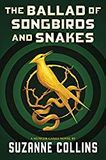
Suzanne Collins
The world of Panem 64 years before the events of The Hunger Games.
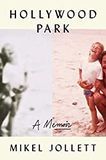
Mikel Jollett
A remarkable memoir of a childhood in one of the country’s most infamous cults.
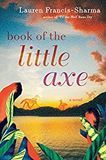
Lauren Francis-Sharma
1796 Trinidad: Rosa's life is upended. 1830 Montana: her son must find his vision in an Apsaalooke rite of passage.
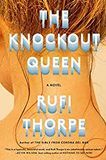
Rufi Thorpe
Dazzling tale of two teenage friends a sunny California suburb, who are desperately struggling to fit in.
Ottessa Moshfegh
The haunting tale of 72-yr.-old Vesta whose life is upturned when she finds an ominous note on a walk in the woods.
Carol Lombardo
A rich, engrossing family saga, spiked with sisterly malice. Impressive debut coming out soon in paperback.
Alistair Gee
The harrowing story of the most destructive American wildfire in a century.
Christopher Moore
Shakespeare meets Dashiell Hammett in this wildly entertaining murder mystery. Pure Christopher Moore!
Cathleen Schine
An enchanting, comic love letter to sibling rivalry and the English language. Soon to be in paperback.
Ivy Pochoda
Five very different women, caught up in fear and danger, are connected by one man with a deadly obsession.
John Moe
John Moe illuminates depression in an entirely fresh and inspiring way.
Brit Bennett
A stunning novel about twin sisters, who choose to live in two very separate worlds, one black and one white.
May 15, 2020____________________________← BACK to our newest list
Emma Straub
A warm, funny novel about the life cycle of one family—as a matriarch confronts the legacy of her mistakes.
Janice Hadlow
Mary, the plain, bookish sister of Pride and Prejudice’s five Bennet sisters comes into her own.
Anna Solomon
A bold novel intertwining the lives of 3 women across 3 centuries as their lives converge in the present day.
Alex George
In Paris between the wars, 4 ordinary people, over the course of a day, search for something each has lost.
Natalie Jenner
After World War II, in a small English village, an unusual group of people attempt something remarkable.
Amity Gaige
A page page-turner about a young family who escape for a yearlong sailing trip that upends all of their lives.
Cho Nam-Joo
An international bestseller: one woman’s struggle against misogyny launched Korea’s new feminist movement.
Amy Jo Burns
On a lush mountaintop, 2 women vow to protect each other, while a young girl must defy her father to survive.
Brad Meltzer, Josh Mensch
The true story about an attempt on Lincoln's life & the team that foiled it.
Paulette Jiles
At the end of the Civil War, an itinerant fiddle player, trying to make a living, falls in love with a charming Irish lass.
Bess Kalb
In the funny, wise voice of her grandmother, Kalb brings family lore & secrets to life.
Sara Sliger
A novel of psychological suspense following a young archivist’s obsession with her subject’s mysterious death.
May 5, 2020____________________________ ←BACK to our newest list
Lisa Wingate
A tale of 3 young women post- Civil War and a modern-day teacher, who learns how they connect to her students' lives.
TJ Klune
The master of an orphanage will do anything to keep his magical children safe, even if it means the world might burn.
John Grisham
Back to Camino Island, where a friend is killed in a ferocious hurricane. But was it the storm… or was it murder? As twisty as the hurricane itself.
Janelle Brown
Two women—one a grifter, the other an heiress—are brought together by the scam of a lifetime in this riveting page-turner.
Afia Atakora
Mother & daughter–with a talent for healing & conjuring curses–are at the heart of this powerful post-civil war saga.
Chris Bohjalian
A twisting story of love and deceit: an American man vanishes, & his fiance follows a troubling path to find him.
Nino Haratischvili
Clocking in at app. 1,000 pp.– a breathtakingly engrossing, heartrending family saga. An int'l bestseller & prize winner.
Ruth Reichal
New in PAPERBACK: now for the 1st time, Reichl talks of her years as the top editor of the legendary Gourmet.
Anika Scott
A heart-pounding debut about a German heiress on the run in post-World War II Germany Is she a war criminal?
Juliet Grames
A gripping saga about sisters, secrets, immigration, and a woman fighting her own fate.

Chelsea Bieker
When her mother runs off, Lacey May becomes attached to an evangelical cult & enthralled to its preacher.
Lian Dolan
After the death of their father three sisters learn that oops… they have another sister. It's complicated.
April 5, 2020______________________________←BACK to our newest list
Deirdre Mask
A delightful work of popular history.
Robert Kolker
The true story of a large family beset with schizophrenia.
Julia Alvarez
In the midst of grief, Antonia must solve a family crisis AND help a young, undocumented pregnant woman.
C. Pam Zhang
The Wild West seen through the eyes of 2 Chinese orphans & their odyssey to find home.
TaraShea Nesbit
The story of the pilgrims and settlers of the Massachusetts Bay colony isn't quite what the history books tell us.
Anne Tyler
Micah, rigid in his ways, is thrown off kilter by 2 people who enter his life.
Sue Monk Kidd
Kidd deftly re-imagines the life of Jesus, marrying at 18 to a courageous young woman who secretly yearns to write.
Christopher McDougall
Healing a weak & debilitated donkey with love and a race.
Veronica Roth
Ten years after their victory over the forces of evil, what is life like for the young celebrity heroes now?
Grady Hendrix
More Ted Bundy than Brad Pitt, a gorgeous man ingratiates himself into small town life.
Ariel Lawhon
True-to-life Aussie spy, Nancy Wake, should well become a household name with this remarkable book.
Elizabeth Wetmore
Women band together during the 1970s Texas oil boom to protect one another from a toxic masculine environment.
Stephanie Wrobel
Rose Gold testified, her mother went to prison, and that was the end of that. But not to be: old grudges die hard.
Adrienne Brodeur
A mother embroils her daughter in a dramatic affair affecting their lives for years.
March 15, 2020_______________________← BACK to our newest list
Peggy Orenstein
Following her remarkable Girls & Sex, Peggy Orenstein. explores the sexual norms of males.
N,K. Jemisin
From multi-award-winner Jemisin: an alien force launches an attack on New York. Five people are called to protect the city.
Emily St. John Mandel
A 20-something marries a wealthy financier whose Ponzi scheme unravels to disastrous effect. RAVES
Katrine Engberg
A killer follows, to the letter, a writer's murderous manuscript in this Danish author's U.S. debut. More thrilling Scandinavian noir.
Holly Jackson
A murder case doesn't add up, but a girl is determined to find the real killer.

Anna Wiener
A sharp critique of Silicon Valley life and start-up culture in this funny yet frightening memoir of a once-upon-a-time insider.
Clare Beams
An all-girls school in the 1870s is thrown into chaos when students fall mysteriously ill.
Glennon Doyle
Another inspiring feminist memoir from Doyle on defying society's narrow expectations gaining personal freedom.
Amanda Eyre Ward
Family members unpack their baggage, real & emotional, on a luxury cruise with Mom.
Ada Calhoun
An insightful analysis of today's new midlife crisis and why we're so anxious. Promise–this book won't put you to sleep.
Rye Curtis
An forest ranger finds a purpose in her life as she searches for the lone survivor of a plane crash.
Tarryn Fisher
Marriage is hard enough without having to compete with two other wives in Fisher's psychological thriller.
Marie Benedict
The remarkable woman who stands side-by-side one of history's most remarkable men.
Greer Hendricks, Sarah Pakkanen
Lonely Shay Miller falls under the spell of two glamorous sisters. Yet things begin to feel a little off…. What do they want from her?
March 3, 2020_________________________←BACK to our newest list
Column McCann
Two fathers, an Israeli & Palestinian, live in a world of conflict–yet in tragedy they find friendship.
(Wolf Hall Trilogy, 3)
Hilary Mantel
The end of Mantel's monumental study of the powerful man behind Henry VIII's throne.
Diane Chamberlain
A mystery set in a small town, and a tale of three artists who lived there over a span of 80 years.
Kate Elizabeth Russell
A 15-year-old has an affair with her 40-year-old teacher. Then it is 17 years later… and #MeToo bursts on the scene. Explosive.
James McBride
A quirky, at times even hilarious, story of those who bore witness to a fatal shooting in the late 60s.
Louise Erdrich
A powerful story, based on Erdrich's own grandfather, who fought to keep Indian lands out of U.S. hands.
Margarita Montimore
A remarkably inventive novel that explores what it means to live in the moment, even if those moments are out of order.
Therese Anne Fowler
Things were perfect…until they weren't. Life gets complicated in modern suburbia!
Alexis Schaitkin
The death of a teenager while on vacation in the Caribbean reverberates through many lives and many years.
Michael Christie
The rise & fall of a family's fortunes are tied to its vast old-growth forest. A magnificent saga.
Simone St. James
Something's not been right at the Sun Down for a long time. Could it be haunted? Carly Kirk is about to find out. Spooky.
Rebecca Serle
It was a perfect day until Dannie woke up 5 years in the future … with a completely different man.
Lily King
An aspiring writer tries to find herself after losing her mother. She's 30, alone in Boston, and has nothing to hold onto.
February 15, 2020_____________________← BACK to our newest list
Jeanine Cummins
Rave reviews. A Mexican mother and young son run for their lives, making the long trek to the US.
Laura Zigman
Poor Judy, middle-aged and anxious. Can coddling the pooch in a baby sling save a marriage? Funny and poignant.
Clare Pooley
A single green notebook brings together strangers, leading to friendship and even love.
Erik Larson
An intimate picture of the great man defying the German Blitz.
Ann Napolitano
The lone survivor of a plane crash, young Edward struggles to learn what it means to truly live again.
Kiley Reid
A black babysitter and her priveleged white employer confront an unforseen fall-out from an incident in a grocery store.
Peter Swanson
A bookstore owner creates a list of perfect murder mysteries. But someone is using the list…for real.
Jess KIdd
Searching for a missing girl, super-sleuth Birdie treds thru Victorian London streets…and unearths a secret past best left alone.
Liz Moore
A police procedural–family drama about two sisters: one a cop, one an addict. Propulsive.
Emma Copely Eisenberg
Unsolved murders inspire this true crime story–memior. Insightful.
Isabel Allende
The epic tale of young couple fleeing Spain after the civil war. Pub Weekly calls it "majestic."
Niall Williams
A young Dubliner in a cozy Irish village. Washington Post critic says reading this book is "truly happiness" in itself.
Mary Kubica
A fresh start for a doctor and her family becomes a living nightmare when a neighbor is murdered.
Jenny Offill
Overwhelmed librarian is caught up in doomsday predictions as she fields letters from a podcast. Sardonic, funny, and wise.
January 15, 2020_______________________← BACK to our newest list
John Carreyrou
The shockingly true tale of a Silicon Valley company's corruption & a lot of look-the-other wayism.
Karma Brown
Alice finds a cookbook of her house's previous owner, inspiring her to question her own life choices.
Megan Angelo
Two narratives–in 2015 and 2051–two women, & two chilling versions of celebrity culture.
Paul Yoon
The tragic but beautiful story of 3 teens in war-torn Laos. Fate deals each different blows, and we catch up with them in the aftermath. RAVES.
Michael Zapata
A lost sci-fi manuscript, Hurricane Katrina, & over-lapping universes.
Martha MacCallum
The little know heroism of marines who stormed the Pacific isles during World War II. Epic in its sweep, intimate in its telling.
Kathleen West
Helicoptor mom, kids from privilege, and one kind but kooky teacher. Oh, boy.
David Zucchino
The true story of Wilmington, Delaware's massacre of its black community … & the cover-up that persisted for 100 years.
Nguyen Phan Que Mai
A sweeping tale of one family's shifting fortunes in Vietnam over half a century.
Sierra Crane Murdoch
An eye-opening view of the oil economy and Native Americans.
Cahterine Steadman
A body on a beach, a clue written on his hand…but to what? His identity? Or something more sinister?
Jennifer Rosen
A mother & her child-prodigy daughter struggle to survive the Holocaust by telling stories and remembering the power of music.
Melissa Albert
A worthy sequel to Albert's immersive Hazel Wood series. This one in NYC.
Colleen Oakley
A married woman meets the man of (in) her dreams and must decide what to do. Are the two meant to be together?
November 16, 2019_________________________←BACK to our newest list
Bill Bryson
An informative, engaging, and often funny guided tour of the human body.
Neil deGrasse Tyson
What's not to love about this astrophysicist? He even takes time to answer his fan mail.
Heather Morris
From Auschwitz to a Siberian prisoner camp, Cilka must learn to find good in humanity, joy in life… and love above all.
From a scrappy childhood to the height of fame, Elton John reveals his life and some of his deepest secrets.
Lisa Jewell
Bodies are found in the attic of a mansion: why? Then the estranged children return, & dark secrets come out.
Helen Phillips
A masked intruder upends the life of a mother, prompting her to question her life and ask … is any of this is even real.
Talia Hibbert
A life-time chronic condition, a list for living, a hunky guy, and a smart, funny heroine that you can't help but love.
Margaret Wilkerson
Five generations after slavery, their ascent to freedom is reimagined by strong women with a magical gift.
Susannah Cahalan
A psychiatrist sends an under-cover team into an asylum.
Erin Morgenstern
A timeless love story set in a secret underground world of pirates, lovers, liars, & ships that sail upon a starless sea.
Carmen Maria Machado
A haunting memoir in which Machado reveals the mental and physical abuse she was subjected to by her girlfriend.
Caitlin Doughty
Everyone's favorite mortician this time answers questions from children about death.
October 15, 2019________________________← BACK to our newest list
Ronan Farrow
Uncovering the Harvey Weinstein scandal.
Jojo Moyes
Based on a true story, five women, "the Packhorse Librarians," take literature into the hills of Kentucky.
Jokha Alaharthi
♦ Man Booker Prize
An arranged marriage, a child, Omani history, and the winds of change.
Stephen Chbosky
A boy and his mother, fleeing abuse, find evil elsewhere, lurking in the woods. Stephen King would be proud.
Cara Wall
Co-pastors of a NYC church in 1963: two couples, wildly different, must come to grips with faith and culture.
Amaryliss Fox
A thrilling memoir of 10 years spent in covert ops with the CIA … & finally calling it quits.
Julia Phillips
The disappearance of twin girls shakes a rural culture on the most northeastern edge of the Russian continent.
Leigh Bardugo
At the top of her form, Bardugo releases her 1st adult fantasy to raves. This one takes place in the secret societies of Yale.
Olga Tokarczuk
♦ Nobel Prize
A mystical detective novel set in a remote Polish village.
Kevin Wilson
Twins with a habit of bursting into flames whenever they're upset. Lillian, their governess, takes them on.
Andre Aciman
Ten years after parting ways, two men, once lovers & now on different continents, seek to find one another.
Salman Rushdie
incomparable Rushdie bases his newest on Don Quixote; today's windmills are the vacuities of American culture.
September 9, 2019_____________________ ←BACK to our newest list
Soren Sveistrup
A serial killer in Denmark targets young mothers as part of a complex scheme. Terrifically scary.
Alix E. Harrow
A young girl finds that written words have the power to open doors, which lead to new worlds and new discoveries.
Lucy Ellman
A mother of 4 in Ohio contemplates her kids, cat, 'fridge– all in a constant tumble & flow of words.
Margaret Atwood
The long-hoped-for sequel to The Handmaid's Tale. Now 15 years later, the foundations of Gilead begin to tremble.
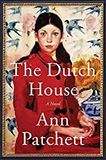
Ann Patchett
A grand house & the family who lives in it: a brother & sister displaced by a cruel stepmother.
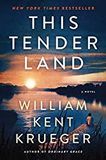
William Kent Krueger
Four children escape down the Minnesota River, finding friends, evading foes, and searching for home.
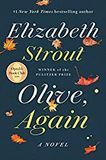
Elizabeth
She's baaaaack! Olive Kitteridge reenters our lives and those of Crosby, Maine. Rave reviews.
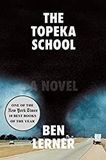
Ben Lerner
The story of a family, its struggles and its strengths, and the challenge of raising a good son in a culture of toxic masculinity.
Jacqueline Woodson
A teen pregnancy pulls two Brooklyn families together, exposing disappointments, hopes & longings.
Ta-Neishi Coates
A young slave boy is endowed with magical powers which, after his escape, he puts to use in the underground railroad.
Lara Prescott
The thrilling but true tale of secretaries turned spies, who smuggle Doctor Zhivago out of the USSR.
Alex North
A serial killer has been locked up for 10 years, so who is mimicking his M.O? And who could have taken 6-year-old Neil Spencer?
Kantor and Twohey
The gripping account of the two reporters who outed Harvey Weinstein.
Alice Hoffman
Berlin, 1941: Ettie, daughter of a rabbi, creates a magical golem to protect young Lea, while Etti herself heads for the resistance.
August 14, 2019____________________________ ←BACK to our newest list
Jami Attenberg
As the brutish father dies, a family struggles to make sense of its past—& come to terms with its present.
J. Ryan Stradal
A family inheritance tears two Minnesota sisters apart—but years later, there may be a chance to make amends.
Christy Lefteri
Fleeing war in Syria, a couple undertakes a perilous journey to find peace in their life and hope in their marriage.
Joshilyn Jackson
Amy Whey's sins come back to haunt her when she's extorted for money by a glamorous stranger.
Karl Marlantes
A breathtaking family saga of Finnish immigrants settling in the old-growth forests of the American Northwest.
Casey McQuiston
What if the half-Mexican son of the first female US president fell in love with Prince Henry, England’s heir?
Silvia Moreno-Garcia
The Mayan god of death sends a young woman on a harrowing journey in this dark Mexican fairy tale.
Alisha Rai
Two rival dating-app creators find themselves at odds in the boardroom but in sync in the bedroom.
Kiri Jane Buxton
A romp through a zombie Apocalypse, with a foul-mouthed crow as our guide and narrator.
Kate Hewitt
Two women befriend one another at a lake house. But one carries a secret that could changes their lives forever.
Ibram X. Kendi
A combination of ethics, history, law, and science with the author's own story of awakening to antiracism.
Katherine Center
Cassie is a firefighter with a passion for saving lives. But can she rescue herself from her own emotional fortress?
Tea Obreht
Arizona Territory, 1893: Two remarkable lives collide in a magical epic journey. Camels included.
Ruth Ware
A nanny alone, a house that appears haunted, and children who aren’t quite what they seem.
Jun/Jul 2019____________________________←BACK to our newest list
Abbi Waxman
Introvert Nina learns she has a huge extended family–& they all want to meet her… Oh nooooo!!
Erica Bauermeister
Emmeline's talent for identifying scents aids her in a journey of self-discovery once she leaves her remote childhood home.
Elizabrth Gilbert
In the 1940s, Vivian heads to glitzy NYC, where she learns far, far more than she ever bargained for.
Marjan Kamali
In 1953, Roya's hopes of marrying Bahman are dashed when he disappears during the Iranian coup d'etat. What happened to him?
Linda Holmes
A funny, charming rom-com in which long-time friends find love and new beginnings.
Kilagraff and Hardstack
The popular My Favorite Murder podcasters share their personal struggles and deepest fears.
Margaret Renkl
A gorgeous memoir of family loss and the consolations of beauty & death in the natural world.
Lisa Taddeo
A riveting true story about the sex lives of three very different American women, based on nearly a decade of reporting
Colson Whitehead
Based on the real story of a reform school in Florida that warped the lives of 1000s of children.
Robert MacFarlane
An extraordinary journey in "deep time" — exploring what lies beneath both the natural world and ancient civilizations.
Blake Couch
A force sweeping the world threatens not only minds but the very fabric of time itself. Thrilling sci-fi.
Christina Lauren
They're not married & can't stand one another. But when a chance for a free honeymoon crops up, what's there to lose?
Jennifer Chiaverini
An intimate, historical tale of four women who do what they can to help the resistance in Germany.
Chandler Baker
A new boss takes over. But whispers surround the way he's treated women for years. A bitterly funny, bracing, & timely thriller.
May 20, 2019________________________← BACK to our newest list
Mary Beth Keane
Friendship between two families is breached when tragedy occurs. About the power of forgiveness.
Casey Cep
A series of rural Alabama murders inspired Harper Lee to write again, years after To Kill a Mockingbird.
Kim Michele Richardson
An indomitable librarian travels by pack horse to deliver books during the Great Depression.
Sarah Blake
Past mistakes & betrayals ripple through generations of a privileged American family, that used to "run the world."
Helen Hoang
A young Vietnamese woman travels to America hoping to find a husband and a better life.
Hanna Jameson
A historian documents his days hiding out in a Swiss hotel after a nuclear war… when the body of a young girl is found.
Erika Swyler
A town falls into a sinkhole in time, and a spacecraft prepares a planet for colonization race to fix their life support system.
Louis Bayard
The courtship of Mary Todd and Abe Lincoln in this delightful new take on American history.
Sally Hepworth
When a family matriarch dies unexpectedly, evidence points to possible homicide… and too many family members with motives.
Joanne Ramos
Set in a luxurious secret facility where women who need money bear children for the wealthy.
Helen Ellis
Humorous, even hilarious, essays on southern etiquette and traditions from an Alabamian now living in NYC.
Julie Orringer
American journalist Varian Fry’s helps famous artists out of Nazi-occupied France.
Sofia Purnell
The book's subtitle says it all: "The Untold Story of the American Spy Who Helped Win World War II." A Gripping story of a true hero.
April 20, 2019_________________________ ← BACK to our newest list
Trent Dalton
A wonderful tale of a boy’s coming of age in 1980s Australia–infused with crime, magic & fate.
Martha Hall Kelly
A prequel to the author's beloved Lilac Girls. Set on the cusp of WW I–fleeing the collapse of Russia & the Romanov family.
Steven Rowley
A young writer meets his new editor–who's none other than Jackie Kennedy Onassis! Whoa…
Lori Gottlieb
A gaze into the process of psychotherapy while the author battles her own demons.
Tracey Gravis Graves
A woman on the autism spectrum bumps into an old sweetheart, sparking hope for something more.
Angie Kim
A web of lies surrounds a fatal fire at an unusual treatment facility in this courtroom drama. Learning & page-turning in one book.
Meredith May
A moving memoir of how helping her grandfather tend his beehives helped a troubled girl survive.
Sally Rooney
A young Irish couple gets together, splits up, gets together, splits up…but no spoilers here. Humor and insight throughout.
Mary Laura Philpott
Musings on the ups & downs of life as a mother-wife-career woman. Big-hearted & funny.
Isabella Hammad
The life of one man against the stormy backdrop of Palestine in the final years of British occupation. Big, beautiful, packed.
Candice Carty-Williams
The life and loves of Queenie Jenkins, a vibrant, troubled 25-year-old Jamaican Brit who is not having a very good year.
Lydia Fitzpatrick
Devoted brothers, a world apart, (Russia & the US) are enmeshed in a mystery.
Susan Choi
First love for high school drama students twists into something much darker; Choi has won big kudos for this work.
Nell Freudenberg
An MIT physicist gets a text from her dead best friend. Big issues, yet smart and witty.
Miriam Toews
Sexually abused Mennonite women gather to talk about their options–the 1st time any have ever spoken up for themselves.
March 20, 2019________________________←BACK to our newest list
Annie Ward
A psychological thriller that begins with a 911 call from a couple with a 3-year-old son.
Mark Synnott
The true story of a young man who climbed 3,000 feet of a sheer rock face–and stunned the world.
Peter Swanson
A twisty, fast-paced thriller depicting picket-fence suburbia's seamy, murderous underside.
Lisa See
Set on Korea's Jeju Island, where women divers, called the Haenyeo, risk their lives in hard physical labor. A tale of young friendship.
G. Willow Wilson
A swashbuckling fantasy novel amid an epic clash between cultures during the Spanish Inquisition.
Nickolas Butler
A family is ripped apart and nearly destroyed when one of its own becomes involved with a radical church.
Anissa Gray
A trio of sisters reel from a criminal conviction in this moving debut.
Andrea Bartz
A woman must confront gaps in her memory as she investigates the death of best friend a decade earlier.
Helen Oyeyemi
A novel set in the land of fairy tales that riffs on "Hansel and Gretel" … without the breadcrumbs.
Lucy Foley
Old friends gather in a English manse… but one turns up dead. Agatha would be thrilled.
Patrick Radden Keefe
A gripping account of a murder and its aftermath when peace finally comes to Belfast.
Kate Quinn
A Nazi "Huntress" commits unspeakable war crimes then vanishes in the postwar chaos.
Frances Liardet
In WWII England, a childless woman discovers joy after she begins caring for a young girl. A beautiful story of love and loss.
March 5, 2019_______________← BACK to our newest list
Rosella Postorino
Haunting story of young women forced to protect Hitler…by testing his food for poison every day.
Susan Meissner
Two girls meet in a US internment camp during WWII. Eventually separated, they spend decades searching for one another.
Charlie Jane Anders
Exiled from the city on planet January, Sophie befriends an unusual species.
Jane Harper
Three brothers in the Australian Outback: one is found dead–by his own hand … or not. Deeply buried secrets begin to surface.
Taylor Jenkins Reid
A rock band–headed by beautiful & talented Daisy Jones–breaks up, & we learn why.
The River
Peter Heller
Camping, two young men feel the force of nature–a rampaging forest fire and a heated domestic dispute. It all means trouble.
William Boyle
An unlikely trio of women band together to escape the clutches of the mob. A screwball crime noir!
Lynda Cohen Loigman
Estranged sisters, burdened with their own shocking secrets, are reunited at the Springfield Armory in the early days of WWII.
Claire Adam
Set in Trinidad, a father must make a devastating choice regarding his twin sons.
Anne Griffin
At the bar of a grand hotel sits 84-year-old Maurice. Pull up a stool & refresh your drink: we're about to hear his remarkable story.
Elinor Lipman
Daphne tosses out her late mother's old year book, unleashing a series of crazy events.
Glendy Vanderah
A mysterious girl, a researcher in rural illinois, & a reclusive neighbor learn to love and trust again.
Jillian Cantor
A blend of historical and science fiction: it's WWII, & two young people fall in love in Germany.
Etaf Rum
Three generations of Palestinian-American women are torn between individual desire & the strict mores of Arab culture.
February 15, 2019______________________← BACK to our newest list
Whitney Scharer
The tumultuous story of photographers Man Ray & Lee Miller, former model, in 1930s Paris.
Valeria Luiselli
A remarkable fictional take on families trying to enter the U.S. Intimate, intelligent & emotional.
Lauren Wilkinson
An African-American intelligence agent takes part in a real-life African coup d’etat 30 years ago.
Pam Jenoff
Based on real-life WW II history: a team of British female spies dropped behind Nazi lines in German occupied Europe.
Marion James
An African "Game of Thrones" fantasy in which a missing boy may be heir to a fabled kingdom.
Jill Santopolo
A hotel heiress takes care of her dying father and discovers his deepest held secrets. A tale of self-discovery for Nina.
Elizabeth McCracken
Whimsical take on an odd-ball group of people who adore one another and adore bowling.
Chanel Cleeton
In Havana, a Cuban-American woman discovers a long hidden family secret–leading to a new understanding of her true self.
Jasper Fforde
Richly detailed, humorous dystopia about most of Wales hibernating through the harsh, wild Winter.
Yangsze Choo
A young houseboy and a dressmaker's apprentice are drawn into a mystery in 1930s Malaya. Sumptuous & riveting.
Dana Czapnik
A teen basketball player, smart, talented & female, struggles to grow up in NYC in 1993.
Josie Silver
A lovely, propulsive romance about two people, missed connections at love, and final chances. Read it any time of year.
The riveting tale of a dancer turned anorexic now fighting for her life.
Alex Michaelides
A wife mysteriously shoots her husband–then refuses to utter another word. But a pyschologist believes he can win her over.
Heidi Perks
Bone-chilling work of psychological suspense in which a woman loses her best friend's daughter.
Sejal Badani
After a miscarriage, a journalist heads to India to learn about her remarkable grandmother and a family legacy.
Tara Conklin
A sweeping yet intimate epic about an American family: reminiscent of Ian McEwan's Atonement.
Megan Collins
When a woman heads home to help her ailing mother, she must come to grips with the death of her sister 16 years earlier.
January 30, 2019_______________________ ← BACK to our newest list
Emma Rous
A strange photo causes Seraphine to wonder about her identity & the family's deepest secrets.
Tessa Hadley
The death of one man has a devastating impact on his wife and the couple who have been dear friends for years.
Larry Loftis
Reads like a thriller.
Marie Benedict
A novel based on the true story of film star Hedy Lamarr and her brilliant invention to help the U.S. war effort.
Tim Johnston
A young woman turns Nancy Drew after losing her friend in an accident. But was it an accident?
Lyndsay Faye
In 1921 a white woman flees the mob & the East Coast, finding refuge in a hotel for people of color in Portland, Oregon.
Susan Conley
An American expat in China attends a retreat to try to cope with old hurts and losses.
Gytha Lodge
A teen girl went missing; 30 years later her body turns up & a small-town cop is determined to find the truth.
Jessica Berry
A woman with a secret survives a plane crash only to be stalked by a ruthless killer.
Sophie Mackintosh
A dystopic fantasy about three sisters on an isolated island, raised to fear men. And then a boy and 2 men wash ashore …
Sarah Moss
A teen joins a group enacting life in the iron age but fears enactment of that age's brutality.
Chris Cander
Two women and the piano that inexorably ties their lives together through time and across continents.
Helen Haong
An autistic woman takes a methodical approach to learning about sex but gets a lesson in love.
Katherine Arden
Last in the series of The Bear and The Nightingale and The Girl in the Tower—a trilogy critics have called "bewitching."
January 10, 2019_______________________← BACK to our newest list

Laura Sims
A woman whose obsession with the beautiful actress on her block drives her to the edge.
Caroline Hulse
An ex-husband and wife holiday together with their partners and daughter. What could go wrong?
Stephanie Land
A single mother struggles in poverty to raise her daugher while working for well-off clients.
Karen Thompson Walker
An ordinary town is transformed by a mysterious illness that triggers perpetual sleep.
Taylor Adams
Four strangers, a blizzard, a kidnapped child, and a young woman desperate to outwit a vicious psychopath.
Madhuri Vijay
A young Indian woman sets out for a Himalayan village in the troubled region of Kashmir.
Diane Setterfield
A powerful novel about the disappearance of three little girls and its devastating effect on their small town.
Jennifer Robson
Two women befriend one another as they create the gown for Prince Elizabeth's wedding to Philip.
Mesha Maren
A 35-year-old woman, newly released from prison, sets out with her girl friend to return to her home in West Virginia.
Jill Lepore
An engaging (and long) history of the U.S. and its difficulty in living up to the promise of equal rights for all citizens.
Mindy Mejia
A thriller about the strange disappearance of a boy and his return 10 years later.
Lisa Jewell
A murder shocks residents of a wealthy English village where everyone seems to watch everyone else.

Pride and Prejudice
Jane Austen, 1813
480 pp.
Penguin Random House
ISBN-13: 9780141439518
Summary
This rich social commentary—Pride and Prejudice—is sometimes considered to be Jane Austen's finest novel. It is certainly among her more famous ones.
Austen sets her entertaining study of manners and misconceptions against the backdrop of a class-conscious society in 18th-century England.
Spirited, intelligent Elizabeth Bennet is alternately enchanted and affronted by Mr. Darcy. She is quick to suspend her usual, more rational judgment when it comes to him.
She also is quick to believe the worst gossip about this haughty, opinionated man, who soon manages to alienate Elizabeth and her family.
But is the condescending air that Mr. Darcy wars an indication of his real character? Or has Elizabeth's pride gotten in the way of her chance for true romance? (From Norton Critical Editions .)
Author Bio
• Born—December 16, 1775
• Where—Steventon in Hampshire, UK
• Death—July 18, 1817
• Where—Winchester, Hampshire
• Education—taught at home by her father
In 1801, George Austen retired from the clergy, and Jane, Cassandra, and their parents took up residence in Bath, a fashionable town Jane liked far less than her native village. Jane seems to have written little during this period. When Mr. Austen died in 1805, the three women, Mrs. Austen and her daughters, moved first to Southampton and then, partly subsidized by Jane's brothers, occupied a house in Chawton, a village not unlike Jane's first home. There she began to work on writing and pursued publishing once more, leading to the anonymous publication of Sense and Sensibility in 1811 and Pride and Prejudice in 1813, to modestly good reviews.
Known for her cheerful, modest, and witty character, Jane Austen had a busy family and social life, but as far as we know very little direct romantic experience. There were early flirtations, a quickly retracted agreement to marry the wealthy brother of a friend, and a rumored short-lived attachment—while she was traveling—that has not been verified. Her last years were quiet and devoted to family, friends, and writing her final novels. In 1817 she had to interrupt work on her last and unfinished novel, Sanditon, because she fell ill. She died on July 18, 1817, in Winchester, where she had been taken for medical treatment. After her death, her novels Northanger Abbey and Persuasion were published, together with a biographical notice, due to the efforts of her brother Henry. Austen is buried in Winchester Cathedral.
Jane Austen's delightful, carefully wrought novels of manners remain surprisingly relevant, nearly 200 years after they were first published. Her novels—Pride and Prejudice and Emma among them—are those rare books that offer us a glimpse at the mores of a specific period while addressing the complexities of love, honor, and responsibility that still intrigue us today. (From Barnes & Noble.)
Book Reviews
(Older works have few, if any, mainstream press reviews online. See Amazon and Barnes & Noble for helpful customer reviews.)
Pride and Prejudice has always been, since its publication in 1813, Austen's most popular novel. The story of a sparkling, irrepressible heroine, Elizabeth Bennet, the behavior of whose family leaves much to be desired, and Mr. Darcy, a very rich and seemingly rude young man who initially finds Elizabeth "tolerable, but not handsome enough to tempt me," is, in the words of the Penguin Classics edition editor Tony Tanner, a novel about how a man changes his manners and a woman changes her mind. Through the ages, its chief delights for readers have been its flawed but charming heroine ("I think [Elizabeth] as delightful a creature as ever appeared in print," Austen herself wrote to her sister, Cassandra); its humorous treatment of a serious subject; brilliant and witty dialogue laced with irony; a cast of humorous minor characters; and Austen's nearly magical development of a complex but believable love relationship between two complex people.
Penguin Classics (Introduction to Mansfield Park)
Discussion Questions
1. Pride and Prejudice is probably Austen's most famous, most beloved book. One element, the initial mutual dislike of two people destined to love each other, has become a cliché of the Hollywood romance. I'm sure you can think of numerous examples.
This book has been described by scholars as a very conservative text. Did you find it so? What sort of position do you see it taking on the class system? It has also been described as Austen's most idealistic book. What do you suppose is meant by that?
2. In 1814 Mary Russell Mitford wrote: "It is impossible not to feel in every line of Pride and Prejudice...the entire want of taste which could produce so pert, so worldly a heroine as the beloved of such a man as Darcy.... Darcy should have married Jane."
- Would you have liked the book as well if Jane were its heroine?
- Have you ever seen a movie version in which the woman playing Jane was, as Austen imagined her, truly more beautiful than the woman playing Elizabeth?
Who doesn't love Elizabeth Bennet?!!
3. Two central characters in Austen have her own first name.
- In Emma: Jane Fairfax is a decorous, talented, beautiful woman.
- In Pride and Prejudice: Jane Bennet is everything lovely.
What do you make of that?
4. Lydia and Wickham pose a danger to the Bennet family as long as they are unmarried and unchecked. But as a married couple, with little improvement in their behavior, this danger vanishes.
In Pride and Prejudice marriage serves many functions. It is a romantic union, a financial merger, and a vehicle for social regulation. Scholar and writer Mary Poovey said that Austen's goal "is to make propriety and romantic desire absolutely congruent."
- Think about all the marriages in the book with respect to how well they are fulfilling those functions.
- Is marriage today still an institution of social regulation?
- What about it would change if gay marriage were legally recognized?
5. Austen suggests that in order to marry well a woman must be pretty, respectable, and have money. In the world of Pride and Prejudice, which of these is most important? Spare a thought for some of the unmarried women in the book—Mary and Kitty Bennet, Miss de Bourgh, Miss Georgiana Darcy, poor, disappointed Caroline Bingley. Which of them do you picture marrying some day? Which of them do you picture marrying well?
6. Was Charlotte Lucas right to marry Reverend Collins?
7. What are your feelings about Mr. Bennet? Is he a good father? A good husband? A good man?
8. Darcy says that one of Wickham's motivations in his attempted elopement with Georgiana was revenge. What motivations might he have had for running off with Lydia? (Besides the obvious...)
9. Elizabeth Bennet says,".... people themselves alter so much, that there is something new to be observed in them for ever."
- Do any of the characters in the book change substantially? Or do they, as Elizabeth says of Darcy, "in essentials" remain much as they ever were?
10. Elizabeth is furious with Darcy for breaking up the match between Jane and Mr. Bingley. Although he initially defends himself, she changes his mind. Later when Lady Catherine attempts to interfere in his own courtship, he describes this as unjustifiable.
- Should you tell a friend if you think they're about to make a big mistake romantically?
- Have you ever done so? How did that work out for you?
(Questions issued by Penguin Classics edition.)
top of page (summary)


Pride and Prejudice and Zombies
Seth Grahame-Smith, 2009 / Jane Austen, 1813
Quirk Publishing
320 pp.
ISBN-13: 9781594743344
Summary
It is a truth universally acknowledged that a zombie in possession of brains must be in want of more brains.
So begins Pride and Prejudice and Zombies, an expanded edition of the beloved Jane Austen novel featuring all-new scenes of bone-crunching zombie mayhem.
As our story opens, a mysterious plague has fallen upon the quiet English village of Meryton—and the dead are returning to life! Feisty heroine Elizabeth Bennet is determined to wipe out the zombie menace, but she's soon distracted by the arrival of the haughty and arrogant Mr. Darcy.
What ensues is a delightful comedy of manners with plenty of civilized sparring between the two young lovers—and even more violent sparring on the blood-soaked battlefield as Elizabeth wages war against hordes of flesh—eating undead. Can she vanquish the spawn of Satan? And overcome the social prejudices of the class-conscious landed gentry?
Complete with romance, heartbreak, swordfights, cannibalism, and thousands of rotting corpses, Pride and Prejudice and Zombies transforms a masterpiece of world literature into something you'd actually want to read. (From the publisher.)
See the 2016 film version with Lily James and Sam Riley.
Listen to our Movies Meet Book Club Podcast as Hollister and O'Toole discuss the movie and book.
Author Bio
• Birth—December 16, 1775
• Where—Steventon in Hampshire, UK
• Death—July 18, 1817
• Where—Winchester, Hampshire
• Education—taught at home by her father
Jane Austen's delightful, carefully wrought novels of manners remain surprisingly relevant, nearly 200 years after they were first published. Her novels—Pride and Prejudice and Emma among them—are those rare books that offer us a glimpse at the mores of a specific period while addressing the complexities of love, honor, and responsibility that still intrigue us today. (From Barnes & Noble.)
Read more about Jane Austen on our Prejudice Reading Guide.
_______________
Seth Grahame-Smith is an American author and film producer, best known for his 2009 novel Pride and Prejudice and Zombies. He lives in Los Angeles, California, USA.
Grahame-Smith's first widely published book was the nonfiction The Big Book of Porn: A Penetrating Look at the World of Dirty Movies, a look at the history of the erotic art form, which was published in 2005. The next year, Grahame-Smith published The Spider-Man Handbook: The Ultimate Training Manual, an examination of Marvel Comics' Spider-man, with an introduction by Stan Lee. In 2007, Grahame-Smith wrote How to Survive a Horror Movie: All the Skills to Dodge the Kills, a tongue-in-cheek guide to help readers escape situations most often shown in horror films. The book's introduction was written by horror film director Wes Craven. The next year, Grahame-Smith wrote the satirical Pardon My President: Fold-and-Mail Apologies for 8 Years, a collection of letters penned by Grahame-Smith addressed to various parties in order to apologize for the wrongs they had suffered under the administration of George W. Bush.
Grahame-Smith received the idea for a mash-up of Jane Austen's Pride and Prejudice with elements of the zombie genre from his editor at Quirk Books, Jason Rekulak, who had been wanting to make a book of the type for quite some time. Grahame-Smith, enamored with the idea, began working on the novel, first by reading Pride and Prejudice and then by meticulously plotting out where to insert the zombie elements, a process he has described as similar to microsurgery. Though the publishing company was initially reluctant to publish the book in fear of alienating possible fans of the books, the book was eventually published in 2009 in hopes of selling several thousand copies and breaking even, as had been done with Grahame-Smith's previous two books. However, once the cover and title of the book began circling around the internet, the book's popularity grew, eventually to the point where it became a New York Times bestseller.
Due to the success of Pride and Prejudice and Zombies, Grahame-Smith has been contracted to write two follow-up books, one of which is reported to be titled Abraham Lincoln: Vampire Hunter.
He'll make his debut as a comic book writer on Marvel Zombies Return: Hulk with artist Richard Elson.
Grahame-Smith has been a producer of several films and television shows. In 2001, he was the coordinating producer on two episodes of History's Mysteries. (From Wikipedia.)
Book Reviews
This may be the most wacky by-product of the busy Jane Austen fan-fiction industry—at least among the spin-offs and pastiches that have made it into print.... Is nothing sacred? —Mary Ellen Quinn
Booklist
Austen's England is overrun with "unmentionables." Etiquette and polite society still reign, but they do become strained when, for example, the ball at Netherfield is interrupted by an attack on the household staff. In this parody, Grahame-Smith maintains the structure and language of the original while strategically inserting zombies into the story. The surprise is how little changes. Elizabeth Bennett is still known for her beauty and intelligence. Here, she is also known for her expertise in the "deadly arts," abilities that only make her a less-desirable marriage partner. There is the constant physical peril that echoes the menace underlying the original. In addition to a life of homeless spinsterhood, the sisters fear having their brains eaten, or being bitten and turned into zombies themselves (a fate to which one character does unfortunately fall prey). The unmentionables also magnify the satirical aspects of the story. A few key arguments, such as the final confrontation between Elizabeth and Lady Catherine, become all-out brawls to the death. (Lady Catherine is famous for her fighting skills and army of ninjas.) And of course Darcy is a renowned swordsman, known for his gentlemanly ferocity. The concept alone is worth a chuckle. The undead are popular at the moment, and teens will be attracted to this clever version of a frequently assigned classic. However, they should be prepared for a somewhat slow read. The author has not accelerated the pace or created suspense in this mashup. —Angela Carstensen, Convent of the Sacred Heart, New York City
Library Journal
Discussion Questions
Use our LitLovers Book Club Resources; they can help with discussions for any book:
• How to Discuss a Book (helpful discussion tips)
• Generic Discussion Questions—Fiction and Nonfiction
• Read-Think-Talk (a guided reading chart)
Also consider these LitLovers talking points to help get a discussion started for Pride and Prejudice and Zombies:
1. First of all, you will want to read Jane's original—uh, the one without the Zombies? If you haven't read it, skip it. There's no point in going any further.
2. Okay, having read the original (see #1), what would you say is different in this "expanded" version? Be precise.
3. Which is the greater peril in this work—the social stigma and financial ruin of remaining a spinster...or having your brains eaten out? Why? Which would be the greater threat today? Why, again?
4. Discuss the way in which class difference determines one's protection against zombies? Does Lady Catherine de Bourgh have greater protection than the Bennett family? Are there parallels to today's call for health care reform? Defend your answer.
5. Why is Elizabeth considered a less-than-desirable marriage partner? How does that change when Mr. Darcy appears on the scene? Why does he find Elizabeth attractive?
6. Why does Charlotte (really) marry Mr. Collins?
7. Where do these Zombies come from? Why are they here? Do you think zombies still exist?
(Questions by LitLovers. Please feel free to use them, online or off, with attribution. Thanks.)
top of page


Prime Deception
Carys Jones, 2014
Carina UK
304 pp.
ISBN-13: 9781472094728
Summary
When Lorna Thomas is found dead in her car everyone believes she killed herself. But the day after her death Lorna was set to sell a scandalous story to one of Britain’s biggest tabloid papers. For six months she had been the Deputy Prime Minister’s mistress.
Will Lorna’s secret die with her? While her family try to move on and come to terms with her death one person refuses to believe that Lorna killed herself. Her twin sister, Laurie is convinced that Lorna was murdered and she’ll stop at nothing to prove it, even if that means teaming up the very man her sister had been having an affair with...
Author Bio
• Birth—December 1985
• Where—Shrewsbury, England, UK
• Education—B.A., University of Wolverhampton
• Currently—lives in Shropshire, England
Carys Jones loves nothing more than to write and create stories which ignite the reader's imagination. Based in Shropshire, England, Carys lives with her husband, two guinea pigs and her adored canine companion Rollo.
When she's not writing, Carys likes to indulge her inner geek by watching science- fiction films or playing video games.
She lists John Green, Jodi Picoult and Virginia Andrews as her favorite authors and draws inspiration for her own work from anything and everything.
To Carys, there is no greater feeling then when you lose yourself in a great story and it is that feeling of ultimate escapism which she tries to bring to her books. (From the author.)
Visit the author's website.
Follow Carys on Facebook.
Book Reviews
I had a blast reading this, and it made me really miss the days when I would sit down and devour a mystery in a few sittings
Kookie Krysp.com
Prime Deception is an amazing read from Carys, I enjoyed every page and found it incredibly hard to put it down
Sabina's Adventures in Reading.blogspot.com
If you like writing with flair and passion, then Jones ticks both boxes. The work of a young author who writes with conviction and authority.
Crime Fiction Lover.com
Discussion Questions
1. Which character did you feel that you related to the most?
2. Were you satisfied with the ending or were you left with more questions?
3. What were your feelings about Lorna as she exists only posthumously in the book?
4. Do you have a favorite passage/scene from the book?
5. If you could ask the author one question, what would it be?
(Questions courtesy of the author.)
top of page (summary)
The Prime of Miss Jean Brodie
Muriel Spark, 1961
HarperCollins
160 pp.
ISBN-13: 9780061711299
Summary
At the staid Marcia Blaine School for Girls, in Edinburgh, Scotland, teacher extraordinaire Miss Jean Brodie is unmistakably, and outspokenly, in her prime. She is passionate in the application of her unorthodox teaching methods, in her attraction to the married art master, Teddy Lloyd, in her affair with the bachelor music master, Gordon Lowther, and—most important—in her dedication to "her girls," the students she selects to be her crème de la crème.
Fanatically devoted, each member of the Brodie set—Eunice, Jenny, Mary, Monica, Rose, and Sandy—is "famous for something," and Miss Brodie strives to bring out the best in each one. Determined to instill in them independence, passion, and ambition, Miss Brodie advises her girls, "Safety does not come first. Goodness, Truth, and Beauty come first. Follow me."
And they do. But one of them will betray her. (From the publisher.)
Author Bio
• Birth—February 1, 1918
• Where—Edinburg, Scotland, UK
• Death—April 13, 2006
• Where—Civitella della Chiana, Tuscany, Italy
• Education—James Gillespie's High School for Girls; Heriot-
Watt College (one course)
• Awards—James Tait Black Memorial Prize; US Ingersoll
Foundation TS Eliot Award; David Cohen Prize; Dame
Commander of the Order of the British Empire; Booker
Prize, short-listed twice.
Dame Muriel Spark, DBE, was an award-winning Scottish novelist. She was born Muriel Sarah Camberg in Edinburgh, to a Jewish father and an English (and Anglican) mother, and was educated at James Gillespie's High School for Girls. In 1934–35 she took a course in "Commercial correspondence and précis writing" at Heriot-Watt College. She taught English for a brief time and then worked as a secretary in a department store.
On 3 September 1937, she married Sidney Oswald Spark, and soon followed him to Rhodesia (now Zimbabwe). Their son Robin was born in July 1938. Within months she discovered that her husband was a manic depressive prone to violent outbursts. In 1940 Muriel had left Sidney and Robin. She returned to the United Kingdom in 1944 and worked in intelligence during World War II. She provided money at regular intervals to support her son as he toiled unsuccessfully over the years. Spark maintained it was her intention for her family to set up home in England, but Robin returned to Britain with his father later to be brought up by his maternal grandparents in Scotland.
Spark began writing seriously after the war, under her married name, beginning with poetry and literary criticism. In 1947, she became editor of the Poetry Review. In 1954, she decided to join the Roman Catholic Church, which she considered crucial in her development toward becoming a novelist. Penelope Fitzgerald, a contemporary of Spark and a fellow novelist, remarked how Spark "had pointed out that it wasn't until she became a Roman Catholic...that she was able to see human existence as a whole, as a novelist needs to do." In an interview with John Tusa on BBC Radio 4, she said of her conversion and its effect on her writing:
I was just a little worried, tentative. Would it be right, would it not be right? Can I write a novel about that — would it be foolish, wouldn't it be? And somehow with my religion — whether one has anything to do with the other, I don't know — but it does seem so, that I just gained confidence.
Graham Greene and Evelyn Waugh supported her in her decision.
Her first novel, The Comforters, was published in 1957. It featured several references to Catholicism and conversion to Catholicism, although its main theme revolved around a young woman who becomes aware that she is a character in a novel.
The Prime of Miss Jean Brodie (1961) was more successful. Spark displayed originality of subject and tone, making extensive use of flashforwards. It is clear that James Gillespie's High School was the model for the Marcia Blaine School in the novel.
After living in New York City for some years, she moved to Rome, where she met the artist and sculptor Penelope Jardine in 1968. In the early 1970s they settled in the Italian region of Tuscany and lived in the village of Civitella della Chiana, of which in 2005 Spark was made an honorary citizen. She was the subject of frequent rumours of lesbian relationships from her time in New York onwards, although Spark and her friends denied their validity. She left her entire estate to Jardine, taking measures to ensure her son received nothing.
She refused to agree to the publication of a biography of her written by Martin Stannard. Penelope Jardine now has the right of approval to publication; and the book was published in July 2009. Stannard was interviewed in the week of the publication of the biography. According to A. S. Byatt, "She was very upset by the book and had to spend a lot of time going through it, line by line, to try to make it a little bit fairer".
She received the James Tait Black Memorial Prize in 1965 for The Mandelbaum Gate, the US Ingersoll Foundation TS Eliot Award in 1992 and the David Cohen Prize in 1997. She became Dame Commander of the Order of the British Empire in 1993, in recognition of her services to literature. She has been twice shortlisted for the Booker Prize, in 1969 for The Public Image and in 1981 for Loitering with Intent.
Spark and her son had a strained relationship. They had a falling out when Robin's Judaism prompted him to petition for his late grandmother to be recognized as Jewish. The devout Catholic Spark reacted by accusing him of seeking publicity to further his career as an artist. During one of her last book signings in Edinburgh she responded to an enquiry from a journalist asking if she would see her son by saying 'I think I know how best to avoid him by now'. (From Wikipedia.)
Book Reviews
Muriel Spark is one of the few writers on either side of the Atlantic with enough resources, daring, and stamina to be altering, as well as feeding, the fiction machine.... We are never out of touch in a Spark novel with the happiness of creation; the sudden willful largesse of magic and wit, the cunning tautness of suspense.
John Updike - The New Yorker
One of our greatest living novelists.
The Times (London)
Spark’s powers of invention are apparently inexhaustible.
Commonwealth
[Spark is] one of this century’s finest creators of comic-metaphysical entertainment.
New York Times
[Spark] has written some things that seem likely to go on being read as long as fiction in English is read at all.
New York Times Book Review.
Book Club Discussion Questions
Use our LitLovers Book Club Resources; they can help with discussions for any book:
• How to Discuss a Book (helpful discussion tips)
• Generic Discussion Questions—Fiction and Nonfiction
• Read-Think-Talk (a guided reading chart)
Also consider these LitLovers talking points to help get a discussion started for The Prime of Miss Jean Brodie:
1. What is Miss Brodie's "prime"? What does she mean by the term and why is it so significant—she announces it to her class and refers to it time and again? It also brought up in the last line of the book.
2. Do we ever learn why she selects the particular girls she does as her Brodie girls? Talk about the girls, their relationships with one another, and their relationship with the school. Are they individuals...or conformists?
3. What is Miss Brodie's purpose in creating the Brodie set? Is it purely educational...or something else? What does she want for (or from) them? In what ways, if at all, does the Brodie set change over the years? Do the girls alter their feelings for Miss Brodie by the time their schooling ends?
4. What do you think of Miss MacKay, the headmistress, who continually attempts to undermine Miss Brodie? At the end, she says to Sandy, "I'm afraid she put ideas into your young heads." Why has that bothered her for so many years? Is that not precisely what education is about, at least Miss MacKay's own philosophy of teaching? Is Miss MacKay a watchful headmistress doing her job? Or is she inhibiting a vibrant, creative teacher?
5. Speaking of the philosophy of education: according to Miss Brodie, she and Miss MacKay differ on the correct method of education. Discuss the following passage and decide whom you agree with:
To me education is a leading out of what is already there in the pupil's soul. To Miss MacKay it is a putting in of something that is not there.... I call that intrusion.... Miss Mackay's method is to thrust a lot of information into the pupil's head; mine is a leading out of knowledge, and that is true education as is proved by the root meaning [of the word].
6. We know Miss Brodie only through the eyes of the girls, primarily Sandy. How does their perception of her change by the time they are 17 years of age...and also when they are even older?
7. Muriel Spark wrote with a great deal of wit, and her humor is particularly evident in this novel because we view the adult world through the eyes of innocents. What are some of the sections you find particularly funny?
8. Is Miss Brodie a good person? Is she a good teacher? Try, in fact, to explain the enigma that is Miss Jean Brodie? What, for instance, is her background—do we ever find out?
9. What about Teddy Lloyd and Gordon Lowther, Miss Brodie's two love interests? What does she want with them? She refuses Lowther's entreaties to marry her—why? And more mysteriously, she encourages Rose to have an affair with Lloyd—why, again?
10. When she is finally betrayed, was the one who did so right or wrong? What prompted the girl tell Miss MacKay what she told her? Was it a betrayal?
11. In the final analysis, how do you come to think of Miss Brodie? Is she a noble figure? A tragic one? A visionary? Is she silly? Is she dangerous or well-meaning? What impact did she have on her girls, lasting or short-term?
(Questions by LitLovers. Please feel free to use them, online or off, with attribution. Thanks.)
top of page (summary)
The Prince of Tides
Pat Conroy, 1986
Random House
688 pp.
ISBN-13: 9780553268881
Summary
Pat Conroy has created a huge, brash thunderstorm of a novel, stinging with honesty and resounding with drama. Spanning forty years, this is the story of turbulent Tom Wingo, his gifted and troubled twin sister, Savannah, and their struggle to triumph over the dark and tragic legacy of the extraordinary family into which they were born.
Filled with the vanishing beauty of the South Carolina Low Country as well as the dusty glitter of New York City, The Prince of Tides is Pat Conroy at his very best. (From the publisher.)
Barbra Streisand directed and starred in the 1991 version of this film, along with Nick Nolte and Blythe Danner.
Author Bio
• Birth—October 26, 1945
• Where—Atlanta, Georgia, USA
• Education—B.A., The Citadel
• Currently—lives in San Francisco, California, and Fripp
IslandSouth, Carolina
Pat Conroy was born in Atlanta, Georgia, to a young career military officer from Chicago and a Southern beauty from Alabama, whom Pat often credits for his love of language. He was the first of seven children.
His father was a violent and abusive man, a man whose biggest mistake, Conroy once said, was allowing a novelist to grow up in his home, a novelist "who remembered every single violent act.... My father's violence is the central fact of my art and my life." Since the family had to move many times to different military bases around the South, Pat changed schools frequently, finally attending the Citadel Military Academy in Charleston, South Carolina, upon his father's insistence. While still a student, he wrote and then published his first book, The Boo, a tribute to a beloved teacher.
After graduation, Conroy taught English in Beaufort, where he met and married a young woman with two children, a widow of the Vietnam War. He then accepted a job teaching underprivileged children in a one-room schoolhouse on Daufuskie Island, a remote island off the South Carolina shore. After a year, Pat was fired for his unconventional teaching practices—such as his unwillingness to allow corporal punishment of his students—and for his general lack of respect for the school's administration. Conroy evened the score when he exposed the racism and appalling conditions his students endured with the publication of The Water is Wide in 1972. The book won Conroy a humanitarian award from the National Education Association and was made into the feature film Conrack, starring Jon Voight.
Writings
Following the birth of a daughter, the Conroys moved to Atlanta, where Pat wrote his novel, The Great Santini, published in 1976. This autobiographical work, later made into a powerful film starring Robert Duvall, explored the conflicts of his childhood, particularly his confusion over his love and loyalty to an abusive and often dangerous father.
The publication of a book that so painfully exposed his family's secret brought Conroy to a period of tremendous personal desolation. This crisis resulted not only in his divorce but the divorce of his parents; his mother presented a copy of The Great Santini to the judge as "evidence" in divorce proceedings against his father.
The Citadel became the subject of his next novel, The Lords of Discipline, published in 1980. The novel exposed the school's harsh military discipline, racism and sexism. This book, too, was made into a feature film.
Pat remarried and moved from Atlanta to Rome where he began The Prince of Tides which, when published in 1986, became his most successful book. Reviewers immediately acknowledged Conroy as a master storyteller and a poetic and gifted prose stylist. This novel has become one of the most beloved novels of modern time—with over five million copies in print, it has earned Conroy an international reputation. The Prince of Tides was made into a highly successful feature film directed by Barbra Streisand, who also starred in the film opposite Nick Nolte, whose brilliant performance won him an Oscar nomination.
Beach Music (1995), Conroy's sixth book, was the story of Jack McCall, an American who moves to Rome to escape the trauma and painful memory of his young wife's suicidal leap off a bridge in South Carolina. The story took place in South Carolina and Rome, and also reached back in time to the Holocaust and the Vietnam War. This book, too, was a tremendous international bestseller.
While on tour for Beach Music, members of Conroy's Citadel basketball team began appearing, one by one, at his book signings around the country. When his then-wife served him divorce papers while he was still on the road, Conroy realized that his team members had come back into his life just when he needed them most. And so he began reconstructing his senior year, his last year as an athlete, and the 21 basketball games that changed his life. The result of these recollections, along with flashbacks of his childhood and insights into his early aspirations as a writer, is My Losing Season, Conroy's seventh book and his first work of nonfiction since The Water is Wide.
South of Broad, published in 2009, 14 years after Beach Music, tells the story of friendships, first formed in high school, that span two decades.
He currently lives in Fripp Island, South Carolina with his wife, the novelist Cassandra King. (Adapted from the author's website and Barnes & Noble.)
Book Reviews
A brilliant novel that ultimately affirms life, hope and the belief that one's future need not be contaminated by a monstrous past.
Chicago Tribune
A big sprawling saga of a novel, the kind Steinbeck used to write, the kind John Irving keeps writing, the kind you can hole up with and spend some days with and put down feeling that you've emerged from a terrible, wonderful spell.
San Francisco Chronicle
A masterpiece than can compare with Steinbeck's East Of Eden.... Some books make you laugh; some make you cry; some make you think. The Prince Of Tides is a rarity: It does all three.
Detroit Free Press
A literary gem.... The Prince of Tides is in the best tradition of novel writing. It is an engrossing story of unforgettable characters.
Pittsburgh Press
For sheer storytelling finesse, Conroy will have few rivals this season. His fourth novel is a seductive narrative, told with bravado flourishes, portentous foreshadowing, sardonic humor and eloquent turns of phrase. Like The Great Santini, it is the story of a destructive family relationship wherein a violent father abuses his wife and children. Henry Wingo is a shrimper who fishes the seas off the South Carolina coast and regularly squanders what little money he amasses in farcical business schemes; his beautiful wife, Lila, is both his victim and a manipulative and guilt-inflicting mother. The story is narrated by one of the children, Tom Wingo, a former high school teacher and coach, now out of work after a nervous breakdown. Tom alternately recalls his growing-up years on isolated Melrose Island, then switches to the present in Manhattan, where his twin sister and renowned poet, Savannah, is recovering from a suicide attempt. One secret at the heart of this tale is the fate of their older brother Luke; we know he is dead, but the circumstances are slowly revealed. Also kept veiled is "what happened on the island that day,'' a grisly scene of horror, rape and carnage that eventually explains much of the sorrow, pain and emotional alienation endured by the Wingo siblings. Conroy deftly manages a large cast of characters and a convoluted plot, although he dangerously undermines credibility through a device by which Tom tells the Wingo family saga to Savannah's psychiatrist. Some readers may find here a pale replica of Robert Penn Warren's powerful evocation of the Southern myth; others may see resemblances to John Irving's baroque imaginings. Most, however, will be swept along by Conroy's felicitous, often poetic prose, his ironic comments on the nature of man and society, his passion for the marshland country of the South and his skill with narrative.
Publishers Weekly
Savannah Wingo, a successful feminist poet who has suffered from hallucinations and suicidal tendencies since childhood, has never been able to reconcile her life in New York with her early South Carolina tidewater heritage. Her suicide attempt brings her twin brother, Tom, to New York, where he spends the next few months, at the request of Savannah's psychiatrist, helping to reconstruct and analyze her early life. In beautifully contrasting memories which play childhood fears against the joys and wonders of being alive, Tom creates and communicates the all-consuming sense of family which is Savannah's major strength as a poet and her tragic flaw as a human being. Conroy has achieved a penetrating vision of the Southern psyche in this enormous novel of power and emotion. —Thomas L. Kilpatrick, Southern Illinois Univ. Lib., Carbondale
Library Journal
(Young Adult) In order to aid a psychiatrist who is treating his psychotic sister, Tom Wingo arrives in Manhattan and describes figures from his youth, among them an abusive father, a mother obsessed with being accepted by Colleton's tawdry elite, eccentric grandparents, stolid brother Luke, and sensitive, poet-sister Savannah. Despite the book's length, scenes such as Grandmother Tolitha's visit to Ogletree's funeral home to try out coffins, Grandfather's yearly re-enactment of the stations of the Cross, Mrs. Wingo's passive-aggressive retaliation by serving her husband dog food, Luke's Rambo-like attempt to keep Colleton from becoming a nuclear plant site, and a bloody football game with the team's first black player deserve students' attention. While Conroy's skills at characterization and storytelling have made the book popular, his writing style may place it among modern classics. He adds enough detail so that readers can smell the salty low-country marsh, see the regal porpoise Snow against the dark ocean, and taste Mrs. Wingo's gourmet cooking and doctored dog food. The story is wholly Tom's; Conroy resists the temptation to include the vantage points of other characters. It is the reluctance of Tom to tell all, to recount rather than recreate his family's past, and to face up to the Wingos' mutual rejections that maintain the tension just below the story's surface. It is Tom's coming clean about his past that lays bare the truth and elevates Prince of Tides above a scintillating best seller. —Alice Conlon, Univ. of Houston
School Library Journal
Discussion Questions
1. In the prologue Pat Conroy sets up many of the novel’s themes: his characters’ love of the Low Country and the South; the power Lila Wingo had over her children, who all adored her; their love of the natural world that shaped all three of their futures. In the midst of this idyllic piece of glorious signature Conroy writing, what signals does he give to his readers about the darkness that is to come in this novel?
2. The novel begins when Tom Wingo, a recently fired teacher and coach, married to a successful physician, and father of three, receives a call from his obviously manipulative mother asking him to go to New York to help his twin sister, Savannah, who has once again attempted suicide. His three young daughters had just expressed embarrassment that he, unlike their friends’ fathers, stays home and cooks meals while it is their mother who goes to work. What other event takes place before he leaves that makes him feel a failure, what he calls “a mediocre man”?
3. When Tom appears to be teasing his young daughters, he tells them that there is only one rule of life they must follow: “Never listen to what your parents say. Parents were put on earth for the sole purpose of making their children miserable. It is one of God’s most important laws.... Both Mama and I are screwing you up. If we knew how we were doing it we would stop because we adore you. But we’re parents and we can’t help it.... We are your enemies.” Are there any examples of good parenting in this novel that would argue against this warning?
4. Pat Conroy willingly admits that his novels are informed to a great degree by his life experiences. The Great Santini was about growing up as the son of a physically violent and abusive Marine fighter pilot. “I created a boy named Ben Meechum and gave him my story,” says Conroy. In The Lords of Discipline he took on his military college, The Citadel, in a book that resulted in a twenty-years-plus feud between the author and his school, which was only recently resolved. In writing The Prince of Tides Conroy attempts to come to terms with his childhood and with the realization that his mother may well have been the more powerful parent and the source behind the self-deception and family secrets that crippled her children. And yet he says in the novel, “In families there are no crimes beyond forgiveness.” Do you believe him when he says this?
5. The Prince of Tides is filled with stories of transformation, for example, his father’s wartime conversion to Catholicism, his sister Savannah’s becoming a New Yorker. Can you name others?
6. The idea of twins has deep roots in literature, from Romulus and Remus in mythology, to Jacob and Esau in the Bible, to the twins in the more recent novel The Memory Keeper’s Daughter. Can you think of other examples in literature? How are Tom and Savannah alike? How are they different?
7. When Tom first encounters Dr. Lowenstein, his sister’s psychiatrist, he is belligerent both to her and in his attitude toward the entire city of New York. Why, do you think, is he so suspicious? Do you feel she acted in the best interests of Savannah by involving her brother in her therapy? Tom is a teacher and Lowenstein is a psychoanalyst. In the end they help each other in ways they might never have predicted. Are the tools or the impulses that create teacher-coaches and therapists similar? How are they different? Does their relationship have anything to say about class issues? Give other examples of problems of communication brought about by class differences.
8. What psychological tools besides denial does Tom use to distance himself from pain?
9. Why, do you feel, does Pat Conroy use flashbacks throughout the novel? Do you find this technique helpful to you as a reader?
10. One might say that the truest example of integrity seems to be exemplified in the character of Luke, the older brother. Do you agree? Why or why not?
11. The natural world is clearly revered by Conroy. Can you find passages about nature that exemplify his power as a writer?
12. Give examples of how Pat Conroy uses animals to advance the plot.
13. Questions are raised regarding the price of gender throughout the novel. For instance, how does Lila treat Savannah differently from her sons? How does Savannah deal with the family’s secrets as opposed to the way her brothers deal with them?
14. Do you think there is such a thing as a southern novel? Is The Prince of Tides a southern novel? If so, what does that mean to you?
15. Who is the Prince of Tides?
(Questions issued by publisher.)
The Priory of the Orange Tree
Samantha Shannon, 2019
Bloomsbury Publishing
848 pp.
ISBN-13: 978-1635570298
Summary
A world divided. A queendom without an heir. An ancient enemy awakens.
The House of Berethnet has ruled Inys for a thousand years.
Still unwed, Queen Sabran the Ninth must conceive a daughter to protect her realm from destruction—but assassins are getting closer to her door.
Ead Duryan is an outsider at court. Though she has risen to the position of lady-in-waiting, she is loyal to a hidden society of mages. Ead keeps a watchful eye on Sabran, secretly protecting her with forbidden magic.
Across the dark sea, Tané has trained all her life to be a dragonrider, but is forced to make a choice that could see her life unravel.
Meanwhile, the divided East and West refuse to parley, and forces of chaos are rising from their sleep. (From the publisher.)
Author Bio
• Birth—1991
• Where—West London, England, UK
• Education—B.A., Oxford University
• Currently—lives in London
Samantha Shannon studied English Language and Literature at St. Anne's College, Oxford. The Bone Season, the first in a seven-book series, was a New York Times bestseller and the inaugural Today Book Club selection. Film and TV rights were acquired by the Imaginarium Studios. The Mime Order followed in 2015 and The Song Rising in 2017. The Priory of the Orange Tree came in 2019. Her work has been translated into 26 languages.
In 2012 the Women of the Future Awards shortlisted her for The Young Star Award. She lives in London, England. (Adapted from the publisher.)
Book Reviews
[S]atisfying…with court intrigue, travel through dangerous lands, fantastical religions, blood, and love.… Unfortunately… [the] tempo… hampers… of an otherwise well-planned and well-executed ending. Nonetheless, a very capable epic fantasy.
Publishers Weekly
[A] fascinating epic fantasy set in a rich, well-developed world. Shannon has created fertile narrative ground, and the state of affairs at the end of this novel certainly leaves room for new stories that will make further use of the excellent setting.
New York Journal of Books
(Starred review) Shannon deftly explores the divides between religion, custom, and territory. This extraordinary saga includes heroism, romance, friendship, pirates, plague, diplomacy, and, of course, dragons. A well-drawn feminist fantasy with broad appeal. —Anna Mickelson
Booklist
(Starred review) [A]n entirely fresh and addicting tale is born.… A celebration of fantasy that melds modern ideology with classic tropes. More of these dragons, please.
Kirkus Reviews
[A] clever combination of Elizabethan England, the legend of St. George, and Eastern dragon lore, with a dash of Tolkien… [and] enough detailed world-building, breath-taking action and sweeping romance to remind epic fantasy readers of why they love the genre in the first place.
Shelf Awareness
Discussion Questions
We'll add publisher questions if and when they're available; in the meantime, use our LitLovers Book Club Resources. They can help with discussions for any book:
• How to Discuss a Book (helpful discussion tips)
• Generic Discussion Questions—Fiction and Nonfiction
• Read-Think-Talk (a guided reading chart)
(Resources by LitLovers. Please feel free to use them, online and off, with attribution. Thanks.)
The Prisoner of Heaven (Cemetery of Lost Books series 3)
Carlos Ruiz Zafon, 2012
HarperCollins
304 pp.
ISBN-13: 9780062206299
Summary
Barcelona, 1957
it is Christmas, and Daniel Sempere and his wife, Bea, have much to celebrate.
They have a beautiful new baby son named Julian, and their close friend Fermin Romero de Torres is about to be wed. But their joy is eclipsed when a mysterious stranger visits the Sempere bookshop and threatens to divulge a terrible secret that has been buried for two decades in the city's dark past.
His appearance plunges Fermín and Daniel into a dangerous adventure that will take them back to the 1940s and the early days of Franco's dictatorship. The terrifying events of that time launch them on a search for the truth that will put into peril everything they love, and will ultimately transform their lives. (From the publisher.)
Author Bio
• Birth—September 25, 1964
• Where—Barcelona, Spain
• Awards—Edebe Children's Literary Award, Best Novel, 1993
• Currently—lives in Barcelona and Los Angeles, California, USA
Carlos Ruiz Zafon is a Spanish novelist. His first novel, El Príncipe de la Niebla (The Prince of Mist, 1993), earned the Edebe literary prize for young adult fiction. He is also the author of three more young adult novels, El Palacio de la Medianoche (1994), Las Luces de Septiembre (1995) and Marina (1999). The English version of El Príncipe de la Niebla was published in 2010.
In 2001 he published the novel La Sombra del Viento (The Shadow of the Wind), his first "adult" novel, which has sold millions of copies worldwide. Since its publication, La Sombra del Viento has garnered critical acclaim around the world and has won many international awards. His next novel, El Juego del Angel, was published in April 2008. The English edition, The Angel's Game, is translated by Lucia Graves, daughter of the poet Robert Graves. It is a prequel to The Shadow of the Wind, also set in Barcelona, but during the 1920s and 1930s. It follows (and is narrated by) David Martin, a young writer who is approached by a mysterious figure to write a book. Ruiz Zafon intends it to be included in a four book series along with The Shadow of the Wind. The Third book in the cycle, El Prisionero del Cielo, appeared in 2011, and was published in English in 2012 as The Prisoner of Heaven.
Ruiz Zafon's works have been published in 45 countries and have been translated into more than 50 different languages. According to these figures, Ruiz Zafon is the most successful contemporary Spanish writer (along with Javier Sierra and Juan Gomez-Jurado). Influences on Ruiz Zafon's work have included 19th century classics, crime fiction, noir authors and contemporary writers.
Apart from books, another large influence comes in the form of films and screenwriting. He says in interviews that he finds it easier to visualize scenes in his books in a cinematic way, which lends itself to the lush worlds and curious characters he creates. (From Wikipedia.)
Extras
From a 2005 Barnes & Noble interview:
• In my tender youth I worked as a musician (composer, arranger and keyboard player/synthesizer programmer, record producer, etc.) and I've also labored for seven long years in the advertising jungle as a cynical mercenary, first as a copywriter, then a creative director (whatever that means) and also producing/directing TV commercials and polluting the world with artifacts glorifying Visa, Audi, Sony, Volkswagen, American Express, and many other evil entities. In 1992, when the lease on my soul was about to expire, I quit to become what I always wanted to do, be a full-time writer. Since then, I've published five novels and also have worked occasionally as a screenwriter.
• I am a curious creature and put my finger in as many cakes as I can: history, film, technology, etc. I'm also a freak for urban history, particularly Barcelona, Paris and New York. I know more weird stuff about 19th-century Manhattan than is probably healthy.
• There are two things that I cannot live without: music and books. Caffeine isn't dignified enough to qualify.
• When asked what authors most influenced his career as a writer, here is his response:
Charles Dickens and all of the 19th-century giants. (From Barnes & Noble.)
Book Reviews
[A novel] with the blissful narrative drive of a high-class mystery… Ruiz Zafón is a splendidly solicitous craftsman, careful to give the reader at least as much pleasure as he is evidently having.
Guardian (UK)
The story has heart, menace torture, kindness, cruelty, sacrifice, and a deep devotion to what makes humans tick.
New York Journal of Books
Full of stylish writing, Gothic atmosphere and love letters to 19th-century novels
Yvonne Zipp - Washington Post
Perhaps his wittiest [novel] and the darkest to date, a stylistic feat that Ruiz Zafon handles deftly…Savor this book.
Milwaukee Journal Sentinel
There is an air of magical realism to Zafon’s tales. The prose is robust and the dialogue rich with smart irony. But mostly, reading Zafon is great fun.
Miami Herald
A deep and mysterious novel full of people that feel real…This is an enthralling read and a must-have for your library. Zafón focusses on the emotion of the reader and doesn’t let go.
Seattle Post-Intelligencer
Characters from The Shadow of the Wind and The Angel's Game reconvene in Zafon's newest literary thriller. When a stranger shows up at the struggling Sempere & Sons bookshop in Barcelona in 1957 to buy a rare and expensive volume, Daniel Sempere—the son—sets out to uncover the mysterious man's motives. The resulting mix of history and mystery drives this third installment in Zafon's cycle about the Cemetery of Forgotten Books, a "sprawling labyrinth…like the trunk of an endless tree." What Daniel discovers will implicate those he loves, has lost, and loathes—from his soon-to-be-wed friend, Fermin; to Daniel's mother, Isabella, who died under questionable circumstances; his father; his wife, Bea, and infant son, Julian; and a host of schemers, torturers, corrupt governmental officials, writers, and lovers, many of whom have changed identities, hurriedly penned secret missives, and stashed keys to hidden treasures. Zafon's storytelling is deft and well-paced, and his vivid prose brings the cultural riches and political strife of Franco-era Spain to life. Though the book will undoubtedly please readers familiar with his other novels, as the introduction explains, the book is a "self-contained tale" capable of standing alone—something it does with aplomb.
Publishers Weekly
Invoking the atmosphere of Dumas, Dickens, Poe and Garcia Marquez, Carlos Ruiz Zafon retains his originality and will hold his rightful place among the storytelling masters of literature.
Book Reporter
Gripping…suspenseful…The magic of the novel is in the wonderfully constructed creepy and otherworldly setting, the likable characters, and the near-perfect dialogue.
Booklist
Daniel [Sempere] sells a rare copy of The Count of Monte Cristo to a shadowy stranger who uses it to send a message to a helper in the store: "For Fermin Romero de Torres, who came back from among the dead and holds the key to the future." Who is the stranger, and what does his dark message mean? ... Ruiz Zafon's story takes off, resembling a Poe story here, a dark Lovecraft fantasy there, a sunny Christopher Morley yarn over there. The...story soon takes twists into the fantastic and metaphorical..... Ruiz Zafon narrowly avoids preciousness, and the ghosts of Spain that turn up around every corner are real enough. Readers are likely to get a kick out of this improbable, oddly entertaining allegory.
Kirkus Reviews
Discussion Questions
1. Describe the relationship between Daniel and Fermin. What ties these men together? What do we learn about these two friends and their lives as the story unfolds?
2. At the beginning of the novel, a mysterious stranger enters Sempere & Sons and purchases the store's rare copy of The Count of Monte Cristo. How does this classic French tale tie into The Prisoner of Heaven? If you have read both books, how are they similar? Who is The Prisoner of Heaven and how did he earn this name? Is his incarceration a form of pure damnation or is there a sublime grace to it as well?
3. The stranger inscribes the book with an enigmatic message: "For Fermin Romero de Torres, who came back from among the dead and holds the key to the future." What key is this message referring to? How does this inscription drive the story and where does it lead the characters?
4. Daniel makes note of Fermin's stockpile of aphorisms, such as "A good repast is like a lass in bloom: not to appreciate it is the business of fools." Look for them throughout the novel, choose a few you especially like, and then share them with your reading group. How does Fermin come by his wisdom?
5. Why does Fermin tell Daniel that he has been protecting him, "From the truth Daniel . . . from the truth?" Why does Daniel—or anyone—need protection from truth? Does truth have the power to free Daniel or to imprison him in a psychological way?
6. Ruiz Zafón interweaves past and present to tell the story of The Prisoner of Heaven. How does life in 1939 Barcelona compare to that of 1957? Describe the Barcelona that Ruiz Zafón creates. What kind of a place is it? How is the civil war still shaping the lives of its inhabitants two decades after it began?
7. Fermin reveals to Daniel that he has been imprisoned in Montjuïc Castle. What kind of conditions do he and the other prisoners there endure? Among the prisoners he meets is the writer David Martín. Why is Martín in prison? Why are writers and intellectuals among the first casualties of a dictatorship? Other inmates say that Martín is mad. Is he crazy or does he use madness to survive?
8. What is David Martín's relationship with Mauricio Valls, the prison's governor? Compare and contrast the two men. What qualities would you ascribe to each? What happens to each of them and how are they both connected to Daniel?
9. Why does Fermin eventually go along with Martín's crazy escape scheme? What might have happened if he had not?
10. Fermin is rescued and nursed back to health by the invisible poor of Barcelona's shadow world. "There are times and places where not to be anyone is more honourable than someone," Ruiz Zafón writes. What is the meaning of his words and how does it relate to the "time and place" brought to life in the novel? Is it better to fight or to give in to what Daniel calls "the convenient cowardice of survivors"? What is sacrificed with each choice?
11. Daniel's friend, Professor Alburquerque, tells him, "Cities have no memory and they need someone like me, a sage with his feet on the ground, to keep it alive." Explain what he means. Why do cities have no memory? Why is it is easy to forget even the most devastating of events? What happens when we do forget? Would you consider Ruiz Zafón to be a memory keeper like the professor?
12. When Daniel discovers a letter from his wife's old suitor in her coat pocket, should he have read it? How is Bea's former fiancé tied into the mystery of both Daniel and Fermin's past?
13. Late in the novel, Daniel and Fermin visit the Cemetery of Forgotten Books. What does Daniel find there and how does he react to his discovery? What is this repository and why is it secret? Why did the prison governor, Valls, want to learn its whereabouts? How do places such as the Cemetery of Forgotten Books exist in a brutal and dangerous world like fascist Spain?
14. What do you think comes next for Daniel and Fermin?
15. In the novel's prologue, the author writes, "The Prisoner of Heaven is part of a cycle of novels set in the literary universe of the Cemetery of Forgotten Books of which The Shadow of the Wind and The Angel's Game are the two first installments. Although each work within the cycle presents an independent, self-contained tale, they are all connected through characters and storylines, creating thematic and narrative links." If you have read the other two books, identify these links. How does reading this third installment shed new light on the characters and your understanding of the mysterious Cemetery of Forgotten Books?
(Questions issued by publisher.)


Private Life
Jane Smiley, 2010
Knopf Doubleday
336 pp.
ISBN-13: 9781400033195
Summary
A riveting new novel from the Pulitzer Prize–winner that traverses the intimate landscape of one woman’s life, from the 1880s to World War II.
Margaret Mayfield is nearly an old maid at twenty-seven in post–Civil War Missouri when she marries Captain Andrew Jackson Jefferson Early. He’s the most famous man their small town has ever produced: a naval officer and a brilliant astronomer—a genius who, according to the local paper, has changed the universe. Margaret’s mother calls the match “a piece of luck.”
Margaret is a good girl who has been raised to marry, yet Andrew confounds her expectations from the moment their train leaves for his naval base in faraway California. Soon she comes to understand that his devotion to science leaves precious little room for anything, or anyone, else. When personal tragedies strike and when national crises envelop the country, Margaret stands by her husband. But as World War II approaches, Andrew’s obsessions take a different, darker turn, and Margaret is forced to reconsider the life she has so carefully constructed.
Private Life is a beautiful evocation of a woman’s inner world: of the little girl within the hopeful bride, of the young woman filled with yearning, and of the faithful wife who comes to harbor a dangerous secret. But it is also a heartbreaking portrait of marriage and the mysteries that endure even in lives lived side by side; a wondrously evocative historical panorama; and, above all, a masterly, unforgettable novel from one of our finest storytellers. (From the publisher.)
Author Bio
• Birth—September 26, 1949
• Where—Los Angeles, California, USA
• Rasied—Webster Groves, Missouri
• Education—B.A., Vassar College; M.A., M.F.A, and Ph.D., Iowa University
• Awards—Pulitzer Prize, 1992; National Book Critics Circle Award, 1991
• Currently—lives in Northern California
Jane Smiley is the author of numerous works of fiction, including The Age of Grief, The Greenlanders, Ordinary Love & Good Will, A Thousand Acres (for which she was awarded the Pulitzer Prize), and Moo. She lives in northern California. (From the publisher.)
More
Jane Smiley is a Pulitzer Prize-winning American novelist.
Born in Los Angeles, California, Smiley grew up in Webster Groves, Missouri, a suburb of St. Louis, and graduated from John Burroughs School. She obtained a B.A. at Vassar College, then earned an M.F.A. and Ph.D. from the University of Iowa. While working towards her doctorate, she also spent a year studying in Iceland as a Fulbright Scholar.
Smiley published her first novel, Barn Blind, in 1980, and won a 1985 O. Henry Award for her short story "Lily", which was published in the Atlantic Monthly. Her best-selling A Thousand Acres, a story based on William Shakespeare's King Lear, received the Pulitzer Prize for Fiction in 1992. It was adapted into a film of the same title in 1997. In 1995 she wrote her sole television script produced, for an episode of Homicide: Life on the Street. Her novella The Age of Grief was made into the 2002 film The Secret Lives of Dentists.
Thirteen Ways of Looking at the Novel (2005), is a non-fiction meditation on the history and the nature of the novel, somewhat in the tradition of E. M. Forster's seminal Aspects of the Novel, that roams from eleventh century Japan's Murasaki Shikibu's The Tale of Genji to twenty-first century Americans chick lit.
From 1981 to 1996, she taught undergrad and graduate creative writing workshops at Iowa State University. She continued teaching at ISU even after moving her primary residence to California.
In 2001, Smiley was elected a member of The American Academy of Arts and Letters. (From Wikipedia.).
Book Reciews
Private Life reflects the pressures of the larger world on the most intimate aspects of personal existence. Andrew's delusions intensify, and Dora and Pete become Margaret's most important emissaries from the outside. As World War II breaks out, there are more wrenching developments. Smiley lets these events infiltrate her narrative even as she keeps Margaret's sad marriage squarely in the foreground. Through every scene and revelation, she keeps in mind the moment she's building toward: the completion of Margaret's long-deferred self-recognition. What she finally delivers has a Jamesian twist of the unforeseen, but it's achieved with a sureness of hand that's all her own.
Sven Birkerts - New York Times
Smiley's virtuosity should be no surprise to us. She has proven herself in a dozen wildly different books.... But Private Life is a quantum leap for this author, a book that...burrows deep into the psyche and stays. It kept me up all night, long after I'd finished it, remembering the lives of my mother and grandmothers, recalling every novel about women I had ever read, from Anna Karenina to My Antonia. In a fair world, it will get all the readers it deserves. It's not often that a work as exceptional as this comes along in contemporary American letters.
Maria Arana - Washington Post
The Pulitzer Prize–winning author of A Thousand Acres delivers a slow-moving historical antiromance in her bleak 13th novel. In the early 1880s, Margaret Mayfield is rescued from old maid status by Andrew Jackson Jefferson Early, an astronomer whose questionable discoveries have taken him from the scientific elite to a position as a glorified timekeeper at a remote California naval base. Margaret’s world is made ever smaller as the novel progresses, with no children to distract her and Andrew more excited by his telescope than his wife. Isolation and boredom being two dominant themes, the book is a slow burn, punctuated by detours into the larger world: the Wobblies, the 1906 San Francisco earthquake, and both world wars. The old-fashioned language can be off-putting, though it does make the reader feel like a reluctant second wife to Andrew as his failed scientific theories are revealed in tedious detail and the gruesome monotony of marriage is portrayed in a repellant but fascinating fashion. Thus, when Margaret finally realizes her marriage is “relentless, and terrifying,” it feels wonderfully satisfying, but the proceeding 100 pages offer a trickle of disappointment and a slackening of suspense that saps hard-earned goodwill.
Publishers Weekly
In 1905 Missouri, quiet 27-year-old Margaret Mayfield marries Capt. Andrew Jackson Jefferson Early, a naval officer and an astronomer who is considered a genius and a little odd. By the time they make their way by train to their new life in California, the reader understands that Captain Early is actually somewhat crazy in his obsessions. This is a conclusion that Margaret herself is slow to draw, even as their lives together grow more troubled. Smiley (Ten Days in the Hills) reminds us how difficult it was for all but the boldest women to extract themselves from suffocating life situations 100 years ago. While dealing with intimate matters, this novel also has an epic sweep, moving from Missouri in the 1880s to the 1906 San Francisco earthquake, up to the Japanese internment camps of World War II, with the scenes from Margaret's Missouri childhood reminiscent of Willa Cather. Verdict: Not a highly dramatic page-turner but rather a subtle and thoughtful portrayal of a quiet woman's inner strength, this may especially appeal to readers who have enjoyed Marilynne Robinson's recent Gilead and Home. —Leslie Patterson, Brown Univ. Lib., Providence, RI
Library Journal
Smiley roars back from the disappointing Ten Days in the Hills (2007) with a scarifying tale of stifling marriage and traumatizing losses. Bookish, shrewdly observant Margaret Mayfield discomfits most men in turn-of-the-20th-century Missouri, but she needs to get married. Her father committed suicide when she was eight, shortly after one of her brothers was killed in a freak accident and the other died from measles. Widowed Lavinia Mayfield makes it clear to her three daughters that decent marriages are their only hope for economic security, and the best bookish Margaret can do is Andrew Early, whose checkered intellectual career is about to take him to a naval observatory in California. He's graceless and self-absorbed, but perhaps it's enough that he and Margaret share a fascination with "the strange effervescence of the impending twentieth century." It isn't. During the years 1905 to 1942, we see Margaret increasingly infuriated by the subordination of her life to Andrew's all-consuming quest to find order in a universe that she knows all too well "makes no sense." Their disparate responses to the death of Andrew's mother in the 1906 San Francisco earthquake and of their infant son in 1909 (the latter among the saddest pages Smiley has ever written) begin Margaret's alienation. It's compounded over decades by seeing in her sister-in-law Dora's journalism career an example of the independent, fulfilled existence Margaret might have achieved if she'd had the courage—and, not at all incidentally, the money. A shady Russian refugee gives Margaret a few moments of happiness, but nothing to make up for Andrew's final betrayal during World War II—denouncing a Japanese-American family she's fond of as spies. The novel closes with Margaret at last asserting herself, but that hardly makes up for a lifetime of emotions suppressed and chances missed. Rage and bitterness may not be the most comfortable human emotions, but depicting them takes Smiley's formidable artistry to its highest pitch. Her most ferocious novel since the Pulitzer Prize-winning A Thousand Acres (1991) and every bit as good.
Kirkus Reviews
Discussion Questions
1. How would you describe this novel in one sentence?
2. Smiley’s epigraph for the book is a quote from Rose Wilder Lane. Why do you think she chose this particular line?
3. What is the purpose of the prologue? How did it color your interpretation of what followed?
4. Over the course of this novel—which stretches across six decades of American history—how does the role of women change? How might Margaret’s life—and marriage—have been different were she born later?
5. This is a book that begins and ends with war—starting in a Missouri that is just emerging from the destruction of the Civil War, concluding in California on the eve of World War II. Margaret’s personal life is also punctuated by historical events, the San Francisco Earthquake among them. How does this history affect the lives of characters? How does Margaret’s story offer the reader a different perspective on the larger life of the nation?
6. On page 64, Smiley writes, “Margaret began to have a fated feeling, as if accumulating experiences were precipitating her toward an already decided future.” Do you think her fated feeling proved accurate? Was marrying Andrew a choice she made, was the decision that of both of their mothers, or was it dictated by the time and place?
7. Lavinia tells Margaret, “A wife only has to do as she’s told for the first year” (page 75). When does Margaret finally take this advice? Why? Do you think this is good advice or manipulation?
8. Compare Lavinia’s advice with the counsel in the letters Margaret finds from Mrs. Early to Andrew. Whose is more useful? More insightful? Do you find Mrs. Early’s behavior toward Margaret and her mother deceitful?
9. What does Dora represent to Margaret? If she could trade places with her, do you think Margaret would? How does Dora think of Margaret? Do Margaret and Dora have anything in common? If not, what do you think brings them together?
10. Margaret and Andrew are both devastated by their son Alexander’s death, yet they react in different ways. How does Andrew’s perspective on this tragedy—that of a scientist and a man who believes in logical explanations—differ from Margaret’s? How does Alexander’s death change their marriage? Might things have been different if he had lived? Why or why not?
11. Thinking about Alexander’s death leads Margaret to think about her brothers and father and the way they died (page 138). Why do you think Private Life opens with descriptions of their deaths? Margaret thinks that their deaths must have been worse for her mother than Alexander’s was for her; do you agree?
12. What is the nature of Dora’s relationship to Pete? What do they get from each other? Pete and Andrew are both liars, yet very different men—but they also seem to get along. What, if anything, do you think they share? And how are they different from each other?
13. Discuss Andrew’s theories of the universe, and his academic dishonesty. Can you think of a modern-day analogue? If he were exposed today, what would happen to him?
14. Andrew Early is a scientist who is described to us at first as a genius. But it turns out to be more complex than that, and for as many of his ideas that are right (the earthquake, the moon craters) others are wrong (ether, double stars). Do you think it’s at all accurate to describe him as a “genius”—or even a “mad genius?” How does “science” augment the overall story the novel is telling
15. What role does Len Scanlan play in the novel, and in Margaret’s evolving perception of her husband and his work? Why doesn’t Margaret tell Andrew about Len’s indiscretions with Helen Branch?
16. Margaret falls in love with a family of birds—coots—that live in a nearby pond. Why do you think they grow to mean so much to her? What is the significance of the coots to this story of a marriage?
17. Japanese art plays a significant part in the novel. What does it represent to Margaret? How does it tie Margaret to the Kimura family?
18. At several points in the novel, Margaret gets a glimpse of how others see her. But how does she see herself? Is her self-image more or less accurate than Andrew’s?
19. Re-read the passage on page 273, about Dora’s reflections on human beings, birds, and freedom. What is Margaret’s reaction? How has Dora changed in the course of the novel? How does this compare to the ways in which Margaret changes?
20. Is Pete the great love of Margaret’s life? What effect does he have on her and the decisions she makes? If Andrew discovered the truth of this relationship, would he feel as wronged by her as she feels by him?
21. Why does Andrew denounce the Kimuras and Pete? Does he have an ulterior motive?
22. Do you think Andrew’s reports are taken seriously—is he responsible for the Kimuras being arrested, or was their fate inevitable given the time and place? Does Andrew’s behavior add a new dimension to your understanding of the World War II internment?
23. On page 294, when Margaret tells Andrew that The Gift is a picture of Len Scanlan, what does she mean?
24. At the end of the novel, Margaret recounts to her knitting group a hanging she witnessed as a young girl and can recall in detail. “I do remember it now that I’ve dared to think about it,” she tells them. “There are so many things that I should have dared before this” (page 318). What do you think she means by this? What do you think of the last line of the book: “And her tone was so bitter that the other ladies fell silent.” What is the significance of the hanging to Margaret’s story, to her life, and to “her” book?
25. What do you take away from the story of Margaret’s entire life? How does this novel compare to accounts in nineteenth- and twentieth-century novels that center around women’s lives?
26. Jane Smiley has revealed that the characters of Margaret and Andrew are very loosely based on “my grandfather’s much older sister [and] her husband, an eccentric family uncle...infamous in the physics establishment.” Yet most of the story’s details are fictional. Does knowing this change the way you see Margaret and her story?
(Questions issued by publisher.)

The Private Life of Mrs. Sharma
Ratika Kapur, 2016
Bloomsbury USA
192 pp.
ISBN-13: 9781408873649
Summary
Renuka Sharma is a dutiful wife, mother, and daughter-in-law holding the fort in a modest rental in Delhi while her husband tries to rack up savings in Dubai.
Working as a receptionist and committed to finding a place for her family in the New Indian Dream of air-conditioned malls and high paid jobs at multi-national companies, life is going as planned until the day she strikes up a conversation with an uncommonly self-possessed stranger at a Metro station.
Because while Mrs. Sharma may espouse traditional values, India is changing all around her, and it wouldn't be the end of the world if she came out of her shell a little, would it?
With equal doses of humor and pathos, The Private Life of Mrs Sharma is a sharp-eyed examination of the clashing of tradition and modernity, from a dramatic new voice in Indian fiction. (From the publisher.)
Author Bio
Ratika Kapur's first novel, Overwinter, was longlisted for the Man Asian Literary Prize. Elle magazine's Indian edition included her in a Granta-inspired list of twenty writers under forty to look out for from South Asia. She lives in New Delhi with her husband and son. (From the publisher.)
Book Reviews
Renu, the mesmerizing narrator in Ratika Kapur's The Private Life of Mrs. Sharma, has a gift for self-deception. It is baffling, then funny, and then quite poignant to witness . . . . The story [The Private Life of Mrs. Sharma] tells is taut, focused; its wider setting, the new India, pops with life. But the real star of this show is Renu, the Mrs. Sharma of the book's title. She starts in one dimension, then gradually plumps into three.
New York Times - Jennifer Senior
[Mrs. Sharma's] words reveal a dignity more private and complex than society can perceive. The book is worthwhile, and quick to read--perfect for your train ride to work.
New York Times Book Review - Aditi Sriram
In Mrs. Sharma, Ms. Kapur has fashioned a memorably double-sided character for a novel that, like a gathering storm, changes before your eyes from soft light to enveloping darkness.
Sam Sacks - Wall Street Journal
One sign of a great novel is an ending that seems shocking when you read it but entirely inevitable when you look back over the events of the book . . . The Private Life of Mrs Sharma delivers this punch both emotionally and in terms of its plot. Tender and funny . . . [Kapur] is a gifted writer . . . The author’s language is vivid and brutally honest . . . a razor-sharp take on gender and economic inequalities.
Irish Times
Clever, wise . . . wonderfully funny . . . an easy pleasure to read . . . I will remember this book for years to come. The points it makes about motherhood, responsibility and self-deception are all so close to home . . . The feel of contemporary Indian life, caught between tradition and modernity, is brilliantly captured.
Newsday
In Ratika Kapur's compelling tale, narrator Renu is in need of fulfillment. While her husband tries to make it in Dubai, she remains in Delhi, feeling trapped and alone. Her escape: an affair with a magnetic stranger she meets on her commute.
US Weekly
This delightfully funny novel delivers a serious message about what happens when our responsibilities push us to the breaking point (Book of the Week).
People
If you're ready for ravishing glimpses into the secret passions of a contemporary yet traditional Indian wife, mother and medical worker who takes a lover, you'll adore The Private Life of Mrs Sharma
Elle
Mrs. Sharma's mounting omissions to her family will have you tearing through the pages of this provocative novel.
Marie Claire
The battle between then and now comes alive in Kapur's novel of life in an evolving India.... A beautiful, tragic, and highly recommended work by a writer previously long-listed for the Man Asia Literary Prize.
Booklist
(Starred review.) [Sharma's] fraught, often humorous and irreverent narration is a study in cognitive dissonance, in which she is constantly trying to reconcile the complex stimuli of Delhi with the image of herself as a simple woman from a good family.... Kapur proves that a gifted writer can still powerfully capture a complex voice from a singular place and time.
Kirkus Reviews
Discussion Questions
We'll add publisher questions if and when they're available; in the meantime, consider our LitLovers talking points to start a discussion for The Private Life of Mrs. Sharma...then take off on your own:
1. What do you think of Renu Sharma? How sympathetic is she as a character? Does your attitude toward her change over the course of the novel? Why or why not?
2. Follow-up to Question 1: When we first meet her, Rena is full of boasts—about her son Bobby's good looks, her own desirability, her inner character. What do we come to learn about her boastfulness? Deep down, what is it really about?
3. Renu often refers to herself as "respectable." What does the following statement reveal about her?
I have a child and a respectable job, and a mother-in-law and father-in-law. I am not a schoolgirl, and even when I was a schoolgirl, when I was Miss Renuka Mishra, even then I actually never did the types of things that other girls of my age did.
4. Renu tells us, "I agreed to go out with him [Veneet] and I don’t think that it was wrong.” What do you make of that declaration? Is she being honest—with us, with herself? Is there a hint of defensiveness about her avowal ... or perhaps of naivete ... maybe even of self-deception?
5. Follow-up to Question 4: Renu's decision to pursue a relationship with Veneet is at first innocent enough, but it's a slippery slope or, to use another cliche, a case in which one thing leads to another. Was the couple's slipping down that slope inevitable?
6. What does Renu's life reveal about the role of women in India? How would you describe their position in the social hierarchy? Is feminism in Renu's socioeconomic strata alive and well?
7. What does the fact that Renu's husband works in Dubai indicate about the Indian economy and what it takes to attain a middle-class life?
8. What does Renu mean when she says, “I sometimes think that the head and heart that God gave me don’t actually belong to me.”
9. Do you find the ending satisfying? Does Ratika Kapur have you on pins and needles as the book moves toward its denoument? Would you have preferred a different ending to the novel?
(Questions by LitLovers. Please feel free to use them, online or off, with attribution. Thanks.)


The Probable Future
Alice Hoffman, 2003
Random House
352 pp.
ISBN-13: 9780345455918
Summary
Women of the Sparrow family have unusual gifts. Elinor can detect falsehood. Her daughter, Jenny, can see people's dreams when they sleep. Granddaughter Stella has a mental window to the future—future that she might not want to see.
In Alice Hoffman's latest tour de force, this vivid and intriguing cast of characters confronts a haunting past—and a very current murder—against the evocative backdrop of small-town New England.
By turns chilling and enchanting, The Probable Future chronicles the Sparrows' legacy as young Stella struggles to cope with her disturbing clairvoyance.
Her potential to ruin or redeem becomes unbearable when one of her premonitions puts her father in jail, wrongly accused of homicide. Yet this ordeal also leads Stella to the grandmother she was forbidden to meet, and to an historic family home full of talismans from her ancestors. (From the publisher.)
Author Bio
• Birth—March 16, 1952
• Where—New York, New York, USA
• Education—B.A., Adelphi University; M.A., Stanford University
• Currently—lives in Boston, Massachusetts
Born in the 1950s to college-educated parents who divorced when she was young, Alice Hoffman was raised by her single, working mother in a blue-collar Long Island neighborhood. Although she felt like an outsider growing up, she discovered that these feelings of not quite belonging positioned her uniquely to observe people from a distance. Later, she would hone this viewpoint in stories that captured the full intensity of the human experience.
After high school, Hoffman went to work for the Doubleday factory in Garden City. But the eight-hour, supervised workday was not for her, and she quit before lunch on her first day! She enrolled in night school at Adelphi University, graduating in 1971 with a degree in English. She went on to attend Stanford University's Creative Writing Center on a Mirrellees Fellowship. Her mentor at Stanford, the great teacher and novelist Albert Guerard, helped to get her first story published in the literary magazine Fiction. The story attracted the attention of legendary editor Ted Solotaroff, who asked if she had written any longer fiction. She hadn't — but immediately set to work. In 1977, when Hoffman was 25, her first novel, Property Of, was published to great fanfare.
Since that remarkable debut, Hoffman has carved herself a unique niche in American fiction. A favorite with teens as well as adults, she renders life's deepest mysteries immediately understandable in stories suffused with magic realism and a dreamy, fairy-tale sensibility. (In a 1994 article for the New York Times, interviewer Ruth Reichl described the magic in Hoffman's books as a casual, regular occurrence — "...so offhand that even the most skeptical reader can accept it.") Her characters' lives are transformed by uncontrollable forces — love and loss, sorrow and bliss, danger and death.
Hoffman's 1997 novel Here on Earth was selected as an Oprah Book Club pick, but even without Winfrey's powerful endorsement, her books have become huge bestsellers — including three that have been adapted for the movies: Practical Magic (1995), The River King (2000), and her YA fable Aquamarine (2001).
Hoffman is a breast cancer survivor; and like many people who consider themselves blessed with luck, she believes strongly in giving back. For this reason, she donated her advance from her 1999 short story collection Local Girls to help create the Hoffman Breast Center at Mt. Auburn Hospital in Cambridge, MA
Extras
From a 2003 Barnes & Noble interview:
• Hoffman has written a number of children's books, including Fireflies: A Winter's Tale (1999), Horsefly (2000), and Moondog (2004).
• Aquamarine was written for Hoffman's best friend, Jo Ann, who dreamed of the freedom of mermaids as she battled brain cancer.
• Here on Earth is a modern version of Hoffman's favorite novel, Wuthering Heights.
• Hoffman has been honored with the Massachusetts Book Award for her teen novel Incantation.
• When asked what books most influenced her life or career, here's what she said:
Edward Eager's brilliant series of suburban magic: Half Magic, Magic by the Lake, Magic or Not, Knight's Castle, The Time Garden, Seven-Day Magic, The Well Wishers. Anything by Ray Bradbury, Shirley Jackson, J. D. Salinger, Grace Paley. My favorite book: Emily Brontë's Wuthering Heights.
(Author bio and interview from Barnes & Noble.)
Book Reviews
And although Hoffman has long imbued life with elements of a fairy tale, as in earlier books like Practical Magic, the grim realities of the times in which we live make this story particularly seductive.
Susan Kelly - USA Today
There's something almost sinfully satisfying about Alice Hoffman's fiction. In this archly ironic age, it's deeply unhip to confess a taste for magic and happy endings, but most people can't survive on a strict diet of postmodern posturing. Like a piece of old-fashioned chocolate cake, Hoffman's 16th novel feeds a craving. It may not be especially memorable or surprising, but it's delicious while it lasts.
Janice P. Nimura - New York Times
Hoffman has peopled this book with a cast of believable, if not especially memorable, characters illustrating a range of human behavior, from the almost pathological selfishness of Will Avery to the deep-seated kindness and thoughtfulness of men like Dr. Stewart and Will's shy but loyal younger brother, Matt. She also paints an engaging picture of small-town New England life. Her themes — the importance of learning to see things as they are, the redemptive potential of kindness and love — are just as appealing. Her fiction may not be literature in the honorific sense, it may not even be "good writing," but there are good reasons why many people enjoy reading it.
Merle Rubin - Los Angeles Times
Magic is once again knitted into the fabric of a Hoffman novel, this one revolving around a New England family living with the legacy of witchcraft.... The plot is crowded, and readers will wish for more time with each of the full-bodied, wholly absorbing characters, but few will complain: Hoffman's storytelling is as spellbinding as ever.
Publishers Weekly
(Adult/High School) On her 13th birthday, Stella Avery receives a remarkable gift. Like her mother, grandmother, and other women in her family reaching back to the 1600s, she awakens to discover that she now has a special paranormal ability.... Complexly constructed, with intertwined plots, memorable settings, and intriguing characters, this is a magnificent novel. —Pam Johnson, Fairfax County Public Library, VA
Library Journal
Hoffman flits from one center of interest to another like a distracted butterfly. The effect is both jarring and intriguing. We're interested in all her people, but their subordination to the increasingly busy plot tends to drain away interest created by their beguiling individual eccentricities. Enough stylish invention here for several novels.
Kirkus Reviews
Discussion Questions
1. Each of the Sparrow women has a secret view into the lives of others—Stella sees their deaths, Elinor their falsehoods, and Jenny their dreams. In which ways do these attributes make the women more perceptive to those around them? How does this paranormal ability insulate and isolate them? Who adjusts the best to using her gift to accomplish something good, and how does she do so?
2. In which ways does Jenny’s extreme overprotectiveness of her daughter cause a rift in their relationship? Do you think the two will be closer as time wears on? Why is Stella so much tougher on her mother than on her father? How is Will affected by Stella’s unadulterated devotion to him?
3. Why does Stella ally herself with Will? In which ways is he a devoted father, and how is he lacking as a parental role model? What characteristics does Will share with Jimmy?
4. How do you account for the estrangement between Elinor and Jenny? How does the stubbornness of each woman expand the breach between them? How does Stella act as a bridge between her warring mother and grandmother?
5. The three generations of Sparrow women all are drawn to men with problems, both hidden and visible. Is this always true in love? Is every relationship fraught with problems, hidden or otherwise? Can you think of other works of fiction in which everyone is in love with the “wrong” person or where the “wrong” person turns out to in fact be “right”?
6. How does love transform characters in the novel? Which evolution was the most surprising to you?
7. The season of spring is a tangible presence in the novel. How is it a harbinger of change, and how does it pose a turning point for Stella in particular? How is it a symbol of renewal in the book, but also of death?
8. What about Elinor is so compelling to Brock Stewart? How does she feel about him? Why does Brock feel that he has let Elinor down? Would you classify their relationship as romantic, friendship, or something in the middle? Why?
9. What message does the book convey about history? There seems to be an official and an unofficial history. Matt is interested in the “unofficial history”—the history of the women in town and their effects on the fabric of their society. What part of history is written with “invisible ink”? Which groups are most forgotten in the official history of our country? Why is it important to note that all of the monuments on the town green of Unity honor men and those who have fought in wars?
10. “For the first time, she didn’t want anyone’s opinion but her own,” Stella thinks when she doesn’t ask for her best friend’s opinion about Jimmy. How is this a significant moment in the development of Stella’s independence? In what ways does Stella rely on Juliet, both for guidance and support? In friendships, as in love, do opposites often attract? Why do you think this is so?
11. How does Liza evolve from a “plain girl” into the woman Will falls in love with? In which ways does she act as a mother figure to Stella? What ultimately draws Will to her, and how does her advice and guidance change him? How does Liza’s past loss—her own history—affect the person she ultimately becomes?
12. In which ways are Matt and Will similar? How are they different? How does each react to being his “brother’s keeper”— both figuratively and literally? How does their affiliation with the Sparrows shape them, for better or for worse? Do you think both of them love Jenny? Why or why not? Who do you think is the right man for Jenny? Do you believe there is one true love for each of us or that circumstances dictate whom a person loves?
13. Throughout the history of the town, the Sparrow women have changed the lives of others—often unnoticed. What changes did you as a reader see?
14. Why does Elinor leave Cake House to her daughter Jenny, instead of to someone else? Is the relationship between grandmother and granddaughter often less fraught than that between mother and daughter? Was this true for you? Do you think that Jenny has made peace with her childhood home by the end of the novel? More important, has she made peace with her mother?
15. Why is building a memorial to Rebecca Sparrow so important to Stella? What does Rebecca symbolize to the town of Unity at the opening of the book? Has that conception changed by the conclusion of the novel? How does Stella’s acceptance of her family history contribute to that shift, both in the minds of her family and to the outside world? What is the place of the witch in history? What does it signify for women about their own place in society?
16. Juliet often mentions that each person has a “best feature.” In your view, what are the best features of the main characters? Are they always aware of what their best feature is, or do they often long to be other than they are?
17. Is there a sense of magic in The Probable Future? Do the gifts of the Sparrow women seem magical? Is a “gift” often a “curse”? Does what brings you the most pleasure often bring the most pain as well? What do you believe is the greatest gift a person can have? What is the connection between love and magic?
(Questions issued by pubisher.)
top of page
Prodigal Summer
Barbara Kingsolver, 2000
HarperCollins
464 pp.
ISBN-13: 9780060959036
Summary
Prodigal Summer weaves together three stories of human love within a larger tapestry of lives inhabiting the forested mountains and struggling small farms of southern Appalachia. From her outpost in an isolated mountain cabin, Deanna Wolfe, a reclusive wildlife biologist, watches a den of coyotes that have recently migrated into the region. She is caught off-guard by a young hunter who invades her most private spaces and confounds her self-assured, solitary life.
On a farm several miles down the mountain, Lusa Maluf Landowski, a bookish city girl turned farmer's wife, finds herself unexpectedly marooned in a strange place where she must declare or lose her attachment to the land that has become her own.
And a few more miles down the road, a pair of elderly, feuding neighbors tend their respective farms and wrangle about God, pesticides, and the possibilities of a future neither of them expected.
Over the course of one humid summer, as the urge to procreate overtakes the countryside, these characters find their connections to one another and to the flora and fauna with whom they share a place. With the complexity that characterizes Barbara Kingsolver's finest work, Prodigal Summer embraces pure thematic originality and demonstrates a balance of narrative, drama, and ideas that render it an inspiring work of fiction. (From the publisher.)
Author Bio
• Birth—April 8, 1955
• Where—Annapolis, Maryland, USA
• Education—B.A., DePauw University; M.S., University of
Arizona
• Awards—Orange Prize
• Currently—lives on a farm in Virginia
Barbara Kingsolver was born on April 8, 1955. She grew up "in the middle of an alfalfa field," in the part of eastern Kentucky that lies between the opulent horse farms and the impoverished coal fields. While her family has deep roots in the region, she never imagined staying there herself. "The options were limited--grow up to be a farmer or a farmer's wife."
Kingsolver has always been a storyteller: "I used to beg my mother to let me tell her a bedtime story." As a child, she wrote stories and essays and, beginning at the age of eight, kept a journal religiously. Still, it never occurred to Kingsolver that she could become a professional writer. Growing up in a rural place, where work centered mainly on survival, writing didn't seem to be a practical career choice. Besides, the writers she read, she once explained, "were mostly old, dead men. It was inconceivable that I might grow up to be one of those myself..."
Kingsolver left Kentucky to attend DePauw University in Indiana, where she majored in biology. She also took one creative writing course, and became active in the last anti-Vietnam War protests. After graduating in 1977, Kingsolver lived and worked in widely scattered places. In the early eighties, she pursued graduate studies in biology and ecology at the University of Arizona in Tucson, where she received a Masters of Science degree. She also enrolled in a writing class taught by author Francine Prose, whose work Kingsolver admires.
Kingsolver's fiction is rich with the language and imagery of her native Kentucky. But when she first left home, she says, "I lost my accent.... [P]eople made terrible fun of me for the way I used to talk, so I gave it upslowly and became something else." During her years in school and two years spent living in Greece and France she supported herself in a variety of jobs: as an archaeologist, copy editor, X-ray technician, housecleaner, biological researcher and translator of medical documents.
After graduate school, a position as a science writer for the University of Arizona soon led her into feature writing for journals and newspapers. Her numerous articles have appeared in a variety of publications, including The Nation, the New York Times, and Smithsonian, and many of them are included in the collection, High Tide in Tucson: Essays from Now or Never. In 1986 she won an Arizona Press Club award for outstanding feature writing, and in 1995, after the publication of High Tide in Tucson, Kingsolver was awarded an Honorary Doctorate of Letters from her alma mater, DePauw University.
Kingsolver credits her careers in scientific writing and journalism with instilling in her a writer's discipline and broadening her "fictional possiblities." Describing herself as a shy person who would generally prefer to stay at home with her computer, she explains that "journalism forces me to meet and talk with people I would never run across otherwise."
Novels
From 1985 through 1987, Kingsolver was a freelance journalist by day, but she was writing fiction by night. Married to a chemist in 1985, she suffered from insomnia after becoming pregnant the following year. Instead of following her doctor's recommendation to scrub the bathroom tiles with a toothbrush, Kingsolver sat in a closet and began to write The Bean Trees, a novel about a young woman who leaves rural Kentucky (accent intact) and finds herself living in urban Tucson.
The Bean Trees, originally published in 1988 and reissued in a special ten-year anniversary edition in 1998, was enthusiastically received by critics. But, perhaps more important to Kingsolver, the novel was read with delight and, even, passion by ordinary readers. "A novel can educate to some extent," she told Publishers Weekly. "But first, a novel has to entertain—that's the contract with the reader: you give me ten hours and I'll give you a reason to turn every page. I have a commitment to accessiblity. I believe in plot. I want an English professor to understand the symbolism while at the same time I want the people I grew up with—who may not often read anything but the Sears catalogue—to read my books."
For Kingsolver, writing is a form of political activism. When she was in her twenties she discovered Doris Lessing. "I read the Children of Violence novels and began to understand how a person could write about the problems of the world in a compelling and beautiful way. And it seemed to me that was the most important thing I could ever do, if I could ever do that."
The Bean Trees was followed by the collection, Homeland and Other Stories (1989), the novels Animal Dreams (1990), and Pigs in Heaven (1993), and the bestselling High Tide in Tucson: Essays from Now and Never (1995). Kingsolver has also published a collection of poetry, Another America: Otra America (Seal Press, 1992, 1998), and a nonfiction book, Holding the Line: Women in the Great Arizona Mine Strike of l983 (ILR Press/Cornell University Press, 1989, 1996). The Poisonwood Bible (1998) earned accolades at home and abroad, and was an Oprah's Book Club selection.
Barbara's Prodigal Summer (2000), is a novel set in a rural farming community in southern Appalachia. Small Wonder, April 2002, presents 23 wonderfully articulate essays. Here Barbara raises her voice in praise of nature, family, literature, and the joys of everyday life while examining the genesis of war, violence, and poverty in our world.
Two additional books became best sellers. Animal, Vegetable, Miracle came in 2007, again to great acclaim. Non-fiction, the book recounts a year in the life of Kingsolver's family as they grew all their own food. The Lacuna, published two years later, is a fictional account of historical events in Mexico during the 1930, and moving into the U.S. during the McCarthy era of the 1950's.
Extras
• Barbara Kingsolver lives in Southern Applachia with her husband Steven Hopp, and her two daughters, Camille from a previous marriage, and Lily, who was born in 1996. When not writing or spending time with her family, Barbara gardens, cooks, hikes, and works as an environmental activist and human-rights advocate.
• Given that Barbara Kingsolver's work covers the psychic and geographical territories that she knows firsthand, readers often assume that her work is autobiographical. "There are little things that people who know me might recognize in my novels," she acknowledges. "But my work is not about me....
• If you want a slice of life, look out the window. An artist has to look out that window, isolate one or two suggestive things, and embroider them together with poetry and fabrication, to create a revelation. If we can't, as artists, improve on real life, we should put down our pencils and go bake bread. (Adapted from Barnes & Noble.)
Book Reviews
A romantic interlude in Barbara Kingsolver's vibrant new novel involves two mating humans plus a moth laying eggs, a hunting phoebe and a couple of mice. Pillow talk, in a cosily secluded mountain cabin where ''there was no better dawn chorus anywhere on earth,'' concerns the fates of the American chestnut, the lynx and the coyote, culminating in a lovers' quarrel about the importance of predators in the food chain. In an improbably appealing book with the feeling of a nice stay inside a terrarium, Ms. Kingsolver means to illustrate the nature of biological destiny and provide enlightened discourse on various ecological matters.
Janet Maslin - New York Times
Readers hoping for the emotional intensity and wide-angle vision of The Poisonwood Bible...will most likely be disappointed. But the legions of fans primed on earlier books like Animal Dreams and The Bean Trees will find themselves back on familiar, well-cleared ground of plucky heroines, liberal politics and vivid descriptions of the natural world.... Once again Kingsolver is thinking globally but writing locally.... But in Prodigal Summer, the characters have all the answers, and you can hardly read a chapter of Kingsolver's lush prose without tripping on a potted lecture by a woman bent on setting a man straight.
Jennifer Schuessler - New York Times Book Review
As lush, rich and abundant as nature itself.... Prodigal Summer is quietly breathtaking, and its vista awe-inspiring.
Buffalo News
A blend of breathtaking artistry, encyclopedic knowledge of the natural world...and ardent commitment to the supremacy of nature.
San Francisco Chronicle
A beguiling departure for Kingsolver, who generally tackles social themes with trenchantly serious messages, this sentimental but honest novel exhibits a talent for fiction lighter in mood and tone than The Poisonwood Bible and her previous works. There is also a new emphasis on the natural world, described in sensuous language and precise detail. But Kingsolver continues to take on timely issues, here focusing on the ecological damage caused by herbicides, ethical questions about raising tobacco, and the endangered condition of subsistence farming. A corner of southern Appalachia serves as the setting for the stories of three intertwined lives, and alternating chapters with recurring names signal which of the three protagonists is taking center stage. Each character suffers because his or her way of looking at the world seems incompatible with that of loved ones. In the chapters called "Predator," forest ranger Deanna Wolfe is a 40-plus wildlife biologist and staunch defender of coyotes, which have recently extended their range into Appalachia. Wyoming rancher Eddie Bondo also invades her territory, on a bounty hunt to kill the same nest of coyotes that Deanna is protecting. Their passionate but seemingly ill-fated affair takes place in summertime and mirrors "the eroticism of fecund woods" and "the season of extravagant procreation." Meanwhile, in the chapters called "Moth Love," newly married entomologist Lusa Maluf Landowski is left a widow on her husband's farm with five envious sisters-in-law, crushing debts—and a desperate and brilliant idea. Crusty old farmer Garnett Walker ("Old Chestnuts") learns to respect his archenemy, who crusades for organic farming and opposes Garnett's use of pesticides. If Kingsolver is sometimes too blatant in creating diametrically opposed characters and paradoxical inconsistencies, readers will be seduced by her effortless prose, her subtle use of Appalachian patois. They'll also respond to the sympathy with which she reflects the difficult lives of people struggling on the hard edge of poverty while tied intimately to the natural world and engaged an elemental search for dignity and human connection.
Publishers Weekly
This novel covers the expanse of one summer in the lives of several people in a remote area of southern Appalachia. The central theme tying three separate story lines together is the importance, and fragility, of the biological ecosystems found in the natural world. This precarious balance between humans and everything else—plants, bugs, moths, and mammals—is examined, tested, rejected, and rejoiced in by a collage of characters, who include Deanna Wolfe, the park ranger who tries to protect a pack of coyotes that miraculously appear on Zebulon Mountain; Lusa Landowski, a city girl with a degree in entomology who raises and sells goat kids; and feuding neighbors Garnett Walker and Nannie Rawley. To follow The Poisonwood Bible would be a daunting task for any writer; for Kingsolver, it would seem to be just about spinning another marvelous, magical yarn, only in a different locale and filled with another batch of endearing, honest people. This time her message is about the environment and intelligent women who are more comfortable with a love of nature than love with a man. Kingsolver reads her own words as lyrically as she writes them. Very highly recommended for all public and academic libraries with audio literature collections. —Gloria Maxwell, Penn Valley Community Coll., Kansas City, MO.
Library Journal
A complex web of human and natural struggle and interdependency is analyzed with an invigorating mixture of intelligence and warmth. In a vividly detailed Appalachian setting, several seemingly incompatible lives come into initially troubling proximity during one event-filled summer. Wildlife biologist Deanna Wolfe has returned to her home territory to work at "trail maintenance" on lushly forested Zebulon Mountain, where a sighting of coyotes (not native to the area) excites her interest in "the return of a significant canid predator and the reordering of species it might bring about." Deanna's stewardship of this wilderness is compromised by her affair with "seasonal migrant" Eddie Bondo, whose pragmatic hunter's code challenges her determination to preserve nature red in tooth and claw. Their relationship, explored in chapters (ironically) entitled "Predators," is juxtaposed with the stories ("Moth Love") of former "bug scientist" and committed environmentalist Lusa Landowski, a widowed farm woman at odds with her late husband's judgmental (tobacco-growing) family, and feuding next-door neighbors Garnett Walker and Nannie Rawley ("Old Chestnuts"), whose contention arises when the herbicides employed to save his chestnut trees endanger her apple orchard. All of the aforementioned are interesting, complicated, ornery creatures themselves, and Kingsolver (The Poisonwood Bible, 1998, etc.) has the good sense to present them in extended conversations (and arguments). The dialogue virtually leaps off the page as the various parties learn a great deal about one another—and themselves. The trap this ambitious story has laid for itself—an over abundance of discussion of ecological issues—is to a great extent avoided because its people's causes are shown to have developed credibly from their personal histories and present circumstances. Kingsolver doesn't hesitate to lecture us, but her lessons are couched in a context of felt life so thick with recognition and implication that we willingly absorb them. This deservedly popular writer takes risks that most of her contemporaries wouldn't touch with the proverbial ten-foot pole. Prodigal Summer is another triumphant vindication of her very distinctive art.
Kirkus Reviews
Discussion Questions
1. Why do you think this book is entitled Prodigal Summer? In what ways do all of the characters display "prodigal" characteristics? Who, or what, welcomes them home from their journeys?
2. Deanna is the self-appointed protector of coyotes and all predators. Is she disturbingnature's own ways of dealing with upsets? What about Garnett and his quest for a blight-free chestnut tree—is this "good" for nature?
3. How does the relationship between Deanna and Eddie Bondo change them both? Should Deanna have told Eddie about the pregnancy? Do you think he already knew and that was one of the reasons he left when he did?
4. When Nannie and Garnett hug, a huge barrier between them drops and they both gain a basic understanding of each other's humanness and vulnerability. Do you think a romantic relationship between them will ensue? How much does Garnett's unrecognized longing for love and human contact account for the shift in his perception of Nannie and the greater world around him? What else influences the shift in Garnett? Does Nannie change as well?
5. The three major story lines are named "Predators," "Moth Love," and "Old Chestnuts." Why, besides acknowledging her respect for coyotes, spiders and other predatory creatures, are Deanna's chapters named "Predators?" Does her love of predators make her the "natural" lover of Eddie Bondo? How does Lusa's life mirror the life cycle of her beloved moths? How does her love of insects lead to her emergence from her cocoon of grief (i.e. her relationship to Crystal)? How do Garnett and Nannie remind you of "old chestnuts?" Are they extinct? Are they the few lone trees left alive after a blight?
(Questions issued by publisher.)


The Promise of Stardust
Priscille Sibley, 2013
HarperCollins
432 pp.
ISBN-13: 9780062194176
Summary
Matt Beaulieu was two years old the first time he held Elle McClure in his arms, seventeen when he first kissed her under a sky filled with shooting stars, and thirty-three when they wed. Now in their late thirties, the deeply devoted couple has everything—except the baby they've always wanted.
When a tragic accident leaves Elle brain-dead, Matt is devastated. Though he cannot bear losing her, he knows his wife, a thoughtful and adventurous scientist, feared only one thing—a slow death. Just before Matt agrees to remove Elle from life support, the doctors discover that she is pregnant. Now what was once a clear-cut decision becomes an impossible choice. Matt knows how much this child would have meant to Elle. While there is no certainty her body can sustain the pregnancy, he is sure Elle would want the baby to have a chance. Linney, Matt's mother, believes her son is blind with denial. She loves Elle, too, and insists that Elle would never want to be kept alive by artificial means, no matter what the situation.
Divided by the love they share, driven by principle, Matt and Linney fight for what each believes is right, and the result is a disagreement that escalates into a controversial legal battle, ultimately going beyond one family and one single life.
Told with sensitivity and compassion, The Promise of Stardust is an emotionally resonant and thought-provoking tale that raises profound questions about life and death, faith and medicine—and illuminates, with beauty and grace, the power of love to wound...and to heal. (From the publisher.)
Author Bio
A few people always know what they want to do when they grow up. Priscille Sibley knew early on she would become a nurse. And a poet. Later, her love of words developed into a passion for storytelling.
Born and raised in Maine, Priscille has paddled down a few wild rivers, done a little rock climbing, and jumped out of airplanes. She currently lives in New Jersey where she works as a neonatal intensive care nurse and shares her life with her wonderful husband, three tall teenaged sons, and a mischievous Wheaten terrier. (From the author's website.)
Book Reviews
Sibley's debut dissects the ethics of a patient's right to die with dignity as a family is torn by a decision to terminate life support. Neurosurgeon Matt Beaulieu finally marries the love of his life, astrophysicist Elle McClure, having known her since he was two years old. After several miscarriages, the couple give up on the idea of having a baby, but when Elle falls and suffers severe head trauma, Matt's life falls completely apart. He knows her biggest fear was to die on life support, as her mother did. During preparations to remove her from life support, it's discovered that she is pregnant and if she remains connected she could potentially carry the fetus to term. Matt decides her desire to have a child would supersede her fear of life support, but his own mother takes him to court as executor of Elle's living will. Jake Sutter, Matt's college roommate, takes the case, using Matt's personal dilemma to serve his own prolife political agenda. The family's anguish is agonizing, each member doing what they believe to be Elle's desire or in her best interest, and while the ending is predictable, the journey is heartrending and tragic.
Publishers Weekly
There’s nothing like devastating moral quandary to spark reading, and this trade paperback original would be a great book club choice.
Library Journal
Sibley does a wonderful job of exploring a complex and controversial moral issue, skillfully giving both sides of the story…. This is a gripping, thoughtful, heart-wrenching, and well-written debut that would be a great discussion vehicle for certain book groups.
Booklist
While the novel is a fictionalized Schiavo-like intrafamily moral war, Sibley ups the ethical stakes by interweaving pregnancy with end-of-life issues. Characters are well-drawn, although the arrogant vindictiveness of Cunningham may be overblown. While she does take the easy way out regarding the end-of-life question, Sibley translates medical and legal issues solidly, bringing both emotion and reason into an examination of our collective failure to agree upon when life begins and ends. A literate and incandescent Nicholas Sparks-like love story complicated by intense moral and ethical questions.
Kirkus Reviews
Discussion Questions
1.As a neurosurgeon, Matt immediately realizes that Elle’s brain damage is severe. Why do you think he lets Phil operate? Do you think he betrays Elle by letting Phil do so? What about when Matt decides to keep his wife on life support?
2. Do you think Linney is overstepping her bounds when she opposes Matt’s decision to keep Elle on life support? How much of Linney’s behavior do you think is motivated by her experience as a nurse? Or by guilt over her decision not to intervene when Alice was dying/ suffering?
3. As teenagers, Matt and Elle find themselves about to have a baby. What do you think would have happened if Matt had approached his parents for help? Why doesn’t Matt’s dad, Dennis, do anything when he finds out Elle is pregnant? How do you think Hank would have reacted? Do you think Matt could have gone to one of his older brothers?
4. When Elle miscarries the first time, she says a name is important because it is the only thing they will ever be able to give the baby. Do you think it’s important to give a name to grief?
5. Matt wants to keep the court case private, but it becomes a media circus. How much influence does the media have on events like this? How much should they have? Is their involvement an expression of freedom of speech or is it an invasion of privacy?
6. Matt keeps talking to Elle while she’s in the hospital, even though he knows she can’t hear him. Why do you think he does that?
7. Elle says women are stronger because they can discuss their sadness and men feel as though they have to mask their pain and insecurities. Do you think that’s true?
8. Matt describes Adam as a controlling prick, but at another point Matt describes himself as a controlling spouse with a medical degree. Why would Elle choose two men who, on the surface, are quite different from each other? Or are they more similar than Matt believes?
9. Do you think Elle or Linney actually hastened Alice’s death? Do you think Matt would have actually gone to the authorities with Elle’s diary? Would you have given Alice an extra “dose” to relieve her suffering?
10. Matt tried desperately to resuscitate his and Elle’s stillborn son. How do you think that loss affected Matt? Elle? And, as a doctor, was Matt’s “failure” to save the baby a deeper loss for him?
11. Matt does not hold Christopher in high esteem. What do you think the origin of Matt’s animosity is? Do you think Christopher is aware of Matt’s feelings about him? Was Elle?
12. Why do you think Elle never gave Matt her medical power of attorney? Have you made an advanced directive? Who would you designate to make those decisions for you?
13. At the end of the story, Matt sees a fleeting figure in the trees and for a moment he thinks it is Elle. In the aftermath of loss, have you ever briefly forgotten that your loved one is gone? Do you believe some part of them stays with you forever?
14. In some states, pregnancy invalidates a woman’s advanced directive. Are you familiar with the laws in your state? Would you want to be kept on life support if you were pregnant?
(Questions issued by publisher.)

The Proposal
Jasmine Guillory, 2018
Penguin Publishing
336 pp.
ISBN-13: 9780399587689
Summary
What happens when a public proposal doesn't turn into a happy ending, thanks to a woman who knows exactly how to make one on her own?
When someone asks you to spend your life with him, it shouldn't come as a surprise—or happen in front of 45,000 people.
When freelance writer Nikole Paterson goes to a Dodgers game with her actor boyfriend, his man bun, and his bros, the last thing she expects is a scoreboard proposal.
Saying no isn't the hard part—they've only been dating for five months, and he can't even spell her name correctly. The hard part is having to face a stadium full of disappointed fans.
At the game with his sister, Carlos Ibarra comes to Nik's rescue and rushes her away from a camera crew. He's even there for her when the video goes viral and Nik's social media blows up—in a bad way.
Nik knows that in the wilds of LA, a handsome doctor like Carlos can't be looking for anything serious, so she embarks on an epic rebound with him, filled with food, fun, and fantastic sex.
But when their glorified hookups start breaking the rules, one of them has to be smart enough to put on the brakes. (From the publisher.)
Author Bio
• Birth—ca. 1976 (?)
• Raised—Berkeley, California, USA
• Education—B.A., Wellesley College; J.D., Stanford University
• Currently—lives in Oakland, California
Jasmine Guillory is an American lawyer and author. Her novels include The Wedding Date, published early in 2018, followed by The Proposal in the fall of the same year. Both books became bestsellers.
Raised in Berkeley, California, Guillory was ingrained early on with a passion for politics, especially after watching the 1991 Clarence Thomas-Anita Hill Congressional hearings. She was further inspired by a beloved seventh-grade teacher, only ten years her senior, who left teaching to pursue a law degree. Her teacher's decision solidified Guillory's own career dreams.
After college and law school, Guillory practiced law for eight years. Yet, as she recounted to Catapult, she found she wanted something more:
After I’d been a lawyer for about eight years, I found myself longing for some sort of creative outlet. The repetitive, structured, spreadsheet-oriented nature of my work often made me feel stifled.
And so Guillory turned to writing fiction, even though she had never considered herself a writer, let alone an author—people whom she had always thought of as solitary and lonely. But Guillory loved to read, (according to family legend, she was reading at the early age of three), so she decided to try her hand at novel writing.
Guillory knew the kind of novels she wanted to write: stories about smart young black girls living in a city. To prepare herself, Guillory spent a year or more reading books about writing and reading novels to suss out the methods of character and plot development. Eventually, once her writing muscles felt strong enough, she put them to work on a romance novel, the novel we know as The Wedding Date. (Adapted from online sources, including Catapult. Retrieved 11/28/2018.)
Book Reviews
With sharp banter, a well-rounded cast of characters, and plenty of swoony scenes, Jasmine Guillory defends her position as one of the most exciting rom-com writers out there.
Buzzfeed
There is so much to relate to and throughout the novel, there is a sharp feminist edge. Loved this one, and you will too.
Roxane Gay, author
While there isn’t much of an overall plot (the majority of the book… [is] devoted to… Carlos and Nik going on dates and being cute), it’s hard to get upset about it because the whole thing is so delightful. A charming book for the modern romance lover.
Kirkus Reviews
Discussion Questions
We'll add publisher questions if and when they're available; in the meantime, use our LitLovers talking points to help start a discussion for THE PROPOSAL … then take off on your own:
1. The best place to start your discussion for The Proposal is to talk about Nik and Carlos: do you sympathize with them or dislike them … and why? Why do they make the decisions they do, what motivates them?
2. What were you expectations for the couple over the course of the novel? Did those expectations, or hopes, pan out?
3. What about your own life? Do any of the events or situations in The Proposal relate to something that has ever happened (or is happening) to you?
Also, be sure to take a look at our DISCUSSION RESOURCES … they can help with any discussion:
• How to Discuss a Book (helpful discussion tips)
• Generic Discussion Questions—Fiction and Nonfiction
• Read-Think-Talk (a guided reading chart)
(Resources by LitLovers. Please feel free to use them, online and off, with attribution. Thanks.)

The Pull of the Stars
Emma Donoghue, 2020
Little, Brown & Company
304 pp.
ISBN-13: 9780316499019
Summary
In Dublin, 1918, a maternity ward at the height of the Great Flu is a small world of work, risk, death, and unlooked-for love.
In an Ireland doubly ravaged by war and disease, Nurse Julia Power works at an understaffed hospital in the city center, where expectant mothers who have come down with the terrible new Flu are quarantined together.
Into Julia's regimented world step two outsiderz—Doctor Kathleen Lynn, a rumoured Rebel on the run from the police, and a young volunteer helper, Bridie Sweeney.
In the darkness and intensity of this tiny ward, over three days, these women change each other's lives in unexpected ways.
They lose patients to this baffling pandemic, but they also shepherd new life into a fearful world. With tireless tenderness and humanity, carers and mothers alike somehow do their impossible work.
In The Pull of the Stars, Emma Donoghue once again finds the light in the darkness in this new classic of hope and survival against all odds. (From the publisher.)
Author Bio
• Birth—October 24, 1969
• Where—Dublin, Ireland
• Education—B.A., University College Dublin; Ph.D., Cambridge University
• Awards—Irish Book Award
• Currently—lives in London, Ontario, Canada
Emma Donoghue was born in Dublin, Ireland, the youngest of eight children. She is the daughter of Frances (nee Rutledge) and academic and literary critic Denis Donoghue. Other than her tenth year, which she refers to as "eye-opening" while living in New York, Donoghue attended Catholic convent schools throughout her early years.
She earned a first-class honours BA from the University College Dublin in English and French (though she admits to never having mastered spoken French). Donoghue went on receive her PhD in English from Girton College at Cambridge University. Her thesis was on the concept of friendship between men and women in 18th-century English fiction.
At Cambridge, she met her future life partner Christine Roulston, a Canadian, who is now professor of French and Women's Studies at the University of Western Ontario. They moved permanently to Canada in 1998, and Donoghue became a Canadian citizen in 2004. She lives in London, Ontario, with Roulston and their two children, Finn and Una.
Works
Donoghue has been able to make a living as a writer since she was 23. Doing so enables her to claim that she's never had an "honest job" since she was sacked after a summer as a chambermaid. In 1994, at only 25, she published first novel, Stir Fry, a contemporary coming of age novel about a young Irish woman discovering her sexuality.
Donoghue is perhaps best known for her 2010 novel, Room—its popularity practically made her a household name. Room spent months on bestseller lists and won the Irish Book Award; it was shortlisted for the Man Booker Prize, the Orange prize, and the (Canadian) Governor General's Award. In 2015, the novel was adapted to film. Donoghue wrote the screenplay, which earned her a nomination for an Academy Award, Golden Globe, and Bafta Award.
Since Room, Donoghue has published seven books, her most recent released in 2020—The Pull of the Stars. (Adapted from the author's website and Wikipedia. Retrieved 9/22/2016.)
Book Reviews
Don’t believe history repeats itself? Read this book… an arresting new page turner of a novel…. [The Pull of the Stars] takes place almost entirely in a single room and unfolds at the pace of a thriller.
Karen Thompson Walker - New York Times
Donoghue has fashioned a tale of heroism that reads like a thriller, complete with gripping action sequences, mortal menaces and triumphs all the more exhilarating for being rare and hard-fought.… As in her best-known work, the deservedly mega selling Room, Donoghue infuses catastrophic circumstances with an infectious—but by no means blind—faith in human compassion, endurance and resilience.
Wendy Smith - Washington Post
The Pull of the Stars moves with the quickness of a thriller.… Donoghue has pulled off another feat: She wrote a book about a 100-year-old flu that feels completely current, down to the same frustrations and tensions and hopes and dangers. And she did it without even knowing just how relevant it would be—how well and frighteningly her own reimagining of a historical catastrophe would square with our actual living experience of its modern sequel.
Carolyn Kellogg - Los Angeles Times
In doing a deep dive into the miseries and terrors of the past, Donoghue presciently anticipated the miseries and terrors of our present.… A deft, lyrical and sometimes even cheeky writer… she’s given us our first pandemic caregiver novel—an engrossing and inadvertently topical story about health care workers inside small rooms fighting to preserve life.
Maureen Corrigan - NPR
With an urgency that brilliantly captures the high-stakes horror and exhilaration of life on a pandemic’s front lines, the Room author centers her latest spine-tingler on a maternity ward nurse charged with keeping new mothers—and herself—safe as the 1918 Great Flu sweeps Ireland.
Oprah Magazine
Echoes of our current catastrophe abound—social distancing and confusing messaging among them—but the heroine copes with so many turn-of-the-century medical horrors that you’ll hardly remember you’re reading a pandemic novel in the first place.
Entertainment Weekly
[S]earing…. While the novel’s characters and plot feel thinner than the best of the author’s remarkable oeuvre, her blunt prose and… evocation of the 1918 flu, and the valor it demands of health-care workers, will stay with readers.
Publishers Weekly
Donoghue offers vivid characters and a gripping portrait of a world beset by a pandemic and political uncertainty. A fascinating read in these difficult times.
Booklist
(Starred review) [This is] a story rich in swift, assured sketches of achingly human characters coping as best they can in extreme circumstances..… Darkly compelling, illuminated by the light of compassion and tenderness: Donoghue’s best novel since Room.
Kirkus Reviews
Discussion Questions
We'll add publisher questions if and when they're available; in the meantime, use our LitLovers Book Club Resources. They can help with discussions for any book:
• How to Discuss a Book (helpful discussion tips)
• Generic Discussion Questions—Fiction and Nonfiction
• Read-Think-Talk (a guided reading chart)
(Resources by LitLovers. Please feel free to use them, online and off, with attribution. Thanks.)


Purity
Jonathan Franzen, 2015
Farrar, Straus and Giroux
pp. 576
ISBN-13: 9780374239213
Summary
A magnum opus for our morally complex times from the author of Freedom.
Young Pip Tyler doesn't know who she is. She knows that her real name is Purity, that she's saddled with $130,000 in student debt, that she's squatting with anarchists in Oakland, and that her relationship with her mother—her only family—is hazardous.
But she doesn't have a clue who her father is, why her mother chose to live as a recluse with an invented name, or how she'll ever have a normal life.
Enter the Germans. A glancing encounter with a German peace activist leads Pip to an internship in South America with The Sunlight Project, an organization that traffics in all the secrets of the world—including, Pip hopes, the secret of her origins. TSP is the brainchild of Andreas Wolf, a charismatic provocateur who rose to fame in the chaos following the fall of the Berlin Wall.
Now on the lam in Bolivia, Andreas is drawn to Pip for reasons she doesn't understand, and the intensity of her response to him upends her conventional ideas of right and wrong.
Purity is a grand story of youthful idealism, extreme fidelity, and murder. The author of The Corrections and Freedom has imagined a world of vividly original characters—Californians and East Germans, good parents and bad parents, journalists and leakers—and he follows their intertwining paths through landscapes as contemporary as the omnipresent Internet and as ancient as the war between the sexes.
Purity is the most daring and penetrating book yet by one of the major writers of our time. (From the publisher.)
Author Bio
• Birth—August 17, 1959
• Where—Western Springs, Illinois, USA
• Education—B.A., Swarthmore College; Fulbright Scholar at Freie Universitat in Berlin
• Awards—National Book Award; Whiting Writer's Award; James Tait Memorial Prize;
American Academy's Berlin Prize
• Currently—lives in New York, New York, and Boulder Creek, California
Jonathan Earl Franzen is an American novelist and essayist. His 2001 novel, The Corrections, a sprawling, satirical family drama, drew widespread critical acclaim, earning Franzen a National Book Award. His next two novels, Freedom (2010) and Purity (2015) garnered similar high praise. Freedom led to an appearance on the cover of Time magazine, and both novels continue to elicit the epithet "Great American Novelist."
In recent years, Franzen has been recognized for his blunt opinions on contemporary culture:
- social networking, such as Twitter ("the ultimate irresponsible medium")
- the proliferation of e-books ("just not permanent enough")
- the disintegration of Europe ("The technicians of finance are making the decisions there. It has very little to do with democracy or the will of the people.")
- the self-destruction of America ("almost a rogue state").
Early life and education
Franzen is the son of Irene Super and Earl T. Franzen. He was born in Western Springs, Illinois, but grew up in Webster Groves, a suburb of St. Louis, Missouri.
He majored in German at Swarthmore College, studying in Munich during his junior year. (While there he met Michael A. Martone, on whom he would later base the Walter Berglund character in Freedom.) After his 1981 graduation, Franzen became a Fulbright Scholar at the Freie Universitat in Berlin. He speaks fluent German as a result of these experiences.
Franzen married Valerie Cornell in 1982 and moved to Boston to pursue a career as a novelist. Five years later, the couple moved to New York where, in 1988, Franzen sold his first novel The Twenty-Seventh City.
Early novels
The Twenty-Seventh City is set in St. Louis and follows the city's decline from what had been its place in the late 19th century as the country's "fourth city." The novel was well received and established Franzen as an author to watch. In a conversation with novelist Donald Antrim for Bomb Magazine, Franzen described the book as "a conversation with the literary figures of my parents' generation[,] the great sixties and seventies Postmoderns." In a Paris Review article, he referred to himself as
...a skinny, scared kid trying to write a big novel. The mask I donned was that of a rhetorically airtight, extremely smart, extremely knowledgeable middle-aged writer.
Strong Motion (1992), Franzen's second novel, focuses on the dysfunctional Holland family and uses seismic events on the U.S. East Coast as a metaphor for quakes that can disrupt the veneer of family life. Franzen has said the book is based on the ideas of "science and religion—two violently opposing systems of making sense in the world."
The Corrections
The Corrections, Franzen's third novel, came out in 2001. A novel of social criticism, it garnered considerable acclaim, winning both the 2001 National Book Award for Fiction and the 2002 James Tait Black Memorial Prize for fiction. The book was also a finalist for the 2001 National Book Critics Circle Award for Fiction, the 2002 PEN/Faulkner Award, and the 2002 Pulitzer Prize for Fiction (won by Richard Russo for Empire Falls).
The Corrections was selected for Oprah Winfrey's book club in 2001. Franzen initially participated in the selection, sitting down for a lengthy interview with Oprah, but later expressed unease. In an interview on National Public Radio's Fresh Air, he worried that the Oprah logo on the cover would dissuade men from reading the book:
So much of reading is sustained in this country, I think, by the fact that women read while men are off golfing or watching football on TV or playing with their flight simulator or whatever. I worry—I'm sorry that it's, uh—I had some hope of actually reaching a male audience and I've heard more than one reader in signing lines now at bookstores say "If I hadn't heard you, I would have been put off by the fact that it is an Oprah pick. I figure those books are for women. I would never touch it." Those are male readers speaking.
Soon afterward, Franzen's invitation to appear on Oprah's show was rescinded. Winfrey announced,
Jonathan Franzen will not be on the Oprah Winfrey show because he is seemingly uncomfortable and conflicted about being chosen as a book club selection. It is never my intention to make anyone uncomfortable or cause anyone conflict. We have decided to skip the dinner and we're moving on to the next book.
These events gained Franzen and his novel widespread media attention. The Corrections soon became one of the decade's best-selling works of literary fiction. At the National Book Award ceremony, Franzen thanked Winfrey "for her enthusiasm and advocacy on behalf of The Corrections."
In 2011, it was announced that Franzen would write a multi-part television adaptation of The Corrections for HBO in collaboration with director Noah Baumbach (The Squid and The Whale). The project was canceled, however, because it was feared that the "challenging narrative, which moves through time and cuts forwards and back" might make it "difficult...for viewers to follow."
Freedom
After the release of Freedom in 2010, Franzen appeared on Fresh Air. He had drawn what he described as a "feminist critique" for the attention that male authors receive over female authors—a critique he agreed with.
While promoting the book, Franzen became the first American author to appear on the cover of Time magazine since Stephen King in 2000. The photo appeared alongside the headline "Great American Novelist."
In an interview in Manchester, England, in October 2010, Franzen talked about his choice of a title for the book:
I think the reason I slapped the word on the book proposal I sold three years ago without any clear idea of what kind of book it was going to be is that I wanted to write a book that would free me in some way. And I will say this about the abstract concept of "freedom"; it’s possible you are freer if you accept what you are and just get on with being the person you are, than if you maintain this kind of uncommitted I’m free-to-be-this, free-to-be-that, faux freedom.
On September 17, 2010, Oprah Winfrey announced that Jonathan Franzen's Freedom would be an Oprah book club selection, the first of the last season of The Oprah Winfrey Show. On December 6, 2010, he appeared on The Oprah Winfrey Show to promote Freedom where they discussed that book and the controversy over his reservations about her picking The Corrections and what that would entail.
Purity
Purity, released in 2015, is described by the publisher as a multigenerational American epic that spans decades and continents. The novel centers on a young woman named Purity Tyler, or Pip, who sets out to uncover the identity of her father, whom she has never known. The narrative stretches from contemporary America to South America to East Germany before the collapse of the Berlin Wall; it hinges on the mystery of Pip's family history and her relationship with a charismatic hacker and whistleblower.
Like Franzen's two previous novels, Purity was published to strong reviews: New York Times reviewer Michiko Kakutani wrote that it was Franzen's "most intimate novel yet" and that the author "has added a new octave to his voice." Time called it "magisterial," while Ron Charles of the Washington Post referred to Franzen's "ingenious plotting" and perfectly balanced fluency." Sam Tannenhaus of the New Republic said of Franzen that "his vision unmasks the world in which we actually live."
Other works
In 2002, following The Corrections, Franzen published How to Be Alone, a collection of essays including "Perchance To Dream," his 1996 Harper's article about the state of the novel in contemporary culture. In 2006, he published his memoir The Discomfort Zone (2006), recounting the influence his childhood and adolescence have had in his creative life.
In 2012, two years after his release of Freedom, Franzen published Farther Away, another collection of essays on such topics as his love of birds, his friendship with David Foster Wallace, and his thoughts on technology.
Philosophy
In various lectures given while on tour, Franzen has mentioned four perennial questions often asked of him that he finds annoying:
- "Who are your influences?"
- "What time of day do you work, and what do you write on?"
- "I read an interview with an author who says that, at a certain point in writing a novel, the characters 'take over' and tell him what to do. Does this happen to you, too?"
- "Is your fiction autobiographical?"
Personal life
Franzen and Valerie Cornell separated in 1994 and are now divorced. Franzen still lives part of the year in New York City but also spends time in Boulder Creek, California. While in California, he lives with his girlfriend, writer Kathy Chetkovich.
In 2010, Franzen's glasses were stolen, then ransomed for $100,000, at an event in London celebrating the launch of Freedom. (Adapted from Wikipedia. Retrieved 9/7/2015.)
Book Reviews
Mr. Franzen's most fleet-footed, least self-conscious and most intimate novel yet.... The stories of the characters in Purity zip forward aggressively in time, but open inward, burrowing into their psyches and underscoring what seems like Mr. Franzen's determination to build on the steps he took in Freedom to create people capable of change, perhaps even transcendence.... Mr. Franzen adroitly dovetails these story lines, using large dollops of Dickensian coincidence and multiple plot twists to construct suspense and to entertain.... Mr. Franzen has added a new octave to his voice.
Michiko Kakutani - New York Times
Purity is a novel of plenitude and panorama.... [Its sprawl] can suggest a sort of openness and can have a strange, insistent way of pulling us in, holding our attention.... Often brilliantly funny.... This is a novel of secrets, manipulations and lies.
Colm Toibin - New York Times Book Review
Purity demonstrates Franzen's ingenious plotting, his ability to steer the chaos of real life toward moments that feel utterly surprising yet inevitable.... In Purity Franzen writes with a perfectly balanced fluency . . . From its tossed-off observations...to its thoughtful reflections on the moral compromises of journalism, Purity offers a constantly provocative series of insights.
Ron Charles - Washington Post
As in all Franzen's novels, and now so very powerfully in Purity, it is the history of his players that matters. Franzen's exhaustive exploration of their motives, charted oftentimes over decades so as to deliver us to this moment when the plot turns on the past in the seemingly smallest of ways, is what makes him such a fine writer, and his books important. He is a fastidious portrait artist and an epic muralist at once.
Bret Lott - Boston Globe
Purity is the best book the prodigiously talented novelist has written--funnier, looser, with more care for his characters.... Purity offers the sense of ease of a virtuoso giving every appearance of enjoying himself.
Yvonne Zipp - Christian Science Monitor
[Purity is] so funny, so sage and above all so incandescently intelligent, there's never a moment you wish you were reading something else. Franzen still seems on every page of this book like America's most significant working novelist.
Charles Finch - Chicago Tribune
[Purity displays] fierce writing, and it does what fiction is supposed to, forcing us to peel back the surfaces, to see how love can turn to desolation, how we are betrayed by what we believe. It is the most human of dilemmas, with which we all must come to terms.... It remains compelling to read Franzen confront his demons, which are not just his but everyone's.
David L. Ulin - Los Angeles Times
Franzen may well now be the best American novelist. He has certainly become our most public one, not because he commands Oprah's interest and is a sovereign presence on the best-seller list—though neither should be discounted—but because, like the great novelists of the past, he convinces us that his vision unmasks the world in which we actually live.... A good writer will make an effort to purge his prose of cliches. But it takes genius to reanimate them in all their original power and meaning.
Sam Tanenhaus - New Republic
Purity comes five years after Freedom and 14 years after The Corrections. Both earlier novels were called masterpieces of American fiction; to say the same of Purity might be true but misses the point. Magisterial sweep is now just what Franzen does, and his new novel appears...as a simple, enjoyable reminder of his sharp-eyed presence.
Radhika Jones - Time
Franzen's prose is alive with intelligence.... [T]he ride is exhilarating.
Caleb Crain - Atlantic
Purity's plot is a beautiful arabesque.... Subplots are doubled and trebled. But the remarkable thing is that the novel does not seem convoluted when you're reading it; to an astonishing degree, the melodramatic swoops of the plot are well orchestrated and thrilling.
Elaine Blair - Harper's
As with all of Franzen's fiction, there is much to admire in Purity, not least what reviewer David Gates once termed a "microfelicities," the expertly calibrated turns of phrase and pleasingly digressive cultural references and riffs around every corner. Like his last two novels, Purity bends time, easing in and out of characters' pasts and presents until, before you know it, the disparate pieces of a life suddenly fit.
Leigh Haber - O Magazine
[Franzen] knows exactly what we've come to expect from him, yet with Purity, imperfect and impolite but, yes, ambitious and vital, he proves us all wrong.
Richard Dorment - Esquire
Secrets are power, and power corrupts even the most idealistic in Franzen's exhaustive bildungsroman.... Franzen's greatest strength is his extensive, intricate narrative web.... Though the novel lacks resonance, its pieces fit together with stunning craftsmanship.
Publishers Weekly
(Starred review.) Does anyone have truly pure intentions, or are most people motivated by their own needs and desires? This is one of the questions posed by Franzen in his provocative new novel, a book rich with characters searching for roots and meaning in a world of secrets and lies. —Sally Bissell, Lee Cty. Lib. Syst., Fort Myers, FL
Library Journal
Franzen has created a spectacularly engrossing and provocative twenty-first-century improvisation on Charles Dickens' masterpiece, Great Expectations.... Purity will be one of the most talked about books of the season. —Donna Seaman
Booklist
(Starred review.) A twisty but controlled epic that merges large and small concerns.... And yet the novel's prose never bogs down into lectures.... An expansive, brainy, yet inviting novel that leaves few foibles unexplored.
Kirkus Reviews
Discussion Questions
1. From the Sunlight Project to Purity Tyler herself, how is purity defined throughout the novel? Are any of these definitions realistic, or are they steeped in youthful idealism? What is at the root of the characters’ impurities?
2. The epigraph quotes a scene in Goethe’s Faust in which Mephistopheles (the Devil) says, “I am part of that power which eternally wills evil and eternally works good.” How does this notion of simultaneously benevolent and sinister intentions play out in Purity? Who are the novel’s most powerful characters? How is their power derived: Through secrets? Money? Integrity?
3. How would you have answered Annagret’s questionnaire, featured in the first chapter? What do Purity’s responses say about her?
4. Life in East Germany under the scrutiny of the Stasi is continually contrasted with Western freedoms, yet the West is also a breeding ground for corruption. What does Purity ultimately tell us about humanity’s capacity to exploit, and to redeem?
5. How are sex and trust interwoven in Purity? In the novel, is there a difference between the way men and women pursue their desires?
6. Discuss the novel’s images of mothering, especially between Katya and Andreas, Clelia and Tom, and Penelope and Purity. What accounts for the volatility in these relationships?
7. In their quest to expose the truth, are Tom and Andreas equally admirable? Is Leila’s investigative journalism on nuclear warheads more useful than the Sunlight Project’s leaked emails? Are the real-world hackers Julian Assange and Edward Snowden heroes?
8. Was Andreas right to bludgeon Horst on Annagret’s behalf? How do his motivations compare to those of Tom’s father when he rescued Clelia?
9. How did your opinion of Anabel shift as you read about her from different points of view? Is she insane or noble—or both?
10. Like Purity, the Pip who inhabits Charles Dickens’s Great Expectations faces quandaries of hidden identities and tainted money. How do the dilemmas of the Information Age compare to those of the past?
11. Under what circumstances would you turn down a billion-dollar trust fund? What do we learn about the characters through their perceptions of money and justice (such as Dreyfuss’s housing situation, which becomes a priority for Purity)?
12. What does the closing scene tell us about irreconcilable differences? What enables Purity to do better than her parents?
13. Which subplots in ;give voice to timeless dilemmas? How does the novel advance the notions of fate and obligation explored in Jonathan Franzen’s previous books?
(Questions issued by the publisher.)
The Pursuit of Alice Thrift
Elinor Lipman, 2003
Knopf Doubleday
304 pp.
ISBN-13: 9780375724596
Summary
In her newest well-tuned, witty, and altogether wonderful novel, bestselling author Elinor Lipman dares to ask: Can an upper-middle-class doctor find love with a shady, fast-talking salesman?
Meet Alice Thrift, surgical intern in a Boston hospital, high of I.Q. but low in social graces. She doesn’t mean to be acerbic, clinical, or blunt, but where was she the day they taught Bedside Manner 101? Into Alice’s workaholic and wallflower life comes Ray Russo, a slick traveling fudge salesman in search of a nose job and well-heeled companionship, but not necessarily in that order. Is he a conman or a sincere suitor? Good guy or bad? Alice’s parents, roommate, and best friend Sylvie are appalled at her choice of mate.
Despite her doubts, Alice finds herself walking down the aisle, not so much won over as worn down. Will their marriage last the honeymoon? Only if Alice’s best instincts can triumph over Ray’s unsavory ways. (From the publisher.)
Author Bio
• Birth—October 16, 1950
• Where—Lowell, Massachusetts, USA
• Education—A.B. Simmons College
• Awards—New England Books Award For Fiction
• Currently—lives in North Hampton, Massachusetts, and New York, New York
Elinor Lipman is an American novelist, short story writer, and essayist, known for her humor and societal observations. In his review of her 2019 novel, Good Riddance, Sam Sacks of the Wall Street Journal wrote that Lipman "has long been one of our wittiest chroniclers of modern-day romance."
The author was born and raised in Lowell, Massachusetts. She graduated from Simmons College in Boston where she studied journalism. While at Simon, Lipman began her writing career, working as a college intern with the Lowell Sun. Throughout the rest of the 1970s, she wrote press releases for WGBH, Boston's public radio station.
Writing
Lipman turned to fiction writing in 1979; her first short story, "Catering," was published in Yankee Magazine. In 1987 she published a volume of stories, Into Love and Out Again, and in 1990 she came out with her first novel, Then She Found Me. Her second novel, The Inn at Lake Devine, appeared in 1998, earning Lipman the 2001 New England Book Award three years later.
Lipman's first novel, Then She Found Me, was adapted into a 2008 feature film—directed by and starring Helen Hunt, along with Bette Midler, Colin Firth, and Matthew Broderick.
In addition to her fiction, Lipman released a 2012 book of rhyming political tweets, Tweet Land of Liberty: Irreverent Rhymes from the Political Circus. Two other books—a 10th novel, The View from Penthouse B, and a collection of essays, I Can't Complain: (all too) Personal Essays—were both published in 2013. The latter deals in part with the death of her husband at age 60. A knitting devotee, Lipman's poem, "I Bought This Pattern Book Last Spring," was included in the 2013 anthology Knitting Yarns: Writers on Knitting.
Lipman was the Elizabeth Drew Professor of Creative Writing at Smith College from 2011-12, and she continues to write the column, "I Might Complain," for Parade.com. Smith spends her time between North Hampton, Massachusetts, and New York City.
Works
1988 - Into Love and Out Again: Stories
1990 - Then She Found Me
1992 - The Way Men Act
1995 - Isabel's Bed
1998 - The Inn at Lake Devine
1999 - The Ladies' Man
2001 - The Dearly Departed
2003 - The Pursuit of Alice Thrift
2006 - My Latest Grievance
2009 - The Family Man
2012 - Tweet Land of Liberty: Irreverent Rhymes from the Political Circus
2013 - I Can't Complain: (All Too) Personal Essays
2013 - The View From Penthouse B
2017 - On Turpentine Lane
2019 - Good Riddance
(Author bio adapted from Wikipedia. Retrieved 2/27/2019.)
Book Reviews
The great accomplishment of The Pursuit of Alice Thrift is Lipman's ability to chart the course of this mismatch in an utterly persuasive way, and this in turn relies on Alice's justification of her involvement with a guy who becomes creepier and creepier with each passing chapter. It's not love that possesses Alice (conveying a mad attraction of opposites would be a far simpler task) but loneliness, the desire to feel normal, to feel as if she has a life—which turns out not to mean what Dr. Alice Thrift, despite her tremendous I.Q., once thought it did.
Karen Karbo - New York Times Book Review
Elinor Lipman reminds me of P.G. Wodehouse, and The Pursuit of Alice Thrift is no exception.
Susan Salter Reynolds - Los Angeles Times
In her new novel, The Pursuit of Alice Thrift, returns Lipman to the very peak of her form. Like the brilliant British writer Barbara Pym, Lipman creates small domestic spheres in which characters are neither famous nor magical. They are simply, wonderfully, memorably human and therefore complicated and compelling.
Deirdre Donahue - USA Today
Snappy wit, a clever plot and the sheer fun of a book you can't put down await readers of Lipman's (The Inn at Lake Divine) eighth novel, surely her best to date. The eponymous Alice is a sleep-deprived surgical intern at a Boston hospital. A graduate of MIT and Harvard and a congenital workaholic, she's also devoid of social skills, a sense of humor or elementary tact. Though miserably unequipped with self-esteem, Alice is an intelligent, well-brought-up offspring of upper-middle-class parents. Why, then, does she fall prey to the romantic blandishments of Ray Russo, a vulgar loudmouth and con artist who-it turns out-lies every time he opens his mouth? That Lipman can make this story plausible, and tell it with humor, psychological insight and rising suspense, is a triumph. Despite her roommate Leo's description of Ray as " a slimeball who won't take no for an answer," Alice fails to see through her conniving beau because she's achingly lonely and because he remains devoted when she's put on probation for falling asleep while assisting in the OR. It's easy for her to dismiss the concern of family and friends as simple snobbery-which, in some cases, it is. Lipman's knowledge of hospital routine, especially the bone-weary lives of interns and residents, is a major reason that the plot moves along as smoothly as if on ball bearings. The dozen or so supporting characters, from Alice's horrified parents to her good friends and fellow residents, are vividly three-dimensional. Lipman's eye for social pretense has never been so keen—or so cruel. There's a dark moral here—that class differences cannot be breached—but readers will appreciate the candor. If ever a novel can be lifted intact from page to silver screen, this is one. From the leads to the character parts, there are juicy roles for Hollywood's best.
Publishers Weekly
Surgical intern Alice Thrift is, by her own admission, a wallflower. Her mother prefers to think of her as socially autistic. But no man—or woman—is an island, and before Alice knows it, her male roommate, a neighbor, and a kindly doctor begin to drag her from her lifelong, self-inflicted emotional exile. Although this social misfit starts to bond with her new friends, her courtship by a traveling fudge salesman leaves her completely bewildered. At first, Alice comes off as an unsympathetic character, but the more she tries to deal with the world as a detached, clinical observer (and the more she fails), the more sympathetic she becomes. Told in the first person, Lipman's seventh novel (after The Dearly Departed) is both funny and poignant, and it is appropriate for most fiction collections in libraries of all sizes. Lipman fans and readers who enjoy the television series Scrubs will go for this similarly offbeat novel about the quirkiness of the medical world.
Library Journal
Popular for sprightly if predictable romantic comedies, Lipman stretches her boundaries in her newest by letting readers know early on that her lovers will not end up happily every after-at least not together. All work and no play Alice Thrift is a Harvard-educated surgical intern at a Boston hospital. Ray Russo is an uneducated, coarse, and sleazy fudge salesman who also claims to be a widower. Alice begins her deadpan narration by quoting the New York Times description of their wedding, letting us know right off that the marriage has ended disastrously before she retraces their courtship. Ray enters her life looking for a nose job. That he immediately begins to pursue Alice raises immediate suspicions given Alice's off-putting personality, which Lipman does almost too good a job conveying. Alice is book smart but lacks any bedside manner, sense of humor, or ability to interact with others. When she considers quitting medicine after being put on probation for falling asleep on the job, her roommate Leo, a charming and (of course) handsome male nurse, bucks her up with pep talks and pizza. She doesn't resign, and she continues resisting Ray, who won't take no for an answer. But Leo's new girlfriend is a midwife who disdains doctors, so Alice moves into a studio apartment. She succumbs to Ray's transparent seduction and begins having regular sex. Her job performance improves, she makes friends with her fellow doctor-in-training Sylvie. But needy Alice feels left out by Sylvie's mild flirtation with Leo, who is squabbling with his now-pregnant girlfriend. In reaction she elopes with Ray. At the elaborate after-the-fact wedding, Alice discovers Ray's "deadwife" is in fact a living girlfriend. Without breaking any laws, Ray has bamboozled her out of money, but she is wiser, and also happier, living now in a three-bedroom apartment with Sylvie and Leo (who may have potential as more than pal). A clever sweet tart, more tart that sweet.
Kirkus Reviews
Discussion Questions
1. The Pursuit of Alice Thrift opens with the announcement of a marriage and its ultimate failure. Does knowing the outcome spoil the narrative journey in any way?
2. Alice always expresses herself in literal and clinical terms. How does the author maintain a comedic tone while her narrator is, essentially, tactless and devoid of humor?
3. No one around Alice can understand what she sees in Ray Russo. How much of that universal disapproval is based on class differences? What facts did the author slip onto Ray’s figurative résumé to prejudice his case?
4. Reviewers have noted Elinor Lipman’s "fondness for inviting peripheral characters along with their numerous subplots and intrigues to have their say." Which characters in The Pursuit of Alice Thrift best exemplify this hallmark?
5. Could The Pursuit of Alice Thrift have been set anywhere, or is there something intrinsically Bostonian about the story and its characters?
6. The author has said that this novel is, first and foremost, "about friendship, and being rescued by it." Leo Frawley might be described as the novel’s nurturer, while Sylvie Schwartz functions as its tough guy. Do you think that the author set out to challenge the readers’ gender expectations, or was she simply trying to create original characters?
7. Except for her long hair and unfashionable clothes, Alice is never described physically. How do you picture her? Did she change in your mind’s eye as she grew more comfortable inside her own skin?
8. Dialogue is all-important in Elinor Lipman’s novels. Is its most important role that of advancing the plot, developing the characters, or entertaining the reader?
9. Should Ray Russo be described as the novel’s villain, or might he be, after all, Alice’s catalyst and crucible?
10. If you could see into their futures, what will Alice, Sylvie, and Leo be doing ten years from now?
11. Novelist Carol Shields, in her biography of Jane Austen, observed, "...(M)others are essential in her fiction. They are the engines that push the action forward, even when they fail to establish much in the way of maternal warmth." How does Mrs. Thrift fit the Austen model? And how much influence does Mrs. Frawley still exert over her full-grown, independent son?
12. Alice confides to Dr. Shaw’s companion, Jackie, "I’m confused by the fact that we had, to the best of my knowledge, in the vernacular, great sex." Why is she baffled? Is it purely her lack of experience, or is it back to the sociology of Ray and Alice—that by all other standards they would be judged incompatible?
13. In Shakespeare’s plays one can rely on comedies ending in marriage. The two weddings in The Pursuit of Alice Thrift, however, are not endings in any conventional sense. What purpose do they serve in the education and evolution of Alice?
(Questions issued by publisher.)
Pursuit of Honor
Vince Flynn, 2009
Simon & Schuster
448 pp.
ISBN-13: 9781416595175
Summary
The action begins six days after a series of explosions devastated Washington, D.C., targeting the National Counterterrorism Center and killing 185 people, including public officials and CIA employees. It was a bizarre act of extreme violence that called for extreme measures on the part of elite counterterrorism operative Mitch Rapp and his trusted team member, Mike Nash.
Now that the initial shock of the catastrophe is over, key Washington officials are up in arms over whether to make friends or foes of the agents who stepped between the enemy's bullets and countless American lives regardless of the legal consequences. Not for the first time, Rapp finds himself in the frustrating position of having to illustrate the realities of national security to politicians whose view from the sidelines is inevitably obstructed.
Meanwhile, three of the al Qaeda terrorists are still at large, and Rapp has been unofficially ordered to find them by any means necessary. No one knows the personal, physical, and emotional sacrifices required of the job better than Rapp. When he sees Nash cracking under the pressure of the mission and the memories of the horrors he witnessed during the terrorist attack, he makes a call he hopes will save his friend, assuage the naysayers on Capitol Hill, and get him one step closer to the enemy before it's too late. Once again, Rapp proves himself to be a hero unafraid "to walk the fine line between the moral high ground and violence" (the Salt Lake Tribune) for our country's safety, for the sake of freedom, for the pursuit of honor. (From the publisher.)
Author Bio
• Birth—1966
• Where—St. Paul, Minnesota, USA
• Education—University of St. Thomas
• Currently—lives in Minneapolis/St, Paul, Minnesota
The fifth of seven children, Vince Flynn was born in St. Paul, Minnesota, in 1966. He graduated from the St. Thomas Academy in 1984, and the University of St. Thomas with a degree in economics in 1988. After college he went to work for Kraft General Foods where he was an account and sales marketing specialist. In 1990 he left Kraft to accept an aviation candidate slot with the United States Marine Corps. One week before leaving for Officers Candidate School, he was medically disqualified from the Marine Aviation Program, due to several concussions and convulsive seizures he suffered growing up. While trying to obtain a medical waiver for his condition, he started thinking about writing a book. This was a very unusual choice for Flynn since he had been diagnosed with dyslexia in grade school and had struggled with reading and writing all his life.
Having been stymied by the Marine Corps, Flynn returned to the nine-to-five grind and took a job with United Properties, a commercial real estate company in the Twin Cities. During his spare time he worked on an idea he had for a book. After two years with United Properties he decided to take a big gamble. He quit his job, moved to Colorado, and began working full time on what would eventually become Term Limits. Like many struggling artists before him, he bartended at night and wrote during the day. Five years and more than sixty rejection letters later he took the unusual step of self-publishing his first novel. The book went to number one in the Twin Cities, and within a week had a new agent and two-book deal with Pocket Books, a Simon & Schuster imprint.
Term Limits hit the New York Times bestseller list in paperback and started a trend for all of Flynn's novels. Since then, his books have become perennial bestsellers in both paperback and hardcover, and he has become known for his research and prescient warnings about the rise of Islamic Radical Fundamentalism and terrorism. Read by current and former presidents, foreign heads of state, and intelligence professionals around the world, Flynn's novels are taken so seriously one high-ranking CIA official told his people, “I want you to read Flynn's books and start thinking about how we can more effectively wage this war on terror.”
October 2007 marked another milestone in Flynn’s career when his ninth political thriller, Protect and Defend, became a #1 New York Times bestseller. A few months later, CBS Films optioned the rights for Flynn’s Mitch Rapp character with the intention of creating a character-based, action-thriller movie franchise. Lorenzo di Bonaventura, who previously launched the "Harry Potter" and "Matrix" films as head of production at Warner Bros., and Nick Wechsler (We Own the Night, Reservation Road) will produce the films.
Extreme Measures, was published in 2008. It too was also a #1 New York Times bestseller. His next novel, Pursuit of Honor, was published in October 2009.
Flynn lives in the Twin Cities with his wife and three children.
Works by Flynn include Transfer of Power, The Third Option, Separation of Power , Executive Power , Memorial Day, Consent to Kill, Act of Treason, Extreme Measures, and Pursuit of Honor.
Influences: Ernest Hemingway, Robert Ludlum, Tom Clancy, J.R.R. Tolkien, Gore Vidal, and John Irving. (From the author's website.)
Book Reviews
Fists, feet, his 9 mm Glock, and a well-wielded epipen are Rapp's weapons of choice in Pursuit of Honor, Vince Flynn's latest thriller featuring the elite counterterrorism operative. It's a page-turner about an out-of-control terrorist shooting spree and the web of traitors in his own ranks that Rapp must untangle to put an end to the killings.
Sunday Oregonian
Mitch Rapp is a man's man and the definitive take-no-guff, lethal action hero, and anyone who reads Vince Flynn's spy novels knows it.... Just as in other Rapp books, the story moves well, the dialogue is snappy (but, as usual, not insulting or too cliched), and Rapp does things normal people only dream about. He's still the best CIA-trained human weapon this side of Jason Bourne.
Contra Costa Times (California)
Flynn demonstrates that he truly understands the psyche of the enemy.... Really scary.
Bookreporter.com
Discussion Questions
Use our LitLovers Book Club Resources; they can help with discussions for any book:
• How to Discuss a Book (helpful discussion tips)
• Generic Discussion Questions—Fiction and Nonfiction
• Read-Think-Talk (a guided reading chart)
Also consider these LitLovers talking points to help get a discussion started for Pursuit of Honor:
1. Start at the beginning...which in this case is Extreme Measures, the back story to Pursuit of Honor. Have you read the first book? If so, does Vince Flynn do a good job of picking up where that story left off? Is it necessary to read Extreme Measures in order to understand Pursuit?
2. Pursuit of Honor is particularly relevant to the current national debate on interrogation methods. What parallels do you see in Flynn's book with politics in Washington, D.C., regarding tracking down and interrogating terrorists?
3. How does Mitch Rapp view terrorists and the threat they pose to the U.S.? Would you describe his views as complicated...or straightforward? In the pursuit of security, what kind of hero does this country need? Is Rapp that hero?
4. How does Rapp deal with the challenges against him from his own countrymen—Glen Adams and the Congressional oversight committee? Did you appreciate the way in which Rapp spoke out at the hearing? Where does Irene Kennedy fit into all of this?
5. Talk about Rapp and Mike Nash's relationship in this book (and in the previous one, if you've read it). How do events in the storyline affect their friendship/mentorship? What kind of character is Nash?
6. Was this story predictable (as some feel), or were you completely surprised (as others were) by the plot twists?
7. Does Pursuit of Honor deliver in terms of its genre as a political thriller: fast-paced, blood-pounding excitement, unexpected plot twists, heroic action? Or did it fall short of your expectations? Will you read other Vince Flynn books?
(Questions by LitLovers. Please feel free to use them, online or off, with attribution. Thanks.)
top of page


The Pursuit of Unity in Time of Separation
Elation Unifire, 2016
Gold Wind, Ltd.
178 pp.
ISBN-13: 9781523366897
Summary
In The Pursuit of Unity in Time of Separation, the author shares his profound and rousing insights into this global, modern-day controversy.
Firm in the belief that unity can be achieved if we all stand up with faith and devotion for what we believe in, the author also shows us how to make this possible. "If we make love the captain of our souls, a real time paradise can and will be our destination."
This incredible journey of awakening is seen through the eyes of four mesmerizing characters; Singadarti from China, Abdul Ahad from the Middle East, Christina from California, and Unikelo from Ethiopia. Living in four polarized corners of the world, thousands of kilometers away from each other, they each have a strong life purpose which is slowly unraveled during their stories.
Each character faces tragedy and happiness, isolation and despair, love and heartache, and acts on these feelings and experiences accordingly. When the stories come full circle, and these fascinating characters are poignantly unified, the strong, underlying messages of what life is really about, will leave you deeply roused.
This book is perfect for readers who seek authenticity, unity, peace, inspiration and spiritual enlightenment. It's ideal for everyone from native African & Arabs, New Age Thinker Westerns to gurus of the far east and the lay reader in need of intelligent stimulation.
Many among this generation are beginning to appreciate the noble connection between people around the globe. This book is a testament for these awakened ones and a revelation for those who seek an answer and a beacon for those who are lost in vain.
It is tightly packed with truths leading to genuine peace and prosperity. Offering evidences from anointed Holy Scriptures of major religions, quoting the powerful words of great personalities and further revealing the actual mysterious of nature; it will lead the "Earthians" to the realization of universal brotherhood with a catchy story and awesome art of work!
Author Bio
• Birth—June 9, 1992
• Where—Addis Ababa, Ethiopia
• Education—Practitioner in Jimma University
• Currently—Addis Ababa, Ethiopia
Elias Gebru, or Elation Unifire as he likes to call himself, is a 23-year-old Ethiopian soul. Growing in one of the slums of Addis Ababa, experiencing and witnessing the hardships of the poor and the dissatisfaction of the rich, he realized the significance of humanity. Through his own enlightenment, he decided to dedicate himself to preach unity and sympathy.
His Muslim mother who was a writer (especially poems) and his Christian father who loved reading were his first inspirations towards literature. After his parents got divorced in his early childhood, he was forced to live in the middle of different religions, life styles and cultures. To understand this diversity he studied theology, comparative religion and read a lot. His mother died when he was 14 years old. As her only son he inherited her belongings, including her unpublished "Amharic" literature. This literature was the reasons he started writing.
Currently he is a fourth year medicine student at Jimma University, he has a certificate in comparative religion study, and he is editor of DANA, a quarterly bilingual magazine. He has also published Comment, a book in a local language and English. (From the author.)
Book Reviews
I enjoyed this book and it is definitely worth reading. It has an amazing story line that will keep you reading in an absorbing manner while discussing the current challenges of the world from a unique perspective. I also admired the abstract paintings in the book. I hope to read more books from this author in the future.
H.J. - Amazon Customer Review
Discussion Questions
1. What is the underlying reasons for terrorism and persistent religious conflicts?
2. How could we achieve a sustained and genuine peace through universal consciousness?
3. The way to inspire everyone from a different cultural background and beliefs from his/her perspective?
4. Even in the tremendous amount of intervention; world wide crisis such us war, hunger, transmigration lasted... why?
(Questions courtesy of the author.)
The Puzzle King
Betsy Carter, 2009
Algonquin Books of Chapel Hill
352 pp.
ISBN-13: 9781616200169
Summary
On a gray morning in 1936, Flora Phelps stands in line at the American consulate in Stuttgart, Germany. She carries a gift for the consul, whom she will bribe in order to help her family get out of Hitler’s Germany.
This is the story of unlikely heroes, the lively, beautiful Flora and her husband, the brooding, studious Simon, two Jewish immigrants who were each sent to America by their families to find better lives. An improbable match, they meet in New York City and fall in love. Simon—inventor of the jigsaw puzzle—eventually makes his fortune.
Now wealthy, but still outsiders, Flora and Simon become obsessed with rescuing the loved ones they left behind in Europe whose fates are determined by growing anti-Semitism on both sides of the Atlantic.
Inspired by her family’s legends, Betsy Carter weaves a memorable tale. In the tradition of Suite Française or Amy Bloom's Away, she explores a fascinating moment in history and creates a cast of characters who endure with dignity, grace, and hope for the future. (From the publisher.)
Author Bio
Betsy Carter is the author of Swim to Me and The Orange Blossom Special. Her memoir, Nothing to Fall Back On, was a national bestseller.
She is a contributing editor for O: The Oprah Magazine and writes for Good Housekeeping, New York, and AARP, among others. Carter formerly served as an editor at Esquire, Newsweek, and Harper's Bazaar, and was the founding editor of New York Woman. She lives in New York City. (From the publisher.)
More
Her Own Words: Why I Wrote The Puzzle King
My great uncle invented Monopoly. At least that's what I grew up believing. But then again, I was raised in a family where mythology and truth blurred. My parents were German Jews who narrowly escaped to this country during the War, and in the re-building of their lives as Americans, they told their youngest child—me—an edited version of their past.
In hindsight, it is probably why I became a journalist. As a reporter and editor, I spent more than twenty years digging up other people's stories and trying to fit together the pieces of their lives—all the while, ignoring the puzzle of my own life.
After being a reporter for Newsweek, editing six magazines, writing one memoir and two novels, I only recently began looking into my past.
The first thing I discovered was that my great uncle did NOT invent Monopoly. An advertising man, who came from Lithuania to this country as a young boy, during the Depression he figured out how to make jigsaw puzzles out of cardboard and sold them for fifteen cents a week.
The puzzles became a sensation. Time magazine dubbed him "America's Puzzle King," and he made millions. He was married to a beautiful woman, a German Jew, who had come to America as a young girl and was my mother's aunt.
What else didn't I know?
The more I dug, the more I learned about the heroic efforts of the people who helped my parents escape Germany.
My novel, The Puzzle King, is based on these truths. All of that family is gone now, which is why I chose to tell their story as fiction. My novel takes place between 1892 and 1936 and goes back and forth between New York and a small town in Germany. We see the burgeoning anti-Semitism on both sides of the ocean, and the intransigence of German Jews who refused to comprehend what was happening to them.
Dire times make for unlikely heroes. The Puzzle King is about how one person saved hundreds of lives assuring a future for them and the children who came after them. I am one of those children. (From the author.)
Book Reviews
Carter mines her family history in this underwhelming novel that examines the lives and loves of Jewish immigrants in early 20th-century New York. Nine-year-old Simon Phelps is sent by his mother from Lithuania to America, where he grows up poor but ambitious on the Lower East Side. He meets German-born Flora Grossman, and their marriage and ascent into American success forms the linchpin for the familiar tales of immigrants vacillating between the New World and the Old. The interwoven stories of Flora and her sisters—Seema, the kept mistress of a WASP banker, and the somber Margot, who endures an austere life in post-WWI Germany—highlight the different paths for German-Jewish women. Meanwhile, Simon’s booming career in the advertising world is tempered by the grief he feels as he searches for his lost family, though his success enables him to plan a bold mission of salvation. Unfortunately, the narrative, while admirable in scope, feels too beholden to its source material, with the remote, speculative tone making this often feel more like a historian’s work than a novelist’s.
Publishers Weekly
When is a person a hero or just a dedicated family member? Carter tackles this question in her latest novel, a moving tale of two ordinary young people sent to America from Europe by their respective families in hopes that they would have a better life than their families can offer. Who could predict that Flora and Simon would not only meet and fall in love but that Simon would become wealthy as America's Puzzle King? Who could predict that the wife of the Puzzle King would dare to go to Hitler's Germany, bribe the American consulate, and sign affidavits of support for hundreds of German Jews? Verdict: Drawing on family legends (no one could invent a story line like this one), Carter deftly paints a panoramic portrait of life during the turbulent 1930s. The pieces of her gripping story fit together so neatly that they cannot easily be torn apart. Highly recommended. —Marika Zemke, Commerce Twp. Community Library, MI
Library Journal
Successful American immigrants rescue hundreds of Jews from Nazi Germany in this latest from memoirist and novelist Carter. The bulk of the novel traces the pre-1930s history of Carter's hero and heroine. In 1892, his mother sends nine-year-old Simon Phelps to America from Vilna, Lithuania. Despite years of searching, he never hears from her or the rest of his family again. A bright, artistic boy, he quickly becomes successful in lithography, window dressing and then in advertising. In 1909 he falls in love with Flora Grossman, who has come to America with her sister Seema. Unlike Simon, Flora remains in touch with her mother and younger sister in Germany. Flora and Simon marry and live happily; his thoughtful reserve and strong convictions compliment her more carefree, easygoing, conventional nature. They enjoy increasing financial success and contentment, marred only by their inability to have children. Meanwhile, sexy, complex Seema, who unlike Flora always felt rejected by their mother, breaks with tradition, allowing herself to be kept by a married non-Jew with anti-Semitic tendencies. When their mother dies in 1928, Flora and Seema return to Germany. Seema feels an unexpected connection to their homeland and decides to remain. She falls in love with a journalist who convinces her to convert to Catholicism to escape being branded a Jew. In the early '30s, Simon and Flora go to Europe with money and documents he has prepared to get as many family members out of Germany as possible. Carter gives disappointingly short shrift to this final act of the drama. Sentimental and rather slow.
Kirkus Reviews
top of page
Discussion Questions
Use our LitLovers Book Club Resources; they can help with discussions for any book:
• How to Discuss a Book (helpful discussion tips)
• Generic Discussion Questions—Fiction and Nonfiction
• Read-Think-Talk (a guided reading chart)
Also consider these LitLovers talking points to help get a discussion started for The Puzzle King:
1. Talk about what it was like for nine-year-old Simon Phelps—or what it would be like for any young child—to leave his family and emigrate to a land on the opposite side of the world. Talk also about the reasons Simon was sent by his mother. What was he leaving behind, and what did she hope for him?
2. Consider Flora and Seema's experiences in emigrating: how similar were their experiences to Simon's?
3. In what way are Flora and Seema different from one another? Why does Seema form a relationship with an American who evinces anti-semitism?
4. Simon and Flora have differing personalities: he is artistic and serious—intense in his convictions; she more lighthearted and conventional. What makes their marriage work?
5. When the two sisters return to Germany on their mother's death, in what way does Seema feel reconnected to her homeland? What is life like for their younger sister, Margot, in post-World War I Germany?
6. Why did so many German Jews choose not to leave Europe at the onset of the Nazi takeover? Why did they not comprehend what was happening in their country? Is their lack of foresight simply part of human nature?
7. Discuss the heroism on the part of Simon and Flora as they travel to Germany in 1936 in an attempt to save the lives of family members.
8. What other books have you read about either the immigrant experience in the late-19th / early-20th centuries or the experience of European Jews during the Holocaust? Does your knowledge from any of those works have bearing on your reading or understanding of The Puzzle King?
(Questions by LitLovers. Please feel free to use them, online or off, with attribution. Thanks.)
top of page


The Puzzle of Grandpops
Mark Williams, 2013
Mirador Publishing
148 pp.
ISBN-13: 9781909220096
Summary
A businessman inherits a mansion and property from his grandfather who died under mysterious circumstances. The suspicious grandson later moves in and investigates the crime personally. Eventually he begins to suspect the household staff and feels he is getting closer to solving the case. (From the author.)
Author Bio
Mark Williams was born 1970 in Ann Arbor, Michigan. He currently resides in Michigan where he writes fiction, mostly thrillers and mysteries.
Book Reviews
(Sorry. There are no reviews yet for this title.)
Discussion Questions
1. What is the relationship between the main character and his grandfather.
2. Address options that could have been used in setting and characterization.
3. What about ideals which would have been more logical for the reader.
4. As a debut mystery will the reader be happy enough to buy the sequel?
5. At 148 pages was the mystery long enough?
(Questions issued by author.)
top of page (summary)


Q: A Novel
Evan Mandery, 2011
HarperCollins
368 pp.
ISBN-13: 9780062015839
Summary
Q, Quentina Elizabeth Deveril, is the love of my life.
Shortly before his wedding, the unnamed hero of this uncommon romance is visited by a man who claims to be his future self and ominously admonishes him that he must not marry the love of his life, Q. At first the protagonist doubts this stranger, but in time he becomes convinced of the authenticity of the warning and leaves his fiancee.
The resulting void in his life is impossible to fill. One after the other, future selves arrive urging him to marry someone else, divorce, attend law school, leave law school, travel, join a running club, stop running, study the guitar, the cello, Proust, Buddhism, and opera, and eliminate gluten from his diet. The only constants in this madcap quest for personal improvement are his love for his New York City home and for the irresistible Q.
A unique literary talent, Evan Mandery turns the classic story of transcendent love on its head, with an ending that will melt even the darkest heart. (From the publisher.)
Author Bio
• Birth—1967
• Where—Brooklyn, New York, USA
• Education—B.A., J.D., Harvard University
• Currently—lives in Manhasset, New York
Evan Mandery is an American author and criminal justice academic at the City University of New York.
Mandery began his writing career in non-fiction. His first book The Campaign: Rudy Giuliani, Ruth Messinger, Al Sharpton and the Race to be Mayor of New York was published in 1999. His academic writing focuses on capital punishment, and his book Capital Punishment in America: A Balanced Examination, was first issued in 2004 and again in 2011. His most recent book on the subject, A Wild Justice: The Death and Resurrection of Capital Punishment in America, came out in 2013.
Mandery turned to fiction in 2007.
- His first novel Dreaming of Gwen Stefani was published in 2007. The novel deals with a mathematical genius and hot-dog vendor, who falls in love with Gwen Stefani.
- His second novel, First Contact, Or, It's Later Than You Think, published in 2010, revolves around a hyper-intelligent alien species and a dim-witted President, mistrustful of the aliens.
- Q: A Novel, published in 2011, is based on time travel. An unnamed protagonist is visited by his future self and advised not to marry the love of his life.
Evan is a professor at the City University of New York, and an avid poker player and golfer. He lives in Manhasset, New York, with his wife Valli Rajah-Mandery, a sociologist, and their three children.(Adapted from the publisher and Wikipedia. Retrieved 9/6/2013.)
Book Reviews
[A] delightful New York-infused novel …. A word to the tear prone: Don’t attempt to read the ending in public.
New York Times Book Review
[A] deeply funny, seriously smart novel, at times both romantic and pragmatic. Fans of Mark Kurlansky and Matthew Norman will appreciate Mandery’s eloquently witty authorial voice....Q is a remarkably refreshing work, full of energy and eminently absorbing.
Booklist
Discussion Questions
1. Q raises some important moral questions. Was it ethical for the older version of the main character, I-55, to encourage the main character to change the path of his life? What about the other older versions?
2. Relatedly, and perhaps most importantly, was it ethical for the main character to decide to abandon Q? Did Q have a right to know the basis for his decision?
3. Are the main character and the future versions of himself the same people? If not, what implications does this have for how we think of ourselves? Is a ten-year old version of myself the same person as me? A thirty-year older version? Fifty?
4. In Q, the price of time travel is extremely high. Does it matter whether a new technology is egalitarian, meaning that it is accessible to all people? Would time travel, on the terms discussed in I, be an improvement to society?
5. The debate between Herbert Spencer and Sigmund Freud in Chapter 18 is central to the theme of the book. All of the future versions of the main character believe they are making the main character’s life better. Is this belief in progress real or is faux-Freud correct in saying that it is something humans have created to make their lives palatable?
6. Is Q’s father a believable character? Is it possible that he is a different person with Q than in his business dealings?
7. The author writes the entire book in present tense. What do you think of this as a literary technique? What, if anything, is the author’s message in making this choice?
8. Q is a comedy with a supremely tragic premise. Are these choices compatible or incompatible?
9. If you could visit yourself at an earlier point, where would you go and what, if anything, would you say?
10. If you could visit another place and time, where and when would you go?
(Questions issued by publisher.)


The Quality of Silence
Rosamund Lupton, 2016
KnopfDoubleday
304 pp.
ISBN-13: 9781101903674
Summary
The gripping, moving story of a mother and daughter's quest to uncover a dark secret in the Alaskan wilderness from the New York Times bestselling author of Sister and Afterwards.
Thrillingly suspenseful and atmospheric, The Quality of Silence is the story of Yasmin, a beautiful astrophysicist, and her precocious deaf daughter, Ruby, who arrive in a remote part of Alaska to be told that Ruby's father, Matt, has been the victim of a catastrophic accident.
Unable to accept his death as truth, Yasmin and Ruby set out into the hostile winter of the Alaskan tundra in search of answers.
But as a storm closes in, Yasmin realizes that a very human danger may be keeping pace with them. And with no one else on the road to help, they must keep moving, alone and terrified, through an endless Alaskan night. (From the publisher.)
Author Bio
• Birth—1964
• Rasied—Little Chesterford in Essex, England, UK
• Education—B.A., Cambridge University
• Awards—New Writers' Award (Carton Television)
• Currently—lives in London, England
Rosamund Lupton is a British author of three novels—Sister (2010), Afterwards (2012), and The Quality of Silence (2016). She studied literature at Cambridge University and lives in London with her husband and two children.
In her first novel, Sister, she tells the story of Beatrice, living in New York, in search for Tess, her missing sister, who lives in London. Sister was a great commercial success, selling well over a million copies worldwide. It has been translated in 30 languages, and it was a best-seller on the New York Times and London's Sunday Times lists.
Her second novel Afterwards was awarded "best mystery books of 2012" by the Seattle Times, and "best book of 2012" by Amazon USA.
Her third novel, The Quality of Silence, follows an astrophysicist and her deaf daughter through the Alaskan wilderness in search of their husband/father. It was optioned by FilmNation in March 2016.
Before turning to novels, Lupton was a script-writer for television and film, writing original screenplays. She won Carlton Television's new writers' competition. (Adapted from Wikipedia. Retrieved 3/24/2016.)
Book Reviews
Much like The Revenant...Rosamund Lupton’s suspense novel The Quality of Silence pits its characters against a heartlessly cruel Mother Nature…. About half of this teeth-chattering novel is narrated by the indomitable Ruby, who is profoundly deaf—and a model of girl power…. In this tale, the deadly cold and treacherous road are no match for the fiery heat of enduring love.
Carol Memmott - Washington Post
A compelling and beautifully written journey into the darkest of hearts.
Seattle Times
A tight, claustrophobic thriller that will enclose readers in a world of cold from which there’s no escape….The author evokes a sense of absolute isolation that hovers at the edge of every scene…. Lupton uses powerful, evocative language to craft a literary novel that sets a knife-edge of danger on every page, as readers follow mother and daughter through the forbidding landscape to a heart-stopping conclusion.
Barbara Clark - Bookpage
(Starred review.) Astrophysicist Yasmin Alfredson, the heroine of this heart-stopping page-turner...makes a desperate gamble to save her marriage.... Lupton limns a starkly beautiful story at once as expansive as the aurora borealis and as intimate as a mother and daughter finally learning to truly hear each another.
Publishers Weekly
(Starred review.) Astrophysicist Yasmin and Ruby, her precocious deaf daughter, fly from Scotland to Alaska to visit Ruby's father.... Nail-bitingly suspenseful and chilling.... Lupton demonstrates her mastery of the suspense genre in this dazzling tale of human resilience. —Susan Clifford Braun, Bainbridge Island, WA
Library Journal
A rip-roaring read full of both beatiful descriptions of the tundra and harrowing passages on the dangers of subzero temperatures.
Booklist
Lupton is at her best when describing the dark, wintry wilderness and pitting her two female protagonists against all comers. Shrewdly commercial and seamed with some memorable descriptions of the polar wilds, Lupton's latest, though unsteady at times, delivers an engrossing wallop of readable escapism.
Kirkus Reviews
Discussion Questions
1. What do you think the setting of northern Alaska added to the novel?
2. Did your opinion of deafness change during the course of the novel? What did you think of Ruby’s character?
3. Do you think Yasmin should be blamed for taking Ruby with her on a perilous journey, as she blames herself? What would you have done?
4. What is your take on the use of Twitter in the novel?
5. What did you think of Matt’s story and the fracking eco-thriller strand?
6. In your reading of the novel, did you expect Matt to reappear?
7. There was a sense of menace in the novel that came from many elements. Which did you find the most threateningand why?
8. Did you enjoy the multiple viewpoints in the novel?
9. Which character did you most relate to and why?
10. Did you find the ending of the novel satisfying? Did it resolve itself in a way you would have expected it to?
(Questions from author's webpage.)
Queen by Right
Anne Easter Smith, 2011
Simon & Schuster
528 pp.
ISBN-13: 9781416550471
Summary
In Cecily Neville, duchess of York and ancestor of every English monarch to the present day, she has found her most engrossing character yet. History remembers Cecily of York standing on the steps of the Market Cross at Ludlow, facing an attacking army while holding the hands of her two young sons.
Queen by Right reveals how she came to step into her destiny, beginning with her marriage to Richard, duke of York, whom she meets when she is nine and he is thirteen. Raised together in her father’s household, they become a true love match and together face personal tragedies, pivotal events of history, and deadly political intrigue. All of England knows that Richard has a clear claim to the throne, and when King Henry VI becomes unfit to rule, Cecily must put aside her hopes and fears and help her husband decide what is right for their family and their country.
Queen by Right marks Anne Easter Smith’s greatest achievement, a book that every fan of sweeping, exquisitely detailed historical fiction will devour. (From the publisher.)
Author Bio
• Birth—ca. 1950
• Raised—England, Germany, Egypt
• Currently—lives near Boston, Massachusetts, USA
Anne Easter Smith is an English-American historical novelist. She is the aunt of England rugby No. 8, Nick Easter.
Smith's novels are set during the Wars of the Roses, the period during which two branches of the House of Plantagenet, the Houses of York and Lancaster, were in contention for the throne of England. As a Ricardian, Anne Easter Smith's novels show a more sympathetic treatment of Richard III than Shakespeare's famous play — but Shakespeare was writing under the reign of the Tudors, who had taken the throne when forces under the command of the future Henry VII of England defeated Richard III's Yorkists at the Battle of Bosworth.
Easter Smith's first novel, A Rose for the Crown, has as its central theme the love story between Richard, while he was Duke of Gloucester during the reign of his brother Edward IV, and the woman who gave birth to Richard's pre-marriage illegitimate children. History tells us of these children, but never identifies who their mother was (or mothers were...). Easter Smith's well-researched novel puts the real characters in the right places at the right dates, eating the period foods, and suffering from period maladies, while inventing other characters to round out the story.
In her second novel, Easter Smith focuses on Margaret of York, Richard and Edward's sister, who, like all royals of the time, anticipates a marriage negotiated for political advantage. Margaret is wedded to Charles the Bold, ruler of the Duchy of Burgundy, the wealthiest in Europe. Daughter of York tells the story of Margaret's early life in England, her lavish wedding to Charles, and both her personal and public life in Burgundy's leading cities, which at the time included Bruges, Binche, and Mechelen, among others.
Easter Smith's third novel, The King's Grace, explores the identity of Perkin Warbeck, through the eyes of Grace Plantagenet, an illegitimate daughter of King Edward IV. Her fourth novel, Queen by Right, concerns the life of Cecily Neville, mother of Edward IV and Richard III. (From Wikipedia.)
In her words
In my novels, I strive to serve those readers who are looking for accuracy in historical fact and yet also engage those who are looking for a good story with strong characters, a little romance and lots of period detail. A Rose for the Crown, Daughter of York, The King's Grace, and Queen by Right are for those readers who enjoy settling into a book and living with the characters for a good long time.
I spent my childhood in England, Germany and Egypt as the daughter of a British Army colonel. At my boarding school in Surrey a teacher we called "Conky"—after William the Conqueror—inspired my passion for history. When in my early 20s, I read Josephine Tey's A Daughter of Time, I became particularly fascinated by Shakespeare's so-called villain, Richard III.
At age 24, after living and working as a secretary in London and Paris, I came on a lark to New York with my flatmate just for a "two-year stint." Many years, two marriages, two children and five cross-country moves later I'm very definitely a permanent resident of the U.S.—but my love for English history remains.
I began writing professionally a few years after I landed in Plattsburgh, NY near the beautiful Adirondack Mountains with my first husband and daughters, Joanna and Kate. For ten years, I was the Features/Arts Editor for the daily newspaper and wrote articles on every conceivable subject that was not hard news! It proved a wonderful training ground for my foray into authoring.
It was while living in Plattsburgh that I took on another persona as a folksinger, playing in music festivals, clubs, restaurants, and on public radio. When I'm not writing, I can be found either on the local stage or weeding my garden, the latter which I hate almost as much as I do sewing!
My husband, Scott, and I love biking, canoeing, cross-country skiing and sailing, which we can do either near Boston, where we live now, or back in the Adirondacks. I should also add that I'm a member of the Richard III Society and the Historical Novel Society. And my daughter Kate has even got me posting to Anne Easter Smith Facebook page. (From the author's website.)
Book Reviews
Intelligent, compelling and engaging, her novel is lively, believable historical fiction with a heroine readers will take to their hearts.
Romantic Times
Familial betrayal, political scandal, savage wars, decapitations, and licentious affairs.... Fans of medieval historical fiction will undoubtedly appreciate this intimate portrayal of some of the era's key players.
Publishers Weekly
Thanks in no small part to William Shakespeare, history recognizes Richard III, the last king in the Plantagenet dynasty and last ruler of the House of York. But less well remembered is his mother, Cecily of York. An intelligent, dynamic woman unafraid of speaking her mind, she and her husband, also Richard, were a rare love match in a time of marriage as social and political contract. With her signature attention to detail, Smith fully fleshes out the life of this English lady and, through her eyes, skillfully dramatizes the thick of the Wars of the Roses. A master of historical accuracy and complex political intrigues, the author suffers one surprising downfall here; at times flat and at times awkward, the romance between Cecily and Richard works best when the lovers are apart. Verdict: Though this latest is not quite as effortlessly engaging as Smith's previous novels (e.g., The King's Grace), her fans will enjoy it. —Leigh Wright, Bridgewater, NJ
Library Journal
Discussion Questions
1. How would you characterize the initial relationship that develops between Richard Plantagenet and Cecily Neville when Dickon joins the Neville family as a young ward? Why is their betrothal considered a great match for Cecily? How does their formal betrothal ceremony alter the dynamics of their relationship?
2. On a ride through the woods when she is eight, Cecily surprises a white deer and interprets its appearance as a holy sign. Later, at her father's death, she witnesses a white dove, and it to be a symbol that her father will be accepted into Heaven. How would you describe the trajectory of Cecily's faith over the course of her life? How does her faith guide her decisions? What events eventually bring about her disbelief?
3. How does his father's execution during Richard's childhood create a kind of social "guilt by association" that Richard must strive to overcome? How does Richard's behavior at Court bear evidence of his wish to compensate for his family's scandalous past?
4. Given her own station as the noble daughter of an esteemed English family, and the wife of the powerful and well-connected Duke of York, why does Cecily Neville feel a special kinship with Jeanne d'Arc, a young French peasant? What aspects of Jeanne's life might Cecily especially admire or envy? How does their encounter in Jeanne's cell change Cecily's life forever?
5. In the scenes involving Jeanne d'Arc, Cecily undergoes moments of intense spiritual awareness, in which she witnesses what she believes is the physical presence of the Holy Spirit. Have you ever felt a similar awareness of a divine presence or spirit? How were those experiences transformative for you? If you've never felt anything of the sort, can you imagine why such an experience might change someone's life and way of thinking? Why or why not?
6. How does the author's strategic use of flashbacks in the novel's narrative enable you as a reader to see Cecily's life through her own memories? Of the many parts of her life that Cecily reveals through her memories, which ones were most powerful or memorable for you, and why? Consider Cecily's childhood, her relationship with her husband, and the births and deaths of her many children.
7. Cecily is surrounded by women who help her navigate her life—her mother, Joan, who informs her morality; her sister-in-law, Alice Montagu, who explains carnal matters with forthrightness; her attendants, Rowena and Gresilde, who take care of all of her daily needs; and her personal physician, Constance LeMaitre, who helps deliver her children and serves as her confidante. What do these relationships reveal about the sphere inhabited by women in this era? Of the many connections Cecily has with women, which seem to influence her most profoundly?
8. How would you describe Cecily's feelings about motherhood? How do the many children she loses in infancy affect her feelings toward her surviving children? How would you characterize her role in her children's development, and how does it compare to her husband's influence?
9. How does Henry VI's mental instability contribute to volatility in the English kingdom and Europe at large? How is the fragility of his mental state foreshadowed in Queen by Right? Why does the pregnant Margaret of Anjou, Henry's French-born queen, see Richard's efforts to serve as Regent during Henry's illness as a threat to her child's future? To what extent are Margaret's fears warranted?
10. How does Cecily actively subvert the following advice from her mother: "I suppose you will learn the hard way that women will never be a man's equal in this world. We may lend an ear, we may even counsel our husbands when asked, but we are a man's property from one end of our lives to the other." To what extent does her role in her husband's decision-making suggest that her power in their marriage is far greater than meets the eye?
11. What does Cecily's behavior in departing from her embattled castle in Ludlow reveal about her true nature? Why does Henry VI show mercy in sparing her and her young children from execution? Given her frustration with her husband for his absences during other difficult moments in their life together, to what extent were you surprised that Cecily did not bear any resentment toward Richard for putting her in such a dreadful position?
12. How does Richard of York's intense military campaign against Henry VI enable Edward's political rise and eventual crowning as King Edward IV? What does Edward's public reception as a hero and sovereign reveal about the English people's attitudes toward Henry VI? How does Edward's ascent to the English throne impact Cecily Neville personally?
13. If you could relive any periods of Cecily's life, which would you choose to revisit and why? How does Cecily Neville compare to other heroines and historic figures you have encountered in literature?
(Questions issued by publisher. See http://readinggroups.simonandschuster.com/)
The Queen of Hearts
Kimmery Martin, 2018
Panguin Publishing
352 pp.
ISBN-13: 9780399585050
Summary
A debut novel set against a background of hospital rounds and life-or-death decisions that pulses with humor and empathy and explores the heart's capacity for forgiveness...
Zadie Anson and Emma Colley have been best friends since their early twenties, when they first began navigating serious romantic relationships amid the intensity of medical school.
Now they're happily married wives and mothers with successful careers—Zadie as a pediatric cardiologist and Emma as a trauma surgeon. Their lives in Charlotte, North Carolina are chaotic but fulfilling, until the return of a former colleague unearths a secret one of them has been harboring for years.
As chief resident, Nick Xenokostas was the center of Zadie's life—both professionally and personally—throughout a tragic chain of events in her third year of medical school that she has long since put behind her. Nick's unexpected reappearance during a time of new professional crisis shocks both women into a deeper look at the difficult choices they made at the beginning of their careers.
As it becomes evident that Emma must have known more than she revealed about circumstances that nearly derailed both their lives, Zadie starts to question everything she thought she knew about her closest friend. (From the publisher.)
Author Bio
Kimmery Martin won her first short story contest in the first grade, and was awarded a red stuffed elephant and publication in the school newspaper.
Her writing career then suffered an unfortunate dry spell, finally broken with the publication of the enthralling journal article Lymphatic Mapping and Sentinel Lymph Node Biopsy in the Staging of Melanoma, followed by the equally riveting sequel Sentinel Lymph Node Biopsy for Pelvic Malignancies, both during medical school.
Conscious readers remained elusive, however, prompting her to wait another decade or so before trying again. This time, spurred on by a supportive husband and three constantly interfering children, she produced an entire novel.
The Queen of Hearts, exploring the startling secrets in a friendship between a cardiologist and a trauma surgeon, became an instantly beloved classic amongst three of her friends. The novel was published in the spring of 2018.
When not working on her next novel, Kimmery spends her time mothering her slew of perfect children. She’s also occupied with poorly executed household chores, working as a physician, and serving on various non-profit boards in Charlotte, North Carolina.
She exercises grudgingly, cooks inventively, reads voraciously, offers helpful book recommendations, interviews authors, publishes travel articles, and edits her son's middle grade book reviews. Finally, she is a world-class Boggle champion, which most people find to be sexy beyond all description. (From the author's website.)
Book Reviews
Martin leverages her own background as a doctor to great effect throughout.… Martin is equally insightful about many aspects of long-term female friendships, especially the blind spots that they often contain by necessity.… Martin's portrayal of the guilt born of selfishness, of knowing that a past version of yourself was capable of truly monstrous behavior, is also sharp. It's Emma's remorse that tips the novel's final third into darker territory.… But [her] story leads us to a place considerably more painful and, ultimately, affecting.
Angelica Baker - New York Times Book Review
Fans of Grey’s Anatomy are sure to enjoy this new release, a novel about friendship, success, and secrets set amid the day-to-day drama of a hospital in Charlotte, North Carolina.
Southern Living
Martin’s extraordinary sensitivity and empathy shines through during moments of crisis, which draw out the subtle, complex shades of her characters. The novel is emotionally exhausting—partly because of its accurate depiction of the relentless 100-mile-an-hour pace of the lives of working mothers—but ultimately because it tests the furthest limits of forgiveness and understanding.… [A] thrilling read, and a fascinating look into the medical world. It’s an impressive debut, full of warmth and excitement.
Harvard Crimson
Emotional and difficult to put down, Martin’s excellent story of friendship is shrewdly plotted and contains a cast of flawed, rich, believable characters. The realistic and vivid medical angle (Martin is an ER doctor) adds to the novel’s appeal.
Publishers Weekly
Kimmery Martin’s excellent debut novel serves up an irresistible mix of romance, ER drama, friendship and betrayal. Martin, a physician herself, writes in a clear and lively way…. In her hands, dramatic hospital scenes and routine kitchen conversations are equally compelling.
BookPage
Martin’s debut novel, about pediatric cardiologist Zadie Anson and trauma surgeon Emma Colley, is a medical drama executed with just the right balance of intensity, plot twists, tragedy, and humor.… A remarkably absorbing read.
Booklist
A secret from two doctors' pasts may put what they cherish most under the knife: their friendship.… Martin distills medical jargon into digestible metaphors and sets scenes as carefully as her characters scrub for surgery.… A book about female friendships that unapologetically wears its heart on its sleeve.
Kirkus Reviews
Discussion Questions
1. Did Zadie and Emma’s friendship through the years always make sense to you or were you ever surprised they remained such good friends?
2. We witness both Zadie and Emma in vulnerable moments over the course of the book. Did you relate to one character more than the other?
3. Which of the two women would you most want to have as a friend? And which one would you choose as your doctor, Zadie or Emma? Why?
4. Kimmery Martin’s medical background as an ER doctor helped her to bring many of the hospital scenes to life. Was there anything in this behind-the-curtain look at a working doctor’s personal life that surprised you?
5. What personality traits do you typically expect a doctor to embody? Did Zadie or Emma fit the persona of a doctor in your mind?
6. Is it common for friends to share an interest in the same man at a certain stage in their lives? Have you ever experienced any similar kind of female competition in your life?
7. What do you think Graham brought into Emma’s life that she was missing out on before their relationship? Are there any similarities you can point to between Graham and Wyatt?
8. Dr. X has a few moral transgressions during Zadie and Emma’s medical school years. Which one did you find to be most egregious?
9. Did you connect more with Zadie’s style of parenthood or with Emma’s?
10. What meaning does the title The Queen of Hearts have for you?
11. What effect did keeping such a long-buried secret from her closest friendhave on Emma?
12. How did you interpret Emma’s analysis of her actions? Were you sympathetic with her?
13. How would you personally draw the line on forgiveness when addressing betrayal in a friendship? Would you have forgiven your friend in this instance?
(Discussion Questions issued by the publisher.)
top of page (summary)

The Queen of the Night
Alexander Chee, 2016
Houghton Mifflin Harcourt
576 pp.
ISBN-13: 9780544925472
Summary
Lilliet Berne is a sensation of the Paris Opera, a legendary soprano with every accolade except an original role, every singer’s chance at immortality.
When one is finally offered to her, she realizes with alarm that the libretto is based on a hidden piece of her past. Only four could have betrayed her: one is dead, one loves her, one wants to own her. And one, she hopes, never thinks of her at all.
As she mines her memories for clues, she recalls her life as an orphan who left the American frontier for Europe and was swept up into the glitzy, gritty world of Second Empire Paris. In order to survive, she transformed herself from hippodrome rider to courtesan, from empress’s maid to debut singer, all the while weaving a complicated web of romance, obligation, and political intrigue.
Featuring a cast of characters drawn from history, The Queen of the Night follows Lilliet as she moves ever closer to the truth behind the mysterious opera and the role that could secure her reputation—or destroy her with the secrets it reveals. (From the publisher.)
Author Bio
• Birth—ca. 1967-68 (?)
• Where—South Kingstown, Rhode Island, USA
• Education—B.A., Wesleyan University
• Awards—Whiting Award
• Currently—lives in New York City, New York
Alexander Chee is an American fiction writer, poet, journalist and reviewer. Born in Rhode Island, he spent his childhood in South Korea, Kauai, Truk, Guam and Maine. He graduated from Wesleyan University and attended the Iowa Writers' Workshop.
Chee is the author of the novels Edinburgh (2001) and The Queen of the Night (2016). He is a contributing editor at The New Republic, and an editor at large at VQR. His essays and stories have appeared in the New York Times Book Review, Tin House, Slate, Guernica, NPR and Out, among others.
He is winner of a 2003 Whiting Award, a 2004 NEA Fellowship in prose, a 2010 MCCA Fellowship, and residency fellowships from the MacDowell Colony, the VCCA, Civitella Ranieri and Amtrak.
He has taught writing at Wesleyan University, Amherst College, the University of Iowa Writers’ Workshop, Columbia University, Sarah Lawrence College and the University of Texas– Austin. He was Picador Professor for Literature at the University of Leipzig.
He lives in New York City, where he curates the Dear Reader series at Ace Hotel New York. (Adapted from the author's website and Wikipedia. Retrieved 2/14/2016.)
Book Reviews
Extravagant five-act grand opera of a novel...readers willing to submit to the spell of this glittering, luxuriantly paced novel will find that it rewards their attention, from its opening mysteries to its satisfying full-circle finale. Mr. Chee could be speaking of his own work when he exalts "the ridiculous and beloved thief that is opera—the singer who sneaks into the palace of your heart and somehow enters the stage singing aloud the secret hope or love or grief you hoped would always stay secret, disguised as melodrama." The highest compliment one can pay this book is that it is easy to imagine a version of it triumphing on the stage.
Wall Street Journal
Under the layers of plot and operatic melodrama, the constant scene changes and set pieces, Queen of the Night explores the question of what gives the courtesan her hold, her power over the hearts of men.
Minneapolis Star-Tribune
This should be a stirring tale, and at times it is, but Chee doesn’t let us stay stirred for long. He is constantly throwing flashbacks and flash-forwards at us, so that we lose the thread of the plot. The story, anyway, is too packed with sensational events for us to keep them straight. Above all, Chee blocks our engagement by keeping Lilliet distant from us. For all her claims of experiencing intense emotion, we never feel that we know much about her inner life.
The New Yorker
The Queen of the Night is a 576-page historical novel [with a] plot that is operatically elaborate, enthralling, and occasionally far fetched—a bit like Verdi’s La Forza del Destino in its twists and turns. Chee has the great novelistic skill...of getting his character into sticky situations and letting her get out of them with her creativity and intelligence. Chee does an excellent job of making the world of 19th-century opera—an art form that continues to struggle with the perception that it is not fun—lively and fascinating and louche.
Slate
It’s the ball gowns, and roses, magic tricks and, ruses, hubris and punishment that will keep the reader absorbed until the final aria, waiting to see whom fate will curse and whom it will avenge.
Time
[L]ush and sweeping.... Though the momentum flags in the book’s lengthy central sections, Chee’s voice, at once dreamy and dramatic, never falters; Lilliet’s cycle of reinventions is a moving meditation on the transformative power of fate, art, time, and sheer survival.
Publishers Weekly
(Starred review.) In a richly imagined work nonetheless grounded in fact, we follow Lilliet from one performance to another as she attempts to outrun a curse that she believes has been cast upon her.... Verdict: completely engrossing work that should appeal to the widest range of readers, especially those with a taste for historical fiction. —Edward B. Cone, New York
Library Journal
(Starred review.) Life as opera: the intrigues and passions of a star soprano in 19th-century Paris.... [T]he voice [Chee] has created for his female protagonist never falters.... Richly researched, ornately plotted, this story demands, and repays, close attention.
Kirkus Reviews
Discussion Questions
1. What is Lilliet’s belief in Fate? How does she see it ruling over her life? Do you think she is in control of her own actions? In what ways do you see her at the will of Fate and how does she make her own way in the world?
2. “Your Fach was your fate as a singer, as far as roles went, and so no wonder if we felt our fates came from our Fächer as well” (478). What does it mean to be a Falcon? How did it affect Lilliet’s fate? What is the Tenor’s Fach and how does it compare to Lilliet’s?
3. What is Lilliet’s real name? What are some of her many nicknames and why does she have so many?
4. What is Lilliet’s curse (or curses)? Do you think the curse is real?
5. “It was as if I had two voices now, the one strong and clear, the other turned to ash. As if the voice that could speak had been punished for the pride of the one that could sing. The gift and the test” (55). What is the significance of Lilliet’s different abilities to speak and to sing?
6. “There were only three people in Paris who knew of the rose’s time with me and the secrets I’d want to keep. It had taken me to each of them in turn, once I had accepted it from the Emperor’s hand. The first still loved me but had betrayed me, the second had once owned me. The third, I would say, never thought of me at all. Or, so I hoped...There was once a fourth, but he was dead” (76–77). Who are these four characters and what were their relationships to Lilliet? Was she correct in her evaluations of each of them at this point in the story? How does each of their stories evolve?
7. How is Lilliet the “Queen of the Night”? Why is the book called this?
8. Why does Lilliet allow herself to be registered when she is arrested with Euphrosyne? Why is this so surprising to everyone else? Think about how and if characters are acting according to gender norms of the day, and how they look to subvert them.
9. “She wanted only to be feared. I wanted to be feared and loved. I didn’t want everything she had as she stood on stage that night. I wanted more” (120). Look at the various role models Lilliet had— Euphrosyne, the Countess, Eugenie, Cora, her mother. What did Lilliet want for herself that these women didn’t have? How did she set out to achieve that?
10. Discuss the importance of clothing and appearance in the novel. What do Lilliet’s cancan shoes mean to her? How do men use the gift of clothing to their advantage? Look at the opening scene and how Lilliet’s change of clothing changes people’s perception of her. Other instances to examine might be the wardrobe of the Empress, the events at the costume ball, or other ways Lilliet must disguise and reinvent herself.
11. Who were Lilliet’s voice teachers and how did each shape her as a person?
12. For Lilliet, what does it mean to be free? Are there any female characters in this novel who are truly free? Discuss the idea of freedom, how it has evolved for women since the time of the setting of this novel, and what it means to you.
13. Look at the various relationships in the novel and discuss the characters’ motivations for entering into them. Which relationships are purely utilitarian? Who is using whom and how? Where do you see true love and true friendship?
14. Where does Lilliet come from and where does she go? What is her overall trajectory? What are her various professions, what does she learn from each of them, and how does she use them to get to where she wants to be? (And where does she want to be, ultimately?) Who does she love, who is her family?
(Questions issued by the publisher.)