
 —By Kristi Spuhler for LitLovers—
The graphic novel has been fighting a tough battle. Many of us have been too quick to pass off panel comics in favor of traditional books, but in truth we may not know what we’re missing.
Breaking away from spandex-clad superheroes, graphic novels have taken on more serious subject matter—often diving into the realms of historical fiction and autobiographies.
Rich with complicated plot lines and well-developed characters, graphic novels take the art of storytelling in a completely new direction. By incorporating poignant images with well-crafted prose, graphic novels break down slow-moving descriptions into swift actions.
Caught your attention yet? Just in case, take a look at the list we’ve compiled—some of the best stories to ease you into the world of speech bubbles!
Graphic Novels

Watchmen - Alan Moore, Dave Gibbons
The only graphic novel that has been included on the NY Times 100 Best Novels List, Watchmen follows a group of retired superheroes through 1985 America as they try to uncover a plot to kill and discredit all past and present superheroes
Persepolis - Marjane Satrapi
This autobiographical graphic novel follows the author through her childhood and early adult years in Iran during and after the Islamic Revolution. In 2010, Newsweek ranked Persepolis #5 on its list of the top 10 books of the decade.
Maus - Art Spiegleman
This graphic novel, penned by the popular contributing illustrator of the New Yorker, depicts the author interviewing his father, a Polish Jew, about his experiences during the Holocaust.
The Sandman: Preludes and Nocturnes - Neil Gaiman, Sam Keith, Mike Dringenberg
This dark fantasy follows Dream (aka Morpheus) on his quest to find his three magical objects of power after a wrongful 70 year imprisonment at the hands of an evil magician.
Scott Pilgrim - Bryan Lee O’Malley
The title character of this spunky graphic novel is in love—but there are complications. The story follows Scott through a video game-inspired landscape as he battles to defeat his girlfriend’s seven evil exes.
The Walking Dead - Robert Kirkman, Charlie Adlard, Cliff Rathburn, Tony Moore
After being shot in the line of duty, Rick Grimes wakes from a coma to discover that his town has been overrun with walking corpses. The story follows Rick and a group of fellow survivors as they struggle against the odds in a post-apocalyptic world.
V For Vendetta - Alan Moore, David Lloyd
Simply put, the titular character, V, seeks vengeance for those in a corrupt government who have wronged him.


Here's the challenge—pick one of these graphic novels (or any other). Give it a try, and let us know what you think. Tell us which novel...and your thoughts. We'd love to hear back.
 Janet is one of those wonderful occurrences of the 21st century—an internet friend. Her blog, Riehl Life, continually demonstrates a love of life’s gifts. And Janet has a gift of her own: a talent for poetry and ear for music.
I’ve invited Janet here to talk about the two projects in The Sightlines Collection: her book Sightlines: a Poet’s Diary and now a new CD, Sightlines: A Family Love Story in Poetry and Music, which brings in music by her 93-year-old father along with his family stories and banter at the recording session in his parlor.
So here’s Janet—
Molly: Janet, tell us what inspired you to produce The Sightlines Collection.
Janet: It covered a three-and-a-half year period. After my sister died in a car crash in August 2004, I began commuting from Northern California back to SW Illinois to our family homeplace. My father and I cared for my mother there. It was a hard time. But, out of the truth I found there, I wrote Sightlines: A Poet’s Diary.
My birthday is at the end of the year. I went into a small retreat where I received a clear leading that I needed to listen to the truth and meaning of this period in my life…and write a book to help others. When I returned to my parents’ place after this, I began the book. It flowed out in the form of story poems. This was an easy and effective way to tell my story. This form also provided a good way to make the story accessible, even to readers who weren’t keen on poetry.
After its publication, I gave talks and workshops in the Midwest and West to get the word out. Folks told me that hearing me read these poems added so much meaning to them. Several people suggested that I record them. I’d had this in mind for several years, but didn’t know how to proceed. In Spring 2008 I’d planned to visit two of my closest blogging buddies in Nashville. Suddenly, it occurred to me that the time had come for me to make the audio book.
Indeed, it had! One of my buddies—Yvonne Perry—suggested Scott Kidd, her son-in-law as my sound engineer. Suddenly, we were on the way. The music was recorded in my father’s parlor, and I recorded the 90 poems in Scott’s home studio. It took us eight months to produce, but moved smoothly the whole way.
Molly: Any tips for our book club members?
Janet: Yes. When preparing for the book club, use the Sightlines Collection as a package. Read the book while listening to the audio book. Taking in the material through both your eyes and ears leads even more directly to your heart. At the meeting queue up tracks on the audio book to enhance and deepen your discussion.
Molly:
Here are a few tips of my own:
1. First of all, to purchase Janet’s Sightlines (the print only version) go here: iUniverse. Buy the new CD version here: CD Baby
2. To learn more about Janet and her collection, check out our Reading Guide for Sightlines.
3. Download the delicious recipe for scrapple that Janet and her father have kindly provided. It would be fun to serve at a meeting devoted to Sightlines.
 This comment caught my eye, from a Publishers Weekly review of Bridget Asher’s The Pretend Wife.
It’s more than a little disappointing...that Asher inserts an improbably happy ending.
Ouch. I’m not sure which word is more distressing in that sentence: “disappointing” or “improbably.” And here’s another comment on happy endings, this one from Josh Henkin, author of Matrimony:
Nothing is more depressing than a happy ending that feels tacked on, and there can be great comfort in literature that doesn’t admit to easy solutions, just as our lives don’t. From I Laughed! I Cried – 9/19/08.
Fortunately, Henkin isn’t discounting happy endings per se, only those that feel forced or “tacked on” (i.e., improbable). Still, there’s the suggestion that happy endings are “easy solutions.”
Some questions for Book Clubs . . .
- What kind of books do you like to read? Ones with happy endings—always ... mostly ... sometimes?
- What about the great works of literature…so many end on unhappy notes? Does that mean books with happy endings aren’t considered good literature?
- Do all happy endings feel manipulative, or as Henkin says, ”tacked on”? Can books end happily in a natural, unforced manner?
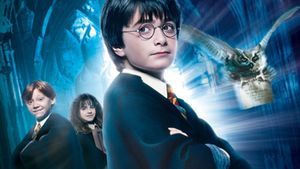 It’s late in the game, I know. But I just finished reading ALL 7 HARRY POTTER BOOKS. I’d avoided them up to now because…
1. They’re for KIDS
2. I don't like FANTASY
3. Way too much HYPE
4. I’m swamped with a long list of "MUST-READS."
Turns out, I was misguided—on all 4 counts. Apologies to the millions of HP fans—I’m now one of you. ICH BIN EIN HARRY POTTER-ER!!!!
Some thoughts on Harry Potter books
- They're complex—seven long novels with interlocking plots, details, secrets and characters. How did Rowling keep track of it all? Post-it notes… index cards… spread sheets… interlocking charts?
- They're funny—portraits on the walls that talk and leave their home frames to visit to their neighboring portraits. There are schoolbooks with titles like "Which Broom" and "One Minute Feasts—It’s a Miracle!" and much, much more.
- They're mythological—represent the archetypal hero's journey; peppered with parallels to Greek, Druid, and Norse mythology.
- They've got rich, long sentences—some real doozies, stretching out to 50 words! FIFTY! They’re lovely things, encouraging kids (and adults) to appreciate complex thoughts along with what it takes to express those thoughts.
Granted, the writing on occasion is clunky, the storyline over-plotted, and villains cartoonish—but all of that’s incidental considering the totality of Rowling’s project. I’m enthralled… and surprised that I am! If you haven’t read Harry Potter… do!
For book clubs, we have Reading Guides for all seven… with discussion questions.
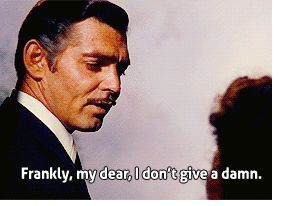 "I don't give a damn"? That's it? The end? A thousand pages (and let's be honest here: that 2nd part really d-r-a-g-s) ... just so Rhett can tell Scarlett to take a hike?
Sometimes we don't like an author's choices, but what's a reader do? Well, some take matters into their own hands and turn themselves into writers. Thus the birth of Fanfiction [fæn'-fik-shun].
Fanfiction is just what it sounds like—amateur stories crafted by a fan of a particular work, featuring the same characters but a different plot...or point of view...or ending. Critics may debate its merit, but fanfiction is gaining in popularity—and it looks like it’s here to stay!
Take a look at FanFiction, a site that hosts 100s-of-1,000s of stories created by readers who want something more from a book...or maybe who simply want to pit their own nascent talents against the pros. Here's a smattering of what's offered:
Original Works # of Fanfiction Spinoffs Harry Potter 685,000 Twilight 216,000 Hunger Games 39,500 Pride and Prejudice 3,400 Gone With the Wind 838 The Fault in Our Stars 494 Kite Runner 57 One Hundred Years of Solitude 3 Room 1
Have some fun reading any of these re-works: Click HERE to see the complete list—1,000s of original works which have led to spinoffs. Then just scan down the list and click . . . wherever.
Though some in the published world support fanfiction (Meg Cabot, author of the Princess Diaries series got her start writing fanfiction), other well-known authors—George R.R. Martin and Anne Rice, to name two—resent budding writers who try to gain exposure by piggy-backing on their works.
On the other hand, where's the line in determining what stories are fanfiction and which aren't? Remember Gregory Maguire's Wicked and Jeany Ryhs' Wide Sargasso Sea? They're only two of a very long list of reimaginings of famous works. Even Gone With the Wind has its spinoffs.
For a better appreciation of just how much literary reworking is done, see our LitBlog post from 2010: Old Wine in New Bottles.
Still, while it can be flattering for authors to have their works emulated by an aspiring writer, it can be equally as frustrating to fight of iterations of a story that aren't what the author imagined.
What do you think? Is fanfiction good writing practice for buddingwriters? Or is it muddying the waters for readers?
—Kristi Spuhler for LitLovers
 Ever get that “ah-ha!” feeling when reading? You come across a passage that practically shouts, “Hey, pal. Pay attention—this is YOU we're talkin' about.” It’s eerie, sometimes unnerving.
One of the narrators of Nicole Krauss’s Great House describes herself in a lengthy passage…and I felt an itch of recognition, a not very pleasant itch either…so I won’t quote it here.
But I love that books can do that…make us see ourselves…recall feelings and experiences…and put them into words! It’s uncanny.
Question for Book Clubs
Was there a particular character—or moment—in the book you’re reading now that gave you a sense of self-recognition? What about in other books? If you’ve come across those passages, can you recall how they made you feel?
 A recent quip from the New York Times about book clubs caught my ire. It’ll probably catch yours, too. So here it is…
Gaggles of readers get together monthly to sip chardonnay and discuss the latest Oprah selection.*
Ouch. Don’t know about you, but that sounds a little…oh, I dunno… condescending? Not to get too upset about an analogy to unruly geese, but it’s kind of a potshot to all those who get together, out of a passion for literature, to talk (not honk) about something of value—books!
So…are mindless cocktail parties better? I’m just asking….
And what’s wrong with Oprah selections? —Breath, Eyes, Memory; Edgar Sawtelle; 3 Faulkner novels (Faulkner!); House of Sand & Fog; We Were the Mulvaneys. That’s some pretty good reading.
To counter that unfortunate “gaggle” image (nothing against geese…understand?), I offer, again, two defenses of book clubs: one by moi and one by Joshua Henkin, author of Matrimony:
- Book Clubs—Smarter than Critics?
An April 2008 post on LitLovers Blog quoting Josh Henkin- Saving the World—One Book Club at a Time
My March 2009 guest post on the literary blog, Books on the Brain
Oh, heck…maybe I’m just over reacting. Honk. Honk.
* Mokoto Rich. ”The Book Club with Just One Member.” New York Times, “Week in Review” section (1.24.10)
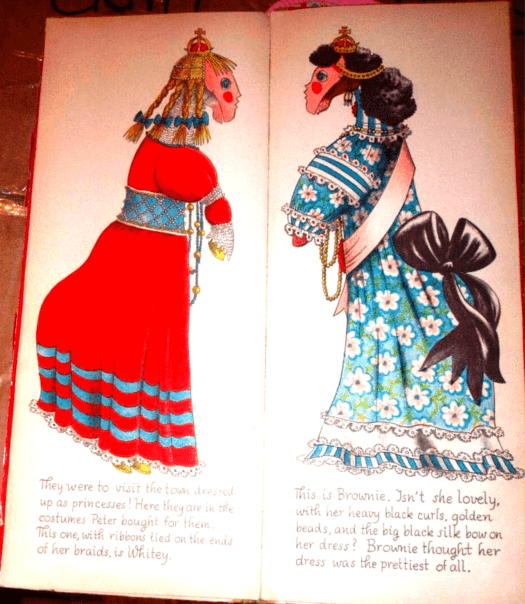
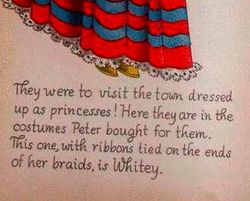
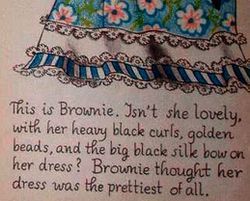
For LitLovers of ALL ages: we couldn't resist sharing this gem—Three Little Horses by Dutch children's author Piet Worm (1909-1966). One of our readers, contacted us to see if we could help her recall the title of a favorite childhood book, one she remembers from her grandmother's house.
We were clueless (not for the first time)—but she persevered and graciously sent us the results. Thank you, Sue! Some text was lost when we brightened up the photo, but we added a bit more contrast so you could decipher some of Piet's story.
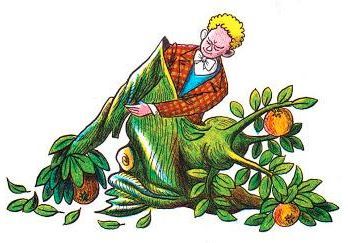
Here's Piet Worm himself. Is he climbing IN or OUT of his imaginative world here? (Lovely metaphor.)
If you have a favorite childhoold book, let us know. But, for heaven's sake, PLEASE don't ask us to help you recall the title. We don't like feeling clueless!

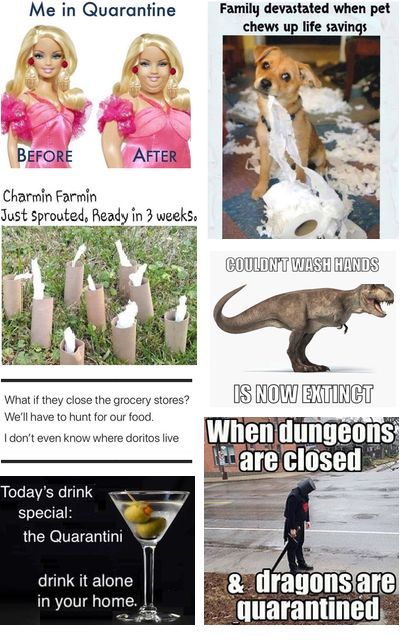
We're worried if not downright panicked. So, of course, GALLOWS HUMOR is on the rise—proof once again that humans will always find a way to laugh in dire times.
Please allow me a DISCLAIMER:
Many find humor tasteless right now—especially if they've taken ill or know someone who has. But laughter is in no way meant to denigrate the seriousness of the virus or make light of how precarious life has become.
Neuroscience tells us that laughing has a BENEFICIAL affect, triggering the release of endorphins, our brain's natural mood elevator, and suppressing cortisol, a stress inducing hormone.
Above are a few memes that have popped up in my texts and emails, brightening my day.* So please, find HUMOR, share a LAUGH, and feel KINSHIP. We're in this together.
♥ Thanks to my sister, Janet, who always keeps me laughing.
 Let me tell you how easy it is to get over your attachment to books—the kind with paper pages? Once you hold this gorgeous book-machine (yes, machine) in your hand, you won’t want to let go. Ever.
It’s surprisingly easy on the eye—so you can read for hours, even even bump up the type size. It’s easy to flip from page to page and back again. You can bookmark pages, highlight passages, even make notes! You’re automatically connected to Amazon, so with a click of a button, you buy your books—and they’re downloaded within a minute. Ooooooooh… I’m in love!
But dear librarians, here’s the question: what will you do? If our books become electronic, what’s the future for libraries? I know librarians all over the country are asking this very question—I read your blogs. (Wow, do you guys blog!) And what will become of bricks-and-mortar book stores?
Oh, how did I get my Kindle? After all, they’re not cheap. Well, my dear friend Lynne presented it to me as a gift! Give her a call. Maybe she’ll take a liking to you and get you one, too. Here’s her number: 202-555-1234. Good luck.
 My 3rd post* on Josh Henkin’s excellent essay about book clubs. Henkin (author of Matrimony) speaks with book groups all over the country, and here’s what he would like to see happen when we talk about books:
- Less discussion about which characters are likable: (Think of all the great literature populated by unlikable characters.)
- Less of a wish for happy endings: (Nothing is more depressing than a happy ending that feels tacked on, and there can be great comfort in literature that doesn’t admit to easy solutions, just as our lives don’t.)
- Less of a wish that novels make arguments: (The business of the novelist is to tell a story and to make characters come sufficiently to life that they feel as real to the reader as the actual people in their lives.)
Books on the Brain, April, 29, 2008
Dear reader, we’re up a creek. Henkin’s points are well-taken, but since we’re not professional critics, and if we shouldn’t talk about characters, endings, or themes—then what do we talk about when talking about books, especially when it’s our turn to lead the discussion? (Me? Lead the discussion? Please, I’d rather have the flu.)
If it’s high anxiety for you at your book club—give the discussion resources a try on our main website. You may find they help.
• Reading Guides for specific titles and discussion questions.
• Discussion Tips
• Generic Questions for Fiction and Nonfiction
• Read-Think-Talk —a guided-reading chart.
• LitCourse—our 10 short, free online courses.
See all my posts on Josh Henkin’s book club essay:
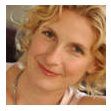 So pretty. So Blonde. So articulate. Did I mention thin? On top of that, she writes Eat, Pray, Love, a terrific bestseller. (Me? I’d have called it Eat, Eat, Eat…but then it’s her book, and as I said, she’s thin.)
I ran across her on a video interview on the "Barnes & Noble Studio" page, Meet the Authors. It’s fun place to visit—good interviews with interesting authors.
Also check out Borders Book Club, another set of videos featuring an Ann Arbor, Michigan, book club that invites top authors in to speak.
Book Clubs can get some good ideas of books to read, authors to check out, discussion questions to ask. The videos are interesting enough to play in your meetings.
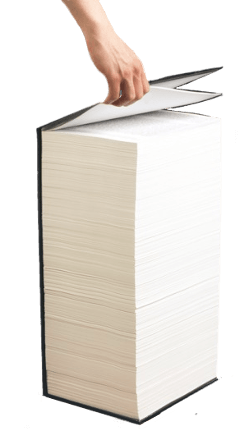 case you hadn't noticed, the novel seems to be getting longer and longer, some clocking in at 700-800+ pages.
 In a gag news article we wrote a while back, we riffed on the idea of authors taking performance enhancing drugs, enabling them to pound out longer and longer sentences, leading to "stupefyingly longer" books.
Now someone's pushing back. Although publishers have pressed him "to write longer books," Welsh author Cynan Jones praises the short novel.
He points to The Old Man and the Sea, They Shoot Horses Don't They?, Animal Farm, even Gatsby (though Fitzgerald worried it was too short). Here's Cynan Jones on the subject:
I've never met a reader who doesn't like short novels.... For me, the opportunity to sit somewhere for two hours and read a book from start to finish—to submerge myself in it—is a thrilling experience. A short novel makes a straightforward demand: give me this time.Readers don't buy books by the the pound, Jones points out. And publishers should get over their obsession with longer works. "The only thing to be taken into account should be the impact a piece of writing has," says Jones. Yep, we couldn't agree more.
Cynan Jones is the author of The Dig and, more recently, Everything I Found on the Beach. The full article can be read in Publisher's Weekly.


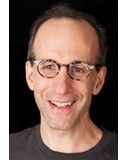 Joshua Henkin is one of my favorite writers: his 2008 novel, Matrimony, was chosen as a NY Times Notable Book and reviewed here four years ago. His newest novel, The World Without You (2012) has received stellar reviews—phrases like "subtle and ingenious," "blazingly alive...a living, breathing world," "powerful and unexpected...compassionate and beguiling." See LitLovers Book Review.
From my keyboard to your eyes—READ THIS BOOK! It's the story of a family that gathers a year after their son and brother Leo was kidnapped and killed in Iraq. Parents, siblings, and Leo's widow meet in remembrance and grief...as they struggle to live in a world without him.
Joshua has generously "stopped by" to answer some questions about his newest novel, and LitLovers is delighted to welcome him.
Q Not a lot happens in The World Without You in terms of plot—though a good deal does happen among characters. You seem to prefer character-driven over plot-driven stories. Why is that?
You’re not the first person to say that not a lot happens in The World Without You in terms of plot, and while I understand what you’re saying, I disagree. A son has been killed in the Iraq War. His parents are splitting up from the grief. His widow has a new boyfriend. There’s a lot of plot there.
That said, I think you’re fundamentally right, in that my fiction is always less concerned with what happens than with the characters who act and are acted upon. I think plot is important for fiction (you are, after all, telling a story, and a writer should never forget that), but the greatest plot in the world won’t be of interest to the reader if the characters don’t come alive on the page.
To me, fiction is first and foremost about characters. I want my readers to feel at the end of my book that they know my characters as well as or better than they know the people in their own lives. If I’ve done that, then I’ve succeeded.
Q The characters in The World Without You are beautifully realized—each clearly delineated from the others. How do you invent them—all the grainy details of their personalities and behavior? Do you find yourself, say, brushing your teeth...when an idea jumps out at you? Do you deliberate? Do you hold conversations with them? Do the characters ever take over? How does the miracle occur?
The miracle occurs slowly over time. You live with your characters day in and day out for years, and eventually they come to be fully formed. Who is your character? the writer should ask. Where did she grow up? What kind of work does she do? Does she like spinach? Does she sleep on her back, her stomach, or her side? It may seem inconsequential to know (much less describe) how a character sleeps, but not if the gesture is laden with meaning, as all gestures in fiction should be. Does the character who sleeps on her side do so because she doesn’t like the smell of her husband’s breath? Does she do so because she hears better out of one ear than the other and if she sleeps on her good ear she won’t be able to hear when her child cries out at night?
In my last novel, Matrimony, Julian meets his eventual-wife Mia after having spotted her in their college facebook. He dubs her Mia from Montreal. I wrote that phrase instinctively, probably because my own girlfriend freshman year of college was named Laura, and my roommate called her Laura from Larchmont. I liked the alliterative sound of those words.
Before I wrote Mia from Montreal, I had no idea where Mia came from. But she had to come from somewhere, and Montreal seemed as good a place as any. But then I had to own up to what I’d written. How did Mia’s family get to Montreal? Had they lived there for centuries? Were they expatriates, and if so, from where? And how did Mia end up back in the States, in western Massachusetts, for college?
I could have chosen Mia from Madagascar or Mia from Maryland, and if I’d chosen Mia from Maryland, there might have been, for all I know, a long section in Matrimony about her family’s tangled relationship with the clamming industry. But she wasn’t Mia from Maryland, she was Mia from Montreal, and so I discovered that her father had gone to teach physics at McGill, forcing her mother to abandon her career in the process, and that Mia, out of loyalty to her mother, decided to retrace her mother’s steps back to Massachusetts.
I knew none of this until I wrote the words Mia from Montreal, just as the writer who has a character who sleeps on her side doesn’t know why she sleeps on her side until she does so.
Q Noelle is the hardest character in the book to like (though we come to develop sympathy, maybe even affection, for her). How difficult is it to create characters that you know readers will find irritating? Do you dislike them as you write them?
As a writer, you have to love all your characters—not love them as human beings, certainly, but love them as characters, which means you have to take them seriously and respect their humanity and complexity. If you don’t, they won’t be real and you won’t be speaking the emotional truth. So while I could tell you that I’d rather go out to dinner with one than another, rather be stranded on a desert island with one than another, as characters, as my creations, they’re all equal; I play no favorites.
But that’s a different question from making your characters likable. This is one of the great myths of fiction writing—that characters have to be likable. Think of Flannery O’Connor’s short stories. There’s not a likable character in the bunch. But those are some of the most brilliant, most affecting stories around.
In fact, it seems to me that one of the pleasures of good fiction is that it allows us to enjoy the company of people on the page whose company we wouldn’t enjoy in real life. The writer’s obligation is to make his characters interesting, complicated, fully human, not to make them likable. A complicated, fully human, flesh-and-blood jerk is far preferable to a dull nice guy.
Q The book centers around Leo, who was killed before the book begins. Yet he gradually takes form and shape—to the point where he seems as developed as the others. Is it difficult to bring a dead character to life on the page when he can't speak for himself?
Leo is, in fact, the great hovering absence in the book, and the issue you’re pointing to gets at one of the challenges of writing a novel like this one—not just in terms of Leo but in general. In a book that takes place over seventy-two hours and that is so engaged with the past, you need to fold in a lot of flashback without slowing down the forward movement of the book.
That was probably the biggest aesthetic challenge I faced with this novel. In terms of Leo specifically—yes, it’s a challenge to bring a character to life who’s not there to speak for himself, but what I would say is that what this novel needs to do is less allow Leo to speak for himself than allow others to speak about him.
Because The World Without You isn’t about Leo—he’s dead. It’s about the family’s memories of Leo and their often contradictory interpretations of who he was, clouded as these interpretations are by grief and by different experiences of him when he was alive. That’s where my interest lies—not in Leo, but in how the rest of the family perceived him.
Q You've written elsewhere about a book's "theme," warning readers against looking for a central idea or lesson. Can you explain what you mean? If not a central idea, what do you hope your readers will come away after reading The World Without You?
Critics think in terms of theme; novelists don’t. A friend of mine in college wrote her psychology thesis on how adults group objects versus how kids group objects. Adults group the apple with the banana, and kids group the monkey with the banana. That’s a way of saying that kids are more natural storytellers than adults are, and it’s the writer’s job to teach herself to think like a child again, albeit like a smart, sophisticated child.
Critics are apple-banana people, and novelists are monkey-banana people. Which isn’t to say there aren’t themes in my novels, just that I don’t and can’t think about them as I write. I have to keep my eye on the prize, and the prize is my characters and my story. That’s what I’m focused on, nothing more and nothing less.
Q Let's talk about book clubs, of which I know you're a huge supporter. You wrote once that book clubs are smart...that they've offered insights into your work that has surprised you. Can you be more specific?
I’ve talked to so many book clubs that it’s hard to remember what I learned from whom, but I do think book clubs are incredibly valuable. I direct Brooklyn College’s fiction MFA program, so I spend a lot of my time with some of the most talented young writers around, and when I’m not spending time with them I’m spending time with my characters. It’s good to get out of my daily life, and out of my head.
I’m not in a book club because my life is a book club, and what I like about talking to book clubs is that you’re in a room with a dozen really smart people whose lives aren’t book clubs. These are just regular readers who take a day a month out of their busy lives to discuss your book, and it gives you a whole new perspective on what you’ve written, and so I’m incredibly grateful to them for that. Also, they’ve just read your book, so a lot of times they know your book better than you do!
Josh wrote a terrific guest blog piece for Books on the Brain back four years ago—about book clubs. It was so good that LitLovers devoted four separate articles on our own Blog to talk about it. Take some time to read them.... Here are the links
• Are Book Clubs Smarter Than Book Critics?
• So Where Are the Guys?
• How Do We Talk About Books?
• Are We All Reading the Same Books?
Also, be sure to check out Josh Henkin's website. There's fascinating video interview with Book Chase TV.
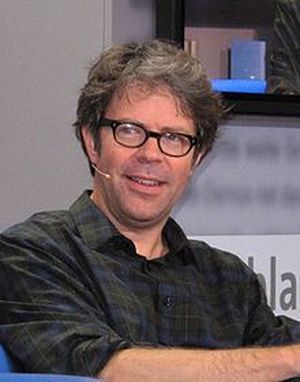 Really, this guy's so good looking—especially if you go for wonky men with GOOD HAIR and a great pair of horned-rims. He's so… so… writer-ly.
But he can't get a break in the media, at least not on Twitter—which is where it all started.
In promoting his newest novel, Crosswords, Jonathan Franzen's publishers touted him as "THE leading writer of his generation" (caps mine).
That's a statement bound to get a reaction. And it does.
One writer quickly retweets that no matter how lauded and applauded any female author's works are, SHE "will never, ever, be called 'the greatest living American writer.'"
In that same publicity announcement, the publishers go on to tweet that Franzen, in this newest work, places the family in all its "intricacy" at the book's center.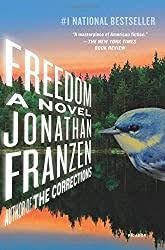 So this gets Roxanne Gay to wondering. Gay (no slouch herself, btw) tweets back asking… Hey, wait. Haven't ALL Franzen's novels centered on the family? In other words, what's the big deal about THIS one that earns him kudos as THE GREATEST WRITER? She's sort of like… ah, c'mon!
Then a guy who writes for an online journal jumps into the DUMPSTER FIRE with these choice words: "Franzen’s a good novelist. Sorry?"
But what does he even mean? Why "SORRY?" Is he sorry because he refers to Franzen as "good" but not "great"? Or is he sorry that others are resentful? Or sorry for himself? And what's with the QUESTION MARK at the end of "sorry"?
Anyway, it's all nutz.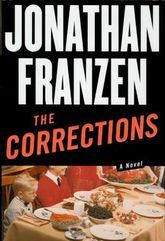 You may remember, 20 years ago, Franzen made literary headlines by dissing Oprah, who had chosen his family-centered novel, The Corrections, for her book club. But Franzen declined!! He didn't want his work given the imprimatur of a woman's book-club pick—because then…omg, MEN WOULDN'T TOUCH IT.
So poor Franzen, there he was, seemingly dissing both Queen Oprah AND women. Whoa! A trifecta (minus one).
Hold on—not so fast. Novelist Meg Wolitzer (no slouch either) has pointed to the same phenomenon, that men don't want to read novels about complex relationships—uh, no thanks, that's for GIRLS.
Let's be honest: Franzen's and Wolitzer's comments say more about men's sensibilities than women's. (See our jokey posts on co-ed book clubs—this one and this one, too.)
One more thing. I had the thrill of hearing Franzen in a live lecture several years back. It was essentially a master class in the ART OF WRITING. Members of the audience, many of them hopeful young writers, asked some of the sharpest, most astute questions I've yet to hear in a lecture—and Franzen was MARVELOUS. Sadly, I can't recall a single thing he said. But I do remember the hair. And his glasses. (Did I mention he's good-looking?)
 By Kristi Spuhler for LitLovers
The way we read, and what we read, has been going through quite a transformation. With publishers focusing solely on what makes a bestseller, many exciting and groundbreaking reads are being passed over in favor of more cookie-cutter options. What’s a writer to do?
To find a way around these roadblocks many budding writers, as well as many previously published authors are turning to alternate methods to get their works published. According to Bowker, self-published titles saw a 59 percent increase from 2011 to 2012. And that number continues to grow.
With so many writers scrounging for the next best way to make sure their work makes it to the eyes of readers, one idea seems to be catching quite a bit of attention—Unbound.
A new groundbreaking method for publishing a work of writing, Unbound offers both established and budding authors the chance to go directly to the source when looking for the funds to publish their books—the readers! Much like similar sites Kickstarter and GoFundMe, Unbound allows writers to appeal to friends, followers and interested parties to pledge donations to see a project through to completion.
Don’t think the project is all one sided! Pledging to a project has its own set of advantages for the contributor as well. Depending on the project and the amount that you agree to contribute to the cause, each individual contributor has access to a set of rewards such as a signed copy of the printed book, or one-on-one meetings with the author.
The process is quite simple. Once you sign up for an account you then have access to author videos pitching their next project. From there you can choose which books you want to endorse and how much you want to contribute. Once the author is fully funded, their work then begins the publishing process. It’s really that simple.
To date, Unbound has helped to publish 54 books and they’ve raised over £1 million in funds from users. In an interview with writer Jason Hesse from Forbes.com, Unbound founder Dan Kieran stated, “Our users love to be involved in the process and have critical taste. They are not passive consumers – they’re micro patrons.” Sounds to us like the perfect opportunity to have a hand in getting the books YOU want to read published
What do you think about giving the power in publishing back to the readers? Would you like to jump in and choose which books are written and published? Leave us a comment and tell us what you think!
(Image courtesy of Kate Ter Harr.)
 A book club member emailed me the other day to say she found a certain book's Discussion Questions just TOO HARD. So I took a look. She was right—you need a Ph.D. to answer them...in fact, a whole damn village of Ph.Ds.
What to do? Well, I decided to replace the publisher-issued questions with my own set and sent them off to her. Fortunately, that seemed to do the trick.
The whole incident brings up a point—a book's Discussions Questions can feel more like a pop quiz than a discussion starter for book clubs. They're often more threatening than helpful.
So...what do you do if you want a good discussion? Try taking a look at our other LitLovers Discussion Resources. While they're not specific to a particular title, they can help you get to the meat of a book—either fiction or nonfiction. They're more helpful than scary.
Discussion help from LitLovers
- How to Discuss a Book
- Generic Disucssion Questions for Fiction and for Nonfiction
- Read-Think-Talk (a guided reading chart)
- LitCourse—our 10 free courses are short and fun
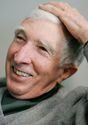 Too young to die. John Updike was only 77 and, many suspect, still taking copious notes as he drew his last breath in hospice care in Massachusetts on January 27.
His lifelong output was astonishing, not just in number but genre: novels, short stories, verse, essays, and criticism. On subject matter, he was equally wide-ranging, moving from literature and art to favorite subjects like golf and baseball.
Considered America’s preeminent recorder of the middle class, he gave “the mundane its beautiful hue,” as he himself put it. Some critics believe his sentences—lyrical things of beauty in themselves—lack the heft to carry ideas, but others feel his writing is a polished reflection of the world.
Critics find themselves hardpressed to pinpoint a single masterpiece, but most mention the Rabbit Tetrology (from 1960-90)—Rabbit, Run; Rabbit Redux; Rabbit is Rich; Rabbit at Rest—chronicling the life of fictional Harry Angstrong.
Other favorites include Couples, The Coup, The Witches of Eastwick and, recently, the Widows of Eastwick. But that short list doesn’t begin to cover the body of his work. My advice—get hold of an obituary in a major newspaper or national news magazine, where his oeuvre will be covered in depth.
- It would be fun to read Witches…then Widows of Eastwick. You might attempt the Rabbit Tetrology, too, though it’s not my favorite.
- For fun, read Updike's famous short story “A & P” in our free LitCourse 4. The story is a brilliant and funny, even bittersweet, coming of age story set in the 1950s. Also, take a look at the LitCourse Study Guide for for the story.
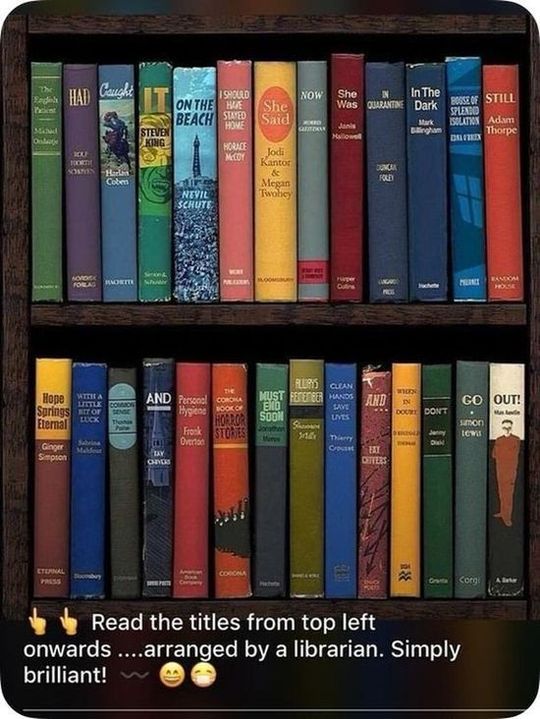
♥ Thanks to my dear friend Sybil.
Btw... the pea-green book—bottom shelf, center—reads: "Always Remember." Even when enlarged, it's hard to read.
 I've said this before, but it bears repeating—we readers are a lucky bunch to have OTHER people willing to write novels for us. I certainly can't do it.
Here's what author Amos Oz has to say on wriitng:
It is like reconstructing the whole of Paris from Lego bricks. It’s about three-quarters-of-a-million small decisions. It’s not about who will live and who will die and who will go to bed with whom. Those are the easy ones.
It’s about choosing adjectives and adverbs and punctuation. These are molecular decisions that you have to take and nobody will appreciate.... That is the business of three-quarters-of-a-million decisions.
Wait...that's the hard part? PUNCTUATION? Nah, that's nowhere near the hard part. When someone says to me (and people have surely said it to you), "You should write a book," MY JAW DROPS in dumb wonderment. Just how smart do people think I am? (I'm not.) Even more to the point, just HOW EASY do they think writing novels is? (It isn't.)
A BAZILLION Legos—not a million—go into novel writing. Here's just some of the stuff authors have to think about—stuff we take for granted but then get ALL TETCHY over if authors get it wrong:
- WHO will tell the story, whose voice (or voices) will be used? (It better be a convincing.)
- WHAT information will be withheld? When will it be revealed? Who will reveal it, and how?
- IS the dialog believable—is it the way people really speak? (Not so easy.)
- HOW much research is needed to establish setting—location and era.
- HOW will the characters be shaped; how much depth will they be given; what will make them life-like and compelling?
- HOW will the plot be structured—what's the arc of the story?
- WHAT underlying concerns, themes, or ideas will suffuse the book? What big questions does the author want to explore?
- WHAT about all the literary stuff—imagery, symbolism / metaphor, irony, and allusions—which gives the story richness and resonance?
Writing is a hard-knock life. Too hard for the likes of me. AND YET, it's remarkable, isn't it, that with the rise of web-based self-publishing, lots and lots of people are heading to the key board to try their hand(s) at writing books.
Bless them one and all. They are BRAVE SOULS, brave souls indeed!
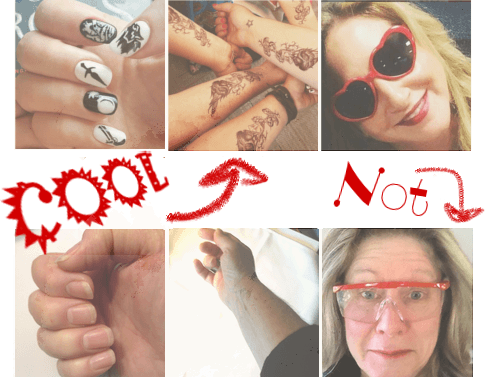
By Molly Lundquist, LitLovers.
Who doesn't want to be cool? Well, my friends, THIS is what cool looks like … and what it doesn't. I'm a wanna be. Just when I deluded myself that—after all these years—I might be getting close, here comes LEIGH BARDUGO, author of the Grisha Trilogy (Shadow and Bone, etc.)
And now Leigh's got a brand new fantasy novel—Six of Crows, published to rave reviews. Think Oceans Eleven with a bunch of adolescents.
Not only is the book cool, but take a look at the photos of Leigh and friends on Instragam. Top row is Leigh. Bottom… guess who. Me. Cool? Not even close.
Lovely words from the book editors of The New York Times—
—Letter from the Book Editors
The New York Times Book Review, April 19, 2020
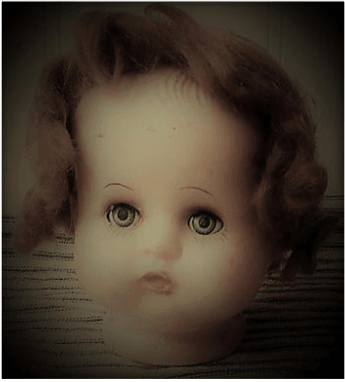 By Kathy Aspden, Author *
Writing is a lot like making a baby. Sometimes, it takes everything to get to the point of conception, and sometimes you don’t even remember having sex that night, but somehow a baby was conceived. Either way it all begins with a tiny seed that is planted in your heart (or your brain if that’s how you’re wired).
Even before conception, the image of your child is already materializing: "He’ll have my eyes, my husband’s lips, and hopefully not Uncle John’s nose…" In anticipation, a parent is creating a composite baby in their mind. It’s the same for writers. We envision different blends of traits, strengths and weaknesses for our characters.
"Composite Character" is a term I was certain I had invented, right up until I looked it up on Wikipedia. What I found was that I had been intuitively using a process that many writers and filmmakers have done forever - take two or more people from real life or experiences or even history, and meld them into one quirky, interesting person with the capability of being both deeply flawed (as most great characters are) and relatable. It was another case of my inventing something that somebody else had already invented (insert travel hammock, swinging screen door for sliders, the instant ballerina-bun maker).
The strange thing is that I can’t tell if my characters begin to remind me of someone who then creeps into my head as I write, or if there is already a person in my head whose traits have crept into my character. Anyone who knows me may have guessed that there’s probably more people in my head than is considered healthy. Whatever the reason, my characters tend to take on a lot of personality traits – like snowballs down a mountainside — as their stories progress.
I'm more aware of it when I'm writing screenplays. It's easier to have an actor to visualize as the script unfolds. And why wouldn’t an actress like Julianna Moore (with a little Diane Keaton thrown in) want to play the part of Grace Mitchell, a forty-nine-year-old author who has just written a successful self-help book decrying America’s obsession with youth, but stands to lose everything when she finds herself pregnant by a thirty-eight-year-old plastic surgeon? Great plot, right? (An Inconvenient Miracle is available for option if you happen to be a successful movie producer).
Anyway, back to these mixed-up characters of mine. What I came to realize was that my psychiatrist had been wrong; the voices in my head were a good thing. Working with the public, being part of a large family, inheriting a natural love of human interaction from both my mother and my father gave me a lifetime’s worth of crazy, loveable parts and pieces to choose from when writing. This mental/multi-tasking/ADD portion of my brain was finally paying off! On top of that, I found a great app that allowed me to see my combos by physically blending people.
Here’s my JulianneDianeKeatonMoore blend.
P.S. I also invented the first Transformer, the epitome of the composite character — a doll head that turned into a change purse. I didn’t call it a Transformer. I called it a Doll-head Purse.
* Kathy Aspden is the author of Baklava, Biscotti, and an Irishman, as well as a book reviewer for LitLovers.
If you're watching any one or more of these Book-to-TV iterations—or if you've got a favorite—let us know.
Books to TV True Blood—Dead Until Dark by Charlaine Harris is the inspiration behind TV's True Blood. The story follows waitress Sookie Stackhouse through Bon Temps—a factional Louisiana town inhabited by both vampires and humans. Dexter—The first novel in Jeff Lindsay's series Darkly Dreaming Dexter, provided the inspiration for the popular TV show. The story chronicles the life of Dexter Morgan, a blood- splatter analyst for the Miami police department who moonlights as a serial killer. Game of Thrones—The first installment in The Song of Ice and Fire series penned by George R.R. Martin, Game of Thrones, inspired the hit HBO series. The story follows the leaders of several noble houses as they battle for the throne of the seven kingdoms. Orange Is the New Black—Piper Kerman's memoir spawned the Netflix original series by the same title. The plot revolves around Piper Chapman after she is sentenced to 15 months in Federal prison for her involvement with drug trafficking. Boardwalk Empire—Set during the prohibition era of the 1920s, Nelson Johnson's novel, Boardwalk Empire: The Birth, High Times, and Corruption of Atlantic City, centers around "Nucky" Thompson. The HBO series returns for its final season this fall (2014). Sleepy Hollow—Most everyone knows Washington Irving's tale of the headless horseman that terrorizes Sleepy Hollow. The FOX series of the same name gives the legend a modern facelift with a few new surprises. Justified—Based on Elmore Leonard's three works—Pronto, Riding the Rap, and Fire in the Hole—the TV series follows Raylan Givens as he enforces his own form of justice in his hometown of Harlan, Kentucky.


 By Kristi Spuhler for LitLovers
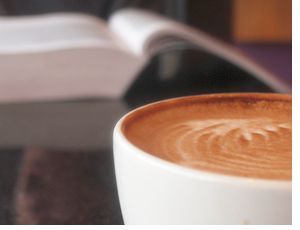
If you're looking for a new read...but not QUITE ready for another long, involved one (a bit hungover from your last big one?), then head to the online journal Literal Latté.
The site's offerings, by published and unpublished writers, create the perfect blend of prose, poetry, and art. It's all just the right size to whet your appetite—like a sip of a carefully crafted cappuccino.
Debuting in 1994 as a print journal, Literal Latté was widely distributed throughout New York City's bookstores and coffeehouses. Its fresh approach to literature grabbed, and held, the attention of readers for nearly a decade.
Then in 2003 the journal published its last print copy. To broaden its reach—and share its writers with a wider audience—Literal Latté moved online, where it remains today as a go-to spot for both readers and writers.
For adventuresome and discerning readers (you, right?), it's a chance to find something new and exciting. For writers on the cusp of a publishing career, Literal Latté offers a way to distribute your work to an appreciative audience. (Go here to learn more about the submission process.)
So if you've got a few spare moments, pop on over to Literal Latté and take a look around. Be sure to let us know if, as a reader, if you found a favorite piece there...or, as a writer, you have a piece featured there. (Share the title or the URL in the comments.)
Image courtesy of nerissa's ring.
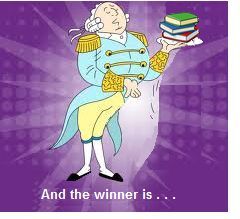 A literary spat that broke out some 30 years ago tickled my funny bone after reading about it in today's New York Times Book Review section. But the article also got me to thinking about what we in book clubs read.
Thirty years ago, authors and publishers split ranks over the National Book Awards—differing on what kind of books should win.
On one side stood the panel of authors and critics who selected the winners. They championed books of high literary merit, based on prose and philosophical insight. Unfortunately, those books don't tend to be big sellers.
On the other side stood publishers who accused the panel of being elite insiders. Why not select big sellers, books that actually make money...just in case anyone forgot that publishing's a business?
I'm not taking sides here, but it got me to thinking about the books we select in our book clubs. I've taken issue on a number of occasions with those who think book clubs read drivel or those who refer to us as a gaggle of geese.
While I don't think most of us tackle a steady diet of difficult "literary" works, and while occasionally we do chose lighter fare, book clubs primarily look for works that engage the reader—compelling characters, solid plotting, and some darn good writing. We also like works that take on issues that divide humanity and do harm to body and soul.
We also want books to be accessible. Finally, they should lead to lively discussions—because conversations about literature can open eyes and change minds. Actually, when you think about it, all those requirements make a pretty tall order for any author.
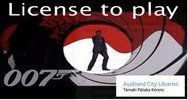 Gotta toot my own horn. When I started my LitLovers website, I’d no idea how it might be used . . . or that readers around the globe would tune in.
A library site in Auckland, New Zealand, uses LitLovers as part of their web 2.0 training exercise—and what a cool site to be listed on. Take a look.
Lots of libraries have training blogs to teach staff how to maneuvre the new world wide web (web 2.0)—which refers to the new level of interactivity on the Net—sites like Del.ic.ious, StumbleUpon, GoodReads, FaceBook, Wikipedia, LibraryThing, and personal blogs.
LitLovers has been used on a number of library training sites in the US, but the New Zealand one is a particularly gratifying! Spend some time on it yourself—we can all learn more about this new web environment.
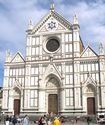 Ah, poor me...I just returned from Italy. Life is so hard.
While there...I was reading Sarah Dunant’s The Birth of Venus—which I’d just happend to pick off the bookshelf at the house where I was staying. And here’s what happened…
Dumb me. I left my purse on the Florence Hop-On-Hop-Off tour bus, which takes you around the city. Had to sprint—shoes off—through a piazza to head it off at the next stop. No mean feet, so to speak (not so young…nor so thin). But happy ending. Got the bus, got the purse.
Here’s the cool part: the piazza I cut through was in front of the Basilica di Santa Croce—the very place, in the book, where Savanarola banned women from public life (i.e., those running barefoot around town). And I’d just read that chapter of the book the night before. Ah literature...ah, life!
Anyway, my trip was slightly different from Liz Gilbert’s…my version was Eat, Run, Eat. Just as much fun...but no book, no movie.
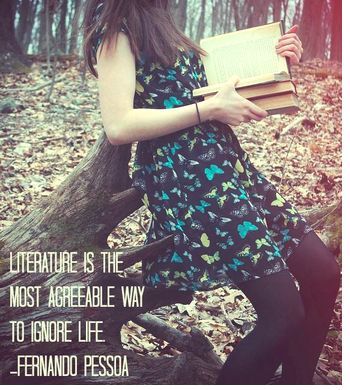 By Kristi Spuhler for LitLovers.
We're sure you saw it—this photo we posted on Facebook a week or so ago. We found it funny because there's a grain of truth to it.
But it's probably more than "a grain" of truth: to be honest—just how much of our reading IS a way for us to ignore life?
You know—we pick up a book after a tough day to shrug off the stress. Or to beat the boredom during a mid-day slump. Maybe to put off chores...or simply to hide from a noisy world.
Of course, we tell ourselves—and everyone else—that our reading isn’t about escaping. No no! We're reading so we can understand the world around us.
And guess what? We're not just blowing hot air when we say that. A study published in the Journal of Science in October, 2013, found correlations between reading and an increase in emotional intelligence. Simply stated, reading helps us understand, and respond to, other’s feelings. (We blogged about this a good year ago. Take a peek here.)
But, okay, say we do read as escapism: even so...how often are we exposed to
♦ ideas we've long opposed but see there might be another side...
♦ troubled characters we come to care about...
♦ alien cultures we've gained some insight into?
An author’s vision can reveal the rich complexity of life—and yield up a new experience for the reader.
So even if we DO read to ignore life, we nonetheless end up engaging with it. WHY we read isn't as important as what we take away from it—which is an enlargement of our understanding and compassion.
So tell us—do you think reading has made a difference in how you understand and react to the world around you? We want to hear what you think!
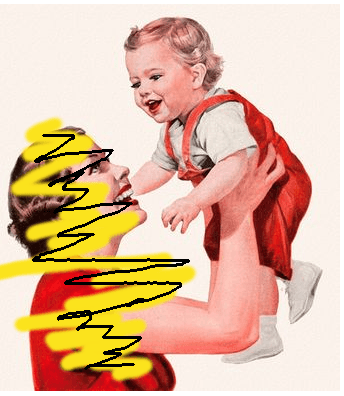 Warning: if you ever find yourself in the position of being a fictional mom, look out—there's a risk you'll get BUMPED OFF.
It could happen during the course of your novel… or even BEFORE the novel even begins.
Here's why: the author may have destined your daughter for a great literary adventure; maybe she's slated to become one of literature's most renowned heroines. If that's the case, SORRY, MOM, you've gotta go.
Literature's spunkiest, most independent HEROINES—the ones we admire and remember most fondly?—they're motherless:
Moll Flanders (1721)
Fanny Hill (1749)
Emma (1815)
Jane Eyre (1847)
Rebecca of Sunnybrook Farm (1903)
Nancy Drew (1930…)
Rebecca (Daphne du Maurier) 1938
More recently, we've been graced with the heroines of Ahab’s Wife and Amy Bloom’s Away, both of whose mothers die.
What's wrong with mothers? Well, traditionally, a mother's role has been to instill proper behavior — to correct for waywardness — especially in their DAUGHTERS. And mothers are fierce protectors of their offspring, keeping them out of harm's way.
Yet literature's greatest heroines are placed squarely in the path of HARM'S WAY, right where their authors want them—but where any mom worth her salt doesn't. So a character who would restrain improper or dangerous behavior must be GOTTEN RID OF. Dumped. That would be a mother.
Today, most moms aren't so old-fashioned. We want our girls to enjoy a WEALTH of human experience — education, career, and travel, as well as family life. Even so, I'm not so sure many of us would want our girls sneaking aboard a whaling ship, let alone working in a brothel like Moll Flanders — which means an author would have to WRITE US OUT of the storyline. Oh, well…
Don't miss these later LitBlog posts on getting rid of literary moms:
#MomsAreMad About Books
Where is My Mother?
Ideas for book clubs
- Think of other books featuring independent heroines in which mothers are done away or are simply never present.
- Think of books with father-and-son or father-and-daughter adventures.
- Prove my theory wrong: come up with some mother-daughter adventure stories.(Okay… Little Women. Any others?)
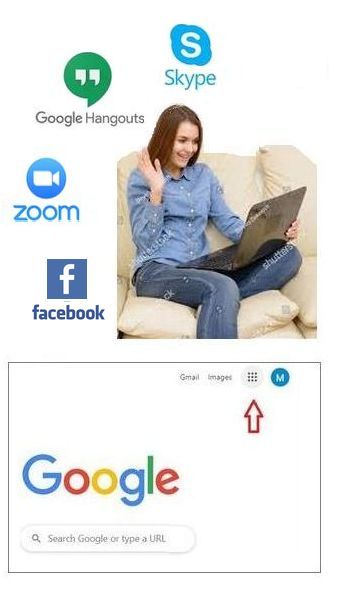
 We're all into social distancing, right? And scrubbing hands while singing "Happy Birthday" (twice, yes?).
Book clubs are affected by the VIRUS, of course. So if you haven't canceled future book club meeting(s), you may be doing so soon.
But don't give up. You can still meet using group VIDEO MEETINGS via Skype, Google Hangout, or Zoom. *
The apps are FREE … and will accommodate up to TEN PEOPLE. Zoom will handle more, but limits you to 40 minutes. All are fairly easy to set up.
Follow the app's instructions. If you run into trouble try site Support or Help … or reach out to an 11-year-old (after all, they're not in school).
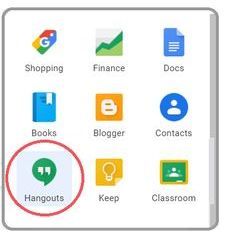
♦ GOOGLE HANGOUT (see photos)
1. Go to Google's home page
2. Click on the app in the top right corner.
3. Scroll down the menu till you find "Hangout."
4. Click on the icon to open it up.
♦ SKYPE (click on links below)
1. Go directly to Skype to download the app.
2. Watch this intro video at Tech Boomers. It's not great, but it's better than others.
♦ ZOOM
1. Go directly to Zoom to download the app.
2. Watch this intro video on YouTube. It's pretty thorough.
And there's always Facebook. Facebook launched its video chat in late 2016, but it's limited to 6 PEOPLE at a time (although more can listen in). If you've already set up a private a Facebook GROUP, click on the "video" icon in the upper-right-hand corner to join an ongoing chat or start a new one.
Whatever you decide, dear readers, STAY WELL—and that goes for your families and friends, as well.
See Meeting in the Time of Corona—Part 2
♥ Thanks to my daughter, who's younger than I am… and smarter. This post was at her suggestion.
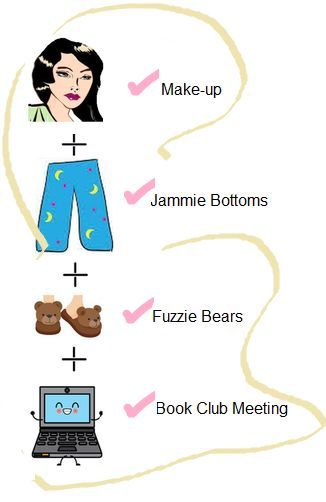 "OK … show of hands: how many of you put on MAKE-UP and a nice top—but still have on your PJ BOTTOMS?"
That's Mary Field opening the first ever online meeting of the VILLAGE LIT CHICKS of Lewes, Delaware.
"It seemed to break the ice," Mary told me. "Everyone LAUGHED, and off we went! A pretty good start."
The 12 members met on ZOOM, a web-based video conferencing app. All signed in without a hitch … except for one member. But her HUSBAND came to the rescue. (Try to have one of them around; that, or know where you can find a 12-year-old.)
To facilitate a sense of order, Mary assigned each member beforehand a Discussion Question for the book— Chances Are... by Richard Russo.
It worked. Conversation flowed, and "everyone was respectful—with very little talking over each other," said Mary. The meeting was such a SUCCESS that the club has planned its next for May.
One final bonus: members sent thank-you notes to Mary for her DELICIOUS New England-themed DINNER—bread bowls of clam chowder, with chilled beer and wine, topped off by a dessert of Boston Cream pie—all of which she had planned, NONE of which she had to cook. Good job, Mary!
See Meeting in the Time of Corona—Part I.
 Some years ago, when her daughter entered the fourth grade, author Tracy Carbone* became part of a Mother Daughter Book Club. I asked Tracy to share some ideas with the rest of us on how to go about starting a club for moms and their girls. So...here's Tracy!
Mother Daughter Book Club
Tracy L. CarboneNine years ago Lisa, the mother of one of my daughter's friends, learned she had breast cancer. Fortunately, she survived. Two years later she decided she wanted to do something special—something to create lasting memories for her oldest daughter.
So Lisa made some calls to find out who would be interested in starting a Mother Daughter Book Club. Ten of us signed on—five mothers and five daughters—all of us excited to be in such an exclusive group.
One of the first things Lisa did was to create a binder, which we used month after month...year after year. In it were the names of each month’s book, along with the five discussion questions posed by the daughter who ran that month’s meeting. Whoever ran the meeting got to host the group and choose the book for the following month. Our first book was the beloved 1945 children's classic—The Hundred Dresses by Eleanor Estes.
By the end of the girls' fourth grade year, we had read one book a month, most of them tame and friendly. But one question kept popping up, time and again: as our girls read the books and studied the plots they always asked, “Why don’t the characters just tell their parents?” We moms wondered the same thing, and their question revealed to us just how strong our bonds were with our daughters—and how our club had become a place where they could trust us.
With each book, we mothers were reminded of our own childhoods, often sharing with the group and our daughters stories no one had heard before. By the end of nearly every meeting, there were tears of joy and remembering, and heaps of sharing.
The girls matured, moving into fifth, sixth and then seventh grades. When bras and periods came into play, we moved up to books like Are You There God? It’s Me Margaret (Judy Bloom, 1970). We also combined movies with books if possible, including Because of Winn Dixie (Kate DiCamillo, 2000) and The Last Song (Nicholas Sparks, 2009), as the girls grew older.
Sadly, midway through the girls' seventh grade, Lisa’s cancer returned with a vengeance. We stepped up the meetings, choosing riskier books, teaching our girls as much about love and heartbreak and reality as we could, preparing them for the road ahead in an environment—our club—where they could feel safe.
Books like So B. It (Sarah Weeks, 2004), Jars of Glass (Brad Barkley, 2008), Hope Was Here (Joan Bauer, 2000) and Call Me Hope (Gretchen Olson, 2007) filled our shelves. These were life-affirming stories that demonstrated tenacious female characters finding strength in what remained. We read Mother-Daughter Book Club (Heather Vogel Frederick, 2007) and set up a conference call with the author, while luxuriating in an oceanfront hotel in Maine.
The five girls grew very close because of this bond. Lisa lost the battle to cancer at the beginning of the girls’ eighth grade. Though the bookclub carried on the rest of the year, by high school, the girls’ workloads were heavy and extra reading wasn’t possible.
We had a good clip though. Five years of stories of courage and love and life. I wouldn’t trade those memories for anything.


* Tracy L. Carbone is author of The Soul Collector for young readers. Check out her book on Amazon (click on the book's cover image). Also, be sure to visit her website at Tracy L. Carbone's Writing Website.
 Book marketers have given in...or smartened up. Either way, they've taken a page from the movie folks and now create film trailers to promote new books. Some of the trailers are pretty ho-hum. But we've found a couple that are ho-ho-hilarious. Really funny.
The first is Teddy Wayne's The Love Song of Jonny Valentine. Wayne is a wonderful comic writer, a terrific satirist, who in this book sets his sights on the commercialization of an 11-year-old rock star sensation, a la Justin Bieber. A child prodigy, Jonny is there for the taking: his life is commodified by just about everyone, including his own mother.
Here's the Video Trailer.
Here's our Reading Guide.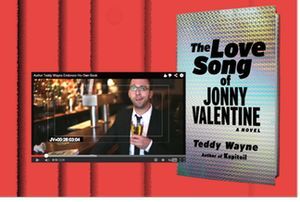
Second up, is John Kenney's novel Truth in Advertising. Again, like Teddy Wayne's, this is a comic novel: a sardonic take on the advertising world of New York. Finbar Dolan, the book's hero (not a River Elf), carries around a lot of angst—about the job, his family, and his love life. He sweats the big stuff.
Here's the Video Trailer.
Here's our Reading Guide.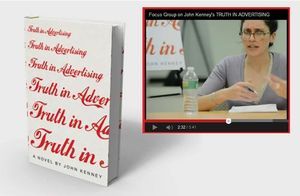
Have fun with these. The more you watch them, the funnier they are. If your book's trailer is any good, play it at the book club meeting—it's a great way to break off socializing and signal the beginning of the discussion.
 What book changed your life?
Paranoid me, but I always see that question as a trap. It means you’re about to be judged on your literary taste, so you’d better come up with an OBSCURE BUT SIGNIFICANT work of literature—like a poem by Rilke.
But all I ever come up with is Nancy Drew.
Nancy. She had great clothes. She had a blue roadster ... great pals ... a boyfriend ... a doting father ... and a surrogate mother in Hannah-the-housekeeper.
Best of all, she had an unlimited supply of pocket change—which allowed her FREEDOM and ADVENTURE!! She was 18—I was 10 or 11, and I adored her ... envied her.
But Nancy Drew DID change my life. Obviously, I never become a detective—instead, I became a life-long reader. After devouring every book in the series by 13, my friend Mary Phelan Turner got me to read all 1,000+ pages of Gone With the Wind.
That did it: from there on, I was hooked on books. Books were, and still are, my drug of choice.
Something fun for a book club meeting:
- Start your meeting by having each member answer the question: “What book turned you into a life-long reader ... and why?
- Turn it into a game. All members write their answers down on a piece of paper, collect and read them outloud, then guess who submitted which title. (For more book club games under "Run a Book Club".)
 Scroll down to our previous post about the hundreds of Girl Titles in the publishing world. Book after book with "girl" in the title.
I griped about the use of the G-word as a throw-back to the bad old days when women were easily dismissed and occupied lower rungs on the cultural ladder.
But, hey! Girl titles sell books. The first "Girl" may have been Susanna Kaysen's 1993 Girl, Interrupted. But it wasn't until 2005, with Steig Larsson's The Girl with the Dragon Tattoo, et.al., that the trend seemed to take off. Next came Gone Girl and Girl on the Train.
Now it's a full blown trend. Publishers want in on it—so they're busy RENAMING OLD TITLES, hoping to breathe new life into older books. Take a look ...
New Girly Titles
For Old Books
Remarkable Creatures
by Tracy Chevalier
Girls Who Dug Rocks
Little Women
by Louisa May Alcott
Little Girls
The Age of Innocence
by Edith Wharton
Girls Wearing Corsets
My Beloved World
by Sonia Sotomayor
The Girl Who Made It All the Way to the Supreme Court
Where'd You Go Bernadette
by Maria Semple
The Girl Who Left Her Daughter (But Kept in Touch)
Hunger Games
by Suzanne Collins
The Girl Who Runs with Sharp Objects
Wild
by Cheryl Strayed
The Girl Who Went for a Walk and Then Felt a Lot Better
Lean In
by Sheryl Sandberg
The Girl Who Kicked Corporate Butt
Pride and Prejudice
by Jane Austen
The Girl with Prejudice & the Man with Pride, or Vice Versa
Obsessive Genius: The Inner Life of Marie Curie
by Barbara Goldsmith
Hey, Girl—You're the Bomb
I Am Malala
by Malala Yousafzai
The Girl Who Damn Well Better Win the Nobel Prize
The Invention of Wings
by Sue Monk Kid
The Girl Who Owned a Slave … Who Was Also a Girl
Flight Behavior
by Barbara Kingsolver
Climate Change Girl
The Signature of All Things
by Elizabeth Gilbert
The Girl Who Watched Fungus Grow and Became Famous
The Woman in Cabin 10
by Ruth Ware
The Girl in Cabin 10
 Feeling guilty about all the reading you do ... and all the chores you DON'T do? Relax. It turns out you're a finer person for keeping your nose in a book. So keep reading.
A new study shows that books enable us live up to our better selves. The researchers, Emanuele Castano and David Comer Kidd, found that people gain empathy and social intelligence after reading certain kinds of books.
What kind of books? Well, not the blockbuster kind. So nix the heart-thomping thrillers or the steamy romances. The study refers specifically to "literary fiction"—well-developed characters and storylines that explore complicated human relationships—the very kind of books we read in book clubs.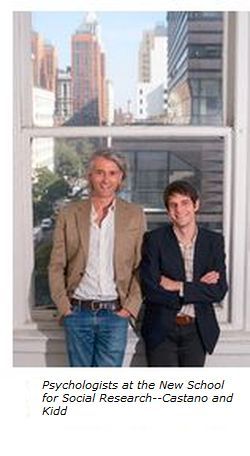 One of the books used in the study was Round House by Louise Erdrich, which (at the time of this writing) happens to be the 3rd most requested book on LitLovers. (See our Popular Books page.)
There's a reason why books like Round House matter. According to the New York Timesarticle:
[L]iterary fiction leaves more to the imagination, encouraging readers to make inferences about characters and be sensitive to emotional nuance and complexity.
You can read the full story in the NY Times HERE. It's fascinating and well worth the time.
For Book Clubs: Consider taking time during one of your meetings to talk about the books that have altered the way you perceive people and the world around you. Which books have enlarged your ideas about life and your role in it?
 A real challenge for any author is the remaking of a classic story. The new novel might set the older work in the modern era (Hamlet → Edgar Sawtelle). Or it might use the older novel as a starting point—for a sequel, or a retelling of the story from a different perspective (Wizard of Oz → Wicked). Here’s what I’ve come up with so far...
Makeovers
Resetting a classic in the modern era.Anna Karenina .......... What Happened to Anna K by Irina Reyn
The Great Gatsby ...... Netherland by Joseph O’Neill
Hamlet ...................... The Story of Edgar Sawtelle by David
Wroblewski
The Illiad .................... The Human Stain by Philip Roth
Howard’s End ............ On Beauty by Zadie Smith
King Lear ................... A Thousand Acres by Jane Smiley
Mrs. Dalloway ........... The Hours by Michael Cunningham
The Odyssey ............. Ulysses by James Joyce
Pride & Prejudice ....... Bridget Jones’s Diary by Helen Fielding
Sense & Sensibility .... The Three Weissmanns of Westport (added: 1/2011)Starting Points
Writing a sequel, ”prequel,” parody, or using a secondary character’s point of view.A Christmas Carol ...... Mr. Timothy by Louis Bayard
Dr. Jekyll &Mr. Hyde ... Mary Reilly by Valerie Martin
Gone With the Wind ..... Scarlett by Alexandra Ripley
Gone With the Wind ..... The Wind Done Gone by Alice Randall
Great Expectations ...... Mister Pip by Lloyd Jones
The Great Gatsby ........ The Double Bind by Chris Bohjalian
The Great Gatsby ........ Jack Maggs by Peter Carey
Jane Eyre ................... The Wide Sargasso Sea by Jean Ryhs
Huckleberry Finn ......... Finn by Jon Clinch
King Arthur ................. The Mists of Avalon
Mansfield Park ............. Murder at Mansfield Park by Lynn Shepherd
Moby-Dick ................... Ahab’s Wife by Sena Jeter Naslund
Pride & Prejudice ......... Pemberley by Emma Tennant
Pride & Prejudice ......... Pride & Prejudice & Zombies by Seth Grahame-Smith
Rebecca ...................... Mrs. DeWinter by Susan Hill
The Scarlet Letter ........ Angel and Apostle by Deborah Noyes
A Tale of Two Cities ..... A Far Better Rest by Susanne Alleyn
The Wizard of Oz ......... Wicked by Geoffrey MacGuire
Wuthering Heights ....... Heathcliff: The Return to Wuthering Heights by Lin Haire Sargeant
What have I missed? Surely, there are more.
 Short update—I’ve just received a terrific invitation to be a guest on a local NPR station in Hampton, Virginia. We’ll be discussing book club issues—the how-tos of starting and running a club, and handling difficult issues.
The show is HearSay with Cathy Lewis. Maureen Corrigan will also be on, as well as Susan Coleman who is leading Virginia’s Big Read! Call letters are WHRV 89.5 FM.
Most of you won’t be within reach, but for those in Southeastern Virginia and Northeastern North Carolina…tune in on Thursday, September 3, 2009, from 12 noon to 1pm.
Apparently, I’ve got a good face for radio. Two days ago, I was on the air again, this time on Martha Stewart’s Living Radio—Sirius Radio/XM, the satellite radio.
No, it wasn’t Martha but instead two shock-jocks, Kim and Betsy, who banter their way through morning drive time. They’re a hoot. We talked about starting a book club, how to talk about a book, etc.—the usual book club stuff. Here’s the short version (6 min.):
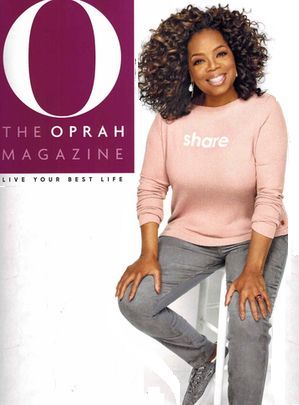 Well, tickle us pink! Three of LitLovers Featured Book Clubs were selected from our line-up (of nearly 100 clubs) to appear in O, THE OPRAH MAGAZINE. The groups are highlighted in an article titled "Book Clubs That Made a Difference."
From O, the Oprah Magazine
February 2019 issueSure they foster friendships (and a certain amount of wine consumption). But Book clubs also increase our compassion, strengthen our connection to the world around us, and maybe even keep us in shape. Join us as we explore fellowship that can be profound beyond words.
1. Becoming Jane Austen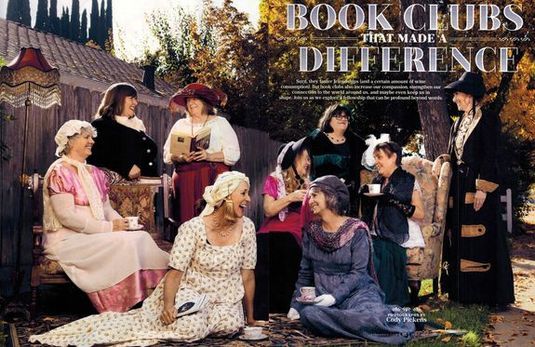
Avid Janites in Modesto, California, read through Jane Austen's entire oeuvre—then realized there were plenty more treasures lying in wait. So they kept digging and found the likes of Victor Hugo, Charlotte Bronte, Thomas Hardy, E.M. Forster, and many more. Read here to learn more about Becoming Jane.
2. The Walking Book Club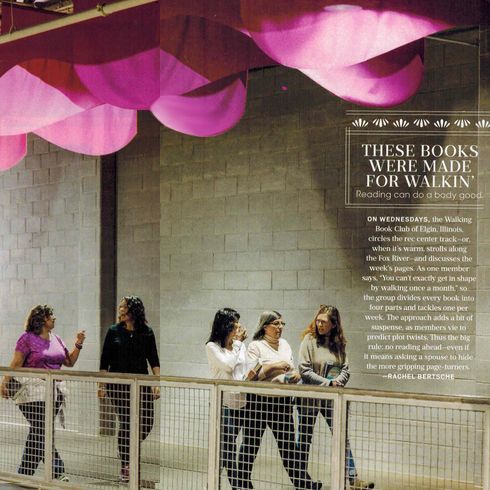
Building muscles for both brain and body, this Elgin, Illinois, group meets weekly to walk and talk. Dividing their books into four sections means NO reading ahead: if you're desperate, then turn the book over to your husband so he can hide it from you. Read here to learn more about the Walking Book Club.
3. Speaking Volumes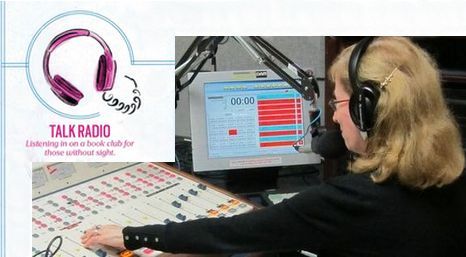
"A book club for those without sight"—this Massachusetts group corals area volunteers for its weekly on the air book club. Produced by Audio Journal out of Wooster, the audio books are announced well in advance and then scheduled for on air discussion by volunteers. Read here to learn more about Speaking Volumes.
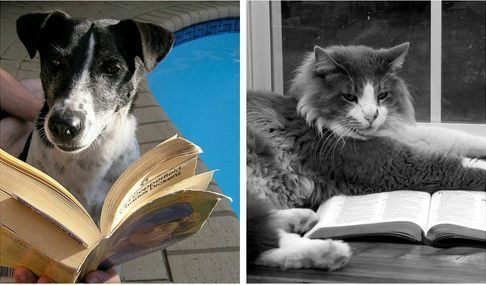
By Kristi Spuhler for LitLovers
We recently came across this article on Bustle that celebrates the literary world of CATS, and that got us thinking—what literary DOGS do people love the most?
A few short months ago, we wrote about dogs making great reading companions, (especially for younger readers who may be struggling,) but now that we’re thinking about it, dogs make some pretty memorable characters in our favorite books as well. Here are just a few that come to mind:
Now that the contenders have weighed in, what do you think? Are dogs or cats more suited to a literary setting?Our 11 Favorite Literary Dogs
Travels With Charley, John Steinbeck
Who better to accompany a lone traveler on a 10,000 mile road trip than their faithful dog?The Curious Incident of The Dog In The Nighttime, Mark Haddon —Though not around for long, Wellington the poodle makes his presence known and sets in motion a monumental chain of events. The Wizard of Oz, L. Frank Baum
Is Dorothy’s companion, Toto, a lovable confidant or a sneaky canine hiding his powers of speech? Turns out, he may be a little of both.Marley and Me, John Grogan
"The World's Worst Dog" ends up teaching his owners about loyalty and unconditional love. Was anyone dry-eyed at the end?The Art of Racing in the Rain, Garth Stein
Confirms what we've know all along: dogs know far more about the human condition than they let on. This one sure does!A Song of Ice and Fire, George R.R. Martin
Direwolves Nymeria, Ghost, Lady, Summer, Shaggydog, Greywind steal the show when found as pups. Though they part ways, they're as much a part of the story as any other character.Call of the Wild and White Fang, Jack London
We follow Buck after he's stolen from his comfortable life and sold into sled dog slavery. In White Fang, we thrill to the growing bond between man and his wolf-dog.; Cujo, Stephen King
Far from lovable, this guy terrorizes the Trenton and Cambers families, to say nothing of readers. A victim of a rabid bat—he was a good dog at heart.Peter Pan, J.M. Barrie
A dog as British nanny? This charming twist is the perfect fit for J.M. Barrie’s fantasy about never growing up.The Phantom Tollbooth, Norton Juster
Tock proves to be a great companion for adventure and one who imparts a little wisdom along the way.Harry Potter, J.K. Rowling
Fang makes recurring appearances thoroughout the series. A Bit of a slobberer, even a coward, he’s still there when Hagrid needs him most.



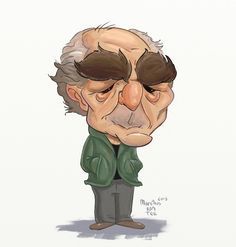 Another book? Philip Roth is 75! Why doesn’t he schlep himself off to Florida, put his feet up, and collect his royalties?
It would be the decent thing to do—it’s what the rest of us would do.
Noooooo...... he’s still plugging away, churning out one superb book after another. His latest is Indignation. “Enough already,” as Portnoy’s mother would say.
I’ve come to Roth late, and now I’m wondering why I deprived myself for so long. If you haven’t read him, run to the nearest library or bookstore. Yes, he can be long-winded, over-the-top, tasteless, and self-absorbed, but he’s also brilliantly inventive, side-splittingly funny, and a dazzling storytelller. Oh, and sexually explicit (hilariously explicit, if you’re up for that...if you’re not, please beware).
Where to start? I can’t direct you, but here’s an outline of his oeuvre:
Philip Roth
- Portnoy’s Complaint—a Jewish man-child’s coming-of-age. (The funniest book ever written.)
- The “Zuckerman novels”—9 in all. In the first 4 (referred to as “Zuckerman Bound”) Nathan Zuckerman, author of the outrageous Carnovsky and stand-in for Roth and Portnoy’s Complaint, is the protagonist. In the last 5, an older Zuckerman observes more than participates in the stories he tells.
- The “Kepesh trilogy”—3 novels that revolve around David Kepesh, an insecure and sexually fixated literature professor.
- The “Roth novels”—3 semi-autiobiographical (or not) novels.
- Other novels—another 9—include Goodbye, Columbus; Letting Go; When She Was Good; Our Gang; The Great American Novel; My Life As a Man; Sabbath’s Theater; Everyman; and the most recent, Indignation.
- Oh, yes—another novel is in the works, The Humbling, due out in 2009.
- Non-fiction and short stories—had I mentioned that?
Also head to SCREEN THOUGHTS with Hollister and O'Toole to listen to the podcast review of the 2016 Sundance film version of, Indignation. (The review starts at point 11:04 after a tribute to famed writer-director-producer Garry Marshall.)
Where do critics stand? He’s been called “the single best writer of fiction of the past 25 years.” * And while all critics have their Roth favorites, most seem to agree that the following are his best (click on titles to see our Reading Guides):
- Portnoy’s Complaint (1969)
- Zuckerman Bound (1979-85)
- Operation Shylock (1993) – Roth Novel
- American Pastoral (1997) – Zuckerman Novel
- The Human Stain (2000) – Zuckerman Novel
- The Plot Against America (2004) – Roth Novel
- Sabbath’s Theater (2005)
- Everyman (2006)
- Exit Ghost (2007) – Zuckerman Novel
* A.O. Scott. “In Search of the Best.” New York Times Book Review , 5/21/2006.
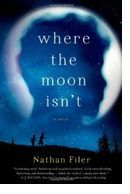
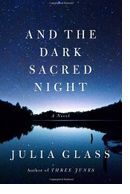
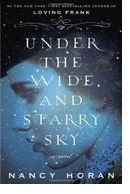
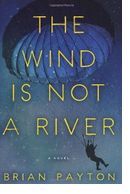
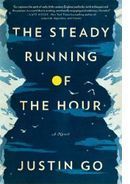
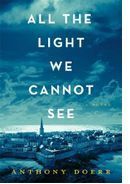
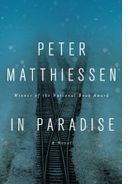
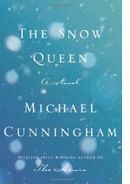
(Click on a cover to see the Reading Guide.)
Notice anything...oh, I dunno...funny? Check out some of 2014's "big" books so far. Clearly, somebody likes blue ... or is pretty sure the rest of us do.
Do you remember the scene in The Devil Wears Prada where boss Miranda chastises Andrea for mocking a popular color of blue? Miranda tells her the shade was chosen after intensive consumer research, followed by a high stakes marketing campaign—all to make women WANT-NEED-BUY that very color. In other words, consumers think we have free will...but we're simply being manipulated.
Is that what's going on with New York publishers (five different houses are represented here)? Is a conspiracy afoot in the literary world? Oh gracious. But then, again, maybe we're just paranoid. Wouldn't be the first time.
So what does blue evoke in YOU?
 I’ve plowed through a pile of books lately and thought it would be fun to share some thoughts with you.
The Lay of the Land (Richard Ford): This book spends 600 pages following a middle-aged guy through 3 days of his life. The math’s easy. . .200 pages per day and not much happens. But I adore this book. The writing is simply brilliant: funny, wry, and filled with provocative, even life-altering insights.
The Sign for Drowning (Rachel Stolzman): a beautiful, slender  novel about the Deaf community, written with elegance and compassion. I loved it, especially because it’s a debut novel!
 The Ten Year Nap (Meg Wolitzer): Right from the opening paragraph, you know you’re in good hands. Here's how she writes about the morning sounds waking women up all over the country:
There were wind chimes and roaring surf, and the electronic approximation of birdsong and other gentle animal noises. All of it accompanied the passage of time, sliding forward in liquid crystal. Almost everything in these women’s homes required a plug.
That last line is priceless—funny and knowing. The women in this novel are all plugged in and nowhere to go.
Winter in Madrid (C.J. Sansom): a huge best-seller coming from Britain. I had high hopes. . . but it’s melodramatic to the max. Things like “tears pricked” (his eyes, or at the corners of his eyes) get used 4 times within the first 60-some pages. In fact, lots of tears get shed by lots of characters. Also, this: She…ran the comb through her thick auburn hair. It flowed in waves.” Or this: “Her heart was starting to thump with excitement.” Okay, truthfully, it gets better. Still, where’s Graham Green when you need him. . .or Robert Ludlum?
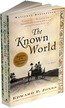 The Known World (Edward P. Jones): I’m late coming to this powerful book, about slavery, especially African Americans who owned slaves. Morally complex and wonderfully written. Jones won the Pulitzer in 2004.
The Story of Edgar Sawtelle (David Wroblewski): You’ve got to love dogs and Hamlet, and I do. Dense, digressive (especially about the genetics of dog breeding), brooding and, yes, tragic (it is, after all, a retelling of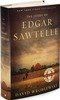 Hamlet). But this is a gorgeous, satisfying read. I love this book. So does Oprah (we’re so much a like).
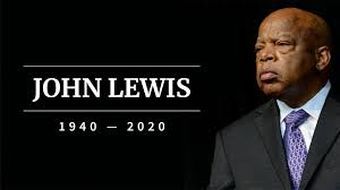 It's perhaps ironic, but surely iconic, that a GIANT of the Civil Rights Movement has died in the midst of the country's protests over George Floyd's death and ongoing racism. That "giant," of course, is U.S. Congressman John Lewis.
In 1998, Lewis (along with writer Michael D'Orso) penned Walking with the Wind, his memoir about growing up on the family's cotton farm in Alabama, his recollections of Jim Crow laws, and his role as a YOUNG LEADER of the Civil Rights Movement of the 1960s.

The Washington Post referred to Walking with the Wind as "the definitive account" of the Civil Rights Movement, declaring it "impossible" to read … "without being moved."
The memoir was reissued in 2015. Two years later, in 2017, Lewis's book went to the top of the bestseller charts—with Amazon announcing it had RUN OUT of new copies, while used ones were going for nearly $100.
Lewis, working with two young writers/illustrators, also published March, a GRAPHIC-NOVEL TRILOGY about the Civil Rights era. The third book of the trilogy won the 2016 National Book Award.
When Book One of the trilogy came out in 2013, Lewis said this about the March project: "It's another way for somebody to understand WHAT IT WAS LIKE and … I want young children to feel it. Almost taste it. To make it real." 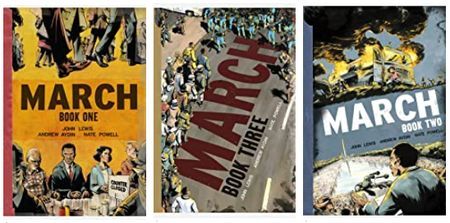
For book clubs that decide to tackle the RACE ISSUE, John Lewis's memoir would be an excellent place to start. Other works of note include the following titles ALSO ON LITLOVERS:
White Fragility
How to Be an Antiracist
Between the World and Me
The Hate U Give
The Warmth of Other Suns
Googling "books on racism," will turn up various lists filled with fine titles. An older one comes to mind immediately: Why Are All the Black Kids Sitting Together in the Cafeteria? (1997), as well as THREE CLASSICS:from the 60s: Black Like Me (1960), The Autobiography of Malcom X (1964), Crisis in Black and White (1964).
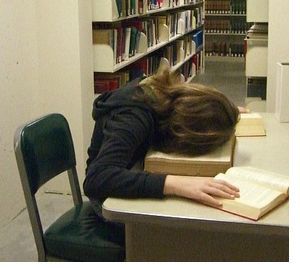 By Kristi Spuhler for LitLovers
We've all been there—slogging our way through a lofty tome, every turning page feeling like it's 50 pounds. (Moby-Dick, anyone?) So you've got to wonder: why are we doing this to ourselves?
Sure, we love that high we get when we slide past the finish line at the end of a task, but is reading a task? Isn't it something we should derive pleasure from?
So here's the question: Is it okay to abandon a book if you don't connect with it? Two writers recently took up the question in the The Guardian (of the UK)—and in a nutshell, here's the gist of their debate:
Alex Cross: The best books ...deserve more than being treated like a passing bit of entertainment.... I've nothing against reads that are quick and dirty fun, but seriously good books are immersive experiences, demanding of time and patience. Respect them.
Tom Lamont: But there is a masochistic sense out there—isn't there?—that it's somehow bad form or disrespectful or helpful to Hitler not to finish books. Very austere, very British. Very clear your plate.
If you're in the mood for delightful snark and a sprinkling of wit, do take a look at the full article.
Here's what we think: Some books take a while to get off the ground; others hit slow points along the way. Give those books time. But if chapter after chapter you feel no real emotional pull, we say put 'er down. Find something new.
Some LitLovers readers have told us on Facebook and on their Featured Club page about books they couldn't make their way through—here are several:
Anna Karenina (Leo Tolstoy)
A Confederacy of Dunces (John Kennedy Toole)
Cutting for Stone (Abraham Verghese)
Last Night in Twisted River (John Irving)
Moby-Dick (Herman Melville)
One Hundred years of Solitude (Gabriel Garcia Marquez)
Open City (Teju Cole)
A Thousand Splendid Suns (Khaled Hosseini)
War and Peace (Leo Tolstoy)
What about you? Are you determined to finish a book once you start it? Or are there some you've given up on? Let us know?
*Photo image courtesy of umjanedoan.


A Sponsored Book Review*
By Molly Lundquist—
Daisy Goodwin's The Fortune Hunter just came out in paperback, so given the hype (see NY columnist Liz Smith's review for one) I took a look...and I loved it.
The novel centers on a romantic triangle populated by actual historical characters: an Austrian empress, British heiress, and dashing cavalry captain. Some of Goodwin's story is true, some imagined. Sound like fun? It is.
Young Charlotte Baird is heiress to the Lenox fortune and considered quite a catch during her debut in London. Like many a good heroine, Charlotte defies convention much to her family's dismay. Yet it's that very independent streak that attracts the eye of handsome Captain Bay Middleton.  Unfortunately, Bay himself catches the eye of visiting royalty: Empress Elisabeth of Austria who has come to Britain for the hunting season. Famed throughout Europe for her beauty, Sisi, as she is known, intoxicates Bay, who is now torn between two women. (Photos left: Charlotte? and Bay)
The story, though, offers more than a standard romance: we get an insider's view of the Victorian class system and the burdens it imposes, not on society's lower rungs but, in this novel, on the upper ones—even on royalty. For as much as Americans are titillated by all things Downton Abby, Goodwin shows us a darker side. We see the demands for mindless conformity, especially for women. We watch how those not quite up-to-snuff (the untitled) face stinging humiliation by their "betters" (the titled). And we're privy to the tacit understanding that women are mere commodities in a cynical marriage market.
The book holds a particular interest for me. A couple of years ago, I stumbled across a 1962 movie with Romy Schneider (anyone remember her?) as Sisi, the lovely 16-year-old girl who captured the heart of the Emperor of Austria-Hungary. (Photo right: Empress Sisi)
The Fortune Hunter picks up 22 years after that romantic coupling to show the toll that royal life—with its sycophantic courtiers and stultifying dullness—has taken on Sisi. That part is true, too, and so is this—unhappy at home, Sisi traveled a good deal to remove herself from the rigid confines of the Austrian court.
This is an engaging read and an easy one, too. Goodwin has drawn her secondary characters broadly; they're somewhat cartoonish, which only makes them more fun to loathe. The author has taken more care with her leads, however, lending them a greater degree of depth. She also writes in rich detail when it comes to riding to the hunt, the new-fangled photography, and the beauty regimes of royalty (which involve slabs of veal...I'll say no more).
Read and have fun. I did. Oh, and don't miss our Reading Guide for The Fortune Hunter, complete with discussion questions.
* This review is sponsored by St. Martin's Griffin, publishers of the Fortune Hunter. The content of the review is an objective opinion by LitLovers.
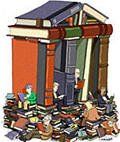 Two good articles appeared recently about re-reading. Roger Angell of The New Yorker and Verlyn Klinkenborg of The New York Times both talk about the joys of returning to favorite books.
Here’s Verlyn (we’re on a first-name basis, at least I am):
Part of the fun of re-reading is that you are no longer bothered by the business of finding out what happens.... I’m able to pay attention to what’s really happening in the language itself—a pleasure surely as great as discovering who marries whom, and who dies, and who does not. (The New York Times 5/29/09)
For Book Clubs
Use part of a meeting to talk about books any of you have re-read—and why (why re-read and why that book?). Was re-reading a different experience—more interesting, or less? Have you read any book more than twice, thrice...?
 I did a post recently on the pleasures of re-reading. I want to add an addendum to that post (original post, June 21, 2009).
My friend, Randy Minnich, is a great re-reader…maybe obsessively so. See what you think—he’s read Tolkein’s Lord of the Rings series . . . 20 times. Actually, more like 22.
Of course, you’re wondering about the movie. What did he think of Peter Smith’s adaptation? Couldn’t sit through it. It would have ruined an entire world of his private imagining, he told me.
But wait… there’s more! Randy’s also read Patrick O’Brian’s Master and Commander series, all 24 volumes . . . get this: 8 times. (If you’re doing the math, it’s 192 books .) Like Tolkein, this was done over a period of decades.
Anyone top that? Randy was a research chemist. Does that explain it? (Nah…don’t think.)