
 By Kathy Aspden, Author *
Writing is a lot like making a baby. Sometimes, it takes everything to get to the point of conception, and sometimes you don’t even remember having sex that night, but somehow a baby was conceived. Either way it all begins with a tiny seed that is planted in your heart (or your brain if that’s how you’re wired).
Even before conception, the image of your child is already materializing: "He’ll have my eyes, my husband’s lips, and hopefully not Uncle John’s nose…" In anticipation, a parent is creating a composite baby in their mind. It’s the same for writers. We envision different blends of traits, strengths and weaknesses for our characters.
"Composite Character" is a term I was certain I had invented, right up until I looked it up on Wikipedia. What I found was that I had been intuitively using a process that many writers and filmmakers have done forever - take two or more people from real life or experiences or even history, and meld them into one quirky, interesting person with the capability of being both deeply flawed (as most great characters are) and relatable. It was another case of my inventing something that somebody else had already invented (insert travel hammock, swinging screen door for sliders, the instant ballerina-bun maker).
The strange thing is that I can’t tell if my characters begin to remind me of someone who then creeps into my head as I write, or if there is already a person in my head whose traits have crept into my character. Anyone who knows me may have guessed that there’s probably more people in my head than is considered healthy. Whatever the reason, my characters tend to take on a lot of personality traits – like snowballs down a mountainside — as their stories progress.
I'm more aware of it when I'm writing screenplays. It's easier to have an actor to visualize as the script unfolds. And why wouldn’t an actress like Julianna Moore (with a little Diane Keaton thrown in) want to play the part of Grace Mitchell, a forty-nine-year-old author who has just written a successful self-help book decrying America’s obsession with youth, but stands to lose everything when she finds herself pregnant by a thirty-eight-year-old plastic surgeon? Great plot, right? (An Inconvenient Miracle is available for option if you happen to be a successful movie producer).
Anyway, back to these mixed-up characters of mine. What I came to realize was that my psychiatrist had been wrong; the voices in my head were a good thing. Working with the public, being part of a large family, inheriting a natural love of human interaction from both my mother and my father gave me a lifetime’s worth of crazy, loveable parts and pieces to choose from when writing. This mental/multi-tasking/ADD portion of my brain was finally paying off! On top of that, I found a great app that allowed me to see my combos by physically blending people.
Here’s my JulianneDianeKeatonMoore blend.
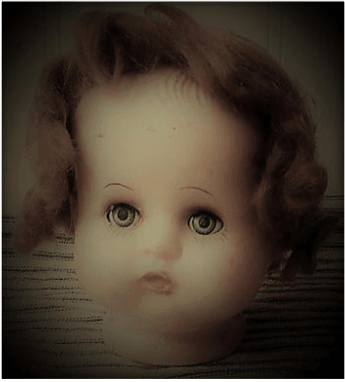
P.S. I also invented the first Transformer, the epitome of the composite character — a doll head that turned into a change purse. I didn’t call it a Transformer. I called it a Doll-head Purse.
* Kathy Aspden is the author of Baklava, Biscotti, and an Irishman, as well as a book reviewer for LitLovers.
 Cursive Cramp
By Kathy Aspeden, Author*
A few years ago I took a creative writing class from Professor Patricia McGraw. It was a three-credit course designed for advanced writers.
Absolutely, I wanted to get the most out of the class.
But I also wanted to get an "A" (grade-seeker — a horrible trait leftover from not having achieved anything athletic in my childhood years). That meant doing all the homework, even the things I found redundant or repetitive. Everything.
Professor McGraw was a huge fan of cursive. She said it got our creative juices flowing to engage our hands in what is quickly becoming a medieval practice. Four handwritten lined-notebook pages a night. Ugh!
It was agony for me. I have terrible, scratchy handwriting. My hands do not form circles. I can’t get anything on my body to make a circle. Ankle rolls during yoga, hula hoop hips, all of it is difficult.
I’m not graceful, I’m purposeful. I can hand-draw a window opening without a level. I’m the chick that does all the cut-in for family painting project.
I don’t create circles or graceful arcs. Cursive is filled with pretty swirls of circles!
Can you imagine getting a mediocre grade because of a simple thing like cursive? It felt positively elementary-schoolish — until I got the hang of it. Yes, like most people my brain works faster than my hands. I had to relax my thoughts, which turned out to allow more time for different, additional thoughts. Who knew?
When I realized that Professor McGraw wasn’t looking at the content, I still felt an obligation to do the task justice. One day I wrote four entire pages of potential book titles that all flowed into one another. "The Life We Made – Making The Pie – A Pie in Your Eye – The Eyes Have It – It Happened in the Park – Park Plaza Promise - Promise You’re Not a Psycho – Psycho is Another Name for Different – A Different Desire…"
Once I wrote a grocery list from when I was a kid, "Chef-Boy-Ardee Raviolis, Captain Crunch Cereal, Frosted Pop Tarts, Tang – the choice of astronauts…" You get the picture.
Before class we’d compare notes about how ridiculous our journals were. One guy wrote everything the NHL Hockey commentator said. Another recorded all the commercials while she power-watched back-to-back episodes of Grey’s Anatomy. Still another student detailed every move her cat made — adding extremely funny dialogue in between actions.
We thought we were beating the system, but we had to admit that something was happening. Ideas were being triggered by the action of writing by hand.
Today, cursive is making a comeback.
I recently saw a news show about the Campaign for Cursive’s 2017 contest winners. It was filled with kids who were treating the learning of cursive like a language or an archeological dig. They were cursive powerhouses, proud to have mastered a language that many of their friends didn’t know existed.
I’ll leave you with a great link to Johanna Silver’s 9 Incredible Ways Writing by Hand Benefits Our Bodies and Brains, as well as a look back at all the hoopla New York Yankees star, Alex Rodriquez, generated with his handwritten apology to the fans of baseball.
Kathy Aspden, is the author of Baklava, Biscotti, and an Irishman, as well as a book reviewer for LitLovers.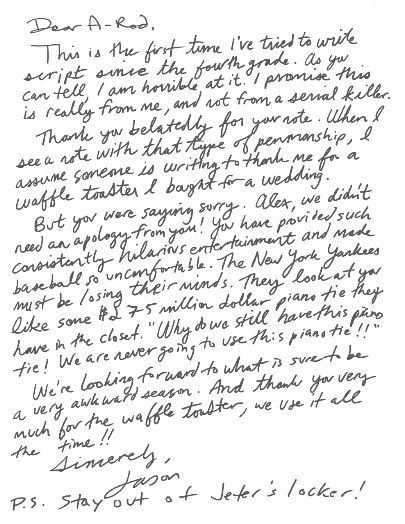


FICTION IS A MAGIC TRICK of sorts. But at its best it doesn’t just conjure up an imaginary world; it makes the real one disappear, it makes the author disappear. Only a book can do this — let you lose yourself so completely. So, if you can, forget about everything else. Just be there with the book.
Jami Attenberg, Author of All Grown Up
Interview, NY Times Book Review, March 26, 2017
And in the other corner . . .
A GREAT OBSTACLE to good education is the inordinate passion prevalent for novels, and the time lost in that reading which should be instructively employed. When this poison infects the mind, …[t]he result is a bloated imagination, sickly judgment and disgust towards all the real businesses of life.
Thomas Jefferson
Letter to Nathaniel Burwell, March 14, 1818
| Click on images | |||||
 |
 |
 |
|||
 |
 |
 |
|||
 |
 |
 |
|||
 |
 |
 |
|||
 |
 |
 |
|||
 |
 |
 |
|||
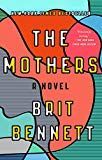
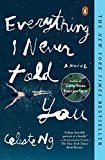
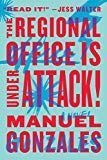
Have you noticed the number of absent mothers at the heart of new novels lately? So far I count SEVEN—in the first quarter of 2017 alone—surely there are more.
1/10 The Sleepwalker
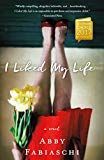
1/31 I Liked My Life
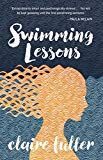
1/ 7 Swimming Lessons
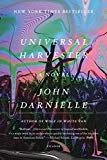
1/ 7 Universal Harvester
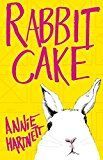
3/ 7 Rabbit Cake
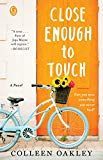
3/ 7 Close Enough to Touch
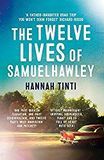
3/28 Twelve Lives of Samuel Hawley
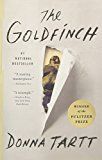
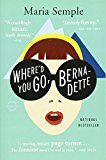
Then there are last year's books, as well as those over the past several years—most famously The Goldfinch and Where'd You Go, Bernadette. We can even go back to the early-aughts.
The missing mothers in these stories TAKE OFF…
or wander off…
or die…
or are killed…
or kill themselves.
Sometimes it happens before the novel opens, sometimes within its pages.
Whenever or however they disappear, fictional moms leave heartbreak and loneliness in their wake—a grief so profound it shapes a character's motivations and actions throughout the novel.
It is an age-old literary trope, which authors use to set their protagonists on the path of the Hero's Journey—a quest for self-discovery, belonging, and self-acceptance.
One of the best missing mother novels? Dickens' David Copperfield—the mother of all missing mother stories.
By the way...I've written on a this subject a number of years ago. See Lost Mothers—Why authors bump off moms.
 Rachel Cusk, wants to reinvent the novel, at least according to the New York Times Book Review.* Just writing that makes me break into a sweat. Why do we have to reinvent the novel?
Okay, I get it. It's a bit like composers wondering where to take symphonic music after Beethoven. Ludwig pretty much said it all.
Poor Johannes Brahms: when folks heard his first symphony, they went, "OMG! It's Beethoven's 10th." Or so the story goes.
After 200+ years of the novel as art form, it's understandable that authors might want to try something different.
Perhaps you've noticed the trend toward SHIFTING POINTS OF VIEW, different characters taking turns at the helm…
. . . surely you've noticed the frequent use of SHIFTING TIME FRAMES, the lack of straightforward chronology…
. . . or maybe you've noticed the use of ALTERNATIVE TEXTS: news clips, diary entries, handwritten letters, scholarly papers, emails, even PowerPoint…
. . . how about the use of ALTERNATE REALITIES?
Sometimes it's hard to tell exactly where you are...or what character you're following—one of the criticisms leveled at Paul Auster's otherwise highly touted new book 4321. Other times, all this narrative disruption can make it hard to engage with the characters.
Yet we know people see and experience life differently. And that is precisely what the new fiction is trying to get at—to point out that human perception isn't cut in stone, that there is more than one way of seeing a particular event, and that memory is faulty.
Nonetheless, don't you miss the comfort of a single narrator? I do. I have a yen for that 19th-century style of writing in which someone steps onto your front porch, claims a seat, and tells you a grand story.
I hate being old-fashioned and curmudgeonly. But I'm weary of the fact that EVERY new book I pick up messes with point of view and chronology. Friends, I just had to get that off my chest.
* New York Times Book Review, January 29, 2017, cover review of Rachel Cusk's Transit.
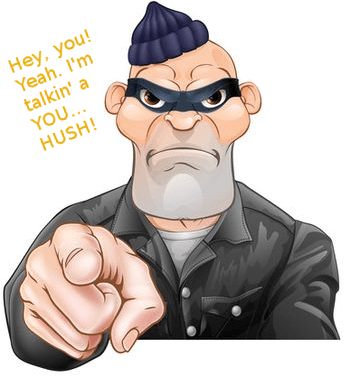 Ha! And you thought librarians were goody-two-shoes. Well, here's a TRUE CRIME story that'll make your toes curl.
The AP reported that the county library in Sorrento, Florida, was caught red-handed in a devilishly clever SCAM. Over the course of nine months some 2,000 books had been checked out by a fake card holder.
Now THAT, dear reader, is registration fraud. But get this: the books were always returned. Within an hour. Undamaged.
The Big Reader was Chuck Finley, except Chuck Finley doesn't exist (at least with an East Lake Library card). It turns out two librarians had dummied up an ID and used it to check out books, dozens at a time—everything from John Steinbeck's Cannery Row to Why Do My Ears Pop, a children's book by Ann Fullick.
It was all for a good cause—to save the books from the chopping block because books that HAVEN'T BEEN CHECKED OUT for a period of time are removed from the county system. So the two librarians took it upon themselves to SAVE as many books as they could.
Until someone ratted them out. What a kill joy.
But who's the bad guy here—the fink or the perps? Bleed though our hearts may, it's hard to say. With some 300,000 titles published a year by major U.S. houses (50,000+ for fiction alone), libraries face a serious SHORTAGE of space. Budgets aren't the only thing being squeezed… so are books on shelves.
Still, how can we NOT relate to these two benighted—or beknighted—souls, so enamored of books that they can't bear to have them tossed in the dust bin of history? (Btw, I've no idea what's become of our librarians—to say nothing of all the BOOKS.)
A humorous yet sad tale.
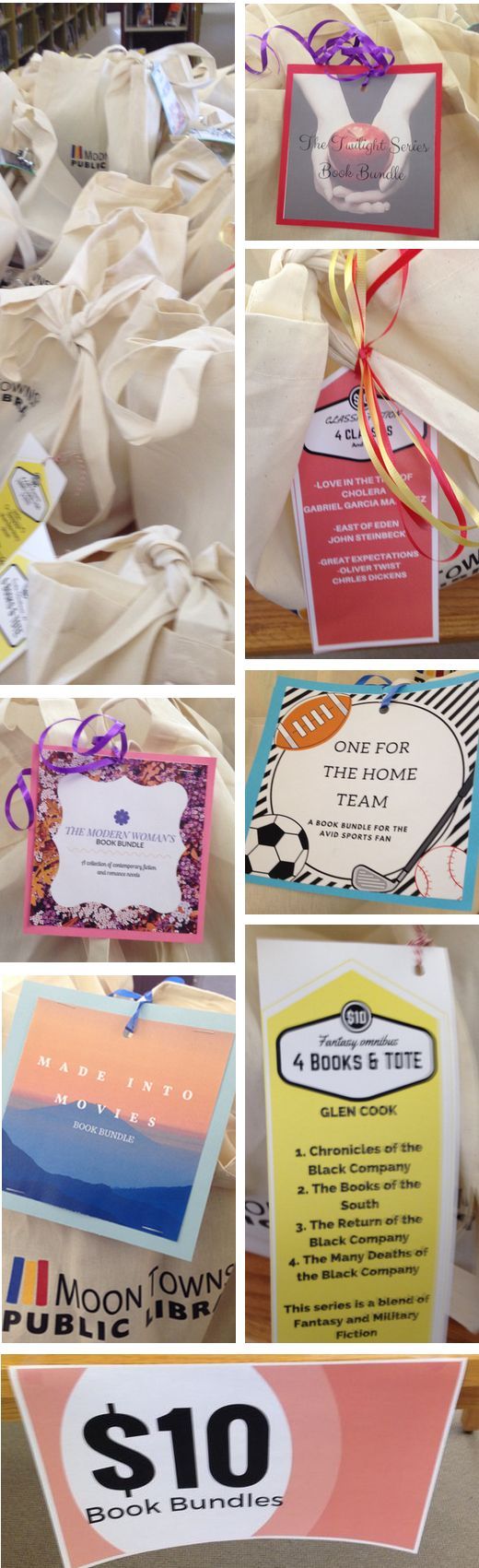
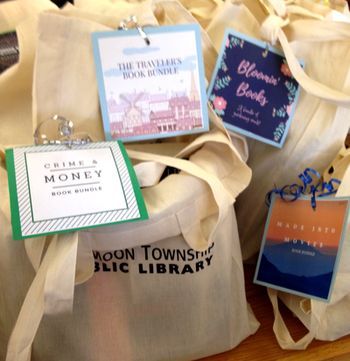 So imagine: you're walking into one of your local library branches, as I was recently, and you find right in front of you a sumptuous table, positively laden with tote bags—each of them charmingly tagged by theme and filled with used books.
For $10 any Book Bundle could be yours. Patrons get the books (from 4 to 6), AND they get the tote bag. It's enchanting.
 Scroll down to our previous post about the hundreds of Girl Titles in the publishing world. Book after book with "girl" in the title.
I griped about the use of the G-word as a throw-back to the bad old days when women were easily dismissed and occupied lower rungs on the cultural ladder.
But, hey! Girl titles sell books. The first "Girl" may have been Susanna Kaysen's 1993 Girl, Interrupted. But it wasn't until 2005, with Steig Larsson's The Girl with the Dragon Tattoo, et.al., that the trend seemed to take off. Next came Gone Girl and Girl on the Train.
Now it's a full blown trend. Publishers want in on it—so they're busy RENAMING OLD TITLES, hoping to breathe new life into older books. Take a look ...
New Girly Titles
For Old Books
Remarkable Creatures
by Tracy Chevalier
Girls Who Dug Rocks
Little Women
by Louisa May Alcott
Little Girls
The Age of Innocence
by Edith Wharton
Girls Wearing Corsets
My Beloved World
by Sonia Sotomayor
The Girl Who Made It All the Way to the Supreme Court
Where'd You Go Bernadette
by Maria Semple
The Girl Who Left Her Daughter (But Kept in Touch)
Hunger Games
by Suzanne Collins
The Girl Who Runs with Sharp Objects
Wild
by Cheryl Strayed
The Girl Who Went for a Walk and Then Felt a Lot Better
Lean In
by Sheryl Sandberg
The Girl Who Kicked Corporate Butt
Pride and Prejudice
by Jane Austen
The Girl with Prejudice & the Man with Pride, or Vice Versa
Obsessive Genius: The Inner Life of Marie Curie
by Barbara Goldsmith
Hey, Girl—You're the Bomb
I Am Malala
by Malala Yousafzai
The Girl Who Damn Well Better Win the Nobel Prize
The Invention of Wings
by Sue Monk Kid
The Girl Who Owned a Slave … Who Was Also a Girl
Flight Behavior
by Barbara Kingsolver
Climate Change Girl
The Signature of All Things
by Elizabeth Gilbert
The Girl Who Watched Fungus Grow and Became Famous
The Woman in Cabin 10
by Ruth Ware
The Girl in Cabin 10
 Oops ... about to show my age. Remember A Woman of Substance by Barbara Taylor Bradford? Back in 1979 it was yuge, a bestselling book and later a TV movie.
Today it would be "A Girl of Substance." Talk about lost in translation.
What's the big deal? Well, if you have to ask, you're too young to have been around during the nascent Woman's Movement in the late-'60s and '70s.
You've seen Mad Men, right? It was like that, even into the 70s. I was there. To be called a "girl" was dismissive. "My girl can get you coffee." Or, "Nah. Don't bother. The girls can clean that up." Age didn't matter—21, 41, or 61—we were just girls, not women of substance.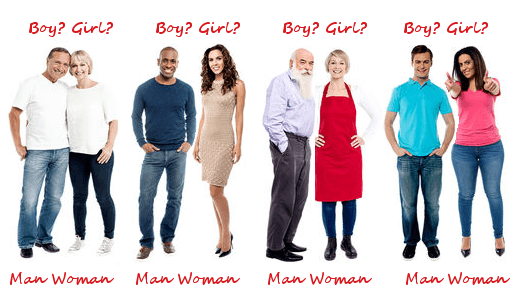
Which is why I get all dithered-up by the use of "GIRL" in the dozens and dozens of recent BOOK TITLES—some 200. I know because I made a LIST. (Click button for a laugh!)
Next up? Publishers eager to cash in on this hot new trend are updating old titles with new, GIRLY-GIRL ones. CHECK OUT OUR NEXT POST to find out which of your favorite books have been given new titles. You'll howl.
 As "crimes" go, the literary ones are of the lesser sort: plagiarism and phony memoirs don't injure, maim, or kill anyone.
Even so, a few misdemeanors on the docket have managed to show a depressing lapse in ethics or taste.
1. The money grab.
The "discovery" of Go Set a Watchman ranks at the top of the list. Harper Lee's lawyer Tonya Carter claimed to have discovered the original manuscript of To Kill a Mockingbird in February 2015. But others insist it had been discovered in 2011 by an agent from Southeby's—and that Carter had been present when it was found.
Only after Alice Lee, Harper's sister and long-time protector, died did Carter announce her "discovery" of the book. The entire episode reeks of an easy money scheme and, worse, the manipulation of an 89-year-old stroke-afflicted woman. You can find two good articles here: one in the New Republic and another in the New York Times.
2. The tattle tale.
Elena Ferrante's real name, a long-kept secret, was just revealed the other day. In the scheme of things, it's hardly serious—except perhaps for the author of My Brilliant Friend (plus two sequels).
So for what higher purpose did Italian journalist Claudio Gatti spill the beans? Sheer self-aggrandizement, most likely. As the owner of Ferrante's publishing house put it: If someone wants to be left alone, leave her alone.... She’s a writer and isn’t doing anyone any harm.” Amen to that.
3. The whitewash.
Although I haven't read it all the way through (God knows I tried), the new YA novel, My Lady Jane, shows a tone-deaf insensitivity toward one of history's more horrific events—the beheading of 16-year-old Lady Jane Grey. I'll let the book's opening speak for itself:
[O]nce upon a time, there was a sixteen-year-old girl named Jane Grey, who was forced to marry a complete stranger (Lord Guildford or Gilford or Gifford-something-or-other), and shortly thereafter found herself ruler of a country. She was queen for nine days. Then she quite literally lost her head.
Yes, it's a tragedy, if you consider the disengagement of one's head from one's body tragic. (We are merely narrators, and would hate to make assumptions as to what the reader would find tragic.)My Lady Jane
Cynthia Hand and Brodie Ashton
What the . . . ?!
Okay, I could be overly sensitive, but I recall reading an account of Lady Jane Gray in a grad school course on the English Renaissance. Her short life was depressingly sad and her end brutal.
Sugar-coating is one thing, but there's enough misappropriation, misreading, and misuse of history—why must we have "just plain fun" with this? (That quote comes from a Booklist review, which also suggests "joyfully punting" history "out of the way." Omg.)
More to the point, the world has been horrified by certain news from the Middle East—and, yes, we do consider those kinds of events tragic.
See? I'm sensitive AND cranky.
Lady Jane's beheading had a powerful effect on artists, even 300 years after the fact. Here are two renderings: The Execution of Lady Jane Gray (1833) by Paul Delaroche and Lady Jane Grey Preparing for Execution (1835) by George Whiting Flagg.