


The Wife Between Us
Greer Hendricks, Sarah Pekkanen, 2018
St. Martin's Press
352 pp.
ISBN-13: 9781250130921
Summary
When you read this book, you will make many assumptions.
You will assume you are reading about a jealous ex-wife.
You will assume she is obsessed with her replacement—a beautiful, younger woman who is about to marry the man they both love.
You will assume you know the anatomy of this tangled love triangle.
Assume nothing.
Twisted and deliciously chilling, Greer Hendricks and Sarah Pekkanen's The Wife Between Us exposes the secret complexities of an enviable marriage—and the dangerous truths we ignore in the name of love.
Read between the lies. (From the publisher.)
Author Bios
Greer Hendricks
• Birth—ca. 1968
• Raised—San Francisco, California, USA
• Education—B.A., Connecticut College; M.A., Columbia University
• Currently—lives in New York City, New York
Greer Hendricks spent over two decades as an editor at Simon & Schuster. Prior to her tenure in publishing, she worked at Allure magazine and obtained her Master's in journalism from Columbia University.
Greer's writing has been published in The New York Times and Publishers Weekly. She lives in Manhattan with her husband and two children. The Wife Between Us is her first novel (From the publisher.)
According to Publishers Weekly, Hendricks worked with Sarah Pekkanen on Pekkanen's 2010 debut novel, The Opposite of Me. The two formed a close friendship and went on to publishd six more of Pekkanen's novels.
When Greer left publishing in 2014, Pekkanen was one of the few who knew of Hendrick's desire to write. Co-authoring a book with Hendricks, Pekkanen believed, would up her own game. So began their collaboration on The Wife Between Us (2018), followed by An Anonymous Girl (2019)
Sarah Pekkanen
• Birth—1967
• Where—New York, New York, USA
• Raised—Bethesda, Maryland
• Education—University of Wisconsin; University of Maryland
• Currently—lives in Chevy Chase, Maryland
Sarah Pekkanen was born in New York City, arriving so quickly that doctors had no time to give her mother painkillers. This was the last time Sarah ever arrived for anything earlier than expected. Her mother still harbors a slight grudge.
Sarah’s family moved to Bethesda, Maryland, where Sarah, along with a co-author, wrote a book entitled "Miscellaneous Tales and Poems." Shockingly, publishers did not leap upon this literary masterpiece. Sarah sent a sternly-worded letter to publishers asking them to respond to her manuscript. Sarah no longer favors Raggedy Ann stationery, although she is sure it impressed top New York publishers.
Sarah’s parents were hauled into her elementary school to see first-hand the shocking condition of her desk. Sarah’s parents stared, open-mouthed, at the crumpled pieces of paper, broken pencils, and old notebooks crowding Sarah’s desk. Sarah’s organization skills have since improved. Slightly.
After college, Sarah began work as a journalist, covering Capitol Hill. Unfortunately, Sarah could not understand the thick drawls of the U.S. Senators from Alabama, resulting in many unintentional misquotes. Sarah was groped by one octogenarian politician, sumo-bumped off a subway car by Ted Kennedy, and unsuccessfully sued by the chief of staff to a corrupt U.S. Congresswoman. Sarah also worked briefly as an on-air correspondent for e! Entertainment Network, until the e! producers realized that Capitol Hill wasn’t, by any stretch of the imagination, what one might call sexy.
Sarah married Glenn Reynolds, completing her rebellion against her father, who told her never to become a writer or marry a lawyer.
Sarah took a job at Gannett New Service/USAToday, covering Capitol Hill. Sarah was assigned to cover the White House Correspondents Dinner and rode in the Presidential motorcade to the dinner. Sarah convinced a White House aide to let her stick her head out of the limousine moon-roof during the ride and wave to onlookers. Later, her triumph was tempered by the fact that bouncers would not allow her into the Vanity Fair after-party. Sarah attempted entry three times in case the bouncers were just kidding.
Sarah took a job writing features for the Baltimore Sun, and interviewed the actor who played Greg Brady. She refrained from asking if he really made out with Marcia, but just barely.
Sarah and Glenn’s son Jackson was born. He arrived too quickly for Sarah to receive painkillers, and Sarah was pretty sure she saw her mother smirking. When Glenn put a loving hand on Sarah’s shoulder during the throes of labor, Sarah decided the most expedient way to get Glenn to remove his hand was to bite it, hard. She was proved right.
Twenty months later, Sarah and Glenn’s son Will was born. Three weeks later, Sarah and Glenn moved into a new home and renovated the kitchen. Two weeks later, Glenn caught pneumonia and simultaneously started a new job. Ten days after the kitchen renovation was complete, the kitchen caught on fire, and Sarah, Glenn and family moved to a hotel while renovation began anew. Sarah and Glenn decided to work on their "timing" issues.
Having left her journalism job to chase around the ever-active Jack and Will, Sarah started writing a column for Bethesda Magazine and began work on a novel. She did not write it on Raggedy Ann stationery.
Her first book, The Opposite of Me, came out in 2010 and her second, Skiping, a Beat in 2011. Those were followed by These Girls in 2012, The Best of Me in 2013, and Catching Air in 2014.
Sarah gave birth to a bouncing baby boy, Dylan, and gets a little weepy every time she contemplates her good luck. (Adapted from the author's website.)
Book Reviews
The Wife Between Us bests The Woman in the Window in the didn’t-see-it-coming plot twist category.
USA Today
Buckle up, because you won't be able to put this one down.
Glamour
(Starred review.) [A] jaw-dropping psychological thriller. This is not another eye-rolling story about the jealous ex-wife stalking her replacement.… Unforgettable twists lead to shocking revelations all the way through the epilogue.
Publishers Weekly
(Starred review.) Readers who were enthralled by B.A. Paris’s Behind Closed Doors and Gillian Flynn’s Gone Girl will love the skewed psychology and shifting perspectives of this domestic thriller.
Library Journal
(Starred review.) [A] seamless thriller that will keep readers on their toes to the very end.… Readers will enjoy the dizzying back-and-forth as they attempt to figure out just who to root for and as the suspense ratchets up to one hell of a conclusion.
Booklist
The use of a multiviewpoint …narrative to …purposely misleading the reader is a really, really popular device. Two words: Gone Girl.… [T]he fun is in trying to figure it out before they tell you.… A good airport book.
Kirkus Reviews
Discussion Questions
1. On page 7, Samantha asks Nellie one of the defining questions of the novel: "Ever think he’s too good to be true?" At what point did you start to think that Sam might be right, and Richard might actually be too good to be true?
2. What do you think is the significance of Vanessa’s new job at an upscale clothing store? How might it affect her to still be in the upper class world she once occupied, but in a much different role? Compare and contrast her experience there to her previous job as a teacher.
3. Throughout the novel, Aunt Charlotte and Vanessa have an extremely close relationship, even when Vanessa struggles to be honest with her aunt. How do you see this relationship affecting the choices Vanessa makes? Is there someone in your family with whom you have a similar bond?
4. When did you realize who Vanessa, Nellie, and Emma actually are? How did this new understanding shape your experience of the rest of the story, and how do you think it will affect your experience if you reread the novel?
5. On page 162, Vanessa says, "I guess I thought marrying Richard would erase my concerns. But my old anxieties simply yielded to new ones." Do you think that that is a common misconception about entering into a marriage? If so, why do you think so many men and women believe this?
6. The Wife Between Us asks difficult questions about how much someone’s past can explain or excuse their behavior. What’s your opinion? Did getting to know more about Vanessa’s or Richard’s backstory help to explain or justify their choices at all?
7. The theme of sight—foresight, hindsight, and even real, physical eyesight—is wound throughout the entire novel. Maggie, the young sorority pledge, repeatedly says, "I hate it when I can’t see." Do you think that anyone in this novel could (or should) have been able to see more clearly the consequences of their actions? Do you believe in the old saying, "Hindsight is 20/20?"
8. Did the end of the novel leave you questioning who was really calling the shots and who had a full picture of what was going on? Which character do you think was truly orchestrating the events that were set into action—or was there more than one person responsible? Why do you believe this?
(Questions from the author's website.)
The Wife's Tale
Lori Lansens, 2009
Knopf Doubleday (Canada); Little, Brown & Co. (USA)
368 pp.
ISBN-13: 9780316069311
Summary
On the eve of their Silver Anniversary, Mary Gooch is waiting for her husband Jimmy—still every inch the handsome star athlete he was in high school—to come home. As night turns to day, it becomes frighteningly clear to Mary that he is gone. Through the years, disappointment and worry have brought Mary's life to a standstill, and she has let her universe shrink to the well-worn path from the bedroom to the refrigerator. But her husband's disappearance startles her out of her inertia, and she begins a desperate search.
For the first time in her life, she boards a plane and flies across the country to find her lost husband. So used to hiding from the world, Mary finds that in the bright sun and broad vistas of California, she is forced to look up from the pavement. And what she finds fills her with inner strength she's never felt before. Through it all, Mary not only finds kindred spirits, but reunites with a more intimate stranger no longer sequestered by fear and habit: herself. (From the publisher.)
Author Bio
• Birth—July, 1962
• Where—Chatham, Ontario, Canada
• Education—St. Clair College (Windsor, Ont.)
• Currently—lives near Los Angeles, California, USA
Lori Lansens was a successful screenwriter before she burst onto the literary scene in 2002 with her first novel Rush Home Road. Translated into eight languages and published in eleven countries, Rush Home Road received rave reviews around the world.
Her follow-up novel, The Girls, was an international success as well. The Wife's Tale, her third novel, was published in 2009. Born and raised in Chatham, Ontario, Lori Lansens now makes her home in Los Angeles with her husband and two children (From the publisher.)
More
Her own words:
I was born in July 1962 in small-town Chatham, Ontario, a rural community near the border to Detroit, Michigan, where I spent the first eighteen years of my life, a landscape that would become the backdrop for my first three novels.
My father worked at a factory that made trucks. My mother stayed at home and cared for me and my brothers, one a year younger than me, one a year older, all of us born in July.... We were free to explore, to wander, and to wonder.
I attended St. Ursula Catholic School from kindergarten to eighth grade. My friends were mostly Italian and Portuguese and I loved their homes with the sides of beef and pork curing in meat lockers, and cloves of garlic dripping from ceilings, and the curious second ovens that they all seemed to keep in their basements. I was strongly influenced by my religious upbringing, and at one point considered becoming a nun, but when our parish refused to baptize my bi-racial cousins I stopped going to church altogether.
After high school I attended St. Clair College in Windsor to study advertising and business. My plan was to become a copy writer, to marry my passion for writing with a practical approach to making a living.
I met my husband of twenty-five years, Milan Cheylov, when he was a young actor. He’d recently returned to Toronto from acting school in New York and I was new in town, working in the classified advertising department of [Toronto's] The Globe and Mail. We met by coincidence at Bennie’s, an old deli near Yonge and Bloor Street. We talked about books and he asked what I was reading. I pulled a tattered, decade-old copy of Mordechai Richler’s Cocksure from my purse. Milan grinned, reached into his duffel bag and pulled out the same novel.
After writing a dozen more short stories, none of which were published, but for which I received just enough encouragement from editors, I decided to try my hand at dramatic writing. Milan suggested I take a few acting classes to better understand the actor’s process and I found myself bitten by the bug. My most memorable moment was playing a scene opposite Al Pacino and John Goodman in Sea of Love. My part was cut out of the movie, but the week I spent on set helped pay our rent that summer. My lowest point was appearing in a children’s play, dressed in a squirrel suit, being upstaged by a fly in a window. I quit acting and turned back to writing— this time a screenplay—South of Wawa. The movie, starring Rebecca Jenkins and Catherine Fitch, was produced in 1992. One reviewer compared the screenplay to Chekov while another wondered if the screenwriter had been dropped on her head at birth.
[After several years] Milan suggested I take a break from the film world to write the novel I’d been dreaming of aloud for so many years..., and with Milan working long hours on film sets, I sat down to write the first chapters to Rush Home Road, the story of an old black woman who lives in a trailer park near Chatham, and the little mixed-race girl she takes in to change the course of both of their lives.... I finished the first draft of Rush Home Road in the weeks before my son was born. Our daughter was born just weeks after Rush Home Road was launched.
Shortly after The Girls [my second novel] was launched, my husband and I made the difficult decision to leave Canada, the city we’d lived in for twenty-five years, our family in south western Ontario, all of our friends, for Milan’s career opportunities in the television industry in L.A. Even before we’d made the decision to move I’d heard Mary Gooch calling from the sidelines—a woman in her forties who undergoes a dramatic transformation.
Milan and I live with our children in a rural canyon in the Santa Monica Mountains with coyotes and bobcats and rattlesnakes. From my office above the garage I can see a horse ranch across the road and beyond that, the tawny hills and clear blue sky. I’m currently at work on my next book.
(Adapted from the author's website.)
Book Reivews
Lansens’s gift, and it’s to be cherished, is one of deep engagement with her subject, and empathetic involvement that broadens to draw in the reader.
Globe and Mail (Canada)
A persuasive, dynamic storyteller, Lansens leads us through flashbacks into the world of a lonely, always-hungry child, who grows into a dutiful, anxious, hungry adult.
Toronto Star
Like short-story queen Alice Munro, to whom she is often compared, Lansens demonstrates a singular gift for discerning both the ordinary and the extraordinary in small-town life and small-town people.
Winnipeg Free Press
Mary Gooch is beyond shock when her husband leaves the night before their silver anniversary party. Jimmy Gooch has always loved her, but with each new trauma—two early miscarriages, her father's death, even the loss of her feral cat—Mary has felt less worthy of his affection and more hungry. Now weighing 302 pounds, Mary can't seem to move past her malaise. Finding $25,000 in their bank account, Mary flies, for the first time, from their small Canadian town to her mother-in-law's home in Southern California, determined to wait for her prodigal spouse. While there, she loses her appetite but discovers a measure of self-worth through the "kindness of strangers." Verdict: Lansens's (The Girls) portrait of a woman who hides behind the Kenmore as protection from life's heartache is earthy and primal in its pain. Yet Lansens doesn't resort to an overnight makeover to save Mary. Instead, our heroine uncovers a hidden strength she had all along. Those who loved The Girls will be pleased that Lansens is back. Highly recommended. —Bette-Lee Fox
Library Journal
Discussion Questions
Use our LitLovers Book Club Resources; they can help with discussions for any book:
• How to Discuss a Book (helpful discussion tips)
• Generic Discussion Questions—Fiction and Nonfiction
• Read-Think-Talk (a guided reading chart)
Also consider these LitLovers talking points to help get a discussion started for The Wife's Tale:
1. In what ways has Mary Gooch's life become smaller and smaller as she enters mid-life? How has she withdrawn from the world...and why?
2. Talk about her obsessive eating. What drives her to food... what is Mary "hungry" for?
3. Comment on this quotation: "The anger of Mary's secret floated down to the silty bottom until another storm stirred it up again. But like the food she hid from herself Mary always knew its precise location." What does this passage reveal about Mary?
4. In what way is Mary a prisoner of her own body? Talk about the daily humiliations she undergoes because of her size?
5. In real life how do people treat the morbidly obese? For instance, what is really being said when someone utters, "such a pretty face"? What condescending or dismissive statements are said or written about any eating disorder, obesity or anorexia?
6. The history of storytelling is replete with heroes who undertake challenging journeys for a specific goal. In what way might The Wife's Tale be considered a "hero's journey," an "adventure" story...or a "coming of age" story? Outwardly, Mary searches for her husband; inwardly, what is her search really about? What is the treasure at the end of the journey?
7. One reader observed that Mary is like an onion. What might she have meant?
8. Talk about her mishaps and the numerous people Mary meets when she arrives in California. How do these acts of kindness begin to heal her?
9. What about Jimmy? What kind of man is he...what kind of husband?
10. Ultimately, how is Mary changed—on the inside? What does she come to learn about herself and the world?
11. To what extent does this passage represent a change in Mary: "Yes, she still believed in miracles. What were they but random occurrences that caused wonder instead of random occurrences that brought grief?"
12. To what extent did you sympathsize with Mary Gooch? Or were you irritated by or impatient with her? If so, did you find yourself rooting for her by the end?
13. Someone referred to Mary as "everywoman"—a character who symbolizes the plight of the modern female. Do you agree? If so, in ways is she representative of many woman today?
(Questions by LitLovers. Please feel free to use them, online or off, with attribution. Thanks.)
top of page


Wildfire: A Novel
Mary Pauline Lowry, 2014
Skyhorse Publishing
288 pp.
ISBN-13: 9781629144979
Summary
Julie has an obsession with fire that began after her parents died when she was twelve years old. Her pyromania leads her to take an unlikely job as a forest firefighter on an elite, Type 1 "Hotshot" crew of forest firefighters who travel the American West battling wildfires.
The only woman on the twenty person crew, Julie struggles both to prove her worth and find a place of belonging in the dangerous, insular, and very masculine world of fire (while also fighting against an eating disorder she's had since her teens).
As her season "on the line" progresses so do her relationships with the strange and varied cast of characters that make up her hotshots team—and she learns what it means to put your life on the line for someone else.
Wildfire is a tough, gritty, and fascinating story from an exciting new voice in American fiction. Fans of the movie Backdraft or Cheryl Strayed’s memoir Wild will enjoy this fast paced debut.
Author Bio
• Birth—March 3, 1976
• Where—Austin, Texas, USA
• Education—B.A., Colorado College; M.A., University of Texas
• Currently—lives in Southern California
Mary Pauline Lowry worked for two years as a forest firefighter on the elite Pike Interagency Hotshot Crew based on the Pike National Forest in Colorado. "Hotshots are the best-trained and best-equipped wildland firefighters, sometimes referred to as the Navy SEALs of their profession" (Rolling Stone Magazine).
As a Hotshot, Lowry traveled all over the American West with her crew fighting wildfires ranging in size from single tree lightening strikes to 20,000 acre blazes. Hotshot crews are "hand crews" that do not use water to fight blazes. Instead they dig a firebreak or "fireline" around the fire to deprive it of fuel. With her crew, Lowry hiked or was helicoptered in to fires and dug fireline for 15 hours or more a day. During fire season, she and her crew would work 21 days at a time fighting fire and camping out.
Lowry left the Hotshot crew to attend graduate school, receiving an M.A. in English (concentration Creative Writing) from the University of Texas at Austin. Lowry has since worked in the movement to end violence against women as a counselor at a domestic violence shelter, advocate on the National Domestic Violence Hotline, and public policy analyst at the Texas Council on Family Violence.
Lowry is a native of Austin, TX, currently residing in Orange County, CA. She has written essays for the New York Times Magazine, xoJane and the Huffington Post. Her novel Wildfire (2014) is inspired by her experiences as a wildland firefighter.
Wildfire has been optioned for film by Bill Mechanic and Suzanne Warren. Lowry has written the script and the project is in development. (From the author.)
Visit the author's website.
Book Reviews
Wildfire will haunt readers long after they close the cover of this gripping, action-packed novel. Foreword Reviews
The Hotshots world is exotic and specialized and the entry she offers is stunning and rare. But it is the heart of this book you will most want to know. Here is an original and special voice.
Anthony Swofford, author of Jarhead
Mary Lowry’s Wildfire is one of those unique books that appear from time to time, a sort of Huck Finn meets Moby Dick, that is, if Huck was a spunky young woman and the white whale was a wildfire.
Craig Nova, author of All the Dead Yale Men
Mary Lowry’s Wildfire is absolutely riveting. A vivid, evocative, and emotionally complex journey through a dangerous and beautiful world.
Lou Berney, author of Gutshot Straight and The Road to Bobby Joe and Other Stories
Lowry paints a vivid portrait of life as a hotshot.... In such scenes of true-to-life suspense and well-rendered detail, it's easy to forget this is a novel and not a work of nonfiction. Indeed, the writing is strongest where it reveals the extreme physical endurance of and deep camaraderie that forms in a hotshot crew.
Kirkus Reviews
Discussion Questions
1. In Chapter One, we meet Julie at a gas station, asking for directions to the Pike Fire Center. What was your first impression of her? How did Julie’s experience of getting lost and duped foreshadow the challenges on her rocky road to acceptance as a hotshot?
2. Written in the first person, Wildfire is Julie’s story, told from Julie’s perspective. If the novel were written in the third person, would it have made you less sympathetic towards its protagonist? Would it have changed your view of the forbidding hotshots’ world?
3. What was your emotional reaction to Julie’s memories of playing with fire at age twelve, after her parents’ death?
4. When did you realize the severity of Julie’s eating disorder? How did being afflicted with bulimia shape Julie as a character? How did it affect your feelings about her?
5. Wildfire centers on Julie’s quest for belonging. Why do you think this young woman, raised by her prim grandmother, feels "at home" on the tough male-dominated turf of wildland firefighters?
6. Do you think Julie signed on to be a hotshot simply as an act of rebellion against Frosty? Or was her motivation driven by something deeper and more complicated?
7. How would you react if your daughter, granddaughter, or niece decided to become a forest firefighter?
8. Discuss Julie’s conflicted relationship with her grandmother. Did you view Frosty as a resentful or a reluctant guardian? What was your initial reaction to Julie’s bitter recollection of Frosty comparing her to her father? How did differences in personality and temperament widen the gulf between Julie and her grandmother?
9. Throughout Wildfire, Julie battles to not only prove her strength and stamina as a rookie, but also to overcome being dismissed purely on the basis of her gender. Are men who routinely brave grave dangers on the job—whether fighting fires, crime, or enemies in combat—justified for putting more pressure on female colleagues to prove their worth?
10. In the course of the novel, another woman takes up residence at the Pike Fire Center. Discuss Julie’s reaction to sharing her female-minority status with Bliss.
11. How did winning the nut roll eating contest mark a significant turning point in Julie’s development?
12. Discuss Julie’s relationship with Sam compared to Julie’s relationship with Archie. Did you see both men as father figures for Julie? Were you surprised when one of those relationships took a romantic turn?
13. Julie feels an intimate bond with Archie after witnessing him narrowly escaping being crushed to death by a falling tree. Have you ever experienced a life-threatening disaster with an acquaintance or stranger? If so, did the experience bring you closer together?
14. Loss is a major theme in the novel. What most struck or impressed you about how Julie handled the tragic loss of Archie?
15. Wildfire captures the unique camaraderie within a hotshot crew. Do you agree with Sam’s assessment that friendship beats romantic love?
16. Wildfire has been optioned for a major motion picture, currently in development, with a script written by Mary Pauline Lowry. If you could cast the movie, who would you choose to play Julie?
(Questions courtesy of the author.)

The Wildling Sisters
Eve Chase, 2017
Penguin Publishing
336 pp.
ISBN-13: 9780399174131
Summary
An evocative novel in the vein of Kate Morton and Daphne Du Maurier, in which the thrill of first love clashes with the bonds of sisterhood, and all will be tested by the dark secret at the heart of Applecote Manor.
Four sisters. One summer. A lifetime of secrets.
When fifteen-year-old Margot and her three sisters arrive at Applecote Manor in June 1959, they expect a quiet English country summer. Instead, they find their aunt and uncle still reeling from the disappearance of their daughter, Audrey, five years before.
As the sisters become divided by new tensions when two handsome neighbors drop by, Margot finds herself drawn into the life Audrey left behind. When the summer takes a deadly turn, the girls must unite behind an unthinkable choice or find themselves torn apart forever.
Fifty years later, Jesse is desperate to move her family out of their London home, where signs of her widower husband’s previous wife are around every corner. Gorgeous Applecote Manor, nestled in the English countryside, seems the perfect solution.
But Jesse finds herself increasingly isolated in their new sprawling home, at odds with her fifteen-year-old stepdaughter, and haunted by the strange rumors that surround the manor.
Rich with the heat and angst of love both young and old, The Wildling Sisters is a gorgeous and breathtaking journey into the bonds that unite a family and the darkest secrets of the human heart. (From the publisher.)
Author Bio
Eve Chase is the pseudonym of a journalist who has worked for a variety of magazines in the UK. She lives in Oxford, England, writing in a small garden shed, which she and her husband built—a way, she says, to get out of the house without having to rent office space.
Chase admits she's always been fascinated by houses...
[E]specially these old English homes, these ancestral houses that get passed down from generation to generation. More than bricks, stone, and mortar are passed down—along with the responsibility and great cost of upkeep, the secrets and scandals of the manor are passed on to future generations.
Another idea that caught Chase's fancy revolved around a group of children at play in one of those ancestral houses, particularly one that was falling apart. Those children—and the house—became characters in her first novel, Black Rabbit Hall, published in 2016. Her second, also a story about an old house, is The Wildling Sisters, published in 2017. (Adapted from Huffington Post.)
Book Reviews
A page turning, suspenseful novel with richly created characters, a twisting plot, and a gothic setting. A delicious, shivery tale!
ShelfAwareness
Atmospheric.… [W]ill appeal to fans of similar English-house mysteries, like those by Daphne du Maurier.
BookPage
In this latest story from Chase, the female protagonists successfully try on the roles of sister, cousin, stepchild, daughter, and mother without being crushed by the weight of jealousy or fear.
Library Journal
A solid addition to the suspense subgenre of old-English-country-house-with-secrets tales.
Booklist
In Margot's first-person sections, the investigation leads to a shocking night of violence. A bewitching gothic tale of sisters and secrets.
Kirkus Reviews
Discussion Questions
1. Did you have a favorite Wilde sister? Why or why not? Did the sisters remind you of your own siblings?
2. How does the novel portray family? Is sisterhood different for the Wilde sisters from how it is for Romy and Bella? Is the sisterhood bond different from brotherhood or from the bond between siblings of different genders? If so, why?
3. The novel asks us to consider how far we would go to protect those we love. Were you surprised by the decisions the Wilde sisters make? Margot thinks they are "bonded by blood" (p. 2). Do you think the sisters committed a crime? If so, are they all equally guilty?
4. When talking about Sybil, Moll tells Margot, "Like I believe in the Good Lord, she believes in Audrey" (p. 194). What does Moll mean? Discuss the role of faith in the novel. How does Sybil’s faith in Audrey shape her character? What does Margot have faith in? What about Jessie?
5. Margot misses Audrey terribly at the beginning of the novel, but as the summer progresses, her relationship to Audrey seems to change as well. What does Audrey’s friendship mean to Margot? Why do you think Margot goes along with Sybil’s fantasy? How does pretending to be Audrey change Margot?
6. Margot thinks "Applecote Manor was summer" (p. 38). How does visiting Perry and Sybil change the Wilde girls? Was there somewhere you went as a child that offered you a similar sense of freedom? Do you remember a particular summer in which you think your life changed?
7. Jessie feels as though she was destined to live at Applecote, and Margot also feels a lifelong bond with the property. Have you ever been drawn to a place? Why do you think the house calls to Jessie the way it does? Is its pull different for Margot?
8. Jessie and Will believe that Applecote Manor will be a "gentler, more benign" place than London, a city that "forces girls to grow up too fast, strips them of their innocence" (p. 3). Do you agree with their decision to move the girls? How does the house prove their expectations wrong? Have you ever moved somewhere in hopes of achieving a different lifestyle?
9. As the summer goes on, Margot notices that Sybil and Perry "are really one system, redistributing their appetites, that the marriage that once looked so dead may actually be alive at the roots" (p. 202). How does the novel portray marriage? How does marriage for Sybil and Perry differ from marriage for Jessie and Will, or for Will and Mandy?
10. Were you surprised by Harry’s confession to Margot? Why or why not? How do you feel about the way Audrey’s story ends?
(Questions issued by publisher.)


Wilful Murder (Alicia Allen Investigates Trilogy, 2)
Celia Conrad, 2011
Barcham Books
332 pp.
ISBN-13: 9780954623333
Summary
The second mystery in the Alicia Allen Investigates trilogy lures the justice-loving solicitor out of London and into the shadowy depths of the Land Down Under where nothing is what it seems and a risky Trust could lead to murder.
When an Australian-born heiress living in London asks Alicia Allen to draw up a Will in expectation of her forthcoming marriage and impending English fortune, she reveals that her family members have been meeting untimely deaths.
After her fiance is killed in an explosion, and her own life is threatened, she implores Alicia to investigate. Alicia soon finds herself hot on the trail of a psychopathic killer who could be responsible for the deaths and near-deaths that continue to occur in London and Australia—or are there two psychopaths working in tandem?
Alicia's quest takes her to Australia—coinciding with an Australian friend's wedding in Brisbane where Alicia's old flame Alex Waterford has also been invited. Alex, a London lawyer now working in Singapore for a British firm, confesses his love for Alicia, but events conspire to make the pursuit of justice more important than personal desires, and the duo join forces to solve the crimes.
Putting questions of love on the back burner, they put their own lives on the line as they search for the answer to the murderous mystery that lies just beneath the misleadingly placid surfaces of Probate, Wills and a Trust. (From the publisher.)
This is the second book in the Alicia Allen Investigates Trilogy. A Model Murder (2011) is the first, and Murder in Hand is the third.
Author Bio
• Birth—N/A
• Where—London, England, UK
• Education—J.D., University of London
• Currently—lives in West London, England
Celia Conrad is a British author who shares similarities with the heroine of her Alicia Allen Investigates Trilogy in her own Anglo-Italian heritage and solicitor experience (aka "lawyer" in the U.S.). Together they share an enthusiasm for crime solving, Shakespeare, All Things Italian and, of course, Pringles. A Model Murder was her debut novel, written at the suggestion of a mentor who encouraged her to write mysteries based on real-life stories she has encountered while working within the law. She followed it with Wilful Murder and Murder in Hand, Books 2 and 3, respectively in the Alicia Allen Investigates series. (From the author.)
Visit the author's website.
Follow Celia on Facebook.
Book Reviews
Celia Conrad has composed a pastiche of cozy-cerebral murder mystery “must haves” plus a fresh blend of Travelogue, Greek Tragedy, Shakespeare and Love Story.
Dancing in the Experience Lane Book Reviews Blog
Alicia Allen in Australia may seem a cuddly, fluffy, Pringle-crunching koala, but when needed she can show both class and claws! Conrad sets any number of teasing possible outcomes in motion, and reserving some daring bait-and-switch manoeuvres for the final chapters. For much of the novel Alicia is in Australia while many of the key plot developments take place in England...yet the pace never slackens.
Ophideide, Amazon U.K. customer review
Discussion Questions
1. What is your opinion of the bitter family feuds and inheritance issues as they are depicted in Wilful Murder?
2. In what ways can you relate to the concept of hostile and greedy relatives and toxic family ties?
3. Since Wilful Murder is Book 2 of the Alicia Allen Investigates Trilogy, did it strike you as a “stand-alone” mystery tale, or would you suggest readers read Book 1, A Model Murder, first? What is the reason for your answer?
4. What do you see as Alicia Allen’s strengths and weaknesses as a lawyer/detective?
5. Do you agree with Alex that Alicia’s feeling of obligation to do the best for her clients goes too far sometimes?
6. What do you think about Alicia’s on/off relationship with Alex? Why do you think Alicia pushes him away when it is evident she is so attracted to him?
7. How does Alicia compare with the other female characters? What did you think about her relationships with other women in the story?
8. What’s your reaction to how Alicia handles authority figures?
9. How do you feel about the action that leads up to Drew’s murder? Did it surprise you? How did you think the story was going to develop?
10. How did you feel about Alicia’s heiress-client Isabelle, and what happens to her? Did you feel sympathy or empathy for her at the beginning? Did those feelings change? If so, how?
11. How did you feel about the way the “backstory” (past events told by various characters) was presented? Did it slow the action down, confuse you, or make you curious to learn more?
12. Most of the violent scenes are not shown to the reader. News of the deaths or “accidents” are relayed by “messenger.” How did you feel about this?
13. In what ways did the action being set in London and Australia (with murders taking place across different time zones and locations) help or hurt your enjoyment of this story?
14. What was your reaction when the identity of the murderer was revealed? What, if any, clues were you able to spot?
15. What role, if any, do you feel Fate plays in the story?
16. How do you feel about the way language and culture is portrayed? Did you learn anything new about Italian or Australian culture? If you are American, did you learn anything new about British and Australian language or food?
17. If you have read A Model Murder (Book 1), how did you feel about some characters in that book not reappearing or playing a bigger role in Wilful Murder (Book 2)? Please discuss why you were or were not disappointed?
18. Which characters would you like to see return to Book 3 (Murder in Hand)? If you have read A Model Murder, are there any characters there that you would like to reappear in the last book of the Trilogy?
19. Regarding Alicia and Alex’s on again/off again relationship, were you as interested in what happens with them romantically as you were in their solving the crime crime together? Why or why not?
(Questions courtesy of the author.)


The Wind is Not a River
Brian Payton, 2014
HarperCollins
320 pp.
ISBN-13: 9780062279972
Summary
A gripping tale of survival and an epic love story in which a husband and wife—separated by the only battle of World War II to take place on American soil—fight to reunite in Alaska's starkly beautiful Aleutian Islands
Following the death of his younger brother in Europe, journalist John Easley is determined to find meaning in his loss, to document some part of the growing war that claimed his own flesh and blood. Leaving behind his beloved wife, Helen, after an argument they both regret, he heads north from Seattle to investigate the Japanese invasion of Alaska's Aleutian Islands, a story censored by the U.S. government.
While John is accompanying a crew on a bombing run, his plane is shot down over the island of Attu. He survives only to find himself exposed to a harsh and unforgiving wilderness, known as "the Birthplace of Winds." There, John must battle the elements, starvation, and his own remorse while evading discovery by the Japanese.
Alone in their home three thousand miles to the south, Helen struggles with the burden of her husband's disappearance. Caught in extraordinary circumstances, in this new world of the missing, she is forced to reimagine who she is—and what she is capable of doing. Somehow, she must find John and bring him home, a quest that takes her into the farthest reaches of the war, beyond the safety of everything she knows.
A powerful, richly atmospheric story of life and death, commitment and sacrifice, The Wind Is Not a River illuminates the fragility of life and the fierce power of love. (From the publisher.)
Author Bio
• Birth—1966
• Where—Los Angeles County, USA
• Education—Seminary of Christ the King;
University of Victoria
• Currently—lives in Vancouver, British Columbia, Canada
Brian Payton is an Ameroican-Canadian writer of books and essays. Born in in 1966, Payton lived in California, Illinois, Texas, New Mexico, and Alaska before settling in British Columbia at the age of 16. He was educated at the Seminary of Christ the King and attended the University of Victoria.
Payton's nonfiction writing about adventure, wildlife, and the environment has appeared in the New York Times, Los Angeles Times, Chicago Tribune, Boston Globe, Canadian Geographic. His books include both novels and nonfiction.
Payton’s first novel, Hail Mary Corner (2001) is a coming-of-age tale based on his experience living among fellow seminarians and Benedictine monks.
Shadow of the Bear: Travels in Vanishing Wilderness (2006), work of narrative nonfiction, chronicles a personal search for the eight remaining bear species across continents, cultures, and memory.
The Ice Passage: A True Story of Ambition, Disaster, and Endurance in the Arctic Wilderness (2009), is a narrative nonfiction account of the final voyage in the 1850s of HMS Investigator.
His historical novel, The Wind Is Not a River (2014) is the story of a World War II journalist who, after a plane crash, survives in the Alaskan wilderness and hides from Japanese soldiers who have invaded the Aleutian Islands.
Payton lives with his wife in Vancouver. (Adapted from Wikipedia. Retrieved 1/12/2014.)
Book Reviews
A haunting love story wrapped in an engaging and unsettling history lesson…Along the way, readers will learn not just about a fascinating and largely forgotten slice of American history, but what it felt like to live through it.
USA Today
Payton crafts a beautiful, heart-inspiring and heart-wrenching tale of love, forgiveness, loneliness, the strength of the human spirit, and the power of faith in God and family. These are not the stories we heard from our parents, but they are believable nonetheless.
Pitttsburgh Post Gazette
This top-notch WWII historical novel...involves the little-remembered Japanese invasion and partial occupation of Alaska’s Aleutian Islands. War correspondent John Easley is shot down in a seaplane.... He and the only other survivor, young Texan aviator Karl Bitburg, hunker down in a beachside cave while hiding from the Japanese.... Payton has delivered a richly detailed, vividly resonant chronicle of war’s effect on ordinary people’s lives.
Publishers Weekly
(Starred review.)John Easley...and one other survivor of [an airplane] crash endure a desperate struggle to survive the cold and hunger [in Alaska] while evading patrolling Japanese soldiers. Meanwhile John's wife, Helen,...joins a USO show, hoping to make her way to Alaska to search for her husband.... [A] suspenseful, beautifully researched title that readers will want to devour in one sitting. —Jane Henriksen Baird, Anchorage P.L., AK
Library Journal
Payton, in the loveliest of prose, illuminates a little-known aspect of WWII while portraying a devoted couple who bravely face down the isolation, pain, and sacrifice of wartime.
Booklist
Set against a meticulously described Alaskan setting, each harrowing or quietly painful minute is portrayed in realistic detail…The book arcs poetically across the distance between Helen and John, drawing out the separation that they (and the reader) can hardly bear.
Bookpage
An unusual novel in that Payton takes us to...the Japanese-occupied Aleutian Islands in 1943. John Easley...a journalist...is shot down and forced into survival mode on the island of Attu.... Meanwhile, John's wife....wangles a trip to entertain the troops in Alaska.... [Through alternating chapters] Payton effectively gives the reader two visions—and two versions—of a neglected aspect of World War II.
Kirkus Reviews
Discussion Questions
Use our LitLovers Book Club Resources; they can help with discussions for any book:
• How to Discuss a Book (helpful discussion tips)
• Generic Discussion Questions—Fiction and Nonfiction
• Read-Think-Talk (a guided reading chart)
We'll add specific questions if and when they're made available by the publisher.


Windmill Point
Jim Stempel, 2016
Penmore Press
419 pp.
ISBN-13: 9781942756507
Summary
The American Civil War simply explodes to life in this stunning new novel by Civil War expert and novelist, Jim Stempel.
As best-selling author, Mark Waldman (Words Can Change Your Brain) writes: "Jim Stempel’s Windmill Point captures the dreadful fury and desperate humanity of the American Civil War with a power and immediacy few authors have been able to achieve."
Set in the late spring of 1864, Windmill Point is a gripping account that vividly brings to life two desperate weeks during the spring of 1864, when the resolution of the Civil War was balanced on a razor’s edge.
At the time, both North and South had legitimate reasons to conclude they were near victory. Ulysses S. Grant firmly believed that Lee’s Army of Northern Virginia was only one great assault away from implosion, while Lee knew that the political will in the North to prosecute the war was on the verge of collapse.
Jim Stempel masterfully sets the stage for one of the most critical periods of the Civil War, contrasting the conversations of decision-making generals with chilling accounts of how ordinary soldiers of both armies fared in the mud, the thunder and the bloody fighting on the field of battle. The result is a stunning achievement.
As American author John Danielski writes, "Brutal yet sentimental, grandly sweeping yet highly intimate, this is a splendid book for those who truly wish to understand the great and terrible spectacle that was the American Civil War," while radio host and critic, Dr. Wesley Britton, writing for Book Pleasures states simply that "I can easily say that Windmill Point is now my favorite novel dealing with the War Between the States." (From the publisher.)
Author Bio
• Birth—1948
• Where—Westfield, New Jersey, USA
• Education—B.A., The Citadel
• Currently—lives in western Maryland
Personal
For some thirty-five years Jim has lived with his family at a country location overlooking the Blue Ridge in Western Maryland. His wife, Sandie, teaches physics and astronomy at nearby McDaniel College, while his three children—a daughter and two sons—have moved on to professional careers. An avid athlete for most of his life, Jim helped coach his children in baseball and basketball while they were young, while an active runner and handball player himself.
Writing Life
A student of the human condition, Jim is the author of seven books that include satire, psychological, scholarly works of historical nonfiction, and historical fiction. His novel Albemarle was nominated for the James Fenimore Cooper Prize in Historical Fiction. His articles have been featured in a wide range of literary journals including Concepts in Human Development, the New Times, and the History News Network. His literary website can be reached at www.jimstempelbooks.com
Jim began writing in college, was a member of the school literary society, and had his first short stories published in the college literary magazine. He then had a number of short works of fiction accepted by a range of literary journals before his first novel, a satire titled American Rain was published in 1992 to considerable critical praise. Booklist, for instance, called American Rain "wonderful reading and great for the heart," while the West Coast Review of Books gave it a Four Star rating and claimed "Lovers of political satire may consider this book a masterpiece because of Stempel’s sly wit and insight." Jim Cox, writing for the Midwest Book Review declared "Jim Stempel’s American Rain is one of the finest novels to emerge from small press publishing this year."
Stempel then turned his attention to the nonfiction topics of science, psychology, and spirituality in his 2001 analysis of modern, emerging spirituality titled When Beliefs Fail; A Psychology of Hope. Of Stempel’s analysis, Dr. Larry Dossey wrote "We are on the hinge of history with a new view of reality taking shape before our eyes. For a captivating glimpse of this emerging worldview, When Beliefs Fail is highly recommended, while Ken Wilber called it "a warm, lively, and altogether accessible introduction to the growth and development of human consciousness from birth to enlightenment."
The study of human growth and psychology led naturally to the conundrum of human warfare, which Jim addressed in his 2012 analysis titled The Nature of War; Origin and Evolution of Violent Conflict, which delved into the psychological origins of human violence and warfare. Writing for Choice: Current Reviews For Academic Libraries, D.M. Digrius suggested that The Nature of War "offers ripe fruit by which to contemplate humanity’s future," while American author, Mark Waldman (Words Can Change Your Brain) insisted that "This is the most intelligent, penetrating, and insightful study of human warfare I’ve ever read."
Jim Stempel is also considered an authority on the Eastern campaigns of the American Civil War. His articles on the topic have appeared in North & South, Military History Now, and the History News Network. He has authored two nonfiction books on the Civil War (The Battle of Glendale; The Day the South Nearly Won The Civil War, and The CSS Albemarle and William Cushing), along with the historical fiction work titled Albemarle. Stempel’s Civil War works are routinely praised. Of Glendale, for instance, critic Hank Demond, writing for the Not Too Late Show wrote that "The suspense is bone-rattling and the storyline chilling. That’s why us history buffs salivate over books like this. You learn the realities of battle while your imagination runs wild." Likewise, the Lone Star Book Review gave The CSS Albemarle a "Wow!" rating, and exclaimed "This is a very exciting naval story and will hold the reader’s attention through-out." Jim’s latest Civil War novel, Windmill Point, was released by Penmore Press in late March, 2016. (From the author.)
Book Reviews
Stempel takes us inside the minds of field commanders, such as George Armstrong Custer, as well as snipers, artillery officers, cavalry riders, and simple grunts. We come to know many of these soldiers very well as they endure the heat, homesickness, and exhaustion of war. Stempel paints the shifting settings with the sounds and smells of what is happening on the frontline, in the camps, and in the tents of the commanding officers. We hear the clang of canteens and smell the cooking fires, at least when there are rations to cook. We see the impact of devastating artillery barrages, cringe at deadly blunders, and experience the resulting carnage on the fields. .I can easily say Windmill Point is now my favorite novel dealing with the War Between the States.
Dr. Wesley Britton – Book Pleasures
Stempel’s approach may be similar to Shaara’s, but he is a much better wordsmith than Shaara. His prose has the evocative power of Bruce Catton and Shelby Foote. His battle descriptions are brutal, gritty, and compelling. You almost feel compelled to duck as you read. You can hear the boom of cannons, smell the gun smoke, and feel the ground vibrating from the feet of thousands of soldiers..Brutal, yet sentimental, grandly sweeping, yet highly intimate, this is a splendid book for those who truly wish to understand the great and terrible spectacle that was the American Civil War.
John Danielski - Author, Active’s Measure
Jim Stempel’s Windmill Point captures the dreadful fury and desperate humanity of the American Civil War with a power and immediacy few authors have been able to achieve. I recommend it highly for anyone interested in a vivid portrayal of that violent crucible from which our modern society ultimately emerged.
Mark Robert Waldman - Executive MBA Faculty, Loyola Marymount and Author of Words Can Change Your Brain
Jim Stempel, quite masterly, allows you to gaze out from the eyes of the great generals and what is going through their minds as well as ordinary soldiers. Jim paints such vivid evocative pictures, that I felt that I was advancing to the enemy lines with the threat of artillery and gunpowder flaying my nostrils, my ears twitching as men were felled beside men, the screams of the dying and the thump as the regiments marched and charged over hallowed ground.. I want to thank Jim for educating me about a battle I did not know about and for nourishing the love that I have for the people of America and its history.
English Author, David Cook, The Soldier’s Chronicles
Discussion Questions
1.Windmill Point begins with the convergence of both Federal and Confederate armies on a point east of Richmond, Va. What is the name of that point, and why did both sides consider it to be of considerable strategic importance?
2. Wyman White was a member of the 2nd US Sharpshooters. What test did White have to pass in order to qualify for the Sharpshooters?
3. How did Cold Harbor get its name, and what did the name signify?
4. One June 3, 1864 the Army of the Potomac assaulted the Confederate works at Cold Harbor and was violently repulsed. This assault had been delayed for twenty-four hours, allowing the Confederates crucial extra hours to improve their defenses. What had caused the Federals to delay?
5. Ulysses S. Grant was able to closely monitor the Federal assault at Cold Harbor while well behind the lines at a specially erected central command post. What technological innovation made this possible?
6. After the Federal disaster at Cold Harbor, Grant found himself in a difficult strategic situation. If he withdrew and moved north he faced a problem, while if he moved south he faced another range of difficulties. What were the strategic difficulties that Grant was faced with?
7. After the violent repulse of the Federal Army at Cold Harbor, General Robert E. Lee had reason to believe that Grant’s Army of the Potomac might well be in a state of near mutiny. Why did Lee have reason to believe this?
8. What strategic ploy did Grant devise in order to greatly reduce Lee’s ability to detect a Federal withdrawal from Cold Harbor?
9. While Robert E. Lee had a healthy regard for the strength of the Federal Army, he also feared that the Confederate Army faced defeat by means of another “antagonist.” What was that other “antagonist”?
10. Ulysses Grant dispatched Phil Sheridan with a force of some 10,000 cavalrymen on a raid into Western Virginia. What did Grant hope to accomplish by means of Sheridan’s raid?
11. Lee realized that he might win the war if the morale of the Northern people faltered, but he also realized that he could not allow Grant to force the Confederate Army back across the James River. If that were to occur, Lee realized that the Confederacy would then face almost certain defeat. Why?
12. Grant’s scouts picked a location for crossing the James River that went from Wilcox’s Landing to Windmill Point. Why was that location chosen?
13. Grant’s chief-of-staff, Andrew Humphreys, suggested a tactical maneuver designed to hold the Confederate Army firmly in place while the Army of the Potomac escaped unmolested across the James River. What was that maneuver, and did it work?
14. Wade Hampton was able to prevent Grant from executing an important part of his grand design. What aspect of Grant’s design was foiled, and how did Hampton achieve that success?
(Questions courtesy of the author.)


A Window Opens
Elisabeth Egan, 2015
Simon & Schuster
400 pp.
ISBN-13: 9781501105456
Summary
What happens when a wife and mother of three leaps at the chance to fulfill her professional destiny—only to learn every opportunity comes at a price?
In A Window Opens, beloved books editor at Glamour magazine Elisabeth Egan brings us Alice Pearse, a compulsively honest, longing-to-have-it-all, sandwich generation heroine for our social-media-obsessed, lean in (or opt out) age.
Like her fictional forebears Kate Reddy and Bridget Jones, Alice plays many roles (which she never refers to as “wearing many hats” and wishes you wouldn’t, either). She is a mostly-happily married mother of three, an attentive daughter, an ambivalent dog-owner, a part-time editor, a loyal neighbor and a Zen commuter. She is not: a cook, a craftswoman, a decorator, an active PTA member, a natural caretaker or the breadwinner.
But when her husband makes a radical career change, Alice is ready to lean in—and she knows exactly how lucky she is to land a job at Scroll, a hip young start-up which promises to be the future of reading, with its chain of chic literary lounges and dedication to beloved classics. The Holy Grail of working mothers―an intellectually satisfying job and a happy personal life―seems suddenly within reach.
Despite the disapproval of her best friend, who owns the local bookstore, Alice is proud of her new “balancing act” (which is more like a three-ring circus) until her dad gets sick, her marriage flounders, her babysitter gets fed up, her kids start to grow up and her work takes an unexpected turn.
Readers will cheer as Alice realizes the question is not whether it’s possible to have it all, but what does she―Alice Pearse―really want? (From the publisher.)
Author Bio
• Birth—ca. 1973-74 (?)
• Raised—South Orange, New Jersey, USA
• Education—N/A
• Currently—lives in Montclair, New Jersey
Elisabeth Egan is the books editor at Glamour. Her essays and book reviews have appeared in Self, Glamour, O, The Oprah Magazine, People, Publishers Weekly, Kirkus Reviews, Huffington Post, New York Times Book Review, Los Angeles Times Book Review, Washington Post, Chicago Sun-Times and Newark Star-Ledger. She lives in New Jersey with her family. (From the publisher.)
Book Reviews
Elisabeth Egan has created a protagonist for the Lean In generation.
O, The Oprah Magazine
Egan has an eye for the absurdities of the corporate workplace and an ear for its preposterous jargon: “drilling down,” “onboarding,” “action item,” “noodle that over.” And she’s very funny on the cultural chasm separating Alice, who is in her late 30s, from her savvy younger colleagues in their “statement glasses.” As Alice puts it, “Sometimes I felt like one of the Danish au pairs I made plans with on the front lawn of the school – understanding but not understanding.” These workaday passages are further enhanced by the presence of two delightfully loathsome villains.
New York Times Book Review
Egan’s novel is both smart and entertaining, and has the added pleasure of some insider publishing juiciness…Though the novel’s focus is on Alice’s work/life balance, the true heart of the story, and what I found most moving, was her relationship with her ailing father. His illness is presented with refreshing straight-forwardness and humor, and his text and e-mail missives are copious.
Emma Straub - Washington Post
Alice Pearse appears on the page as the quintessential 2015 thirtysomething heroine…the novel is peppered with her consumerist commentary, which largely manages to keep the voice functioning as a tongue-in-cheek self-parody. Egan nails this ridiculous yet terrifying rat race reality in perfect detail…A Window Opens provides us an emergency exit to situations into which we keep cornering ourselves. It's a powerful reminder we all need — and a great read at that.”
Bustle.com
I can't think of a more delicious literary cocktail.
Conde Nast Traveler - The Fug Girls,
Egan immediately lures female bibliophiles into her protagonist Alice Pearse’s story.... Though the author successfully skewers start-ups and corporate culture, Alice’s disillusionment with her trendy employer is slow to play out, filling much of the space with repetitive plot developments.
Publishers Weekly
Glamour books editor Egan may draw inspiration from her own work-life balancing act with this tale of Alice Pearce, an optimistic and reasonably contented wife, mother, and part-time editor who suddenly gets a smashing full-time job at Scroll, a too-cool start-up with a string of fashionable literary lounges devoted to the classics. Is Alice on the verge of having it all? And does she really want it?
Library Journal
(Starred review.) What happens when a book lover gets caught up in the tech world?... Egan...packs an incredible amount of humor, observation, and insight into her buoyant debut novel, a sort-of The Way We Live Now for 21st-century moms.... Women may not be able to have it all, but this novel can.
Kirkus Reviews
Discussion Questions
1. At the beginning of the book, Alice says that a page has turned; she and her husband are “on to a new chapter” (15). What events lead to this new chapter, and what impact do they have on the Pearse family? How do they deal with the changes, for better or for worse?
2. How does Alice’s friend Susanna react when Alice tells her that she has decided to interview for a full-time job at Scroll? Why does Susanna respond as she does? How do you feel about Susanna’s reaction and about Alice’s decision to apply for a job that will almost certainly have a direct impact on her best friend? Do you feel greater sympathy for one of the characters in particular? If so, why?
3. What kind of pressures and challenges do the main characters face throughout the story, and how do they cope with them? Which methods seem to be the most effective for dealing with these obstacles?
4. How are technology and social media represented in the book? Are they presented positively or negatively—or does the author offer a mostly neutral view? Explain.
5. During Alice’s job interview at Scroll, one of the employees says that the company represents the “intersection of the past and the future.” What does he mean by this? Do you agree with his assessment? How do the characters in the book feel about the MainStreet Company and about Scroll? Are they mostly united in their opinions or is a variety of opinions offered? What seems to influence or determine the side each character takes on this issue?
6. Genevieve recalls George Bernard Shaw’s maxim, “Progress is impossible without change.” What message does the book offer about the themes of progress and change?
7. A Window Opens offers a fresh take on the ways we communicate with one another as family, friends, and colleagues. How do the various characters communicate with one another throughout the story? Would you say that they are good communicators? Explain. How does the novel ultimately allow readers to understand and define “good” or “effective” communication?
8. At the anniversary party for Nicholas’s parents, an old friend gives a toast in which he says that the key to Elliot and Judy’s happiness has been their ability to change alongside each other. What does this mean in the context of this story, and how is it applicable in real life?
9. When Alice accepts the job at Scroll, the company allows her to choose a first edition of her favorite book. What book does she choose? Why do you think that she may have been interested in this book in particular? What books do the other employees choose? Are their choices surprising? Does the choice of one’s reading material seem to reveal any information about his or her character? Do you believe that your own book choices reveal information about your character? Discuss.
10. Alice frequently compares herself to other women. Do these comparisons help her in any way or are they more harmful than productive? Alice also frequently reflects upon the past, although she later recalls the popular advice: “Stay in the moment.” Does the book suggest whether or not reflecting upon one’s past is helpful, or does it advise living in the moment and letting the past be the past? Explain.
11. How do the characters in the novel cope with illness and grief? Do they each react the same way? How do people respond to news of the death of Alice’s father? How does Alice feel about their reactions? What does Alice find comforting or useful as she is grieving?
12. Why might the author have chosen the title, "A Window Opens for this novel"? What does the title of the novel signify? Where is the title referenced in the book and what figurative examples of “ a window opening” are found throughout? How does the title reinforce or underline the major theme or themes of the novel?
13. What mistakes do the adult characters make, and how do they learn from and correct these mistakes? How do they respond to the mistakes of others? What messages does the book offer about failure, judgment, and forgiveness?
14. Alice writes a letter to her children’s long-time babysitter, Jessie, that she never delivers. What advice does she give to Jessie in this letter? What question or questions does Alice suggest people should ask when they reach adulthood? Do you agree with her advice?
15. Do you feel that Alice made the right choice by accepting the job at Scroll? Do you feel that she made the right choice by leaving the same job later? How did both of her decisions impact those around her? How did her decisions contribute to or detract from her own development and sense of self and well-being? Discuss.
(Questions issued by the publisher.)


The Windup Girl
Paolo Bacigalupi, 2009
Night Shade Books
300 pp.
ISBN-13: 9781597801584
Summary
Winner, 2009 Nebula Award for Best Novel
Winner, 2010 Hugo Award for Best Novel
Anderson Lake is a company man, AgriGen’s Calorie Man in Thailand. Undercover as a factory manager, Anderson combs Bangkok’s street markets in search of foodstuffs thought to be extinct, hoping to reap the bounty of history’s lost calories. There, he encounters Emiko…
Emiko is the Windup Girl, a strange and beautiful creature. One of the New People, Emiko is not human; she is an engineered being, creche-grown and programmed to satisfy the decadent whims of a Kyoto businessman, but now abandoned to the streets of Bangkok. Regarded as soulless beings by some, devils by others, New People are slaves, soldiers, and toys of the rich in a chilling near future in which calorie companies rule the world, the oil age has passed, and the side effects of bio-engineered plagues run rampant across the globe.
What happens when calories become currency? What happens when bio-terrorism becomes a tool for corporate profits, when said bio-terrorism’s genetic drift forces mankind to the cusp of post-human evolution? In The Windup Girl, award-winning author Paolo Bacigalupi returns to the world of “The Calorie Man” (Theodore Sturgeon Memorial Award winner and Hugo Award nominee, 2006) and “Yellow Card Man” (Hugo Award nominee, 2007) in order to address these important questions. (From the publisher.)
Author Bio
• Birth—August 6, 1972
• Raised—Paonia, Colorado, USA
• Education—Oberlin College
• Awards—(see below)
• Currently—lives in Paonia, Colorado
Paolo Tadini Bacigalupi is an American science fiction and fantasy writer.
He has won the Hugo, Nebula, Compton Crook, Theodore Sturgeon, and Michael L. Printz awards, and was nominated for the National Book Award. His fiction has appeared in The Magazine of Fantasy & Science Fiction, Asimov's Science Fiction, and the environmental journal High Country News. His non-fiction essays have appeared in Salon.com and High Country News, and have been syndicated in newspapers including the Idaho Statesman, Albuquerque Journal, and Salt Lake Tribune. He was a webmaster for High Country News starting in 2003.
His short fiction has been collected in Pump Six and Other Stories (2008). His debut novel The Windup Girl (2009) won the Hugo, Nebula, and John W. Campbell Memorial Awards in 2010. It was also named by Time as one of the Top 10 Books of 2009. Ship Breaker (2010) was awarded the Michael L. Printz Award for best young adult novel and was nominated for the National Book Award for Young People's Literature.
The Windup Girl, along with many of his short stories, explores the effects of bioengineering and a world in which fossil fuels are no longer viable. Bioengineering has ravaged the world with food-borne plagues, produced tailored organisms as mimics to both cats and humans, and replaced today's fossil-fuel reliant engines with megodonts (an elephant-like beast), which convert food energy into work. Energy storage is accomplished through the use of high-capacity springs, as well as simply transporting food to feed either megodonts or human labourers. His writing deals with the ethics and possible ramifications of genetic engineering and western dominance, as well as the nature of humanity and a world in which, despite drastic changes, people remain essentially the same.
Awards
2006: Theodore Sturgeon Award for "The Calorie Man" (The Magazine of Fantasy & Science Fiction, Oct/Nov 2005)
2009: Locus Award for Best Collection, for Pump Six and Other Stories (2008)
2009: Locus Award for Best Novelette, for "Pump Six"
2010: Compton Crook Award for Best First Novel for The Windup Girl
2010: Hugo Award for Best Novel for The Windup Girl (tied with China Mieville's The City & the City)
2010: John W. Campbell Memorial Award for Best Novel for The Windup Girl
2010: Locus Award for Best First Novel for The Windup Girl
2010: Nebula Award for Best Novel for The Windup Girl
2011: Michael L. Printz Award for Best Young Adult Novel for Ship Breaker
2012: Seiun Award for The Best Translated Novel for The Windup Girl
2013: Seiun Award for The Best Translated Short Story for "Pocketful of Dharma"
(Author Bio brom Wikipedia. Retrieved 5/10/2014.)
Book Reviews
Not since William Gibson's pioneering cyberpunk classic, Neuromancer (1984), has a first novel excited science fiction readers as much as Paolo Bacigalupi's The Windup Girl.… Readers of science fiction will recognize multiple influences on this excellent novel: Cordwainer Smith, J. G. Ballard, Philip K. Dick, William Gibson, China Mieville and even, possibly, Margaret Atwood…Clearly, Paolo Bacigalupi is a writer to watch for in the future. Just don't wait that long to enjoy the darkly complex pleasures of The Windup Girl.
Michael Dirda - Washington Post
(Starred review.) Noted short story writer Bacigalupi proves equally adept at novel length in this grim but beautifully written tale of Bangkok struggling for survival in a post-oil era of rising sea levels and out-of-control mutation.... This complex, literate and intensely felt tale...is clearly one of the finest science fiction novels of the year.
Publishers Weekly
In a future of rising water levels, bioengineered plagues, widespread food shortages, and retrotechnology, calories have become currency.... [A] captivating look at a dystopic future that seems all too possible. East meets West in a clash of cultures brilliantly portrayed in razor-sharp images, tension-building pacing, and sharply etched characters.... [A] cautionary thriller.
Library Journal
This highly nuanced, violent, and grim novel is not for every teen. However, mature readers with an interest in political or environmental science fiction or those for whom dystopias are particularly appealing will be intrigued. If they are able to immerse themselves completely into the calorie-mad world of a future Bangkok, they will not be disappointed (adult/high school). —Karen E. Brooks-Reese, Carnegie Library of Pittsburgh, PA
School Library Journal
Bacigalupi is as unflinching in his examination of the unthinkable cruelty, humiliation and banal evil that humanity inflicts on the Other as he is on the bleak future that our mass consumption society will inevitably unleash.... The Windup Girl will almost certainly be the most important SF novel of the year for its willingness to confront the most cherished notions of the genre, namely that our future is bright and we will overcome our selfish, cruel nature.
BookPage
Discussion Questions
Use our LitLovers Book Club Resources; they can help with discussions for any book:
• How to Discuss a Book (helpful discussion tips)
• Generic Discussion Questions—Fiction and Nonfiction
• Read-Think-Talk (a guided reading chart)
(We'll add specific questions if and when they're made available by the publisher.)
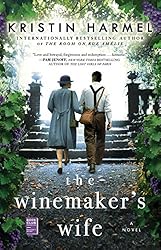
The Winemaker's Wife
Kristin Harmel, 2019
Gallery Books
432 pp.
ISBN-13: 9781982112301
Summary
The author of the engrossing international bestseller The Room on Rue Amelie returns with a moving story set amid the champagne vineyards of France during the darkest days of World War II.
• Champagne, 1940:
Ines has just married Michel, the owner of storied champagne house Maison Chauveau, when the Germans invade. As the danger mounts, Michel turns his back on his marriage to begin hiding munitions for the Résistance.
Ines fears they’ll be exposed, but for Celine, the French-Jewish wife of Chauveau’s chef de cave, the risk is even greater—rumors abound of Jews being shipped east to an unspeakable fate.
When Celine recklessly follows her heart in one desperate bid for happiness, and Ines makes a dangerous mistake with a Nazi collaborator, they risk the lives of those they love—and the vineyard that ties them together.
• New York, 2019:
Recently divorced, Liv Kent is at rock bottom when her feisty, eccentric French grandmother shows up unannounced, insisting on a trip to France. But the older woman has an ulterior motive—and a tragic, decades-old story to share.
When past and present finally collide, Liv finds herself on a road to salvation that leads right to the caves of the Maison Chauveau. (From the publisher.)
Author Bio
• Birth—May 4, 1979
• Born—Newton, Massachesettes, USA
• Education—B.A., University of Florida
• Currently—lives in Orlando, Florida
Kristin Harmel is an American author with more than a dozen novels to her name. Originally from Newton, Massachusetts, she gained her first writing experience at the age of 16 as a sports reporter for the St. Petersburg Times, and Tampa Bay All Sports magazine while still attending Northeast High School in St. Petersburg, Florida.
A graduate of the University of Florida, Harmel was a reporter for People magazine starting in 2000. Her work has appeared in dozens of other publications, including Men's Health, Glamour, YM, Teen People, People en Español, Runner's World, American Baby, Every Day With Rachel Ray, and more.
Harmel is the author of more than 10 books, which have been translated into many languages around the world. They include more recently including The Book of Lost Names (2020), The Winemaker’s Wife (2019), The Room on Rue Amelie (2018), and The Sweetness of Forgetting (2012).
Harmel resides in Orlando, Florida with her husband Jason. (Adapted from Wikipedia. Retrieved 4/22/2015.)
Book Reviews
Harmel's engrossing latest reminds us that love, like resistance, begins with courage.
People
Unfolding in multiple viewpoints, the writing is atmospheric and rich, showcasing heavily researched topics of wine making and French Resistance efforts.… [A]touching story of love and loss in World War II France. —Laura Jones, Argos Community Schs., IN
Library Journal
[Part of the novel's plot] requires suspension of disbelief… [while in others] Harmel resorts to formulaic moments…. A somewhat entertaining but mostly predictable story.… [R]eaders who can't get enough WWII fiction will probably still enjoy it.
Kirkus Reviews
Discussion Questions
1. This novel takes place in the champagne-producing region of France. How does the location play into the plot? Is the setting crucial to the story, or could this book have taken place at any vineyard during World War II?
2. Ines struggles with her place at the Maison Chauveau. She feels disrespected by her husband and left out of everything important. Did you feel sympathy for Ines’s predicament, or were you frustrated by her focus on her own problems? Or a mix of both?
3. Michel is not very attentive to Ines and doesn’t notice her attempts to be useful. However, he pays very close attention to Celine. Why do you think Michel was so frustrated with Inès?
4. Ines looks inward for much of the novel, and as a result, she misses a lot of the horror happening around her. How did you feel about her spending time with a Nazi collaborator? How do you think Ines justified it to herself?
5. Much of The Winemaker’s Wife revolves around characters being complacent in a time of crisis; therefore, it’s easy for one to be willfully blind to what’s really happening. Are there other times in history where this same observation applies?
6. Liv has her own struggles, including dealing with the end of her marriage. How does her situation compare with Ines’s predicament?
7. Celine goes through an emotional journey over the course of the novel, worrying about her family and her own safety. Her story, sadly, is dictated by the times she lived in. Did you feel satisfied with the way it turned out, or did you want Celine’s story to go differently?
8. Michel feels that he must defy the Nazis in any way he can. How did you feel about his resistance, with his knowing that he was putting others at Maison Chauveau in harm’s way?
9. Ines tries to help the Resistance, but those around her accuse her of only acting, as a way to prove that she’s useful—in essence, for still having selfish motives. How did you separate her motives from her actions? Is there something inherently selfish in every generous act?
10. Discuss what you learned about champagne making in The Winemaker’s Wife. How much did you know before you read the novel, and what did you learn from it?
11. Harmel surprises the reader with a twist, revealing new truths about modern-day Edith’s identity. Did you suspect that this was the case? Did it impact your understanding of the character of Ines?
12. The selfishness Ines displays has dire consequences at the end of the book. Do you think her work in the Resistance redeemed her?
(Questions issued by the publisher.)
The Winner
David Baldacci, 1997
Grand Central Publishing
524 pp.
ISBN-13: 9780446522595
Summary
When the enigmatic Mr. Jackson approaches LuAnn Tyler, a young, indigent mother of one, and guarantees her the $100 million national lottery prize, all of her prayers, or possibly all of her fears, become reality. (From the publisher.)
David Baldacci brings us another thriller that grabs hold and doesn't let go. It's the story of a rags-to-riches heroine. LuAnn Tyler is tough and smart, but she's plunged into a realm of corruption that will make readers think twice the next time they buy a lottery ticket. (Also from the publisher.)
Author Bio
• Birth—1960
• Where—Richmond, Virginia, USA
• Education——B.A., Virginia Commonwealth University; J.D.,
University of Virginia
• Currently—Northern Virginia
David Baldacci's authoritative legal thrillers operate on the irresistible notion that a sinister undercurrent threads through the country's most powerful institutions.
While his stories hinge on the complex machinations behind the presidency, the FBI, the Supreme Court and other spheres of influence, Baldacci (a former Washington, D.C.-based attorney) finds his way into a mystery through the eyes of the innocents. Semi-innocents, at least: small players who often don't realize they're players at all end up hunting down answers, and their hunt becomes the reader's.
According to Baldacci, reading John Irving's The World According to Garp convinced him that he wanted to be a novelist. Absolute Power—in which a thief finds himself accidentally connected to a murder involving the president and the ensuing coverup—was hardly Irvingesque; but it did begin Baldacci's friendly relationship with the bestseller lists, which has continued over his writing career.
Baldacci's style is brief and plot-driven, but he's not afraid to linger on macabre and vivid details, such as a rosary clenched in a plane crash victim's hand, or hard-learned lessons from a sniper's life (pack your food so you can find it at night, by touch). These small but memorable—indeed, almost cinematic—details give his books another layer that distinguishes them from the average potboiler.
Although the author has occasionally departed from his usual fare (examples include the tenderhearted coming-of-age tale Wish You Well and the holiday-themed adventure The Christmas Train), it is high-octane thrillers that are his true stock in trade. Whether it's a taut stand-alone or a new installment in his "Camel Club" series, readers know when they crack the spine of a new Baldacci book, they're in for an action-packed page-turner.
Extras
• Baldacci was a trial lawyer and a corporate lawyer for nine years in Washington, D.C.
• He worked his way through college as a Pinkerton security guard and by washing and detailing 18-wheel trucks.
• Baldacci writes under his own name except when published in Italy, where he uses a pseudonym because it is the homeland of his ancestors.
• Bill Clinton selected The Simple Truth as his favorite novel of 1998, according to Baldacci's web site. (From Barnes and Noble.)
Book Reviews
The heroine of The Winner is LuAnn Tyler, a smart and beautiful young woman from a backwater Georgia town who lives in a trailer with her baby's father, a no-good bum who drinks away his paycheck, fools around with other women and now seems to have picked up a sideline career in drug dealing. LuAnn dreams of leaving Duane whole she's slinging hash at her all-night, truck stop job, but knows realistically she's unlikely to save enough money to make the break. Enter Jackson, a master of multiple disguises with better-than-average talents for acting, investing and fixing lotteries. He's already successfully fixed a bunch of them, making the recipients enormously wealthy, and now he's settled on LuAnn as the winner of his next lottery scam. Though puzzled by Jackson's offer, LuAnn is also enticed—here's her chance to split from Duane and give her child a more promising future. But she's uncomfortable with the scheme, and ultimately decides to decline.
That all changes the morning she's to give Jackson her answer, when she accidentally becomes embroiled in one of Duane's drug deals gone awry. With Jackson's invitation her only shot at avoiding a potential murder conviction, she accepts and she and infant Lisa head for New York City, where the drawing is to take place. Under ordinary circumstances, LuAnn would have accepted the money and gotten her new life under way. But her appearance on TV attracts the interest of the authorities, so Jackson has to spirit her out of the country. She is ordered to make her home in Europe, which she does for 10 years. But she gets weary of being on the run, and wants a more stable life for Lisa, so she sneaks back into the U.S. moving to a home she has bought in Virginia. A substantial portion of the book is devoted to her efforts to evade both the police and Jackson, which is to say the excitement doesn't wane—in fact, it picks up—in the latter half of the book. If you were a bit disappointed with Baldacci's second novel, Total Control, you were justified; it didn't live up to the drama and credibility of Absolute Power. Be assured, however, that The Winner is—well, a winner.
Newark Star Ledger
Baldacci cuts everyone's grass—Grisham's, Ludlum's, even Patricia Cornwell's—and more than gets away with it.
People
Irritatingly trite woman-in-periler from lawyer-turned-novelist Baldacci. Moving away from the White House and the white-shoe Washington law firms of his previous bestsellers (Absolute Power, 1996; Total Control, 1997), Baldacci comes up with LuAnn Tyler, a spunky, impossibly beautiful, white-trash truck stop waitress with a no-good husband and a terminally cute infant daughter in tow. Some months after the birth of Lisa, LuAnn gets a phone call summoning her to a make-shift office in an unrented storefront of the local shopping mall. There, she gets a Faustian offer from a Mr. Jackson, a monomaniacal, cross-dressing manipulator who apparently knows the winning numbers in the national lottery before the numbers are drawn. It seems that LuAnn fits the media profile of what a lottery winner should be—poor, undereducated but proud—and if she's willing to buy the right ticket at the right time and transfer most of her winnings to Jackson, she'll be able to retire in luxury. Jackson fails to inform her, however, that if she refuses his offer, he'll have her killed. Before that can happen, as luck would have it, LuAnn barely escapes death when one of husband Duane's drug deals goes bad. She hops on a first-class Amtrak sleeper to Manhattan with a hired executioner in pursuit. But executioner Charlie, one of Jackson's paid handlers, can't help but hear wedding bells when he sees LuAnn cooing with her daughter. Alas, a winning $100 million lottery drawing complicates things. Jackson spirits LuAnn and Lisa away to Sweden, with Charlie in pursuit. Never fear. Not only will LuAnn escape a series of increasingly violent predicaments, but she'll also outwit Jackson, pay an enormous tax bill to the IRS, and have enough left over to honeymoon in Switzerland. Too preposterous to work as feminine wish-fulfillment, too formulaic to be suspenseful.
Kirkus Reviews
Discussion Questions
Use our LitLovers Book Club Resources; they can help with discussions for any book:
• How to Discuss a Book (helpful discussion tips)
• Generic Discussion Questions—Fiction and Nonfiction
• Read-Think-Talk (a guided reading chart)
Also consider these LitLovers talking points to help get a discussion started for The Winner:
1. This is a plot-driven suspense story. Does it live up to its reputation as a "thriller"? In other words, does the story keep you on the edge of your seat? How so?
2. How would you describe LuAnn—what kind of personality does she have? Why does she eventually accept Jackson's offer?
3. Then there's Jackson—the kind of character you love to hate! How about Uncle Charlie and his softspot for LuAnn and her daughter? Finally, were you rooting, or not, for Matthew Riggs?
4. Does LuAnn's fortune play into your own "sudden-wealth" fantasies? What would you have done in her place—accept the offer from Jackson immediately, never accept it, even after Duane's foul-up? Or do exactly what LuAnn does—accept it under duress? And—big question—how would you spend the money?
5. The story, ultimately, is about the possibility of recreating one's identify, changing one's life, and leaving behind a less-than-happy past. For many, it might be wish fulfillment. Is it for you? If you could make yourself over again, what kind of life would you create? Who would you be, what would you do, where would you live? And what would you be getting away from?
6. The title, "The Winner," has a double significance. It obviously refers to the lottery, but what else?
7. Were you satisfied by the ending? Did it fulfill your hopes? Was it predictable, or were you surprised?
(Questions by LitLovers. Please feel free to use them, online or off, with attribution. Thanks.)
top of page

Winter (Seasonal Quartet)
Ali Smith, 2017 (2018, U.S.)
Knopf Doubleday
336 pp.
ISBN-13: 9781101870754
Summary
WINTER. Bleak. Frosty wind, earth as iron, water as stone, so the old song goes. And now Art’s mother is seeing things.
Come to think of it, Art’s seeing things himself.
When four people, strangers and family, converge on a fifteen-bedroom house in Cornwall for Christmas, will there be enough room for everyone?
Winter. It makes things visible. In Ali Smith’s Winter, life-force matches up to the toughest of the seasons.
In this second novel in her Seasonal cycle, the follow-up to her sensational Autumn, Smith’s shape-shifting novel casts a warm, wise, merry and uncompromising eye over a post-truth era in a story rooted in history and memory and with a taproot deep in the evergreens, art and love. (From the publisher.)
Author Bio
• Birth—1962
• Where—Inverness, Scotland, UK
• Education—University of Abderdeen; Cambridge University
• Awards—Whitbread Award
• Currently—lives in Cambridge, England
Ali Smith is a Scottish writer who won the Whitbread Award in 2005 for her novel, The Accidental. To date, she has been shortlisted for the Man Booker Prize three times and the Orange Prize twice.
She was born to working-class parents, raised in a council house in Inverness and now lives in Cambridge. She studied at the University of Aberdeen and then at Newnham College, Cambridge, for a PhD that she never finished.
She worked as a lecturer at University of Strathclyde until she fell ill with Chronic Fatigue Syndrome. She then became a full-time writer and now writes for The Guardian, Scotsman, and Times Literary Supplement. She lives in Cambridge, England, with her partner filmmaker Sarah Wood.
Works
Smith is the author of several works of fiction, including the novel Hotel World (2001), which was short-listed for both the Orange Prize and the Man Booker Prize in 2001. She won the Encore Award and the Scottish Arts Council Book of the Year Award in 2002. ♦ The Accidental (2007) won the Whitbread Award and was also short-listed for both the Man Booker and Orange Prize. ♦ Her 2011 novel, There But For The, was shortlisted for the James Tait Black Prize and named as a Best Book of the Year by both the Washington Post and Boston Globe. ♦ How to Be Both (2014) was also shortlisted for the Man Booker Prize.
Her story collections include Free Love, which won the Saltire Society Scottish First Book Award and a Scottish Arts Council Award, and The Whole Story and Other Stories.
In 2007 she was elected a Fellow of the Royal Society of Literature.
In 2009, she donated the short story "Last" (previously published in the Manchester Review Online) to Oxfam's Ox-Tales project, four collections of UK stories written by 38 authors. Her story was published in the "Fire" collection. (From Wikipedia. Retrieved 11/20/2014.)
Book Reviews
All multibook "projects" have a kind of ambition and grand vision, but they must also function close up, book by book, chapter by chapter. That is true of Elena Ferrante’s Neapolitan novels and Karl Ove Knausgaard’s work. (He is writing his own seasonal quartet, having just published Winter.) While Edward St. Aubyn’s Patrick Melrose novels, looked at in the aggregate, are a way to understand family trauma, Smith seems to be using her cycle as a way to process the larger trauma of our breaking, swirling world — over time, over human moments, over seasons. Each novel will give her a new chance to inspect her preoccupations in a different light. In Winter, the light inside this great novelist’s gorgeous snow globe is utterly original, and it definitely illuminates.
Meg Wolitzer - New York Times Book Review
A capacious, generous shapeshifter of a novel.… [A] book with Christmas at its heart, in all its familiarity and estrangement: about time, and out of time, like the festival itself (The Best Fiction of 2017).
Guardian (UK)
[There are] glimmers of life, laughter and love.… Smith threads passages of delicately observed natural beauty throughout the ephemera. She often lets the language itself lead her (hence her love of puns), and the intricate narrative rolls back and forth smoothly in time.
Times Literary Supplement (UK)
Smith’s deceptively unshowy writing evokes every shade of emotion.… Themes and experiences entangle, making Winter a dense, satisfying read.… It’s to Smith’s credit that Winter works on a number of levels, from a straightforward, quotidian tale about a fractured family to a deeper story packed with symbolism and highbrow literary references: a subtle meditation on loneliness, loss and aging in uncertain times.
Irish Independent
One of Britain’s most important novelists.… Winter is narrated with Smith’s customary stylistic brio … punctuated with clever word play.… Heartwarming.
Irish Times
The novel is lucid and tightly constructed.… [I]ts disparate strands converge tautly to convey and deepen Smith’s powerful political message.… This wintry spirit of benevolence animates Smith’s vision of a world where empathy overrides divisions and where animosity can melt like snow.… Smith’s voice, so wise and joyful, is the perfect antidote to troubled times: raw and bitter in the face of injustice, yet always alive to hope.
New Statesman (UK)
Smith combines her state-of-the-moment themes with a preoccupation for how to behave in a meaningful way in an increasingly technocratic world—and she does so with an effervescent seriousness none of her peers can match.
Daily Mail (UK)
A novel of great ferocity, tenderness, righteous anger and generosity of spirit that you feel Dickens would have recognised.… Winter is at its most luminously beautiful when the news fades and merges with recent and ancient history, a reminder that everything is cyclical. There is forgiveness here, and song, and comic resolution of sorts, but the abiding image is of the tenacity of nature and light.
Observer (UK)
Smith has both a telescopic and a microscopic eye.… Her many-layered artistry softens rage or sorrow.… If Ali Smith’s four quartets in, and about, time do not endure to rank among the most original, consoling and inspiring of artistic responses to "this mad and bitter mess" of the present, then we will have plunged into an even bleaker midwinter than people often fear.
Financial Times (UK)
Smith’s prose—that trademark mischievous wit and wordplay, a joyful reminder of the most basic, elemental delights of reading—makes us see things differently.… The entire book is testament to the miraculous powers of the creative arts.… Winter firmly acknowledges the power of stories. Infused with some much needed humour, happiness and hope.
Independent (UK)
A novel which, in its very inclusiveness, associative joy, and unrestricted movement, proposes other kinds of vision.… [A]stonishingly fertile and free.… [Smith] finds life stubbornly shining in the evergreens.… [T]old in a voice that is Dickensian in its fluency and mobile empathy.… Leaping, laughing, sad, generous and winter-wise, this is a thing of grace.
Guardian (UK)
Combines comedy with social criticism, playfulness with political indictmen.… Structurally, the book is intricate: a collage of flashbacks, flash-forwards and interior monologues.… Smith is a self-consciously aesthetic writer who also has strong political convictions.
Sunday Times (UK)
Refracted through the lens of a broken family in a broken home, Smith’s vision is almost without redemption, but not quite; beneath the frozen ground, some hope exists.
Times (UK)
[A] novel of great ferocity, tenderness, righteous anger and generosity of spirit.… Winter is at its most luminously beautiful when the news fades and merges with recent and ancient history, a reminder that everything is cyclical. There is forgiveness here, and song, and comic resolution of sorts, but the abiding image is of the tenacity of nature and light.
Observer (UK)
[Smith] is cresting across the contemporary in a manner few novelists can manage.… Winter is a novel in which the cold also reveals clarity. Things crystallize. They become piercing and numbing at the same time. It is a book about being wintry in the sense of supercilious and hibernal, in its sense of wanting to shut the world out. The characters have to deal with both impulses, and deal with them in different ways. But the end result is a book that makes one think, and thinky books are rare as hen’s teeth these days.
Scotsman
Like Autumn, the novel employs a scattered, evocative plot and prose style, reflecting the fractured emotional, intellectual, and political states occupied by its contemporary characters. Though [it] misses more than it hits this time out, it’s still…engaging.
Publishers Weekly
(Starred review.) This second installment in Smith’s seasonal quartet combines captivating storytelling with a timely focus on social issues. Enthusiastically recommended; we’re now eagerly awaiting Spring.
Library Journal
(Starred review.) Stunning prose.… [O]ften funny, sometimes wistful, suggesting a garrulous old friend riffing on a gripe or sharing an anecdote. Smith knits together the present-time narrative and many flashbacks to reveal secrets, ironies, old loves, and the unfolding lives enriched by them. A sprightly, digressive, intriguing fandango on life and time.
Kirkus Reviews
Discussion Questions
We'll add publisher questions if and when they're available; in the meantime, please use our LitLovers talking points to help start a discussion for Winter … then take off on your own:
1. In what way might Charles Dickens's A Christmas Carol be the model for Ali Smith's Winter? For starters, consider Sophie Cleves and her stinginess. How else would you describe Sophie? Does she become more sympathetic during the course of the novel … or not?
2. Who or what are the disembodied heads that appear before Sophie? If you are unfamiliar with the various myths concerning the Green Man, find out a little about him, who he is and what he represents. What might it say, in terms of symbolic significance, that he appears to Sophie as one of the heads.
3. Compare Sophia to Iris: the conventional vs. the activist. How do the two sisters differ from one another? How would you describe their relationship? Frosty … or icy, perhaps? Iris lives a courageous life of protest on behalf of others. Is she the book's hero?
4. And Arthur — not much of a king for Camelot, is he? How would you describe him?
5. "Art is seeing things" — which Iris says is the perfect description of the importance of art. "Where would we be, without our ability to see beyond what it is we're supposed to be seeing?" she asks. How does that remark apply to the characters of the book ... in fact, to the thematic concerns of the novel as a whole? How does it apply in real life?
6. What role does Lux play in the novel? Consider the myth of the Stranger who comes into a village and functions as an agent of change, exposing shortcomings and wrongdoings. (Smith has used the stranger before: young Amber in her 2005 novel, The Accidental.)
7. Lux talks about Shakespeare's Cymbeline because, "it's like the people in the play are living in the same world but separately from each other, like their worlds have somehow become disjointed or broken off each other's worlds." How does that observation related to Sophia's family? And...to Britain as a whole?
8. Follow-up to Question 7: Winter, like Autumn before it, is written after Britain's Brexit vote. How does the symbolic shadow of Brexit fall over the novel? How does it affect the storyline, atmosphere, and characters?
9. Consider that winter encapsulates the dying of light, death within the natural world, Christmas and gift-giving, crystalline clarity of vision, and new beginnings. How might any or all of those notions, or other concepts of winter, play out in Ali Smith's novel?
10. Consider Smith's playful use of names: Sophia is derived from the Greek word for wisdom and knowledge; Iris was the goddess of the rainbow (hope) and in the novel is nicknamed "Ire"; Arthur was the legendary king of Camelot, evoked in the novel's opening lines about the death of romance and chivalry (Arthur is called "Art"); and Lux means light. How do these characters represent their names — or ironically misrepresent them?
11. Smith's signature wordplay is prevalent in more than her use of names. What are some other examples?
(Questions by LitLovers. Please feel free to use them, online and off, with attribution. Thanks.)


The Winter Boy
Sally Wiener Grotta, 2014
Pixel Hall Press
495 pp.
ISBN-13: 9780988387195
Summary
Reminiscent of Margaret Atwood, Mary Doria Russell and Ursula K. LeGuin, The Winter Boy explores important political and social issues within a dynamic, character-driven otherworld, wrapped up in masterful storytelling.
The Valley of the Alleshi is the center of all civilization, the core and foundation of centuries of peace. A cloistered society of widows, the Alleshi, has forged a peace by mentoring young men who will one day become the leaders of the land.
Each boy is paired with a single Allesha for a season of intimacy and learning, using time-honored methods that include dialog, reason and sexual intimacy. However, unknown to all but a hidden few, the peace is fracturing from pressures within and beyond, hacking at the very essence of their civilization.
Amidst this gathering political maelstrom, Rishana, a young new idealistic Allesha, takes her First Boy, Ryl, for a winter season of training. But Ryl is a “problem boy” who fights Rishana every step of the way.
At the same time, Rishana uncovers a web of conspiracies that could not only destroy Ryl, but threatens to tear their entire society apart. And a winter that should have been a gentle, quiet season becomes one of conflict, anger and danger. (From the publisher.)
Download a free excerpt.
Author Bio
Sally Wiener Grotta is a consummate storyteller, reflecting her deep humanism and appreciation for the poignancy of life. As an award-winning journalist, she has authored hundreds of articles, columns, essays and reviews for scores of glossy magazines, newspapers, journals and online publications. She has also authored numerous non-fiction books. Her fiction includes the critically acclaimed novel Jo Joe.
A member of the American Society of Journalists & Authors, Sally Wiener Grotta is a frequent speaker at conferences, schools and other organizations on storytelling, creativity, the business of writing, as well as on photography and the traditional tradespeople of her American Hands narrative portrait project. She welcomes invitations to participate in discussions with book clubs (occasionally in person, more often via Skype, Google Hangout, or phone), and to do occasional readings. You can also connect with her on Facebook. (From the publisher.)
Visit Sally on Google+ and on her blog,
Follow Sally on Facebook.
Book Reviews
A Bookwatch Reviewers’ Choice
[A] very rewarding read that raises your self-awareness in a way that only great books do… A literary triumph.
Dr. Babus Ahmed - Ajoobacats blog
The Winter Boy by Sally Wiener Grotta is a deeply thoughtful book. The comparisons to Margaret Atwood and Ursula K. LeGuin are apt. It reads more like literature than fantasy or Science Fiction… I found The Winter Boy very engrossing. I enjoyed the experience of reading the book and felt enriched by it when I was done.
Kelly Jensen - SFCrowsnest
The Winter Boy is highly readable. It captures the reader's interest immediately and swiftly carries him or her through the incredible story.
Alma Bond - Midwest Book Review
Sally Wiener Grotta has written an intriguing tale with a unique premise…. deeply enthralling.
Lynn Worton - Book Reviews by Lynn
Quite unlike anything else I have read, this second book from Sally Wiener Grotta is multi-faceted, complex and wholly intriguing.
Gaele Hince - I am Indeed
I thoroughly enjoyed this book. I particularly liked the development of the characters and their response to the lessons they learned. Although set in a time that is not our own, many of the insights offered throughout the story have relevance to our world and our own humanity. I loved the myths and legends that were used as part of Ryl’s training. The Winter Boy is also a suspenseful tale and I always returned to my reading, eager to find out what would happen next….This is a story that will stay with me for a long time; thank you Sally Wiener Grotta for writing such a wonderful, thought provoking story.
Angela Thomas - Fantastic Books
The Winter Boy is a study on human character, and an interesting lesson on the psychology of the pupil as well as the teacher…. The prose is lyrical, though straightforward. There are elements of philosophy, spirituality, and sensuality that are thought provoking, disturbing, even. It is a deep, all-encompassing story, well imagined and exotic.
Michelle Bowles - What Is That Book About
Discussion Questions
1. If you were to create a culture or society from scratch, with the hope of it being one of peace, how would you have gone about doing it?
2. What fatal flaws did the Alleshine world have? Or are the flaws within human beings?
3. How many names have you had in your lifetime? How did they represent different relationships or different aspects of you and your life at the time?
4. What do you think of Kiv? What do you think of she did what she did? Was it entirely out of love for the Peace, or other more personal reasons - or both? What would you have done, if you felt the way she did?
5. What do you think of the idea of using sexuality and intimacy to teach young men how to be leaders? How have the deep bonds you have shared with special people in your life changed you? What did you learn from them? Was the depth of your learning and alteration related to the depth of the relationship?
6. If you were an Allesha or Alleman, what would you do to save the Peace?
7. What do you think of the Guardian Alleshi? Are they necessary? Or do they subvert the essence of the Alleshine Peace?
8. Can you save lives by taking lives? Does preparing for war assure that there will be a war? Or does the nature of humanity require always being ready to protect yourself and your loved ones?
9. What do you think would have happened to Jinet if she hadn't become an Allesha?
10. What makes her the right fit for Ryl? Would Ryl have become an Alleman with some other Allesha? Was there anything unique about their pairing, or was it the system of training that gave him what he needed to mature?
11. How would you define Ryl/Dov's love for Tayar? What are the differences and similarities to his love for Lilla? Can one man love two women? Can a boy be in love with a woman older than his mother?
12. Do you blame Mistral for starting a war? What would you have done in a similar situation?
13. Was Caith wise or foolish to confront Kiv about her plans? Why? If you were Caith, would you have released the guns?
(Questions courtesy of the author.)

Winter Counts
David Heska Hanbli Weiden, 2020
HarperCollins
336 pp.
ISBN-13: 9780062968944
Summary
A groundbreaking thriller about a vigilante on a Native American reservation who embarks on a dangerous mission to track down the source of a heroin influx.
Virgil Wounded Horse is the local enforcer on the Rosebud Indian Reservation in South Dakota.
When justice is denied by the American legal system or the tribal council, Virgil is hired to deliver his own punishment, the kind that’s hard to forget.
But when heroin makes its way into the reservation and finds Virgil’s nephew, his vigilantism suddenly becomes personal. He enlists the help of his ex-girlfriend and sets out to learn where the drugs are coming from, and how to make them stop.
They follow a lead to Denver and find that drug cartels are rapidly expanding and forming new and terrifying alliances. And back on the reservation, a new tribal council initiative raises uncomfortable questions about money and power.
As Virgil starts to link the pieces together, he must face his own demons and reclaim his Native identity. He realizes that being a Native American in the twenty-first century comes at an incredible cost.
Winter Counts is a tour-de-force of crime fiction, a bracingly honest look at a long-ignored part of American life, and a twisting, turning story that’s as deeply rendered as it is thrilling. (From the publisher.)
Author Bio
David Heska Wanbli Weiden is an enrolled citizen of the Sicangu Lakota Nation and received his MFA from the Institute of American Indian Arts. He's a MacDowell Colony Fellow, a Tin House Scholar, and the recipient of the PEN America Writing for Justice Fellowship. A lawyer and professor, he lives in Denver, Colorado, with his family. (From the publisher.)
Book Reviews
Weiden is from a branch of the Lakota tribe himself, and his book relies on deep research into its history and traditions. Winter Counts is written with a light touch and a good deal of humor and sobering truths about Native American life.
Sarah Lyall - New York Times Book Review
You can zip through Winter Counts for the fast-paced thrills or the chance to learn about native culture, but slow down to enjoy the beauty of Weiden’s writing.
Washington Post
Winter Counts is a once-in-a-generation thriller, an unforgettable debut set in and around South Dakota’s Rosebud Indian Reservation that brims with complex characters, believable conflicts and an urgent message about Native culture, inequities and criminal justice.… Propulsive.
Los Angeles Times
[V]ivid and convincingly rendered… with fresh insight into the durable charms of the whodunit…. And while some readers may correctly suspect who the true bad guy is long before the reveal, there is plenty to enjoy in the journey to the novel’s satisfying conclusion…. [A] compelling read and an insightful perspective on identity and power in America.
USA Today
(Starred review) [G]orgeous…. The novel twists delicately around various personal conflicts while artfully addressing issues related to the politics of the reservation. Weiden combines funny, complex, and unforgettable characters with strong, poetic prose. This is crime fiction at its best.
Publishers Weekly
Weiden’s series launch sheds much-needed light on the legal and societal barriers facing Native Americans while also delivering a suspenseful thriller that builds to a bloody climax. A worthy addition to the burgeoning canon of indigenous literature. —Michael Pucci, South Orange P.L., NJ
Library Journal
[An] engrossing, and culturally revelatory debut crime novel…. Suspenseful, gritty, gruffly endearing, and resonant, Weiden’s thriller, with its illumination of Lakota spiritual traditions and hopes raised for Virgil’s evolution from thug to sleuth, launches a promising and meaningful series.
Booklist
Key characters have a way of fading from view, and things get talky just when the action is picking up.…Weiden is at his best allowing Native culture to curl naturally around the mystery plot.… A solid if inconsistent crime novel.
Kirkus Reviews
Discussion Questions
1. What did you think about the setting of the book—the Rosebud Indian Reservation? If you’ve never visited a Native reservation, were you surprised by anything described in the book about reservation life?
2. What did you think about the main character, Virgil Wounded Horse? Did you like or dislike him? Did that change as you read further in the book?
3. Who was your favorite character in Winter Counts? Did you dislike any of the characters?
4. What are your feelings about the criminal justice system on reservations? Do you think the U.S. government should change the laws that prevent Native nations from prosecuting felony crimes that occur on their own lands?
5. At times, Virgil is troubled by his role as a hired enforcer. What are your thoughts about this issue? Is Virgil serving or harming justice?
6. There are other social issues discussed in Winter Counts: the problematic health care system on reservations and the lack of healthy food options. What do you think about these issues?
7. How did you feel about the relationship between Virgil and Marie? How about Virgil and his nephew Nathan? How do these relationships change over the course of the novel?
8. How do you feel about the conclusion of the novel? Were you satisfied with the ending? If not, what would you have changed?
9. Did anything surprise you in the book? What did you like most about the novel? What were your favorite scenes from the book?
10. If Winter Counts were turned into a television series or a film, which actors would you like to play Virgil and Marie? How about Nathan and Tommy?
11. What aspect of Native American life would you like to learn more about?
(Questions from the author's website.)
top of page (summary)


A Winter Dream
Richard Paul Evans, 2012
Simon & Schuster
288 pp.
ISBN-13: 9781451628036
Summary
The author of the bestselling phenomenon The Christmas Box presents a new holiday novel about family, fate and forgiveness.
Joseph Jacobson is the twelfth of thirteen siblings, all of whom are employed by their father’s successful Colorado advertising company. But underneath the success runs a poisonous undercurrent of jealousy; Joseph is his father’s favorite and the focus of his brothers’ envy and hatred. When the father seems ready to anoint Joseph as his heir, the brothers make their move, forcing Joseph from the company and his Denver home, severing his ties to his parents and ending his relationship with his soon-to-be fiancee. Alone and lonely, Joseph must start a new life.
Joseph joins a Chicago advertising agency where his creativity helps him advance high up in the company. He also finds hope for a lasting love with April, a kind woman with a secret. However, all secrets hold consequences, and when Joseph learns the truth about April’s past, his world is again turned upside down. Finally, Joseph must confront his own difficult past in order to make his dreams for the future come true.
A Winter Dream is an ingenious modern retelling of the Old Testament story of Joseph and the coat of many colors by the master of the holiday novel. (From the publisher.)
Author Bio
• Birth—October 11, 1962
• Where—Salt Lake City, Utah, USA
• Education—B.A., University of Utah
• Awards—American Mother Book Award; two Story
Telling World Awards (2000, 2001)
• Currently—lives in Salt Lake City, Utah
Evans graduated from Cottonwool High School in Salt Lake City. He graduated with a B.A. degree from the University of Utah in 1984. While working as an advertising executive he wrote a Christmas story for his children. Unable to find a publisher or an agent, he self-published the work in 1999 as a paperback novella entitled The Christmas Box. He distributed it to book stores in his community.
The book became a local bestseller, prompting Evans to publish the book nationally. The next year The Christmas Box hit #2 on the New York Times bestseller list, inciting an auction for the publishing rights among the world's top publishing houses. Evans signed a publishing deal with Simon & Schuster. Released in hardcover in 1995, The Christmas Box became the first book to simultaneously reach the number-one position on the New York Times bestseller list for both paperback and hardcover editions. That same year, the book was made into a television movie of the same title, starring Richard Thomas and Maureen O'Hara.
Evans has subsequently written eleven nationally best-selling books, including those for children, most with conservative Christian themes and appealing to family values. His 1996 book Timepiece was made into a television movie featuring James Earl Jones and Ellen Burstyn, as was 1998's The Locket, which starred Vanessa Redgrave, and 2003's A UnPerfect Day, which starred Rob Lowe and Christopher Lloyd. (Adapted from Wikipedia.)
Book Reviews
Shoved out of the family business by his green-with-envy siblings, Joe soon triumphs as chief adviser to the CEO of another company. Then the siblings need his help. Sound familiar? This novel is in fact based on the Old Testament story of Joseph and the Coat of Many Colors. More sparkly holiday hope from the author of the outrageously best-selling The Christmas Box.
Library Journal
Readers will relate to these characters, be moved to tears and laughter by them, and most importantly, be inspired by them,... A journey you should definitely take.
Kirkus Reviews
Discussion Questions
Use our LitLovers Book Club Resources; they can help with discussions for any book:
• How to Discuss a Book (helpful discussion tips)
• Generic Discussion Questions—Fiction and Nonfiction
• Read-Think-Talk (a guided reading chart)
Specific questions will be added if and when they are made available by the publisher or author.


Winter Garden
Kristin Hannah, 2010
St. Martin's Press
532 pp.
Meredith and Nina Whitson are as different as sisters can be. One stayed at home to raise her children and manage the family apple orchard; the other followed a dream and traveled the world to become a famous photojournalist.
But when their beloved father falls ill, Meredith and Nina find themselves together again, standing alongside their cold, disapproving mother, Anya, who even now, offers no comfort to her daughters. As children, the only connection between them was the Russian fairy tale Anya sometimes told the girls at night. On his deathbed, their father extracts a promise from the women in his life: the fairy tale will be told one last time—and all the way to the end.
Thus begins an unexpected journey into the truth of Anya’s life in war-torn Leningrad, more than five decades ago. Alternating between the past and present, Meredith and Nina will finally hear the singular, harrowing story of their mother’s life, and what they learn is a secret so terrible and terrifying that it will shake the very foundation of their family and change who they believe they are. (From the publisher.)
Author Bio
• Birth—September, 1960
• Where—Southern California, USA
• Reared—Western Washington State
• Education—J.D., from a school in Washington (state)
• Awards—Golden Heart Award; Maggie Award; National Reader's Choice
• Currently—lives on Bainbridge Island, Washington
I was born in September 1960 in Southern California and grew up at the beach, making sand castles and playing in the surf. When I was eight years old, my father drove us to Western Washington where we called home.
After working in a trendy advertising agency, I decided to go to law school. "But you're going to be a writer" are the prophetic words I will never forget from my mother. I was in my third-and final-year of law school and my mom was in the hospital, facing the end of her long battle with cancer. I was shocked to discover that she believed I would become a writer. For the next few months, we collaborated on the worst, most clichéd historical romance ever written.
After my mom's death, I packed up all those bits and pieces of paper we'd collected and put them in a box in the back of my closet. I got married and continued practicing law.
Then I found out I was pregnant, but was on bed rest for five months. By the time I'd read every book in the house and started asking my husband for cereal boxes to read, I knew I was a goner. That's when my darling husband reminded me of the book I'd started with my mom. I pulled out the boxes of research material, dusted them off and began writing. By the time my son was born, I'd finished a first draft and found an obsession.
The rejections came, of course, and they stung for a while, but each one really just spurred me to try harder, work more. In 1990, I got "the call," and in that moment, I went from a young mother with a cooler-than-average hobby to a professional writer, and I've never looked back. In all the years between then and now, I have never lost my love of, or my enthusiasm for, telling stories. I am truly blessed to be a wife, a mother, and a writer. (From the author's website .)
Book Reviews
Female bonding is always good for a good cry, as Hannah (True Colors ) proves in her latest. Pacific Northwest apple country provides a beautiful, chilly setting for this family drama ignited by the death of a loving father whose two daughters have grown apart from each other and from their acid-tongued, Russian-born mother. After assuming responsibility for the family business, 40-year-old empty-nester Meredith finds it difficult to carry out her father’s dying wish that she take care of her mother; Meredith’s troubled marriage, her troubled relationship with her mother and her mother’s increasingly troubled mind get in the way. Nina, Meredith’s younger sister, takes a break from her globe-trotting photojournalism career to return home to do her share for their mother. How these three women find each other and themselves with the help of vodka and a trip to Alaska competes for emotional attention with the story within a story of WWII Leningrad. Readers will find it hard not to laugh a little and cry a little more as mother and daughters reach out to each other just in the nick of time.
Publishers Weekly
Middle-aged sisters Meredith and Nina have always felt distanced from their Russian-born mother, Anya. But when their beloved father dies, he leaves them with a wish—for them to become closer to their mother and for Anya to reveal the truth about her past. Meredith's and Nina's troubled relationship with their mother is mirrored in their relationships with men. Meredith has grown apart from Jeff, her childhood sweetheart and longtime husband. And Nina travels the world as a freelance photographer, meeting up occasionally with lover Danny. Things have to fall apart before they get better, so after Jeff leaves Meredith and Nina's work begins to suffer, the sisters spend more time with Anya, who finally reveals more of the fairy tale she had told her daughters in their childhood. It doesn't take long for Meredith and Nina to figure out that this is really the true story of their mother's life in Leningrad during World War II. Verdict: This tearjerker weaves a convincing historical novel and contemporary family drama with elements of romance. It is sure to please fans of Danielle Steel, Luanne Rice, and Nicholas Sparks. —Karen Core, Detroit P.L.
Library Journal
A Russian refugee's terrible secret overshadows her family life. Meredith, heir apparent to her family's thriving Washington State apple enterprises, and Nina, a globetrotting photojournalist, grew up feeling marginalized by their mother. Anya saw her daughters as merely incidental to her grateful love for their father Evan, who rescued her from a German prison camp. The girls know neither their mother's true age, nor the answers to several other mysteries: her color-blindness, her habit of hoarding food despite the family's prosperity and the significance of her "winter garden" with its odd Cyrillic-inscribed columns. The only thawing in Anya's mien occurs when she relates a fairy tale about a peasant girl who meets a prince and their struggles to live happily ever after during the reign of a tyrannical Black Knight. After Evan dies, the family comes unraveled: Anya shows signs of dementia; Nina and Meredith feud over whether to move Mom from her beloved dacha-style home, named Belye Nochi after the summer "white nights" of her native Leningrad (St. Petersburg). Anya, now elderly but of preternaturally youthful appearance—her white hair has been that way as long as the girls can remember—keeps babbling about leather belts boiled for soup, furniture broken up for firewood and other oddities. Prompted by her daughters' snooping and a few vodka-driven dinners, she grudgingly divulges her story. She is not Anya, but Vera, sole survivor of a Russian family; her father, grandmother, mother, sister, husband and two children were all lost either to Stalin's terror or during the German army's siege of Leningrad. Anya's chronicle of the 900-day siege, during which more than half a million civilians perished from hunger and cold, imparts new gravitas to the novel, easily overwhelming her daughters' more conventional "issues." The effect, however, is all but vitiated by a manipulative and contrived ending. Bestselling Hannah sabotages a worthy effort with an overly neat resolution.
Kirkus Reviews
Discussion Questions
1. This novel explores a complicated and strained relationship between two sisters. Do you think Meredith is justified in being so angry with Nina? In what ways are the sisters different and in what ways are they alike?
2. Meredith and Nina are both reluctant to let the men in their lives help them through a difficult time, yet both are suffering from the grief caused by the death of their father. Do you think this is something they’ve inherited from their mother? In what other ways are they similar to their mother? Do you think it’s impossible to avoid becoming like the people who raised you?
3. Anya Whitson is color blind and cannot see the colors in her winter garden. Why do you think the author gave the character this particular trait? In what ways is it a metaphor for what Anya has gone through in her life? Do you believe it is a physiological blindness or a psychological one?
4. One of the themes in this book is female solidarity and strength during hard times. Nina witnesses women in Namibia, Africa holding hands and laughing, even though their country has been ravaged by famine and warfare. Their bond impenetrable. Why do you think she’s so interested in this theme How else does this theme play out throughout the novel? How does understanding her mother’s life inform Nina’s view of her work?
5. Memory is an important theme in Winter Garden. Meredith often regrets—when looking at old family photos taken without her—that she was often off organizing or obsessing over details, while everyone else was living in the moment, creating memories. How common is this for women and mothers? What memories keep your family together?
6. As a child in Leningrad, Anya learned that it was dangerous to express emotions. That in doing so she would be putting what was left of her family at risk with the secret police. But now, with Meredith and Nina, her inability to express emotion is driving them apart, destroying the family she has now. How has Anya passed down this legacy to her daughters? How has it harmed their own relationships?
7. Food is an important element in this novel. Obviously, Anya loves to cook. Why doesn’t she teach this to her daughters?
8. Jeff tells Meredith that “words matter.” What are some examples of this throughout the story? How have words saved and harmed each of these characters’ lives? How has silence saved and harmed each of these characters’ lives? How do words—the telling of the fairy tale—change their individual and collective perceptions of who they are?
9. When Anya, Meredith and Nina watch the man carving the totem pole in Alaska in memory of his deceased son, Meredith realizes that Anya’s fairytale has served the same function as this man’s sculpture. It is a symbol of loss, a way to sublimate the pain of grief, to heal. In what other ways did Anya heal by telling her daughters the fairy tale? In what ways did Meredith and Anya heal?
10. Anya is an unsympathetic character throughout much of the book. How did your perception of her change as the fairy tale unfolded? Did you end up sympathizing with her, or even liking her? Or do you feel that her treatment of her daughters was inexcusable, regardless of the hardships she had faced in her life? How do you think you would have fared in Leningrad under the siege? Was Anya heroic in Leningrad, or a failure?
11. It isn’t until Nina and Meredith discover who their mother is that they are able to discover who they are. What do they find out about themselves? How do you think their perception of their own childhoods will change now that they know the truth behind their mother’s story?
12. Winter Garden teaches us that it is never too late to say “I love you.” Meredith and Nina waited all of their lives to hear it from their mother. Sasha waited until his death for Anya to return. What has this novel taught us about the bonds of family and the strength of love?
13. How did you feel about the ending?
(Questions issued by publisher.)


The Winter Girl
Matt Marinovich, 2015
Knopf Doubleday
224 pp.
ISBN-13: 9780385539975
Summary
A scathing and exhilarating thriller that begins with a husband's obsession with the seemingly vacant house next door.
It's wintertime in the Hamptons, where Scott and his wife, Elise, have come to be with her terminally ill father, Victor, to await the inevitable.
As weeks turn to months, their daily routine—Elise at the hospital with her father, Scott pretending to work and drinking Victor's booze—only highlights their growing resentment and dissatisfaction with the usual litany of unhappy marriages: work, love, passion, each other.
But then Scott notices something simple, even innocuous. Every night at precisely eleven, the lights in the neighbor's bedroom turn off. It's clearly a timer...but in the dead of winter with no one else around, there's something about that light he can't let go of.
So one day while Elise is at the hospital, he breaks in. And he feels a jolt of excitement he hasn't felt in a long time. Soon, it's not hard to enlist his wife as a partner in crime and see if they can't restart the passion.
Their one simple transgression quickly sends husband and wife down a deliriously wicked spiral of bad decisions, infidelities, escalating violence, and absolutely shocking revelations.
Matt Marinovich makes a strong statement with this novel. The Winter Girl is the psychological thriller done to absolute perfection. (From the publisher.)
Author Bio
• Birth—1966
• Where—N/A
• Education—M.F.A., Emerson College
• Currently—lives in Brooklyn, New York City, New York
Matt Marinovich is the author of The Winter Girl (2016) and Strange Skies (2007). He has worked as a freelance writer, manuscript editor, copy writer, and adjunct professor.
He has worked as an editor at Interview, Martha Stewart Living, People, and Real Simple. His writing has appeared in McSweeney’s Internet Tendency, Esquire.com, Salon, Quarterly West, Open City, Barcelona Review, Mississippi Review, Poets & Writers, and other publications.
He lives in Brooklyn. (From the publisher.)
Book Reviews
[A]bsorbing thriller [about]...Scott and Elise, a troubled couple...staying in the house of Elise’s abusive and dying father, Victor.... The revelations...seem rushed at times, and Scott’s own motivations aren’t always clear. Still, this is an engrossing, disquieting read for a chilly night.
Publishers Weekly
Family secrets and marital transgressions weave a suspenseful Hitchcockian story of intrigue, mystery, and deceit.... Marinovich offers a promising premise with a disturbing, fast-paced plot. While the ending may leave something to be desired, this is a quick read for fans of psychological thrillers. —Carolann Curry, Mercer Univ. Lib., Macon, GA
Library Journal
The twists are clever and the pacing relentless.
Booklist
[A] psychological thriller.... It starts with promise.... [but the] novel's second half devolves into a noisy, almost parodic noir, with too much coincidence, too many nested secrets, and too many people acting according to motives that seem cooked up.... But it all moves briskly, and the beginning is compelling enough to keep the reader turning pages.
Kirkus Reviews
Discussion Questions
Use our LitLovers Book Club Resources; they can help with discussions for any book:
• How to Discuss a Book (helpful discussion tips)
• Generic Discussion Questions—Fiction and Nonfiction
• Read-Think-Talk (a guided reading chart)
(We'll add specific questions if and when they're made available by the publisher. In the meantime, use our generic mystery questions.)
GENERIC DISCUSSION QUESTIONS
Mystery / Crime / Suspense Thrillers
1. Talk about the characters, both good and bad. Describe their personalities and motivations. Are they fully developed and emotionally complex? Or are they more one-dimensional heroes and villains?
2. What do you know...and when do you know it? At what point in the book do you, the reader, begin to piece together what happened?
3. Good crime writers are skillful at hiding clues in plain sight. How well does the author hide the clues in this work?
4. Does the author use red-herrings—false clues—to purposely lead readers astray?
5. Talk about plot's twists & turns—those surprising developments that throw everything you think you've figured out into disarray. Do they enhance the story, add complexity, and build suspense? Are they plausible? Or do the twists & turns feel forced and preposterous—inserted only to extend the story.
6. Does the author ratchet up the story's suspense? Did you find yourself anxious—quickly turning pages to learn what happened? How does the author build suspense?
7. What about the ending—is it satisfying? Is it probable or believable? Does it grow out of clues previously laid out by the author (see Question 2). Or does the ending come out of the blue? Does it feel forced...tacked-on...or a cop-out? Or perhaps it's too predictable. Can you envision a better, or different, ending?
8. Are there certain passages in the book—ideas, descriptions, or dialogue—that you found interesting or revealing...or that somehow struck you? What lines, if any, made you stop and think?
9. Overall, does the book satisfy? Does it live up to the standards of a good crime story or suspense thriller? Why or why not?
(Generic Mystery Questions by LitLovers. Please feel free to use them, online or off, with attribution. Thanks.)
top of page (summary)


The Winter Guest
Pam Jenoff, 2014
Harlequin
256 pp.
ISBN-13: 9780778315964
Summary
A stirring novel of first love in a time of war and the unbearable choices that could tear sisters apart, from the celebrated author of The Kommandant's Girl
Life is a constant struggle for the eighteen-year-old Nowak twins as they raise their three younger siblings in rural Poland under the shadow of the Nazi occupation. The constant threat of arrest has made everyone in their village a spy, and turned neighbor against neighbor.
Though rugged, independent Helena and pretty, gentle Ruth couldn't be more different, they are staunch allies in protecting their family from the threats the war brings closer to their doorstep with each passing day.
Then Helena discovers an American paratrooper stranded outside their small mountain village, wounded, but alive. Risking the safety of herself and her family, she hides Sam—a Jew—but Helena's concern for the American grows into something much deeper. Defying the perils that render a future together all but impossible, Sam and Helena make plans for the family to flee.
But Helena is forced to contend with the jealousy her choices have sparked in Ruth, culminating in a singular act of betrayal that endangers them all—and setting in motion a chain of events that will reverberate across continents and decades. (From the publisher.)
Author Bio
• Birth—N/A
• Where—Silver Spring, Maryland, USA
• Education—B.A., George Washington University; M.A., Cambridge University; J.D., University of Pennsylvania
• Currently—lives in Cherry Hill, New Jersey
Pam Jenoff was born in Maryland and raised outside Philadelphia. She attended George Washington University in Washington, D.C., and Cambridge University in England.
Upon receiving her master's in history from Cambridge, she accepted an appointment as Special Assistant to the Secretary of the Army. The position provided a unique opportunity to witness and participate in operations at the most senior levels of government, including helping the families of the Pan Am Flight 103 victims secure their memorial at Arlington National Cemetery, observing recovery efforts at the site of the Oklahoma City bombing and attending ceremonies to commemorate the fiftieth anniversary of World War II at sites such as Bastogne and Corregidor.
Following her work at the Pentagon, Pam moved to the State Department. In 1996 she was assigned to the U.S. Consulate in Krakow, Poland. It was during this period that Pam developed her expertise in Polish-Jewish relations and the Holocaust. Working on matters such as preservation of Auschwitz and the restitution of Jewish property in Poland, Pam developed close relations with the surviving Jewish community.
Pam left the Foreign Service in 1998 to attend law school and graduated from the University of Pennsylvania. She worked for several years as a labor and employment attorney both at a firm and in-house in Philadelphia and now teaches law school at Rutgers.
Pam is the author of The Kommandant's Girl, which was an international bestseller and nominated for a Quill award, as well as The Diplomat's Wife, The Ambassador's Daughter, Almost Home, A Hidden Affair and The Things We Cherished.
She lives outside Philadelphia with her husband and three children. (From the publisher.)
Book Reviews
I have not been so moved by a book in quite some time as I was by The Kommandant's Girl ...The remarkably accurate account of a world at war, and the repercussions of that war make this a brilliant debut novel...I could not put the book down, yet was sad to see it end.
Historical Romance Writers
Jenoff excels in her vivid portrayal of the deprivation and corrosive fear that afflicted those dwelling under Nazi aggression.... In the end, The Winter Guest proves compulsive as it races to its desperate denouement, the finale a moving testament to the suffering endured during the war.
Historical Novel Society
Brisk, romantic and emotionally satisfying.
Booklist
Successful and satisfying...[Jenoff] expertly draws out the tension and illustrates the danger and poverty of Eastern Europe as it falls under communism. Highly recommended for all fiction collections.
Library Journal
An 18-year-old Polish girl falls in love, swoons over a first kiss, dreams of marriage—and, oh yes, we are in the middle of the Holocaust.... [It is] the early 1940s, as the Nazis invade Poland and herd Jews into ghettos and concentration camps.... Romance and melodrama mix uneasily with mass murder.
Kirkus Reviews
Discussion Questions
1. Which sister did you identify with more closely, Helena or Ruth? If you have a sibling, were you able to relate to their rivalry, camaraderie, and the distinct role each of them played in the family?
2. Were there things that you wished Helena had done differently throughout the book? Under what circumstances would you make a decision like Helena’s—one that put yourself and potentially the ones you love at risk? Would you have helped Sam, or looked the other way to protect your family?
3. Despite the horrors of war, a romantic view of WWI and WWII abounds in historical novels. What is it about wartime that drew men and women together so powerfully, like Helena and Sam? Do you believe it is possible for people to fall in love so quickly and for such a love to last?
4. How did each of the sisters’ strengths and weaknesses come to light in the story—and what role did Sam play?
5. Discuss the sisters’ relationship as it evolved throughout the book. Do you think it improved or deteriorated by the end?
6. The Nowak sisters were young women dealing with situations that were completely overwhelming, especially at such a young age. What do you think each really wanted out of life, and in your view were those dreams achievable?
7. Did you identify with any symbolic items or places throughout the book? What did they represent to you?
8. Helena’s feelings toward the Jews, and the Poles’ views of the Jews, were multi-faceted throughout the book. What was your reaction to these varying perspectives?
9. Were you surprised to learn what had happened to the Nowaks at the end of the book? Did you feel it was the appropriate ending for each of the characters?
(Questions courtesy of the author.)
The Winter of Our Discontent
John Steinbeck, 1961
Penguin Group USA
304 pp.
ISBN-13: 9780143039488
Summary
In awarding John Steinbeck the 1962 Nobel Prize in Literature, the Nobel committee stated that with The Winter of Our Discontent, he had "resumed his position as an independent expounder of the truth, with an unbiased instinct for what is genuinely American."
Ethan Allen Hawley, the protagonist of the novel, works as a clerk in a grocery store that his family once owned. With the decline in their status, his wife is restless, and his teenage children are hungry for the tantalizing material comforts he cannot provide. Then one day, in a moment of moral crisis, Ethan decides to take a holiday from his own scrupulous standards. (From the publisher.)
Author Bio
• Birth—February 27, 1902
• Where—Salinas, California USA
• Death—December 20, 1968
• Where—New York, NY
• Education—Studied marine biology at Stanford University,
1919-25
• Awards—Pulitzer Prize and National Book Award, 1940;
Nobel Prize, 1962.
John Ernst Steinbeck, Nobel and Pulitzer Prize winner, was born in Salinas, California February 27, 1902. His father, John Steinbeck, served as Monterey County Treasurer for many years. His mother, Olive Hamilton, was a former schoolteacher who developed in him a love of literature. Young Steinbeck came to know the Salinas Valley well, working as a hired hand on nearby ranches in Monterey County.
In 1919, he graduated from Salinas High School as president of his class and entered Stanford University majoring in English. Stanford did not claim his undivided attention. During this time he attended only sporadically while working at a variety jobs including on with the Big Sur highway project, and one at Spreckels Sugar Company near Salinas.
Steinbeck left Stanford permanently in 1925 to pursue a career in writing in New York City. He was unsuccessful and returned, disappointed, to California the following year. Though his first novel, Cup of Gold, was published in 1929, it attracted little literary attention. Two subsequent novels, The Pastures of Heaven and To A God Unknown, met the same fate.
After moving to the Monterey Peninsula in 1930, Steinbeck and his new wife, Carol Henning, made their home in Pacific Grove. Here, not far from famed Cannery Row, heart of the California sardine industry, Steinbeck found material he would later use for two more works, Tortilla Flat and Cannery Row.
With Tortilla Flat (1935), Steinbeck's career took a decidedly positive turn, receiving the California Commonwealth Club's Gold Medal. He felt encouraged to continue writing, relying on extensive research and personal observation of the human drama for his stories. In 1937, Of Mice and Men was published. Two years later, the novel was produced on Broadway and made into a movie. In 1940, Steinbeck won the Pulitzer Prize for fiction for Grapes of Wrath, bringing to public attention the plight of dispossessed farmers.
After Steinbeck and Henning divorced in 1942, he married Gwyndolyn Conger. The couple moved to New York City and had two sons, Thomas and two years later, John. During the war years, Steinbeck served as a war correspondent for the New York Herald Tribune. Some of his dispatches reappeared in Once There Was A War. In 1945, Steinbeck published Cannery Row and continued to write prolifically, producing plays, short stories and film scripts. In 1950, he married Elaine Anderson Scott and they remained together until his death.
Steinbeck received the Nobel Prize for Literature in 1962 "for his realistic as well as imaginative writings, distinguished by a sympathetic humor and keen social perception." In his acceptance speech, Steinbeck summarized what he sought to achieve through his works:
Literature is as old as speech. It grew out of human need for it and it has not changed except to become more needed. The skalds, the bards, the writers are not separate and exclusive. From the beginning, their functions, their duties, their responsibilities have been decreed by our species.... Furthermore, the writer is delegated to declare and to celebrate man's proven capacity of greatness of heart and spirit—gallantry in defeat, for courage, compassion and love. In the endless war against weakness and despair, these are the bright rally flags of hope and emulation. I hold that a writer who does not passionately believe in the perfectibility of man has no dedication nor any membership in literature..."
Steinbeck remained a private person, shunning publicity and moving frequently in his search for privacy. He died on December 20, 1968 in New York City, where he and his family made a home. But his final resting place was the valley he had written about with such passion. At his request, his ashes were interred in the Garden of Memories cemetery in Salinas. He is survived by his son, Thomas. (Author bio from Barnes & Noble, courtesy of the National Steinbeck Center.)
Book Reviews
(Older works have few, if any, mainstream press reviews online. See Amazon and Barnes & Noble for helpful customer reviews.)
Mr. Steinbeck displays considerable ingenuity in contriving unexpected twists of plot.... His own pleasure in a sprightly, prancing, frivolous prose style, unlike anything he ever wrote before, is attractive. But this change in literary personality... diminishes the weight of Mr. Steinbeck's attack on moral corruption. Satire, if it is to draw blood, inspire feelings of guide and contrition, cannot afford to seem too light and playful.... Nevertheless...this uneven novel is always pleasantly readable.
Orville Prescott - New York Times (6/23/1961)
Steinbeck...is less ready than he formerly was with the sturdy moral preachment and pat social answer. This is all to the good. Yet...this is a problem whose central problem is never fully solved, an internal conflict novel in which the central issued between nobility and expediency...is never satisfactorily resolved. For this reason, despite its obvious powers, The Winter of Our Discontent cannot rightly stand in the forefront of Steinbeck's fiction. Yet it is also a highly readable novel which bristles with disturbing ideas.
Carlos Baker - New York Times Book Review (6/25/1961)
Discussion Questions
Use our LitLovers Book Club Resources; they can help with discussions for any book:
• How to Discuss a Book (helpful discussion tips)
• Generic Discussion Questions—Fiction and Nonfiction
• Read-Think-Talk (a guided reading chart)
Also consider these LitLovers talking points to help get a discussion started for The Winter of Our Discontent:
1. Steinbeck set his previous novels on the other side of the continent—in (or on the way to) California. Why might he have chosen the East Coast as a setting for his last work? What are the historical implications of the locale?
2. The Winter of Our Discontent takes place between two holiday weekends—one Easter and the other Independence Day. What is the metaphorical significance of these weekends?
3. Discuss the characters in this book, starting with Ethan Allen Hawley. Much of the book is spent inside his mind: what kind of man is he... what is his moral compass? What about his wife Mary and two children? What pressures do they exert on Hawley?
4. Care to comment on this passage from the book? Do you agree or disagree with the sentiments expressed—are they cynical...or realistic?
Strength and success—they are above morality, above criticism. It seems, then, that it is not what you do, but how you do it and what you call it. Is there a check in men, deep in them, that stops or punishes? There doesn't seem to be. The only punishment is failure. In effect no crime is committed unless a criminal is caught.
5. What are the moral issues at the center of this book? Does Hawley "sell his soul" for personal gain? How conflicted is he regarding the dilemmas he faces? Are those dilemmas similiar to today's...50 years later?
6. Is this book a tragedy...or comedy?
7. Does the book's ambiguous ending satisfy you? What do you think will happen to Hawley?
8. Do you feel, as one of the New York Times reviewer (above) does...that the moral questions are never fully resolved?
9. What is the significance of the title? The line is uttered by Shakespeare's Richard III—one of Shakespeare's most corrupt characters—who, in the history play of his name, contemplates his frustration during exile from power. Why might Steinbeck have considered "the winter of our discontent" a fitting title for this novel?
(Questions issued by LitLovers. Please feel free to use them, online or off, with attribution. Thanks.)
top of page
The Winter of the Witch (Winternight Trilogy 3)
Katherine Arden, 2019
Del Rey
384 pp.
ISBN-13: 9781101885994
Summary
Following their adventures in The Bear and the Nightingale and The Girl in the Tower, Vasya and Morozko return in this stunning conclusion to the bestselling Winternight Trilogy, battling enemies mortal and magical to save both Russias, the seen and the unseen.
The Winternight Trilogy introduced an unforgettable heroine, Vasilisa Petrovna, a girl determined to forge her own path in a world that would rather lock her away. Her gifts and her courage have drawn the attention of Morozko, the winter-king, but it is too soon to know if this connection will prove a blessing or a curse.
Now Moscow has been struck by disaster. Its people are searching for answers—and for someone to blame. Vasya finds herself alone, beset on all sides.
The Grand Prince is in a rage, choosing allies that will lead him on a path to war and ruin. A wicked demon returns, stronger than ever and determined to spread chaos. Caught at the center of the conflict is Vasya, who finds the fate of two worlds resting on her shoulders.
Her destiny uncertain, Vasya will uncover surprising truths about herself and her history as she desperately tries to save Russia, Morozko, and the magical world she treasures. But she may not be able to save them all. (From the publisher.)
Author Bio
• Birth—ca. 1987 (?)
• Where—Austin, Texas, USA
• Education—B.A., Middlebury, Vermont, USA
• Currently—lives in Brandon, Vermont
Katherine Arden is a Texas-born author known for her Winternight Trilogy of fantasy novels—The Bear and the Nightingale, The Girl in the Tower, both published in 2017, and The Winter of the Witch in 2019.
Born in Austin, Texas, Katherine Arden spent her junior year of high school in Rennes, France. Following her acceptance to Middlebury College in Vermont, she deferred enrolment for a year in order to live and study in Moscow. At Middlebury, she specialized in French and Russian literature.
After receiving her B.A. in French and Russian literature, she moved to Maui, Hawaii, working every kind of odd job imaginable, from grant writing and making crepes to serving as a personal tour guide. After a year on the island, she moved to Briancon, France, and spent nine months teaching. She then returned to Maui, stayed for nearly a year, then left again to wander. Currently she lives in Vermont, but really, you never know. (Adapted from the publisher.)
Book Reviews
(Starred review) Arden’s gorgeous prose entwines political intrigue and feminist themes with magic and folklore to tell a tale both intimate and epic, featuring a heroine whose harrowing and wondrous journey culminates in an emotionally resonant finale.
Publishers Weekly
[The first two books] were both LibraryReads picks. Here's betting that this wrap-up to the trilogy will make the list, too, as Moscow smolders and Vasya struggles to contain both the angry Grand Prince, readying for war, and a dangerous demon.
Library Journal
Visceral descriptions of battle, an atmospheric sense of place, and some truly heartbreaking moments of loss make this a gut-wrenching read, but there’s ample hope and satisfaction to be found as Vasya chooses her own unique path to triumph.
Booklist
(Starred review) A satisfying conclusion to [Arden's] trilogy…. A striking literary fantasy informed by Arden's deep knowledge of and affection for this time and place.
Kirkus Reviews
Discussion Questions
We'll add publisher questions if and when they're available; in the meantime, use our LitLovers talking points to help start a discussion for THE WINTER OF THE WITCH ... then take off on your own:
• Start your discussion with, perhaps, the most important question of all: does The Winter of the Witch complete Katherine Arden's trilogy in a satisfactory way? In other words, are you satisfied with how the series ended? Why or why not?
• Talk about how the characters matured, gained wisdom, or changed in some fashion from the beginning of the series to this final volume.
(Talking points by LitLovers. Please feel free to use them, online and off, with attribution. Thanks.)


Winter of the World (Century Trilogy, 2)
Ken Follett, 2012
Penguin Group USA
960 pp.
ISBN-13: 9780451419248
Summary
Ken Follett’s Fall of Giants, the first novel in his extraordinary new historical epic, The Century Trilogy, was an international sensation.
Winter of the World picks up right where the first book left off, as its five interrelated families—American, German, Russian, English, Welsh—enter a time of enormous social, political, and economic turmoil, beginning with the rise of the Third Reich, through the Spanish Civil War and the great dramas of World War II, up to the explosions of the American and Soviet atomic bombs.
Carla von Ulrich, born of German and English parents, finds her life engulfed by the Nazi tide until she commits a deed of great courage and heartbreak.... American brothers Woody and Chuck Dewar, each with a secret, take separate paths to momentous events, one in Washington, the other in the bloody jungles of the Pacific.... English student Lloyd Williams discovers in the crucible of the Spanish Civil War that he must fight Communism just as hard as Fascism.... Daisy Peshkov, a driven American social climber, cares only for popularity and the fast set, until the war transforms her life, not just once but twice, while her cousin Volodya carves out a position in Soviet intelligence that will affect not only this war—but the war to come.
These characters and many others find their lives inextricably entangled as their experiences illuminate the cataclysms that marked the century. From the drawing rooms of the rich to the blood and smoke of battle, their lives intertwine, propelling the reader into dramas of ever-increasing complexity.
As always with Ken Follett, the historical background is brilliantly researched and rendered, the action fast-moving, the characters rich in nuance and emotion. With passion and the hand of a master, he brings us into a world we thought we knew, but now will never seem the same again. (From the publisher.)
The first book of Follett's Century Trilogy is Fall of Giants (2010).
Author Bio
• Birth—June 5, 1949
• Where—Cardiff, Wales, UK
• Education—B.A., University College, London
• Awards—(see below)
• Currently—lives in Hertfordshire, England
Kenneth Martin Follett is a Welsh author of thrillers and historical novels who has sold more than 150 million copies of his works. Many of his books have reached number 1 on the New York Times Best Seller list, including Edge of Eternity, Fall of Giants, A Dangerous Fortune, The Key to Rebecca, Lie Down with Lions, Triple, Winter of the World, and World Without End.
Early years
Follett was born in Cardiff, Wales, the first child of four children, to Martin Follett, a tax inspector, and Lavinia (Veenie) Follett. Barred from watching films and television by his Plymouth Brethren parents, he developed an early interest in reading but remained an indifferent student until he entered his teens. His family moved to London when he was ten years old, and he began applying himself to his studies at Harrow Weald Grammar School and Poole Technical College.
He won admission in 1967 to University College London, where he studied philosophy and became involved in center-left politics. He married his wife Mary in 1968, and their son was born in the same year. After graduating in the autumn of 1970, Follett took a three-month post-graduate course in journalism, working as a trainee reporter in Cardiff on the South Wales Echo. A daughter was born in 1973.
Career
After three years in Cardiff, Follett returned to London as a general-assignment reporter for the Evening News. He eventually left journalism for publishing, having found it unchallenging, and by the late 1970s became deputy managing director of the small London publisher Everest Books.
During that time, Follett began writing fiction as a hobby during evenings and weekends. Later, he said he began writing books when he needed extra money to fix his car, and the publisher's advance a fellow journalist had been paid for a thriller was the sum required for the repairs. Success came gradually at first, but the 1978 publication of Eye of the Needle, became an international bestseller and sold over 10 million copies, earning Follett wealth and international fame.
Each of Follett's subsequent novels, some 30, has become a best-seller, ranking high on the New York Times Best Seller list. The first five best sellers were fictional spy thrillers. Another bestseller, On Wings of Eagles (1983), is a true story based on the rescue of two of Ross Perot's employees from Iran during the 1979 revolution.
Kingsbridge series
For the most part, Follett continued writing spy thrillers, interspersed with historical novels. But he usually returned to espionage. Then in 1989, Follett surprised his readers with his first non-spy thriller, The Pillars of the Earth (1989), a novel about building a cathedral in a small English village during the Anarchy in the 12th century.
Pillars was wildly successful, received positive reviews, and stayed on the New York Times Best Seller list for 18 weeks. All told, (internationally and domestically), it has sold 26 million copies and even inspired a 2017 computer game by Daedalic Entertainment of Germany.
Two sequels followed a number of years later — in 2007 and 2017. World Without End (2007) returns to Kingsbridge 200 years after Pillars and focuses on lives devastated by the Black Death. A Column of Fire (2017), a romance and novel of political intrigue, is set in the mid-16th century — a time when Queen Elizabeth finds herself beset by plots to dethrone her.
Century trilogy
Follett initiated his Century trilogy in 2010. The series traces five interrelated families — American, German, Russian, English and Welsh — as they move through world-shaking events, beginning with World War I and the Russian Revolution, up through the rise of the Third Reich and World War II, and into the Cold War era and civil-rights movements.
Adaptations
A number of Follett's novels have been made into movies and TV mini series. Eye of the Needle was made into an acclaimed film, starring Donald Sutherland. Seven novels have been adapted as mini-series: The Key to Rebecca, Lie Down with Lions, On Wings of Eagles, The Third Twin (rights were sold for a then-record price of $1,400,000), The Pillars of the Earth, World Without End, and A Dangerous Fortune.
Follett also had a cameo role as the valet in The Third Twin and later as a merchant in The Pillars of the Earth.
Awards
2013 - Grand Master at the Edgar Awards (New York)
2012 - Que Leer Prize-Best Translation (Spain) - Winter of the World
2010 - Libri Golden Book Award-Best Fiction (Hungary) - Fall of Giants
2010 - Grand Master, Thrillerfest (New York)
2008 - Honorary Doctor of Literature - University of Exeter
2007 - Honorary Doctor of Literature - University of Glamorgan
2007 - Honorary Doctor of Literature - Saginaw Valley State University
2003 - Corine Literature Prize (Bavaria) - Jackdaws
1999 - Premio Bancarella Literary Prize (Italy) - Hammer of Eden
1979 - Edgar Award-Best Novel - Eye of the Needle
Personal life
During the late 1970s, Follett became involved in the activities of Britain's Labour Party when he met the former Barbara Broer, a Labour Party official. Broer became his second wife in 1984.
Follett, an amateur musician, plays bass guitar for Damn Right I Got the Blues. He occasionally plays a bass balalaika with the folk group Clog Iron. (Adapted from Wikipedia. Retrieved 10/4/2017.)
Book Reviews
The second volume of Ken Follett’s Century Trilogy, Winter of the World, improves on Fall of Giants, the first. For one thing, it weighs in at 940 pages, which by Follett standards is concise. For another, it dispenses with some of the waxenness of its 985-page predecessor and breathes life into its fictional characters.... Mr. Follett is best appreciated as a novelist, not a historian. What he knows how to do is put readers’ hearts in throats, as when he sends one whole family of key characters to Hawaii for a December vacation in 1941. The best of this book, the latter half, is as gripping as it is manipulative. It makes the biggest tectonic shifts of its era—the struggle between Communism and Fascism, the irreversible march of science toward nuclear weapons, the laying of groundwork for the coming cold war—feel momentous indeed. So it would be surprising if this second installment did not prove to be the most powerful part of Mr. Follett’s trilogy: because its naïve characters improve over time, because its era is more approachable than the malaise-ridden later 20th century and because Mr. Follett is so reassuringly old-school.
Janet Maslin - New York Times
Suspenseful, tightly constructed, sharply characterized, plot-driven.... Some of the biggest-picture fiction being written today.
Seattle Times
This second installment of Follett’s epic Century trilogy is just as potent, engrossing, and prolix as the opening opus, Fall of Giants. Continuing the histrionics of the five families introduced in Fall, this masterfully conceived novel picks up in 1933 as Carla von Ulrich, 11, feels the horror of Nazi encroachment in Germany and proves a staunch resister, while her older brother, Erik, becomes an infatuated soldier. Elsewhere, English student Lloyd Williams aggressively resists the Fascists in the Spanish Civil War. Later, wealthy American brothers Chuck (a closeted homosexual) and Woody Dewar head to the South Seas to fight the good fight as socialite Daisy Peshkov, Woody’s first love, is swept up with Lloyd and the drama of war. Rife with plot lines, interpersonal intrigue, sweeping historical flourishes, and an authentic and compelling cast, this is a tale of dynamic characters struggling to survive during one of the world’s darkest periods. While some may find Follett’s verbosity daunting, others will applaud his dedication and ability to keep so many plots spinning while delivering a story that educates, entertains, and will leave fans eagerly awaiting the trilogy’s crowning capstone.
Publishers Weekly
The second volume in Follett's trilogy of the 20th century traces the intertwined histories of the same five families—Welsh, English, German, Russian and American—that were featured in Fall of Angels. In 1933, Hitler's acolytes seize power; in a particularly disturbing scene, Brownshirts destroy the offices of an opposition newspaper while smiling police look on. By 1948, the Axis has been defeated, but Europe is split between Eastern and Western Europe, Communists are gaining in the West, and the Soviets have the bomb. The Berlin airlift has begun. Follett's latest novel is a tale of heroes and heroic acts. In the hands of a less adroit storyteller, it would be hackneyed, but Follett moves his stock figures through interesting situations and draws the reader in to care what happens to them. The next thing you know, you've read all 960 pages of this enjoyable novel. Verdict: This second installment will be just as popular as its predecessor, and it deserves to be. —David Keymer, Modesto, CA
Library Journal
Follett never lets the action lag as he adeptly ties together all the sweeping economic, cultural, political, and social transformations of the entire era.
Booklist
Follett continues the trilogy begun with Fall of Giants (2010) with a novel that ranges across continents and family trees. It makes sense that Follett would open with an impending clash, since, after all, it's Germany in 1933, when people are screaming about why the economy is so bad and why there are so many foreigners on the nation's streets. Follett's big project, it seems, is to reduce the bloody 20th century to a family saga worthy of a James Michener, and, if the writing is less fluent than that master's, he succeeds.... Stay tuned. An entertaining historical soap opera.
Kirkus Reviews
Discussion Questions
1. Before reading Winter of the World what did you know about World War II and the rise of fascism in Germany? Did you learn anything new upon finishing the novel?
2. Why do you think Ken opened Winter of the World with that short period of a few days when Hitler came to absolute power? What does that do to draw you into the story?
3. Do you think Ken accurately depicted his characters situations and feelings while Hitler rose to power? What is the best example of that?
4. Ken’s big scene about the Holocaust focuses on the extermination of the mentally handicapped. Why do you think he chose to do that?
5. Which families and characters do you identify with the most? Why?
6. Is there a custom or practice from the book’s time period that you wish existed in our modern day? What would it be, and why do you think it should have a place in today’s world?
7. Talk about the historical figures that appear throughout Winter of the World, What did you think of Ken’s depiction of them? Do you like seeing notable people such as these come alive in fiction, or do you prefer reading about them in a strictly historical context?
8. Do you enjoy reading epic novels such as this one? What makes them so appealing to readers, in your opinion?
9. Ken populates this novel with several strong female characters. Compare/contrast some of them; who was your favorite? Which one did you like least? Apply the same question to the book’s male figures. When considering those of different backgrounds and social classes, were any of the male figures similar to one another?
10. Discuss Woody and Chuck’s relationship.
11. Discuss Lloyd Williams and Boy Fitzherbert. How are they similar, despite their many differences?
12. What did you think of Daisy Peshkov? Did your opinion of her change from your initial impression of her?
13. Think about the ways the main characters’ lives intersected throughout the book. Were there any characters that didn’t meet over the entirety of the novel that you wished did? Who, and why?
14. Consider the book’s title. Does "Winter of the World" capture the atmosphere of the book?
15. What did you think of the book’s ending? Did the author succeed in wrapping up the many threads and strands in Winter of the World?
16. Which of the characters in Winter of the World do you expect to be reading about in book three of The Century Trilogy?
(Questions from author's website.)
top of page (summary)


The Winter Palace: A Novel of Catherine the Great
Eve Stachniak, 2012
Random House
464 pp.
ISBN-13: 9780553808124
Summary
From award-winning author Eva Stachniak comes this passionate novel that illuminates, as only fiction can, the early life of one of history’s boldest women. The Winter Palace tells the epic story of Catherine the Great’s improbable rise to power—as seen through the ever-watchful eyes of an all-but-invisible servant close to the throne.
Her name is Barbara—in Russian, Varvara. Nimble-witted and attentive, she’s allowed into the employ of the Empress Elizabeth, amid the glitter and cruelty of the world’s most eminent court. Under the tutelage of Count Bestuzhev, Chancellor and spymaster, Varvara will be educated in skills from lock picking to lovemaking, learning above all else to listen—and to wait for opportunity.
That opportunity arrives in a slender young princess from Zerbst named Sophie, a playful teenager destined to become the indomitable Catherine the Great. Sophie’s destiny at court is to marry the Empress’s nephew, but she has other, loftier, more dangerous ambitions, and she proves to be more guileful than she first appears.
What Sophie needs is an insider at court, a loyal pair of eyes and ears who knows the traps, the conspiracies, and the treacheries that surround her. Varvara will become Sophie’s confidante—and together the two young women will rise to the pinnacle of absolute power.
With dazzling details and intense drama, Eva Stachniak depicts Varvara’s secret alliance with Catherine as the princess grows into a legend—through an enforced marriage, illicit seductions, and, at last, the shocking coup to assume the throne of all of Russia.
Impeccably researched and magnificently written, The Winter Palace is an irresistible peek through the keyhole of one of history’s grandest tales. (From the publisher.)
Author Bio
• Birth—1952
• Where—Wroclaw, Poland
• Education—University of Wroclaw, Ph.D., McGill
University
• Awards—Canada First Novel Award
• Currently—Toronto, Ontario, Canada
Eva Stachniak was born in Wroclaw, Poland. She moved to Canada in 1981 and has worked for Radio Canada International and Sheridan College, where she taught English and humanities.
Her first short story, “Marble Heroes,” was published by The Antigonish Review in 1994, and her debut novel, Necessary Lies, won the Amazon.ca/Books in Canada First Novel Award in 2000.
She is also the author of Garden of Venus, which has been translated into seven languages. Her third novel, The Winter Palace: A Novel of Catherine the Great, was published in 2012. She lives in Toronto. (From the publisher.)
Book Reviews
As told from the perspective of Varvara, a Polish servant girl in the 18th century Russian court, spies and lovers lurk everywhere, while brilliantly bedecked royals indulge their every whim. When readers first meet Catherine the Great, she is 14-year-old Princess Sophie of Anhalt-Zerbst, brought by her mother to Empress Elizabeth as a potential wife for Elizabeth’s nephew and heir, the future Peter III. Sophie quickly realizes that to achieve her marital ambitions, she must please the empress more than her mother or even Peter, who is more interested in playing soldier than he is in Sophie. On advice from the conniving Chancellor Bestuzhev, Elizabeth engages 16-year-old Varvara, well-versed in languages, espionage, and storytelling, to befriend Sophie and spy on her. Varvara’s loyalties soon shift to Sophie. After she leaves the court to marry a palace guard, Varvara secretly keeps in touch with Sophie, who becomes Grand Duchess Catherine, despised by an increasingly petulant Peter and distrusted by the demanding Elizabeth. Since Stachniak (Necessary Lies) can’t invent anything more bizarre than actual czarist history, she wisely focuses on portraying the liaisons of Russian court life, with Varvara’s story paralleling Catherine’s before taking its own unique turn. A sequel about Catherine’s reign is already in the works.
Publishers Weekly
This first novel in a planned trilogy begins at the Russian court of Empress Elizabeth. Searching for a bride for her nephew, grandson of Peter the Great and designated heir to the throne, Elizabeth invites the Prussian Princess Sophie of Anhalt-Zerbs to St. Petersburg. She also enlists Varvara, the novel's narrator and a bookbinder's daughter married to an esteemed member of the palace guard, to befriend and spy on the princess. Trading in secrets while trying to protect her new friend and advance her own position, Varvara follows the loves, disappointments, and successes of Princess Sophie, rebaptized as Catherine, through the last two decades of Elizabeth's rule and the dramatic coup that leads to Catherine's reign as empress. VERDICT Stachniak (Dancing with Kings) sets the scene extravagantly with details of sumptuous meals, elaborate wardrobes, and cunning palace politics. Longtime readers of English and French historical novels will delight in this relatively unsung dynasty and the familiar hallmarks of courtly intrigue. — Cathy Lantz, Morton Coll. Lib., Cicero
Library Journal
(Starred review.) Stachniak’s brilliant, bold historical novel of eighteenth-century Russia is a masterful account of one woman’s progress toward absolute monarchical rule. . . . This superb biographical epic proves the Tudors don’t have a monopoly on marital scandal, royal intrigue, or feminine triumph.
Booklist
All this watchful waiting saps the novel of drama. Historically brilliant and erudite, Catherine comes off as a passive and needy whiner, dependent on others to mediate for her. Varvara is such a covert operator that her personality never emerges. Less a novel than a 400-plus-page prologue to an anticipated sequel.
Kirkus Reviews
Discussion Questions
1. The novel starts with a quotation from a letter the future Catherine the Great wrote to the British Ambassador, Sir Hanbury-Williams: Three people who never leave her room, and who do not know about one another, inform me of what is going on, and will not fail to acquaint me when the crucial moment arrives. What does this sentence tell us about the future empress of Russia?
2. Varvara is an immigrant to Russia. She is an outsider in many other ways, a tradesman’s daughter among aristocrats, a Roman Catholic among Orthodox Christians, a Polish wife of a Russian officer. How does she cope with the need to belong? How much is she willing to sacrifice for a sense of home?
3. Catherine too is an immigrant. In the 17th century Russia, keen on developing its national identity, her Prussian blood is suspect. How does Catherine cope with xenophobia? How does she turn it to her advantage?
4. Much of the novel is about power. The characters crave it, gain it, lose it. How are the principal women characters: Varvara, Catherine, and Elizabeth defined by their understanding of what power is? What in their background made them think that their definition of power is the right one? And what do men in the novel think of power? Powerful women? Their role in a country ruled by a woman?
5. Why is power so important to these three women? What do they wish to do with it? How much are they willing to sacrifice for it? And, when they finally have it, what do they actually do?
6. Motherhood is another pivotal issue in the novel. Elizabeth wishes to be a surrogate mother to her nephew, Peter, and later to Catherine’s son Paul. Catherine and Varvara give birth to their own children. What does motherhood mean to each of them? How does it transform them? Why?
7. Darya and Paul are two children whose birth we witness in the novel. How does their childhood differ? What is expected of them? What emotional future do envisage for them and why?
8. Love, lust and marriage are always present at the Winter Palace. How do the three principal characters, Varvara, Catherine and Elizabeth, understand them? How do they use love, lust, and marriage to further their own needs? Why?
9. The Russian court is the backdrop of the novel. Historical sources confirm that spying was ubiquitous there. How does being a spy affect Varvara? How does having spies affect Elizabeth and Catherine? How does being watched affect the lives of the courtiers?
10. Loyalty is another important theme in The Winter Palace, national, political, personal. How is each of the three main characters defining loyalty? How does this definition affect their actions?
11. Peter the Great has transformed Russia. Is his presence felt in the novel? In what ways? What is your sense of Russia under Elizabeth and later under Catherine? Why does the country feel snubbed by the rest of Europe? How is Catherine and Elizabeth play to this sense of rejection? What are their visions for Russia? Do they really differ that much?
12. Toward the end of the novel Catherine decides to reassess her own needs as an empress and her obligations as a friend and lover. Is she justified in this decision? How does she do it? What are Varvara’s expectations of their friendship and what is Catherine’s assessment of it?
13. The novel ends when the reign of Catherine II has just begun. How much has Catherine sacrificed for her position? Is it possible to predict from her behavior as Grand Duchess what kind of a ruler is she going to be? What are her best qualities? Her worst?
14. Varvara leaves Catherine’s court. In the last chapter of the novel she meets one of Catherine’s former lovers, recently elected the king of Poland. What are Varvara’s feelings about Stanislaw’s prospects? What does she fear? Why?
15. The novel ends with the image of Varvara beginning to tell Darya the story of her life in Russia. How much do you think she will tell her child? What will she keep to herself? Why?
(Questions issued by publisher.)


The Winter People
Jennifer McMahon, 2014
Knopf Doubleday
336 pp.
ISBN-13: 9780385538497
Summary
A simmering literary thriller about ghostly secrets, dark choices, and the unbreakable bond between mothers and daughters . . . sometimes too unbreakable.
West Hall, Vermont, has always been a town of strange disappearances and old legends. The most mysterious is that of Sara Harrison Shea, who, in 1908, was found dead in the field behind her house just months after the tragic death of her daughter, Gertie. Now, in present day, nineteen-year-old Ruthie lives in Sara's farmhouse with her mother, Alice, and her younger sister, Fawn.
Alice has always insisted that they live off the grid, a decision that suddenly proves perilous when Ruthie wakes up one morning to find that Alice has vanished without a trace. Searching for clues, she is startled to find a copy of Sara Harrison Shea's diary hidden beneath the floorboards of her mother's bedroom.
As Ruthie gets sucked deeper into the mystery of Sara's fate, she discovers that she's not the only person who's desperately looking for someone that they've lost. But she may be the only one who can stop history from repeating itself. (From the publisher.)
Author Bio
• Birth—1968
• Where—suburban, Connecticut, USA
• Education—B.A., Goddard College; M.F.A., Vermont College
• Currently—Montpelier, Vermont
In her words
I was born in 1968 and grew up in my grandmother’s house in suburban Connecticut, where I was convinced a ghost named Virgil lived in the attic. I wrote my first short story in third grade.
I graduated with a BA from Goddard College in 1991 and then studied poetry for a year in the MFA in Writing Program at Vermont College. A poem turned into a story, which turned into a novel, and I decided to take some time to think about whether I wanted to write poetry or fiction.
After bouncing around the country, I wound up back in Vermont, living in a cabin with no electricity, running water, or phone with my partner, Drea, while we built our own house. Over the years, I have been a house painter, farm worker, paste-up artist, Easter Bunny, pizza delivery person, homeless shelter staff member, and counselor for adults and kids with mental illness—I quit my last real job in 2000 to work on writing full time.
In 2004, I gave birth to our daughter, Zella. These days, we're living in an old Victorian in Montpelier, Vermont. Some neighbors think it looks like the Addams family house, which brings me immense pleasure. (From the author's website.)
Book Reviews
In this scary thriller, McMahon explores how far people will go to save the ones they love, and what results when they go too far.... Almost every character is imbued with a great deal of psychological depth, which makes the stereotypical portrayal of Auntie, a Native American sorceress, all the more disappointing. McMahon is more successful when she deftly switches between past and present, using the changes in perspective to increase the tension.
Publishers Weekly
A century after Sara Harrison Shea was found dead behind her Vermont house following the tragic loss of her daughter, Ruthie lives in the same house with her sister and their mother, Alice. When Alice disappears, Ruthie reads Sara's crumbling diary and sees eerie parallels. Twisty psychological suspense.
Library Journal
In The Winter People, McMahon gives readers just what they want from a good thriller: can’t-put-it-down, stay-up-until-dawn reading. In addition to being downright creepy, this novel is also a poignant reminder of what grief can drive humans to do. Lock your doors, check under your bed and soak up The Winter People, a legitimately chilling supernatural thriller.
BookPage
McMahon, a masterful storyteller who understands how to build suspense, creates an ocean of tension that self-implodes in the last two-thirds of the book...when her characters make implausible decisions that cause them to behave like teens in low-budget horror films.... Although she writes flawless prose, McMahon's characters' improbable choices derail her story.
Kirkus Reviews
Discussion Questions
1. At the heart of the novel is the longing to be reunited with a loved one who has died. How would you respond to this possibility, even if you could only see your beloved for one week? What risks would you take to take to experience such a reunion?
2. What was it like to read Sara’s diary, alternating with scenes from other time periods? Did Sara’s words change your vision of the spirit world? Did her bond with Gertie remind you of your own experience with a mother’s love?
3. When Alice and her family inhabit Sara’s house and her land, how does that environment transform them? Do you believe that the history of a locale can influence your present-day experiences there?
4. Ruthie and Fawn have been raised to question authority and to live a non-materialistic life. What benefits and challenges does their upbringing give them when their mother goes missing? Ultimately, what did Alice try to teach her daughters about becoming fulfilled women?
5. Reread the excerpt from Amelia’s introduction on the book’s first page. How do Amelia and the other townspeople react to their legacies? Why did Reverend Ayers feel so threatened by Auntie?
6. Martin cherishes Sara and continually strives to please her. Does she love him in equal measure, or does her ancestry make it too difficult for an outsider to fully share a life with her?
7. How was Sara affected by her history with her siblings, Constance and Jacob? Why did their father easily become dependent on Auntie, while Sara’s mother didn’t trust her?
8. Did Tom and Bridget O’Rourke have ethical motivations? Did Candace? How do the revelations about them affect Ruthie’s sense of self?
9. How did you react to Gertie’s hunger? What is its significance to the maternal women who must care for her?
10. Discuss Katherine and Gary’s love for each other. How does their marriage compare to the others presented in the book? How do Katherine’s art and Gary’s photography give them a unique perspective on life and memory? What does their story indicate about whether a sleeper should be awakened?
11. Consider the rules for waking a sleeper. What do the words and the ingredients represent in terms of the cycles of life and the nature of death?
12. What were your theories about the many unsolved deaths in West Hall? Did your instincts prove to be correct when the truth about the Devil’s Hand was revealed?
13. In The Winter People and previous novels by Jennifer McMahon that you have enjoyed, how is the author able to make surreal situations seem highly realistic? What role do fear and courage play in each of her books?
(Questions issued by the publisher.)
The Winter Sea
Susanna Kearsley, 2008
Sourcebooks
544 pp.
ISBN-13: 9781402241376
Summary
History has all but forgotten... In the spring of 1708, an invading Jacobite fleet of French and Scottish soldiers nearly succeeded in landing the exiled James Stewart in Scotland to reclaim his crown.
Now, Carrie McClelland hopes to turn that story into her next bestselling novel. Settling herself in the shadow of Slains Castle, she creates a heroine named for one of her own ancestors and starts to write.
But when she discovers her novel is more fact than fiction, Carrie wonders if she might be dealing with ancestral memory, making her the only living person who knows the truth—the ultimate betrayal—that happened all those years ago, and that knowledge comes very close to destroying her. (From the publisher.)
Author Bio
After studying politics and international development at University, Susanna Kearsley worked as a museum curator before turning her hand to writing. Winner of the UK’s Catherine Cookson Fiction prize, Susanna Kearsley’s writing has been compared to Mary Stewart, Daphne DuMaurier, and Diana Gabaldon. Her books have been translated into several languages, selected for the Mystery Guild, condensed for Reader's Digest, and optioned for film.
The Winter Sea was a finalist for both a RITA award and the UK's Romantic Novel of the Year Award, and is a nominee for Best Historical Fiction in the RT Book Reviews Reviewers Choice Awareds. She lives in Canada, near the shores of Lake Ontario. (From the publisher.)
Book Reviews
(Top Pick of the Month.) Kearsley's novel is highly reminiscent of Barbara Erskine's Lady of Hay and Mary Stewart's works: evocative novels that lift readers straight into another time and place to smell the sea, feel the castle walls, see history and sense every emotion. These are marks of a fantastic storyteller.
Romance Times
Skillful writing and research... Readers will not be disappointed in Sophia's enthralling story. Highly recommended.
Historical Novel Review
Discussion Questions
Use our LitLovers Book Club Resources; they can help with discussions for any book:
• How to Discuss a Book (helpful discussion tips)
• Generic Discussion Questions—Fiction and Nonfiction
• Read-Think-Talk (a guided reading chart)
Also consider these LitLovers talking points to help get a discussion started for The Winter Sea:
1. Why might Susanna Kearsley have utilized a story-within-a story device rather than use a straightforward telling of a historical novel? What does the character of Carrie McClelland, as a writer, add to the story? (Also see Question #8)
2. How do the two stories, past and present, parallel one other? Do they? Is one of the stories in one of the time-periods more engaging than the other? Did Sophie Paterson's story hold your interest more than Carrie McClelland's?
3. What, if anything, do the heroines—Sophie and Carrie—have in common? How do they differ? Are the two women believable? In other words, does Kearsley do a good job of creating rich, well-rounded characters?
4. Talk about the men in both stories. Which of the contemporary men—Jimmy Keith, Stuie, Graham, or Angus—do you find most appealing? Does Carrie make the right choice at the end?
5. Have you read Diana Gabaldon's Outlander? If so, do you find similarities? Two other books in a similar vein are A.S. Byatt's Possession and Deborah Harkness's The Discovery of Witches. If you've read either of these, or others, compare them to Winter Sea.
6. Kearsley incorporates a good deal of historical fact into her story. Do you find her historical research intrusive or overbearing? Or does Kearsley blend it seamlessly into her story line? What about her remarks in the book's afterword...have you read it?
7. Can you explain genetic memory and how it enables Carrie to access the past? Do you believe there might be such a thing as genetic memory? Is it similar to the "past-lives" concept?
8. A follow-up to Question #1: the book in many ways is self-referential: an author writing about an author writing. What does Kearsley seem to suggest about the craft of writing—in terms of its ability to merge past with present...or to bring historical events and characters alive?
9. Many reviewers mentioned that the book involved them on a deeply emotional level, evoking tears. Did it involve you in the same manner?
10. What is the significance of the book's title, winter sea.
11. Does this book deliver—in terms of romance and suspense? A number of readers say it's boring, a dull read. Others fall at the opposite end of the spectrum—finding it fast paced and engaging. Where do you fall?
(Questions by LitLovers. Please feel free to use them, online or off, with attribution. Thanks.)
top of page (summary)
The Winter Sister
Megan Collins, 2019
Atria Books
336 pp.
ISBN-13: 9781982100148
Summary
In this spellbinding and suspenseful debut, a young woman haunted by the past returns home to care for her ailing mother and begins to dig deeper into her sister’s unsolved murder.
Sixteen years ago, Sylvie’s sister Persephone never came home.
Out too late with the boyfriend she was forbidden to see, Persephone was missing for three days before her body was found—and years later, her murder remains unsolved.
In the present day, Sylvie returns home to care for her estranged mother, Annie, as she undergoes treatment for cancer. Prone to unexplained "Dark Days" even before Persephone’s death, Annie’s once-close bond with Sylvie dissolved in the weeks after their loss, making for an uncomfortable reunion all these years later.
Worse, Persephone’s former boyfriend, Ben, is now a nurse at the cancer center where Annie is being treated. Sylvie’s always believed Ben was responsible for the murder—but she carries her own guilt about that night, guilt that traps her in the past while the world goes on around her.
As she navigates the complicated relationship with her mother, Sylvie begins to uncover the secrets that fill their house—and what really happened the night Persephone died. As it turns out, the truth will set you free, once you can bear to look at it.
The Winter Sister is a mesmerizing portrayal of the complex bond between sisters, between mothers and daughters alike, and forces us to ask ourselves—how well do we know the people we love most? (From the publisher.)
Author Bio
• Birth—ca. 1984 (?)
• Raised—Bolton, Connecticut, USA
• Education—B.A., Wheaton College, Massachusetts; M.F.A., Boston University
• Currently—lives in Manchester, Connecticut
Megan Collins grew up in Bolton, Connecticut. She received her BA in English and Creative Writing from Wheaton College in Massachusetts and her MFA in Creative Writing from Boston University. She has taught creative writing at the Greater Hartford Academy of the Arts and Central Connecticut State University, and she is the managing editor of 3Elements Review.
A Pushcart Prize and Best of the Net nominee, her work has appeared in many print and online journals, including Off the Coast, Spillway, Tinderbox Poetry Journal, and Rattle. She lives in Manchester, Connecticut, and The Winter Sister is her first novel. (From the publisher.)
Book Reviews
I love a good family-driven suspense novel, and this one doesn't disappoint.
MarieClaire.com
[A] tepid debut…. This psychological thriller starts strong, but the story veers off along tired plot lines, leaving readers as adrift as the characters.
Publishers Weekly
[D]ark, tense, and completely absorbing.… While full of hand-clenching suspense, the novel’s real strength comes from its study of relationships.… Gripping to the last page,… the desperation in the connections among the characters… will stay with readers.
Booklist
The secrets [Sylvie] uncovers… will shatter every memory she holds dear about her sister, her mother, and even the man she believes killed Persephone. A bewitching thriller with surprises detonating in nearly every chapter.
Kirkus Reviews
Discussion Questions
1. The title of Megan Collins’s debut novel is The Winter Sister. Which sister do you think the title refers to—Sylvie or Persephone? Why do you think Collins chooses to leave this interpretation open to the reader?
2. Even though Lauren is Sylvie’s best friend, Sylvie reveals that she has lied about the truth of Persephone’s death for the majority of their relationship. How would you feel if you found out that an important person in your life had lied about something like this? Would you try to understand? Feel betrayed? How do you think your relationship with that person would change after the fact?
3. Although Sylvie never forgets about Persephone, she doesn’t actively reinvestigate her sister’s case until after she returns to Spring Hill. Why do you think her homecoming sparks a renewed dedication in solving Persephone’s cold case? Is it returning to Spring Hill itself? Seeing her mother in a weakened state? Make a list of Sylvie’s possible motivations, and share them with your fellow book club members to compare.
4. The majority of the novel takes place sixteen years after Persephone’s death, but the loss still feels fresh for many characters in the novel. Consider the following passage: "I didn’t know that stars don’t last forever. I had no idea that the light we see is just an echo of an old burn, or that, most of the time, it’s the absence of a glow, instead of the glow itself, that goes on and on and on" (p. 45). How is this a metaphor for Persephone? How does her absence continue to affect the lives of Sylvie, Annie, Jill, and Ben? How might things have been different for them had she survived? Do you think that the effects of a loss like this can ever dissipate?
5. Even though she’s been convinced her entire life that Ben was the one who killed Persephone, Sylvie finally decides to hear what he has to say at the end of chapter 11. Why do you think she makes the decision to trust him? How do you think the novel would have progressed if Sylvie had chosen differently?
6. Annie always warned Sylvie about Tommy Dent, so Sylvie is shocked when she learns that her mother and Tommy spent time together after Persephone’s death. Consider Annie’s perspective in this situation. Do you think there was more to her relationship with Tommy than just the pills? Why or why not? Does Annie deserve any sympathy for her "deal" with Tom?
7. "We O’Leary women—we keep our promises to our sisters" (p. 162). In chapter 17, Annie reveals that Jill knew she had a drug problem after Persephone’s death but promised to keep it secret. This echoes a quote from chapter 1: "We’re sisters, Sylvie, Persephone would always say. And that’s sacred. So I know your promise to keep this a secret isn’t just words. It means something to you" (pp. 14–15). Discuss the parallels between Jill and Annie’s relationship and that of Sylvie and Persephone. What role do secrets play in these relationships? How did Jill’s and Sylvie’s choices to keep their sisters’ secrets affect their lives? When is it better to tell a secret than to keep one? Discuss as a group.
8. Sylvie and Annie both had a deep desire to protect Persephone, even though it came at a cost to her. Sylvie locked the window "because I’d loved her, deeply, and I’d wanted to save her from herself" (p. 251), while Annie was "rescuing Persephone from a life in the Underworld" (p. 156). Examine the theme of protecting loved ones throughout the novel. Do you think either Sylvie or Annie actually had the power to protect Persephone? What about Ben? Is it ever really possible to protect someone?
9. Ben eventually reveals to Sylvie the real reason behind Persephone’s bruises. Were you surprised by his explanation? If you were Sylvie, would you forgive him for what he did? Why or why not?
10. Annie keeps perhaps the biggest secret of all in The Winter Sister. Why do you think she ultimately chose not to tell Persephone her father’s identity? Do you think Annie was genuinely naïve about Persephone and Ben’s relationship? Afraid about what might happen were she to tell the truth? Both? Share your thoughts with your book club.
11. Persephone and Annie’s relationship is a tumultuous one at best, but as Annie puts it, "I couldn’t get too close to her just to lose her someday" (p. 271). Did you ever have a "tough love" relationship with anyone as a child? How did it affect your relationship with that person as an adult? What’s your perspective on this relationship now?
12. There are several characters in the novel that could have viably murdered Persephone. Were you surprised when you finally found out the killer’s identity? Why or why not? Share some of the theories you had while reading and explain how those theories might have changed throughout the course of the novel.
13. Ben and Sylvie develop a semiromantic relationship while they work together to find out what happened to Persephone. If you were to revisit them a year from now, do you think they would be together? Why or why not?
14. Tattoos are a recurring motif throughout The Winter Sister. Sylvie paints them on Persephone as a child to hide her bruises and later becomes a tattoo artist as an adult. At the end of the book, Sylvie decides to give up the career, musing, "I no longer needed to watch a needle sink pigment into flesh, no longer needed to punish myself by reenacting what I’d done to Persephone, always seeing her arm instead of the client’s" (p. 311). How was tattooing a punishment for Sylvie, and how does giving it up signify her healing?
15. Paint is another motif that plays an important role in the novel. As Sylvie says of the medium: "Paint is stubborn. It clings instead of chips, and even after more than a decade, it has to be scraped and scraped and scraped" (p. 177). How is this a metaphor for her grief over Persephone? Why do you think she chooses to paint over the constellation on her mother’s living room wall at the end of the novel, rather than try to scrape it off? What is the significance of Sylvie and Annie doing this together?
(Questions issued by the publisher.)
Winter Sisters
Robin Oliveira, 2018
Penguin Publishing
416 pp.
ISBN-13: 9780399564253
Summary
From the New York Times bestselling author of My Name Is Mary Sutter comes a rich and compelling historical novel about the disappearance of two young girls after a cataclysmic blizzard, and what happens when their fate is discovered.
New York, 1879: After an epic snow storm ravages the city of Albany, New York,
Dr. Mary Sutter, a former Civil War surgeon, begins a search for two little girls, the daughters of close friends killed by the storm who have vanished without a trace. Mary’s mother and niece Elizabeth, who has been studying violin in Paris, return to Albany upon learning of the girls’ disappearance—but Elizabeth has another reason for wanting to come home, one she is not willing to reveal.
Despite resistance from the community, who believe the girls to be dead, the family persists in their efforts to find the two sisters. When what happened to them is revealed, the uproar that ensues tears apart families, reputations, and even the social fabric of the city, exposing dark secrets about some of the most powerful of its citizens, and putting fragile loves and lives at great risk.
Winter Sisters is a propulsive new novel by the New York Times bestselling author of My Name Is Mary Sutter. (From the publisher.)
Author Bio
• Birth—1954
• Raised—Loudonville, New York, USA
• Education—B.A., Universityof Montana; M.F.A., Vermont College
• Awards—Michael Shaara Prize; James Jones First Novel Award
• Currently—lives outside Seattle, Washington
Robin Oliveira is an American author, former literary editor, and nurse, who is known for her 2010 debut novel, My Name is Mary Sutter. Her second novel is I Always Loved You was issued in 2014.
Background
Robin Frazier Oliveira was born in Albany, New York, in 1954 and grew up in nearby Loudonville, graduating from Shaker High School. She earned a Bachelor of Arts in Russian from the University of Montana in 1976, and continued her study at the Pushkin House Institute of Russian Literature in Moscow. After finding this wasn't a viable career path, she studied nursing, earning a living as registered nurse specializing in critical care and bone marrow transplant, in Seattle.
Writing
Oliveira worked in nursing until the birth of her children, when she left work to stay home with them, but when her youngest son entered kindergarten, she decided to try to write a book instead of returning. She went back to school to earn a Master of Fine Arts in Writing from the Vermont College of Fine Arts in 2006. She served as assistant editor at Narrative Magazine and from 2007 through 2011 as fiction editor for the annual literary magazine Upstreet.
In 2002 Oliveira began writing the novel that became My Name is Mary Sutter. It tells the story of an Albany midwife trying to become a surgeon during the American Civil War. At first, Oliveira admits, the writing wasn't very good, and her writing teacher doubted it could succeed. Rewriting took years, including traveling to Washington D.C. for extensive research at the National Archives and the Library of Congress. In 2007, while still in progress, it won the James Jones First Novel Award under the working title The Last Beautiful Day.
My Name is Mary Sutter was finally published in 2010. It was widely reviewed, mostly favorably, with reviewers commenting on the detailed research and the determined heroine. It won an honorable mention for the 2010 Langum Prize for American Historical Fiction and won the 2011 Michael Shaara Award for Excellence in Civil War Fiction.
Her 2013 novel, I Always Loved You imagines a love affair between Mary Cassat and Edgar Degas. Kikus Reviews cited the "accomplished" research, which will enable readers to "gain a better understanding of impressionism."
Personal
Oliveira lives just outside Seattle, Washington, with her husband Andrew. They have a daughter, Noelle, and a son, Miles. (Adapted from Wikipedia. Retrieved 2/19/2014.)
Book Reviews
The author’s flair for historical detail and local color deepened my involvement with that basic plot premise. I dare anyone to read Winter Sisters and not want to discuss women’s rights with others—both how far we’ve come and yet, how much further we still have to go. READ MORE…
Keddy Ann Outlaw - LitLovers
This stunning mystery is set back in 1879, when New York’s capital city is hit by a blizzard that buries the parents of 10-year-old Emma and 7-year-old Claire and hurls the girls into the streets.… Oliveira writes with feeling about social issues like abortion and prostitution, and her grasp of causes like women’s suffrage is firm.
Marilyn Stasio - New York Times
[An] engrossing story of unspeakable crime and unbreakable love… propelled by feminist themes that feel utterly timely.
People
The real charm of Winter Sisters is the story of family, love, and perseverance, and the commentary on how women were and still are treated in society.… Populated with strong female characters and an oft-lyrical prose, this is a definite must read.
Historical Novel Review
Oliveira's beautiful, expertly researched novel showcases the lives of women overcoming societal constraints and living fearlessly.
Publishers Weekly
Oliveira blends mystery, historical detail, and courtroom drama in a compelling story that will please most historical fiction fans
Library Journal
[A] multifaceted and affecting portrait of courage.
Booklist
(Starred review) [A] complex, multifaceted historical novel that is both a captivating story and a commentary on the laws that have, for far too long, oppressed and endangered women.… [A] perfect example of a historical novel that also illuminates present-day issues.
Kirkus Reviews
Discussion Questions
We'll add publisher questions if and when they're available; in the meantime, use our LitLovers talking points to help start a discussion for WINTER SISTERS … then take off on your own:
1. The obvious place to start, or even end, this discussion is to talk about the roles of women in the late 19th century. Consider that New York's age of consent was 10-years and that Dr. Mary Stipp professionalism was disparaged because she treated prostitutes.
2. (Follow-up to Question 1) The next area of discussion is to compare 19th-century women's rights (or lack thereof) with today's standards. How far have we come and how much further do we need to go?
3. Talk about the hypocrisy of many of Albany's "finest" citizens. Again, how does that compare to our own recent scandals?
4. Discuss the irony of Mary Stipp's observation that the freedom women had during the American Civil War vanished. "Therein lay the advantage of wartime. Men were too busy killing one another to take heed of women's activities." Didn't something similar happen with women who "manned" the factories and farm fields during the two world wars of the 20th century?
5. How would you describe Mary Stipp? In what way could you say that Mary is a voice for those who lack their own voices.
6. Have you read My Name is Mary Sutter, a prologue of sorts, which takes place 14 years before the events of Winter Sisters? If so, how well do the two books mesh with one another?
7. Winter Sisters is not for the faint of heart. Was it too painful for you to read?
(Questions by LitLovers. Please feel free to use them, online and off, with attribution. Thanks.)
The Winter Soldier
Daniel Mason, 2018
Little, Brown and Company
336 pp.
ISBN-13: 9780316477604
Summary
Vienna, 1914.
Lucius is a twenty-two-year-old medical student when World War I explodes across Europe. Enraptured by romantic tales of battlefield surgery, he enlists, expecting a position at a well-organized field hospital.
But when he arrives, at a commandeered church tucked away high in a remote valley of the Carpathian Mountains, he finds a freezing outpost ravaged by typhus.
The other doctors have fled, and only a single, mysterious nurse named Sister Margarete remains.
But Lucius has never lifted a surgeon's scalpel. And as the war rages across the winter landscape, he finds himself falling in love with the woman from whom he must learn a brutal, makeshift medicine. Then one day, an unconscious soldier is brought in from the snow, his uniform stuffed with strange drawings.
He seems beyond rescue, until Lucius makes a fateful decision that will change the lives of doctor, patient, and nurse forever.
From the gilded ballrooms of Imperial Vienna to the frozen forests of the Eastern Front; from hardscrabble operating rooms to battlefields thundering with Cossack cavalry, The Winter Soldier is the story of war and medicine, of family, of finding love in the sweeping tides of history, and finally, of the mistakes we make, and the precious opportunities to atone. (From the publisher.)
Author Bio
• Birth—1976
• Where—Palo Alto, California, USA
• Education—B.A., Harvard University; M.D., University of California Medical School
• Currently—lives in the San Francisco Bay Area, California
Daniel Mason is an American novelist and physician. He is the author of The Piano Tuner (2002), A Far Country (2007), and The Winter Soldier (2018).
Mason was raised in Palo Alto, California. He received a B.A. in biology from Harvard University and an M.D. from the UCSF School of Medicine. He spent a year studying malaria on the Thailand-Myanmar border, where much of The Piano Tuner was written. The novel later became the basis for a 2004 opera of the same name (composed by Nigel Osborne to a libretto by Amanda Holden).
Mason is currently a clinical assistant professor of psychiatry at Stanford University where he teaches courses in the humanities and medicine. He lives in the Bay Area with his family. (Adapted from the publishers and Wikipedia. Retrieved 9/28/2018.)
Book Reviews
Despite its serious concerns, The Winter Soldier brims with improbable narrative pleasures.… These pages crackle with excitement-and charging cavalries, false identities, arranged marriages, scheming industrialists and missing persons.… Within the meticulously researched and magnificently realized backdrop of European dissolution, Mason finds his few lost souls, and shepherds them toward an elusive peace. Lucius's "dream of being able to see another person's thinking" is not only the controlling metaphor of The Winter Soldier, but the work of literature more broadly. Lucius may fail, but the novel he carries is a spectacular success.
Anthony Marra - New York Times Book Review
The beauty of Mason's new novel persists even through scenes of unspeakable agony. That tension reflects the span of his talent.… The story that unfolds in this forsaken place is so captivating that you may feel as unable to leave it as Lucius does.
Ron Charles - Washington Post
Epic.… Daniel Mason has harnessed the harsh clarity of winter to frame his urgent, cinematically beautiful third novel.… Lucius is an irresistible protagonist.… Not only does Mason make every crumb of pertinent history, culture, and geography so real throughout this saga that a reader feels instantly teleported into all of it: The Winter Soldier delivers, in shocking detail, a relentless inventory of the era's medical knowledge and practices.… Mason has created a magnificent world, urging us to savor every grain of it.
Joan Frank - San Francisco Chronicle
As lyrical as a Viennese waltz and as delicate as crystal, Mason's riveting novel examines the human heart and the wounds of war with clear eyes and compassion.
People
What I've found most remarkable about Mason's fiction is the quality of his revelations, his ability to unveil temperaments, habits, natures.… Although The Winter Soldier contains some of the most brutal moments of suffering I've encountered in fiction, they're never there just to move the story along. They allow the reader to sit very close to someone in great pain and listen to him.
Wyatt Mason - New York Times Magazine
[M]oving…. Mason’s old-fashioned novel delivers a sweeping yet intimate account of WWI, and in Lucius, the author has created an outstanding protagonist.
Publishers Weekly
[I]n 1914, Lucius, a promising medical student, enlists in the Imperial Austrian Army and ends up stranded in a typhus-ridden outpost in the Carpathian Mountains.… [L]yrical and affecting novel about the costs of war and lost love. —David Keymer, Cleveland
Library Journal
A sweeping story of love found and lost, steeped in medical details that reveal the full horrors that ill-equipped doctors and nurses faced over years of vicious trench warfare, The Winter Soldier is a vivid account of one man caught up in the epic forces of war.
Booklist
Mason's contribution to war literature involves almost no depiction of fighting but rather its aftermath, the tragically scarred soldiers, and the almost equally traumatized caregivers who sacrifice their health in providing medical help to the wounded.
Kirkus Reviews
Discussion Questions
1. The novel begins with an epigraph from a 1918 French book on neurological and psychological injuries in war. What different meanings (contemporary and otherwise) can you think of for the word "affections"? How might these different meanings relate to the plot of the book?
2. While the story mostly follows Lucius following his entry into medicine, there are frequent flashbacks to childhood. Which important moments in Lucius’ childhood can you identify? How do they shape the person he becomes and the decisions that he makes?
3. Consider Lucius across the duration of the book. How do you see him changing during this period? How is he a different person when the book ends?
4. What might you say about Lucius’ friendships? What are they based on? Does this change as he gets older?
5. A number of images repeat themselves throughout the book. What is the role that they play, either in representing something from Lucius’ life, or the larger movements of history? You may wish to consider:
a. The Grottenolm (p 7, p 123). What aspects of this little creature recapitulate themes of the book (for example, you may wish to think about translucency, blindness, its association with childhood and innocence)
b. The myth of Cadmus and the dragon’s teeth (p 222, p 287)
c. The Uzhok meteorite (p 37, p 216)
d. The mermaid (p 20, p 252)
e. Hidden parents (p 9, p 82) f.X-rays (p. 16 and onwards)
6. This is a book of wounds, from the physical to the mental. Considering the different wounded characters, what do you think is the role of visibility and invisibility? How do characters’ wounds shape not only their experiences, but their understanding of themselves?
7. The inset to the book depicts a winged hussar from an early 17th century illustration. While the events of the novel take place in World War 1, much of Lucius’ conception of war comes from his father romantic tales of chivalry. How do you think such stories shaped Lucius and the decisions he makes?
8. What are the different roles that medicine plays in Lucius’ life? How does his relationship to medicine and patients change over time? How is this revealed, for example, by his interactions with the old Italian man with a brain tumor (p 13), Margarete’s illness (p 152), or patients’ families (p 225)?
9. Who do you think is the "the winter soldier" of the title?
10. What role does love play in the story? Do feel that the ending represents an embrace, a transformation, or a relinquishing of love?
11. Towards the end of the novel, we read "But what he was seeking was forgiveness and atonement, and he couldn’t think of any worthy offering to give." What role do themes of atonement and forgiveness play in the novel? Do you agree with Lucius at this point, does he have a "worthy offering" to give?
12. Primum non nocere (First, do no harm) is a fundamental principal of medicine, at one point (p 229), Lucius refers to his fateful decision as "his crime." Do you agree? What, in the context of the novel, does it mean to "do no harm"?
(Questions issued by the publishers.)
top of page (summary)


Winter Street
Elin Hilderbrand, 2014
Little, Brown and Co.
272 pp.
ISBN-13: 9780316376105
Summary
Kelley Quinn is the owner of Nantucket's Winter Street Inn and the proud father of four grown children: Patrick, a hedge fund manager; Kevin, a bartender; Ava, a school teacher; and Bart, who has recently shocked everyone by joining the Marines.
As Christmas approaches, Kelley looks forward to spending the holidays with his family at the inn. But when he walks in on his wife Mitzi kissing another man, utter chaos descends, and things only get more interesting when Kelley's ex-wife, news anchor Margaret Quinn, arrives on the scene.
Before the mulled cider is gone, the delightfully dysfunctional Quinn family will survive a love triangle, an unplanned pregnancy, a federal crime, and endless rounds of Christmas caroling in this heart-warming novel about coming home for the holidays. (From the publisher.)
Author Bio
• Birth—ca. 1969-70
• Raised—Collegeville, Pennsylvania, USA
• Education—B.A., Hopkins University; University of Iowa Writers' Workshop
• Currently—lives in Nantucket, Massachuestts
Elin Hilderbrand is an American writer of Summer beach read romance novels, some 20 in all. Her books have been set on and around Nantucket Island where she lives with her husband and three children.
Hilderbrand was born and raised in Collegeville, Pennsylvania. As a child, she spent summers on Cape Cod, "playing touch football at low tide, collecting sea glass, digging pools for hermit crabs, swimming out to the wooden raft off shore," until her father died in a plane crash when she was sixteen. She spent the next summer working—doing piecework in a factory that made Halloween costumes; she promised herself that the goal for the rest of her life would be that she would always have a real summer.
She graduated from Johns Hopkins University and became a teaching/writing fellow at the University of Iowa Writers' Workshop. In 1993 she moved to Nantucket, took a job as "the classified ads girl" at a local paper, and later started writing.
Her first novels were published by St. Martin's Press. With A Summer Affair, published in 2008, she moved to Little, Brown and Company. (From Wikipedia. Retrieved 7/11/2013.)
Book Reviews
Open this diverting tale of family dysfunction and you'll find a holiday package filled with humor, romance and realism.
USA Today
The whole island is looking forward to the annual Winter Street Inn Christmas party, except for the inn’s owner, Kelley Quinn, who's just discovered the hired Santa kissing his wife.... Hilderbrand’s...skill at creating character is present, but the plot feels constrained and a little predictable. A quick read to get you in the holiday mood, but not as strong as Hilderbrand’s best.
Kirkus Reviews
Discussion Questions
Use our LitLovers Book Club Resources; they can help with discussions for any book:
• How to Discuss a Book (helpful discussion tips)
• Generic Discussion Questions—Fiction and Nonfiction
• Read-Think-Talk (a guided reading chart)
(We'll add specific questions if and when they're made available by the publisher.)


Winter Stroll
Elin Hilderbrand, 2015
Little, Brown and Co.
272 pp.
ISBN-13: 9780316261135
Summary
The Quinn family celebrates their most dramatic Christmas yet in this enchanting sequel to Elin Hilderbrand's bestselling Winter Street.
Christmas on Nantucket finds Winter Street Inn owner Kelley Quinn and his family busily preparing for the holiday season. Though the year has brought tragedy, the Quinns have much to celebrate: Kelley has reunited with his first wife Margaret, Kevin and Isabelle have a new baby; and Ava is finally dating a nice guy.
But when Kelley's estranged wife Mitzi shows up on the island, along with Kevin's devious ex-wife Norah and a dangerously irresistible old fling of Ava's, the Inn is suddenly overrun with romantic feuds, not to mention guests. With jealousy, passion, and eggnog consumption at an all-time high, it's going to take a whole lot more than a Christmas miracle to get the Quinns--and the Inn--through the holidays intact. (From the publisher.)
Author Bio
• Birth—ca. 1969-70
• Raised—Collegeville, Pennsylvania, USA
• Education—B.A., Hopkins University; University of Iowa Writers' Workshop
• Currently—lives in Nantucket, Massachuestts
Elin Hilderbrand is an American writer of Summer beach read romance novels, some 20 in all. Her books have been set on and around Nantucket Island where she lives with her husband and three children.
Hilderbrand was born and raised in Collegeville, Pennsylvania. As a child, she spent summers on Cape Cod, "playing touch football at low tide, collecting sea glass, digging pools for hermit crabs, swimming out to the wooden raft off shore," until her father died in a plane crash when she was sixteen. She spent the next summer working—doing piecework in a factory that made Halloween costumes; she promised herself that the goal for the rest of her life would be that she would always have a real summer.
She graduated from Johns Hopkins University and became a teaching/writing fellow at the University of Iowa Writers' Workshop. In 1993 she moved to Nantucket, took a job as "the classified ads girl" at a local paper, and later started writing.
Her first novels were published by St. Martin's Press. With A Summer Affair, published in 2008, she moved to Little, Brown and Company. (From Wikipedia. Retrieved 7/11/2013.)
Book Reviews
The Quinn family returns in this sequel to the best-selling Winter Street. Their inn on the lovely island of Nantucket, MA, is flourishing again, and the family has mostly recovered from the drama of last Christmas. However, the holiday season seems to be a magnet for...all kinds of strife and uncertainty.
Library Journal
In a sequel to last year's holiday novel Winter Street, Hilderbrand improves on the first by delving deeper into the emotional lives of the Quinn clan.... In this standalone sequel to Elin Hilderbrand's popular Winter Street, new and renewed prospects threaten to be nullified at Nantucket holiday get-togethesr by old feuds and uninvited guests. A richly unpredictable holiday fiction.
Kirkus Reviews
Discussion Questions
Use our LitLovers Book Club Resources; they can help with discussions for any book:
• How to Discuss a Book (helpful discussion tips)
• Generic Discussion Questions—Fiction and Nonfiction
• Read-Think-Talk (a guided reading chart)
(We'll add specific questions if and when they're made available by the publisher.)


The Winter Witch
Paula Brackston, 2013
St. Martin's Press
352 pp.
ISBN-13: 9781250001313
Summary
In her small early nineteenth century Welsh town, there is no one quite like Morgana. She is small and quick and pretty enough to attract a suitor, but there are things that set her apart from other girls.
Though her mind is sharp she has not spoken since she was a young girl. Her silence is a mystery, as well as her magic—the household objects that seem to move at her command, the bad luck that visits those who do her ill. Concerned for her safety, her mother is anxious to see Morgana married, and Cai Jenkins, the widowed drover from the far hills who knows nothing of the rumors that swirl around her, seems the best choice.
After her wedding, Morgana is heartbroken at leaving her mother, and wary of this man, whom she does not know, and who will take her away to begin a new life. But she soon falls in love with Cai’s farm and the wild mountains that surround it. Here, where frail humans are at the mercy of the elements, she thrives, her wild nature and her magic blossoming.
Cai works to understand the beautiful, half-tamed creature he has chosen for a bride, and slowly, he begins to win Morgana’s affections. It’s not long, however, before her strangeness begins to be remarked upon in her new village. A dark force is at work there—a person who will stop at nothing to turn the townspeople against Morgana, even at the expense of those closest to her. Forced to defend her home, her man, and herself from all comers, Morgana must learn to harness her power, or she will lose everything in this beautifully written, enchanting novel. (From the publisher.)
Author Bio
Paula Brackston's first novel Book of Shadows was first published in the UK in 2009. It was issued in the U.S. in 2011 under the title The Witch's Daughter. Her second historical fantasy Lamp Black, Wolf Grey came out in 2010. The Winter Witch, Paula's third novel, came out in 2013.
More
From the author's website.
Paula lives in a wild, mountainous part of Wales. She has an MA in Creative Writing from Lancaster University, and is a Visiting Lecturer for the University of Wales, Newport. Before becoming a writer, Paula tried her hand at various career paths, with mixed success. These included working as a groom on a racing yard, as a travel agent, a secretary, an English teacher, and a goat herd. Everyone involved (particularly the goats) is very relieved that she has now found a job she is actually able to do properly.
When not hunched over her keyboard in her tiny office under the stairs, Paula is dragged outside by her children to play Swedish tennis on the vertiginous slopes which surround them. She also enjoys being walked by the dog, hacking through weeds in the vegetable patch, or sitting by the pond with a glass of wine. Most of the inspiration for her writing comes from stomping about on the mountains being serenaded by skylarks and buzzards.
In 2007 Paula was short listed in the Creme de la Crime search for new writers. In 2010 her book Nutters (writing as PJ Davy) was short listed for the Mind Book Award, and she was selected by the BBC under their New Welsh Writers scheme. (From the author's website.)
Book Reviews
Brackston (The Witch’s Daughter) delivers an intimate paranormal romance that grounds its fantasy in the reality of a 19th-century Welsh farm. Widower Cai Jenkins needs a wife to qualify as a porthmon (head drover) and to help run Ffynnon Las (“Blue Well”) farm. Morgana Pritchard, mute by choice, is no blushing bride, however: she has Romany blood, an affinity for animals, and the growing power of a witch. Already an outsider, Morgana runs afoul of locals who blame her for unusual weather and sickness, as well as one who desires Ffynnon Las for the power of its titular well. Whether on a drive with Cai to take cattle and sheep to London or staying home to learn to be the new Witch of the Well, she is challenged by hostile groups who threaten her freedom and life. Brackston provides clear portraits of her protagonists and their lives on the farm, even if her villain veers a bit to the melodramatic and overweening.
Publishers Weekly
Shortlisted for the Crème de la Crime Search for new writers, Brackston debuted with The Witch's Daughter. She's back with a second work starring a young Welsh witch who has yet to master her magic.
Library Journal
Eighteen-year-old Morgana Pritchard, silent by choice since childhood, doesn't know the extent of her magical powers until new husband Cai's housekeeper, Mrs. Jones, a witch herself, starts to teach her.... What Morgana does know—because she can smell it—is that there is powerful evil in the community, soon identified as Isolda Bowen.... When Isolda curses Cai...the young witch must summon all her knowledge and resolve to fight for both their lives. Love of landscape and lyrical writing lend charm, but it's Brackston's full-blooded storytelling that will hook the reader.
Kirkus Reviews
Discussion Questions
1. What did you think of the arranged marriage between Cai and Morgana? Which of them did you sympathize with more?
2. How do you feel about Morgana’s speechlessness? How do you think it helped or hindered her developing relationship with Cai. Did it make her harder for you to connect with as a reader?
3. Mrs. Jones became a very important person in Morgana’s life, what did you think of her? How might the story have been different without her?
4. Superstition and the supernatural (arguably!) played a much bigger role in society in 1830 than they do now— how did they impact Morgana’s new life at Ffynnon Las?
5. Did you find the landscape around Ffynnon Las attractive, threatening, or perhaps both?
6. Isolda uses her magic in very different ways from Morgana. Which of them do you think more closely conforms to most people’s idea of a witch? Why?
7. Did you see Reverend Cadwaladr as a victim, or a weak man who should have known the right thing to do?
8. The weather was almost a character in its own right in this book— would you agree with this statement? How much were you affected by it as you read?
(Questions issued by publisher.)


Winter's Tale
Mark Helprin, 1983
Houghton Mifflin Harcourt
768 pp.
ISBN-13: 9780544320420
Summary
Mark Helprin’s masterpiece will transport you to New York of the Belle Epoque, to a city clarified by a siege of unprecedented snows.
One winter night, Peter Lake—master mechanic and second-storey man—attempts to rob a fortress-like mansion on the Upper West Side. Though he thinks it is empty, the daughter of the house is home.
Thus begins the affair between a middle-aged Irish burglar and Beverly Penn, a young girl dying of consumption. It is a love so powerful that Peter Lake, a simple and uneducated man, will be driven to stop time and bring back the dead. His great struggle is one of the most beautiful and extraordinary stories of American literature. (From the publisher.)
The book's 2014 film version stars Colin Farrell and Jessica Brown Findlay.
Author Bio
• Birth—1947
• Where—New York City, New York, USA
• Education—B.A., M.A., Harvard University
• Awards—National Jewish Book Award
• Currently—lives in Earlysville, Virginia
Mark Helprin is an American novelist, journalist, conservative commentator, Senior Fellow of the Claremont Institute for the Study of Statesmanship and Political Philosophy, Fellow of the American Academy in Rome, and Member of the Council on Foreign Relations. While Helprin's fictional works straddle a number of disparate genres and styles, he has stated that he "belongs to no literary school, movement, tendency, or trend"
Biography
Helprin was born in Manhattan, New York in 1947. His father, Morris Helprin, worked in the film industry, eventually becoming president of London Films. His mother was actress Eleanor Lynn Helprin, who starred in several Broadway productions in the 1930s and 40s. In 1953 the family left New York City for the prosperous Hudson River Valley suburb of Ossining, New York. He was raised on the Hudson River and later in the British West Indies. Helprin holds degrees from Harvard University, and Harvard's Graduate School of Arts and Sciences. Helprin's postgraduate study was at Princeton University and Magdalen College, Oxford, University of Oxford, 1976-77. He is Jewish-American, and he became an Israeli citizen during the late 1970s. He served in the British Merchant Navy, the Israeli infantry, and the Israeli Air Force. Helprin is married to Lisa (Kennedy) Helprin. They have two daughters, Alexandra and Olivia. They live on a 56-acre farm in Earlysville, Virginia, and like his father and grandfather who had farms before him, Helprin does much of the work on his land.
Novels, Short Stories and Periodicals
His first novel, published in 1977, was Refiner’s Fire: The Life and Adventures of Marshall Pearl, a Foundling. The 1983 novel Winter’s Tale is a sometimes fantastic tale of early 20th century life in New York City. He published A Soldier of the Great War in 1991. Memoir from Antproof Case, published in 1995, includes long comic diatribes against the effects of coffee. Helprin came out with Freddy and Fredericka, a satire, in 2005. His latest, In Sunshine and In Shadow, was released in 2012, and has been described as an extended love song to New York City.
Helprin has published three books of short stories: A Dove of the East & Other Stories (1975), Ellis Island & Other Stories (1981), and The Pacific and Other Stories (2004). He has written three children’s books, all of which are illustrated by Chris Van Allsburg: Swan Lake, A City in Winter, and The Veil of Snows. His works have been translated into more than a dozen languages.
Helprin's writing has appeared in The New Yorker for two decades. He writes essays and a column for the Claremont Review of Books. His writings, including political op-eds, have appeared in The Wall Street Journal (for which he was a contributing editor until 2006), The New York Times, The Washington Post, The Los Angeles Times, The Atlantic Monthly, The New Criterion, National Review, American Heritage, and other publications.
Controversy
Helprin published an op-ed for the May 20, 2007 issue of The New York Times, in which he argued that intellectual property rights should be assigned to an author or artist as far as Congress could practically extend it. The overwhelmingly negative response to his position on the blogosphere and elsewhere was reported on The New York Times's blog the next day. Helprin was said to be shocked by the response.
In April 2009, HarperCollins published Helprin's "writer's manifesto", Digital Barbarism. In May, Lawrence Lessig penned a review of the book entitled "The Solipsist and the Internet" in which he described the book as a response to the "digital putdown" heaped upon Helprin's New York Times op-ed. Lessig called Helprin's writing "insanely sloppy" and also criticized HarperCollins for publishing a book "riddled with the most basic errors of fact."
In response to such criticisms Helprin wrote a long defense of his book in the September 21, 2009 edition of National Review, which concluded: "Digital Barbarism is not as much a defense of copyright as it is an attack upon a distortion of culture that has become a false savior in an age of many false saviors. Despite its lack of mechanical perfections, humanity, as stumbling and awkward as it is, is far superior to the machine. It always has been and always will be, and this conviction must never be surrendered. But surrender these days is incremental, seems painless, and comes so quietly that warnings are drowned in silence."
In May 2010, Helprin wrote an article which stated that China's military is "on the cusp" of being able to dominate Taiwan and the rest of the Far East.
Honors and Accomplishments
A Fellow of the American Academy in Rome and a former Guggenheim Fellow, Helprin has been awarded the National Jewish Book Award and the Prix de Rome from the American Academy and Institute of Arts and Letters.
He is also a senior fellow at the Claremont Institute for the Study of Statesmanship and Political Philosophy. In 1996 he served as a foreign policy advisor and speechwriter to presidential candidate Bob Dole.
In May 2006, the New York Times Book Review published a list of American novels, compiled from the responses to "a short letter [from the NYT Book Review] to a couple of hundred prominent writers, critics, editors and other literary sages, asking them to identify 'the single best work of American fiction published in the last 25 years.'" Among the twenty-two books to have received multiple votes was Helprin's Winter's Tale.
In 2006 Helprin received the Peggy V. Helmerich Distinguished Author Award. This award is presented annually by the Tulsa Library Trust.
On November 8, 2010, in New York City, Helprin was awarded the 2010 Salvatori Prize in the American Founding by the Claremont Institute. (Adapted from Wikipedia.)
Book Reviews
[T]he heart of this book resides unquestionably in its moral energy, in the thousand original gestures, ruminations...writing feats that summon its audience beyond the narrow limits of conventional vision, commanding us to see our time and place afresh. Is it not astonishing that a work so rooted in fantasy, filled with narrative high jinks and comic flights, stands forth centrally as a moral discourse? It is indeed.... I do not pretend to know why or how the marvelous concord of discords in Mr. Helprin's Winter's Tale is achieved. I can testify only to the force of the book's summons to wider vision.... Not for some time have I read a work as funny, thoughtful, passionate or large-souled. Rightly used, it could inspire as well as comfort us. Winter's Tale is a great gift at an hour of great need.
Benjamin De Mott - New York Times (1983)
Helprin's portrait of a snow-bound New York from a 1900s that we just about recognise is peopled with Dickensian grotesques and fancies; gangs who battle in the streets, a race to build a bridge all the way to infinity, hidden communities surviving in corners of New York that never were, fantastical families in tumbledown houses at the centre of frozen lakes. There are vast newspapers, almost living things, in intense rivalry with each other, and a magical, Aslan-like horse that can leap across this icy vision of Manhattan. It's wonderful and perplexing and philosophical and, yes, sometimes infuriating.... On every re-reading, [I am] carried along by Helprin's lyrical prose and surreal depiction of New York.
David Barnett - Guardian.com
Discussion Questions
Use our LitLovers Book Club Resources; they can help with discussions for any book:
• How to Discuss a Book (helpful discussion tips)
• Generic Discussion Questions—Fiction and Nonfiction
• Read-Think-Talk (a guided reading chart)
(We'll add specific questions if and when they're made available by the publisher.)
Winterdance: The Fine Madness of Running the Iditarod
Gary Paulsen, 1994
Houghton Mifflin Harcourt
272 pp.
ISBN-13: 9780156001458
Summary
Fueled by a passion for running dogs, Gary Paulsen entered the Iditarod—the 1,180 sled-dog race through the Alaskan wilderness—in dangerous ignorance and with a fierce determination. For 17 days, he and his team of 15 dogs endured blinding wind, snowstorms, frostbite, dogfights, moose attacks, sleeplessness, hallucinations—and the relentless push to go on.
They crossed the barren, moonlike landscape of the Alaskan interior and witnessed sunrises that cast a golden blaze over the vast waters of the Bering Sea. They crossed the finish line, but it wasn't enough: Paulsen was obsessed and wanted to race again.
Though the dangers of the Iditarod were legion, more frightening still was the knowledge that he could not stop racing dogs of his own free will. (From the publisher.)
Author Bio
• Birth—May 17, 1939
• Where—Minnesota, USA
• Education—
• Awards—3-time Newbery Honor winner (for Hatchet,
Dogsong, The Winter Room); Golden Spurs Award of
Western Writers of America
• Currently—lives in La Luz, New Mexico
Gary Paulsen writes many young adult coming of age stories about the wilderness. He is the author of more than 200 books (many of which are out of print), 200 magazine articles and short stories, and several plays, all primarily for young adults.
Born in Minnesota in 1939, he was raised by his grandmother and aunts. Paulsen used his work as a magazine proofreader to learn the craft of writing. In 1966, his first book was published under the title The Special War. Using his varied life experiences, especially those of an outdoorsman (a hunter, trapper, and three-time competitor in the 1,150 mile Iditarod Trail Sled Dog Race), Paulsen writes about what he knows best.
Much of Paulsen's work features the outdoors and highlights the importance of nature. He often uses "coming of age" themes in his novels, where a character masters the art of survival in isolation as a rite of passage to manhood and maturity. He is critical of technology and has been called a Luddite.
Some of Paulsen's most well-known books are the "Hatchet" series, although he has published many other popular novels including Dogsong, Harris and Me, and The Winter Room, which won the Newbery Honor. Woodsong and Winterdance are among the most popular books about the Iditarod.
Paulsen competed in the 1983 and 1985 Iditarods. In 1990, due to heart problems, he gave up dog sledding, which he has described as the most difficult decision he has ever made. After more than a decade spent sailing all over the Pacific, Paulsen got back into dog sledding in 2003. In 2005, he was scheduled to compete in the 2005 Iditarod after a 20-year absence, but withdrew shortly before the start of the race. He participated in the 2006 Iditarod, but scratched after two days.
Paulsen lives in La Luz, New Mexico with his wife, Ruth Wright Paulsen, an artist who has illustrated several of his books. He also maintains a 40-acre spread north of Willow, Alaska where he breeds and trains sled dogs for the Iditarod. (From Wikipedia).
Book Reviews
Thhre are only a handful of indispensable dog books.... Winterdance belongs among [those] classics.... It's hard to find a page in this laconic book without an insight, hard to find a word that could be cut without loss.... Winterdance is beautiful and it is very funny and it is about men and dogs and their souls.
Donald McCaig - Washington Post
Winterdance will be around long after most outdoor adventure book shave been forgotten. What could have been an ordinry journal becomes instead a revelation.
Minneapolis/St. Paul Star-Tribune
A breathtaking, heart stopping, roller-coaster ride that depicts the brutal reality of the Iditarod, the magnificent beauty of Alaska, and the unique, if not surreal, relationship that develops between man and dog.
Nevada Weekly
Paulsen's survival adventure is in the tradition of Jack London: one man and his dog team together against the Arctic wilderness. With everything stripped down to the barest essentials, Paulsen finds elemental connection with a world beyond cities, family, and work. His prose is spare and physical; at its best, it has the fluid simplicity of Hemingway.
Hazel Rochman - Booklist
The Alaskan Iditarod is an annual 1180-mile dogsled race from Anchorage to Nome that generally takes two to three weeks to complete. Paulsen, a popular YA writer, ran the race in 1983 and 1985 and was again in training when a heart condition forced him to retire. This book is primarily an account of Paulsen's first Iditarod and its frequent life-threatening disasters, including wind so strong it blew his eyelids open and blinded his eyes with snow, cold so deep matches would not strike, and packages of lotions kept next to his skin that froze solid. However, the book is more than a tabulation of tribulations; it is a meditation on the extraordinary attraction this race holds for some men and women. In a style reminiscent of fellow nature writer Farley Mowat, Paulsen deftly examines careening on a precarious edge. Highly recommended for all libraries. — John Maxymuk, Rutgers Univ. Lib., Camden, NJ
Library Journal
Discussion Questions
Use our LitLovers Book Club Resources; they can help with discussions for any book:
• How to Discuss a Book (helpful discussion tips)
• Generic Discussion Questions—Fiction and Nonfiction
• Read-Think-Talk (a guided reading chart)
Also consider these LitLovers talking points to help get a discussion started for Winterdance:
1. Given the inhuman conditions and hardships, what is behind Paulsen's obsessive drive to complete the Iditarod? In light of his inexperience, do you find his ambition admirable, selfish, mad ... or what?
2. What lessons does Paulsen's self-training episodes teach him? How well do those lessons work during the actual race?
3. To what extent is the race about the dogs, as Paulsen says, or about human skill in running them?
4. What knowledge does Paulsen gain during the race—about the race, the dogs, the Alaskan wilderness, and most of all about himself?
5. What about those who cheat...especially the one who has pizza delivered by a friend on a snowmobile?
6.The Iditarod has generated controversy regarding the sometimes maltreatment of the sled dogs. Although no fingers are pointed at Paulsen, who clearly treats his dogs with love and respect, The Sled Dog Action Coalition* has raised disturbing issues about abuse in general. You might do a little research and decide for yourself where you stand.
(Questions by LiLovers. Please feel free to use them, online or off, with attribution. Thanks.)
* In June, 2012, a LitLovers reader emailed the following:
The Sled Dog Action Coalition is known to be negative, untruthful, and has no known positive support for sled dogs other than a vicious internet campaign attacking people and schools. I suggest you consider removing reference to the group (although the thought behind the question itself is certainly fair). For more information, please see: http://blog.nj.com/skiing/2010/01/and_another_side_to_the_iditar.html

Wintering
Peter Geye, 2016
Knopf Doubleday
320 pp.
ISBN-13: 9781101969991
Summary
A true epic: a love story that spans sixty years, generations’ worth of feuds, and secrets withheld and revealed.
One day, elderly, demented Harry Eide steps out of his sickbed and disappears into the brutal, unforgiving Minnesota wilderness that surrounds his hometown of Gunflint.
It's not the first time Harry has vanished. Thirty-odd years earlier, in 1963, he'd fled his marriage with his eighteen-year-old-son Gustav in tow. He'd promised Gustav a rambunctious adventure, two men taking on the woods in winter.
With Harry gone for the second (and last) time, unable to survive the woods he'd once braved, his son Gus, now grown, sets out to relate the story of their first disappearance—bears and ice floes and all—to Berit Lovig, an old woman who shares a special, if turbulent, bond with Harry.
Wintering is a thrilling adventure story wrapped in the deep, dark history of a rural town. (From the publisher.)
Author Bio
• Birth—1969-70 ca.
• Where—Minneapolis, Minnesota, USA
• Education—B.A., University of Minnesota; M.F.A., University of New Orleans; Ph.D., Western
Michigan University
• Currently—lives in Minneapolis, Minnesota
Peter Geye is an American author with (so far) three novels under his belt: Safe from the Sea (2010), The Lighthouse Road (2012), and Wintering (2016). He was born and raised in Minneapolis, Minnesota, attending the city's South High. He enrolled in the school's magnet program, which encouraged learning by having students pursue their areas of interest. Geye pursued ski jumping, flirting, and being a wiseacre.
His love of literature came after cracking a joke during English class. When his teacher retorted that "it's easier to be a smart ass if you've actually read the book." Geye took up the challenge and plunged into the book that night. It turned out to be Hemingway's A Farewell to Arms, and Geye was hooked. As he explained to his hometown paper, the Minneapolis Star Tribune: it was a near "religious experience. I was smitten. I wanted to create for others the feeling that I was having."
Still, after high school he pursued his passion for ski jumping, moving to Steamboat Springs, Colorado, where he skied every day and dreamed of Olympic championships. But one day, he told the Star Tribune, he realized "it was time to grow up."
Geye went on to receive his BA from the University of Minnesota, his MFA from the University of New Orleans, and his PhD from Western Michigan University, where he taught creative writing and was editor of Third Coast. Nevertheless, it took him 10 years to find his identity as a writer. Along the way, he has been a bartender, bookseller, banker, copywriter, and cook. (From the author's website and Minneapolis Star Tribune.)
Book Reviews
Fans of Per Petterson’s fabulous novel Out Stealing Horses should pick up Peter Geye’s latest Wintering. Not in a hurry for the story to unfold, but aware of his pacing, Geye let’s readers learn about what really happened the winter that Gus and his father Harry set off on canoes to spend winter in the wild with only this as an explanation: "Folks always chase their sadness around. Into the woods. Up to the attic. Out onto the ice.… As you piece together the story, it becomes clear that no one knows the whole of it. To which Berit points out, "Who ever does?"
Abby Fabiaschi - LitLovers
A book about love and revenge, families and small towns, history and secrets.… [A] deftly layered and beautifully written novel that owes as much to William Faulkner and it does to Jack London.… Make no mistake: Geye is a skillful, daring writer with talent to burn. Simultaneously epic in scope and deeply personal, Wintering is a remarkable portrait of the role that one’s environment—and neighbors—can play in shaping character and destiny.
Skip Horack - San Francisco Chronicle
Suspense, unforgettable characters, powerful landscapes, and even more powerful emotions.
John Timpane - Philadelphia Inquirer
Gripping.… A page-turning cross between Jack London’s naturalism and Jim Harrison’s poetic symbolism. . . . [Stitches] together two frequently dissociated strands in American literature: its dramas of beset manhood and its domestic chronicles.… Wintering gives us both, vividly imagining an outward bound journey that eventually brings us home to a fuller understanding of ourselves.
Mike Fischer - Milwaukee Journal Sentinel
If Jack London’s Yukon tales married William Faulkner’s Yoknapatawpha County’s blood battles, their thematic and geographic offspring would be Peter Geye’s Wintering.… There’s a lot to love about this novel: the beauty of the wilderness, the tenderness of relationships, the craft.… [There] is the feeling you get at the funeral of a loved one — how you ache to hear the stories you never knew so that you might round out the man.… But in the sharing of stories there is healing, if not complete comprehension — and that, it seems to me, is the point and triumph of this novel.
Christine Brunkhorst - Minneapolis Star Tribune
Geye’s powerful third outing [after The Lighthouse Road, 2012] journeys to the frozen places in the American landscape and the human heart.… Capturing the strength and mystery of characters who seem inextricable from the landscape, Geye’s novel is an unsentimental testament to the healing that’s possible when we confront our bleakest places.
Publishers Weekly
Beautifully written [and] supported by immaculately conceived characters [and] Geye’s instinctive sense of narrative movement.… The relatively small and enclosed community is Geye’s perfect laboratory for exploring human nature. —Brad Hooper
Booklist
Geye’s assured narrative gradually unfolds a Jack London-like tale of survival blended with a Richard Russo-like picture of small-town intrigue.… Geye dips into history with ease and comes up with a story as contemporary as anything flashing across our screens today. Wintering is a novel for the ages. —Bruce Jacobs
Shelf Awareness
Geye has chosen a complex narrative strategy, one that mirrors the complexity of the relationships he dramatizes.… Reminiscent of Jack London’s “To Build a Fire” and Jon Krakauer’s Into the Wild, Geye’s narrative takes us deep into both human and natural wilderness.
Kirkus Reviews
Discussion Questions
1. What is “wintering” and why do you think the author chose this term as the title for his book? Why does Harry want his son, Gus, to go with him into the wilderness and why does he choose to embark on this journey as the winter season is approaching?
2. At the opening of the novel, Berit Lovig says that “two stories began” the day that Gus came to see her in November. She says, “One of them was new and the other as old as this land itself.” (5) What does she mean by this? What is the story that is “as old as [the] land itself”?
3. Who reveals or narrates the two stories and who is the audience? Do you believe that they are reliable narrators? Why or why not? Does any single point of view seem to dominate the text? Explain. Does the book ultimately answer the question of why these characters wish to exchange their stories?
4. Explore the setting of the book. How does the setting mirror or otherwise help to reveal the psychological and emotional states of the characters who inhabit it? What other information does the setting allow us to access about the characters that we would perhaps not be privy to if they lived in a different place? How does “wilderness” come to work symbolically or metaphorically? What key themes does the setting help to reveal?
5. Why is Gus scared before he sets out into the wilderness with his father? What does he believe that they risk leaving behind? Why does Gus choose to go with his father rather than attend one of the colleges that has accepted him?
6. According to Berit, what is most important to the inhabitants of Gunflint? Does the rest of the novel support or disprove this view? Where in the novel can we see evidence of what means the most to Berit’s neighbors and family?
7. Gus tells Berit that “history and memory aren’t the same thing.” (76) What does he say is the difference between the two? Do you agree with him?
8. Why does Gus go after the bear even though he knows it could kill him? What does he cite as his primary motivation or influence? Does he seem to have learned anything from this experience? Is he changed by it? If so, how?
9. What does Gus say is his religion (138)? How does he come to find this religion and what feelings accompany it? Do any of the other characters seem to share this religion? In what ways?
10. What does the book seem to suggest about our relationship with the unknown past? How does Harry’s view of his mother or Gus’s view of his grandmother, for instance, change as secrets are revealed? What, if anything, changes for Gus and Berit as they exchange stories and expose secrets? Does the book ultimately suggest whether it is better to face the past or to accept that there are things that can’t be known?
11. How are Gus and Harry changed by their experience in the wilderness? Berit asks Gus if he believes that Harry’s time in the borderlands took his true nature away from him. How does Gus respond? Would you say that the experience altered the true nature of either of the men? Why or why not?
12. Although the novel centers on the story of Gus and Harry, Berit also reflects on her own life. How does she feel about the choices she has made? What regrets does she have? How has hearing Gus’s story affected her? What does the story make her wonder about or reconsider?
13. How does the book also create a dialogue around the idea of civilization through its exploration of wilderness? How does the story of Charlie Aas and the Aas family inform this dialogue? What does the book suggest is the true definition of civilization?
14. Consider the theme of discovery and its variations—rediscovery, self-discovery, and so on. What are the main characters in the novel hoping to discover? What discoveries do they make? What causes them to rediscover or reevaluate what they think they know about themselves and others?
15. What is the story that Berit says was the “prologue” to Harry’s life? (295) Does learning this story from Berit change Gus’s opinion of his father? Does it change your own assessment of Harry’s character? What does this indicate about the way that we come to know other people and the judgments we make?
16. Gus and Berit tell stories to each other about Harry; both feel that they have information of which the other is unaware. What does the novel reveal about storytelling and perspective? How does their respective storytelling shape or influence the other’s perspective? What does this suggest about the tradition of storytelling?
17. Explore the novel’s theme of crossing borders. How do the characters in the novel cross boundaries or otherwise reach beyond that with which they are familiar? What inspires them to challenge these boundaries? How are they changed by their experiences of physical and/or psychological boundary crossing?
(Questions issued by the publisher.)
top of page (summary)
Wintering: A Novel of Sylvia Plath
Kate Moses, 2003
Knopf Doubleday
336 pp.
ISBN-13: 9781400035007
Summary
This is the story of a woman forging a new life for herself after her marriage has foundered, shutting up her beloved Devonshire house and making a home for her two young children in London, elated at completing the collection of poems she foresees will make her name. It is also the story of a woman struggling to maintain her mental equilibrium, to absorb the pain of her husband's betrayal and to resist her mother's engulfing love. It is the story of Sylvia Plath.
In this deeply felt novel, Kate Moses recreates Sylvia Plath's last months, weaving in the background of her life before she met Ted Hughes through to the disintegration of their relationship and the burst of creativity this triggered. It is inspired by Plath's original ordering and selection of the poems in Ariel, which begins with the word 'love' and ends with 'spring,' a mythic narrative of defiant survival quite different from the chronological version edited by Hughes.
At Wintering's heart, though, lie the two weeks in December when Plath finds herself still alone and grief-stricken, despite all her determined hope. With exceptional empathy and lyrical grace, Moses captures her poignant, untenable and courageous struggle to confront not only her future as a woman, an artist and a mother, but the unbanished demons of her past. (From the publisher.)
Author Bio
• Birth—April 9, 1962
• Where— San Francisco, California, USA
• Education—B.A., University of the Pacific
• Awards—American Book Award
• Currently—lives in San Francisco, California
In her words
From a Barnes & Noble interview
• I'm a seventh-generation Californian, and my great-great-grandmother, great-grandmother, grandmother, mother, daughter, and myself were all born in San Francisco — my mother, daughter, and myself all at the same hospital.
• I decided I would be a writer when I was four years old, while sitting at my mother's feet as she sewed on her mother's old Singer sewing machine and told family stories with her mother and sisters (my grandmother and aunts). As little snips of fabric snowed down on me and I listened — unobserved — to the stories told by the women in my family, I suddenly realized that's all I wanted to do with my life: to tell stories.
• I have never been to a writing workshop, retreat, or residency program. The only writing class I ever took was as a sophomore in college, and I ended up dropping out of school for the semester and getting an Incomplete for the class. After college graduation I talked my way into a job as an editor at a small literary trade publishing house called North Point Press in Berkeley, California: My strategy was to learn to write, surreptitiously, by working with 'real' writers. I published my first short story when I was 23; the story was part of a fiction competition and was published with my photograph. Someone recognized me in the grocery store and I was so appalled to have my imagination made so public and personal that I didn't submit another piece of fiction to a publisher until Wintering, 14 years later.
• Though childhood convinced me that I was going to be a writer, motherhood is what gave me my subject. I don't think I had anything worth writing about until I started re-experiencing the world through the eyes of my children; it is the assembly of the self — through childhood, through relationships with other people, through parenthood — that fascinates me as a writer as well as a reader.
• When asked what book most influenced her life as a writer, here is what she said:
The Yearling by Marjorie Kinnan Rawlings. This was the first "adult" book that I ever read. I was 12 years old, and though I had decided by the age of 4 that I wanted to be a writer — a "storyteller" is how I thought of it then — it wasn't until I read The Yearling that I felt the imprint of an author's voice and heart and conscience on the story being told. The Yearling was my first exposure to the idea of a writer's craft: that a story is told through a writer's imagining of it, that the story didn't merely exist as a complete and separate entity.
As I read, I could detect how Mrs. Rawlings got inside the hearts and minds of each of her characters, and that they came alive, with all their frailties and dreams and losses, through her. Not only did the story of Jody and his love for his fawn, for his suffering parents and neighbors, lift off the pages for me, but so did their author. This, I realized for the first time, is what a genuine writer can do — put blood in the veins of characters who could not exist without her, and transmit them, feeling and alive, to a reader, and all of it through words. Many years later it sank in that this literary epiphany was given to me by a woman writer, making this book and what it means to me all the sweeter. (Author interview from Barnes & Noble.)
Book Reviews
This exceptional first novel, shot through with a fierce poetic luminosity that almost matches that of Moses's much-written-about subject, covers the last few months of the poet's life as she cares for her sick children in the middle of a brutal London winter, struggling to write her last poems and recover from the defection of husband Ted Hughes. Moses is frank, in a long afterword, about her sources—which include Plath's letters and journals—and about what she has made up or merely surmised. But the key question is whether the book succeeds as a compelling piece of fiction, and the answer is that it does, triumphantly. Moses moves deftly back and forth in time, from the couple's last months in their beloved but moldering Devonshire hideaway through Plath's first suspicions of Hughes's infidelities to her arrival in London. Moses catches the quality of English life, particularly its austere inconveniences and its moody weather, with remarkable fluency, and her habitation of Plath's body and mind feels complete. At the same time, she offers scenes that show how awkward and bloody minded the poet could sometimes be. It is not a sentimental book, but rather one that evokes Plath's fierce joy in words and images and her huge motherly courage in the face of crippling adversity, with lacerating episodes like the one in which she makes a desperate call from a phone box in the rain while her children peer in at her uncomprehendingly. In the end one wonders not how Plath came to kill herself but how she survived so long. This beautifully written novel may offend literary purists, but most readers will find it moving almost beyond words.
Publishers Weekly
Moses traces the source of Plath's unsustainable drive and sensitivity and their tragic consequences with empathic artistry. —Donna Seaman
Booklist
The last days of poet Sylvia Plath, as seen by a co-editor of the anthology Mothers Who Think (as well as co-founder of Salon.com s feature of the same name). Plath s tragic end has been so horribly romanticized that it has almost overshadowed the life and work that led up to it. A poetic prodigy, Plath (1932-63) won a scholarship to Smith College and began publishing verse while still a student. Her first mental breakdown (vividly described later in her novel The Bell Jar) came during her junior year at Smith, but she quickly made a name for herself as a poet and, in 1955, won a Fulbright scholarship to Cambridge. There, she met and married English poet Ted Hughes, with whom she had two children. Moses concentrates her entire story on the winter of 1962, when Plath was facing the recent collapse of her marriage (Hughes had fallen in love with another woman) along with the first full flowering of her success as a major poet. Having published her first book of verse (The Colossus) in 1960, Plath had now begun writing in a more intensely personal style, composing works that depicted and arose from the failure of her marriage. As Plath moved back and forth between her house in Devon and her London flat, her life became increasingly scattered and disorienting. First-novelist Moses convincingly portrays the stress that finally overcame the poet as she went about her daily routines recording for the BBC, looking after her children, receiving visits from literary friends and from her mother haunted by her husband s rejection of her and by her growing discomfort at the necessity of constructing her poetry from the raw elements of an increasingly unhappy life. We don't see the suicide, but by the story's end it is clear that Plath has painted herself into an emotional corner leaving no other way out. Rich and harrowing, told with none of the sensationalism or cheap sentiment that has undermined so many accounts of Plath s life and end.
Kirkus Reviews
Discussion Questions
1. Sylvia Plath's Ariel poems are almost all written from the first person point of view, yet Wintering's narrative is told in the third person. Why do you think the author chose this perspective? What role does perspective play in the novel?
2. Describe Ted Hughes as portrayed in Wintering. Do you think he is fully committed to his marriage to Sylvia? How do you account for his decision to enter into an affair with Assia?
3. In Chapter 29, "The Moon and the Yew Tree", Ted hesitates to tell Sylvia what he really thinks of her poem. What are the consequences of his hesitation, and of Sylvia's refusal to acknowledge the darkness of her world view as she expresses it in her poem? What do Ted and Sylvia's choices in this chapter tell us about each of them, about their marriage, and about the idea of faith?
4. What symbolic role does the ocean play in Sylvia's imagination? How does it relate to her relationship with her mother?
5. What do you think is Sylvia's opinion of herself as a mother? How does Sylvia's longing for fertility — both as a mother and as an artist — impact her sense of self as she assembles her Ariel manuscript?
6. The telephone plays an important role — almost that of a character — in Wintering. How does the telephone affect Sylvia's sense of personal success and failure, and of "solving the problem of herself"?
7. There are various references to religion in Wintering. For example, Sylvia's voyeuristic desire to attend services at the church next to Court Green in Chapter 29, "The Moon and the Yew Tree"; her belief that "her god is dead, again" in Chapter 15, "Ariel"; her walk through the rainy churchyard in Chapter 12, "Elm"; her recalling of the famous lines about faith, hope and charity from I Corinthians in Chapter 19, "The Other"; her memory of an old Catholic chorale about the Christmas rose in Chapter 40, "The Swarm." What is the author telling us about Sylvia's relationship to organized religion? To faith?
8. The chapter titles in Wintering are taken directly from the poem titles, in Sylvia Plath's intended order, of Ariel and Other Poems. Yet Wintering's chapters do not necessarily refer in overt ways to their poetic counterparts. Think about the chapter titles and what the author might be telling us about Sylvia and her relationship to the story she is constructing through her manuscript. For example, what is the author saying about Chapter 3, "Thalidomide"? Or Chapter 10, "The Jailor"? Or Chapter 30, "A Birthday Present"?
9. In Chapter 1, Sylvia thinks of herself as a "poet at rest." The author tells us that the real Sylvia Plath began writing poetry again at the very end of December 1962, within days of the confrontation at Ted's borrowed apartment depicted in Chapter 40, "The Swarm." What does the novel tell us about why Sylvia would be moved to begin writing poetry again? Do you think the poems written during the last weeks of Sylvia Plath's life came from the same inspiration that produced her artistic output of the fall of 1962?
10. "The ones you love will leave you": this is the statement that Sylvia believes is her intuitive gift of understanding in Chapter 15, "Ariel". How does this relate to the themes of faith and fate that are threaded throughout Wintering? What relationship does it have to Chapter 20, "Stopped Dead," in which the myth of Arachne and Sylvia's viewing of the film "Through a Glass Darkly" are entwined?
11. We are told that the anagram Sylvia imagines at the end of Chapter 40, "The Swarm," tells her "you are ash." How does this symbolic statement relate to Sylvia's defiant independence in Chapter 15, "Ariel", when she rides at sunrise on the morning of her thirtieth birthday?
12. In Chapter 34, "Daddy," Sylvia's father appears only remotely. What is the author telling us about Sylvia Plath's notorious poem?
13. The locations depicted in Wintering are all real, and interestingly, most are on hilltops: Cawsand Hill in Dartmoor, the setting of Sylvia's ride on the horse Ariel; Court Green and its neighboring church and the local playground overlooking the village of North Tawton; Smith College; the Primrose Hill neighborhood in London. In an autobiographical essay the real Plath wrote for the BBC just weeks before her death, she stated that the pride of mountains terrified her, and she found the stillness of hills stifling. What do these hilltop settings, where so many of the most significant events of her life occur, tell us about Sylvia's character?
14. Sylvia Plath has long been considered a feminist icon. Yet Sylvia's relationship to most of the female characters in Wintering — her mother, Dido Merwin, Assia Wevill, her neighbors in North Tawton and in Primrose Hill — can be described as conflicted at best. "I so rarely get any girl talk," Sylvia says to Assia while talking in the garden in Chapter 6, "Barren Woman." What do you think of the statement about Wintering made by biographer Diane Middlebrook: "I've never read a more womanly book"? Do you think Sylvia is a feminist?
15. Wintering opens with an image of golden sight and a metaphoric ocean, and ends with a related image of golden sight and another imagined ocean. What is the author telling us with this pair of symbols?
16. One of the themes that runs through Wintering is that of different art forms responding to each other: fiction to poetry, poetry to film, poetry to music, poetry to visual art. How does the fictional aspect of Wintering respond to the poetry that was its inspiration?
17. Sylvia Plath's manuscript for Ariel and Other Poems, which she told Ted Hughes began with the word "love" and ended with the word "spring", has never been published. Now that you know how Sylvia Plath envisioned Ariel, does it change the way you think of Plath as an artist or as a woman? As a mother?
18. The author has chosen not to depict Sylvia's suicide in Wintering, ending the novel a few weeks before her death. Why? Plath biographer Anne Stevenson has written of Wintering that "Everyone who seeks a valid, impartial explanation for Plath's suicide should read this book." Does Wintering aid in your understanding of why the real Sylvia Plath killed herself?
(Questions issued by publisher.)
The Winters
Lisa Gabriele, 2018
Penguin Publishing
320 pp.
ISBN-13: 9780525559702
Summary
Inspired by Daphne du Maurier’s Rebecca, a spellbindingly suspenseful novel set in the moneyed world of the Hamptons, about secrets that refuse to remain buried and consequences that can’t be escaped
After a whirlwind romance, a young woman returns to the opulent, secluded Long Island mansion of her new fiancs Max Winter—a wealthy politician and recent widower—and a life of luxury she’s never known.
But all is not as it appears at the Asherley estate.
The house is steeped in the memory of Max’s beautiful first wife Rebekah, who haunts the young woman’s imagination and feeds her uncertainties, while his very alive teenage daughter Dani makes her life a living hell.
She soon realizes there is no clear place for her in this twisted little family: Max and Dani circle each other like cats, a dynamic that both repels and fascinates her, and he harbors political ambitions with which he will allow no woman—alive or dead—to interfere.
As the soon-to-be second Mrs. Winter grows more in love with Max, and more afraid of Dani, she is drawn deeper into the family’s dark secrets—the kind of secrets that could kill her, too. The Winters is a riveting story about what happens when a family’s ghosts resurface and threaten to upend everything. (From the publisher.)
Author Bio
• Birth—ca. 1968
• Where—Windsor, Ontario, Canada
• Education—B.A., Ryerson University
• Awards—Canadian Screen Award-Best Reality Series; Gemini (twice)-Best Reality Series
• Currently—lives in Toronto, Ontario
Lisa Gabriele is a Canadian novelist, television producer and journalist. She was the show runner for Dragons' Den (2006-2012). As novelist, Gabriele is the author of Tempting Faith DiNapoli (2002), The Almost Archer Sisters (2008), and The Winters (2018), an update of Daphne DuMaurier's 1938 classic, Rebecca.
In February 2013, it was revealed on The Current that Gabriele is the actual identity of the pseudonym "L. Marie Adeline," author of the erotic novel S.E.C.R.E.T. (2013). Now a trilogy, the two sequels came out in 2013 and 2014. She was also outed as ghost writer for Kevin O'Leary of Shark Tank and Dragons' Den.
Although neither book is under her name, Gabriele is the only Canadian writer who has had #1 bestsellers in both fiction and non-fiction at the same time—S.E.C.R.E.T. by L. Marie Adeline and Men, Women and Money by Kevin O'Leary.
Under her own name, Gabriele's essays and fiction have appeared in several anthologies, including Dave Eggers' The Best American Nonrequired Reading; Sex and Sensibility; Don’t You Forget About Me; When I Was a Loser; and 2033: The Future of Misbehavior. Her short story, "How to Be a Groupie," was included in the Norton Anthology of Western Literature.
Gabriele's writing has also appeared in the New York Times Magazine, Washington Post, Glamour, Salon, Vice, among other publications.
In addition to Dragon's Den, Gabriele has worked as a director and/or producer for CBC for The Week the Women Went and, from 2003-2006, wrote the CBC radio program The Current. She has also produced or directed programs for the History Channel, the Life Network and Slice TV. As head of development for Proper Television, she worked on Masterchef Canada in 2015 and 2017.
Nominated for four Geminis, Gabriele has won twice. She also won the Screen Award for best Reality TV show in 2013. She lives in Toronto, where she graduated from Ryerson University's school of journalism in 1992. (Adapted from Wikipedia. Retreived 11/14/2018.)
Book Reviews
It’s as beautifully written as it is (re)plotted and the updating of the characters is superb. Fabulous—and not just for Rebecca fans.
Daily Mail (UK)
Spellbinding and eerie.… [A] riveting, breaktaking page-turner.
Woman's World
A bewitching novel about love, lies, and the ghosts that never quite leave us alone, The Winters is a masterful retelling of an old favorite that has enough surprises to keep readers hooked, even if they think they know how it all ends.
Bustle
[A] suspenseful, dark tale of love, deception, and grief… from the minute you crack open The Winters until you reach its riveting conclusion, you'll be spellbound.”
PopSugar
[C]reepy, atmospheric homage to Daphne du Maurier’s Rebecca…. Gabriele keeps the tension high up to the surprising and satisfying final twist. Du Maurier fans will be pleased.
Publishers Weekly
Gabriele skillfully modernizes… [Rebecca]. Fans of du Maurier's book…will admire how Gabriele plays with the elements, but anyone who appreciates solid, twisty, "whom can I trust" narratives and female empowerment stories can enjoy. —Liz French
Library Journal
[A] haunting reimagining of Daphne Du Maurier’s original thriller, Rebecca.… This retelling… retains the allure and gothic tone of the original, while remaining a page-turner for newcomers to the story.
Booklist
With [a] close echo of one of the most famous opening lines in literature, Gabriele [opens] … her update of Daphne Du Maurier's 1938 classic, Rebecca.… A harmless parlor game of a book but a little lacking in the skin-crawling suspense department.
Kirkus Reviews
Discussion Questions
1. The Winters has been described as a modern response to Daphne du Maurier’s Rebecca. Have you read Rebecca? If yes, did that enhance your enjoyment of The Winters? How does The Winters stand on its own as a distinct work?
2. Lisa Gabriele has said that, in The Winters, she sought to examine shifting gender roles and norms since Rebecca’s publication. She has argued that men—in particular, powerful white men—have not changed as much as women have. Do you agree? How does The Winters illustrate this?
3. What role do the disparate settings of Rebecca and The Winters—1930s England and 2010s America—have in shaping the plot? How do the cultural forces at play differ between the books, and how are they the same?
4. The unnamed narrator says there was nothing about her that would suggest she was the type to fall for a man like Max Winter. What do you think she means by this? Do you agree with her?
5. The narrator gleans information about Rebekah’s life and death, as well as about Max and his daughter Dani, from her internet searches. How has the internet made it difficult to keep the past in the past? Do you think this is a good or bad thing?
6. Discuss the moment the narrator lays eyes on Asherley, Max’s estate and her new home. Why is this Cinderella trope—of a lower- or middle-class woman rescued by someone rich—so common in literature? Have you ever had this fantasy?
7. Dani and Max tell differing stories about what happened to Rebekah that night in the greenhouse. What makes Max easier to believe than Dani? In the narrator’s place, who would you believe and why? And, as a reader, how do you think Rebekah died?
8. Discuss the use of water as a symbol in The Winters. Why do you think this symbol recurs and what do you think it represents?
9. Early in the story, Louisa tells the narrator: "I can see what Max sees in you.… He brought you home for a reason." Our narrator believes this reason is love. What do you think?
10. Revisit the opening scene of the book. Has your interpretation of this scene changed now that you’ve finished the novel? Does The Winters have a happy ending?
(Questions issued by the publisher.)


Wise Men
Stuart Nadler, 2013
Little Brown & Co.
352 pp.
ISBN-13: 9780316126489
Summary
Almost overnight, Arthur Wise has become one of the wealthiest and most powerful attorneys in America. His first big purchase is a simple beach house in a place called Bluepoint, a town on the far edge of the flexed arm of Cape Cod.
It's in Bluepoint, during the summer of 1952, that Arthur's teenage son, Hilly, makes friends with Lem Dawson, a black man whose job it is to take care of the house but whose responsibilities quickly grow. When Hilly finds himself falling for Lem's niece, Savannah, his affection for her collides with his father's dark secrets. The results shatter his family, and hers.
Years later, haunted by his memories of that summer, Hilly sets out to find Savannah, in an attempt to right the wrongs he helped set in motion. But can his guilt, and his good intentions, overcome the forces of history, family, and identity?
A beautifully told multigenerational story about love and regret, Wise Men confirms that Stuart Nadler is one of the most exciting young writers at work today. (From the publisher.)
Author Bio
Stuart Nadler is a graduate of the Iowa Writers' Workshop, where he was awarded a Truman Capote Fellowship and a Teaching-Writing Fellowship. Recently, he was the Carol Houck Smith Fiction Fellow at the University of Wisconsin. His fiction has appeared in The Atlantic. He is the author of the story collection The Book of Life. (From Wikipedia.)
Book Reviews
Nadler begins his first novel, a sweeping epic of race and family in America, with an extraordinary account of lawyer Arthur Wise’s meteoric ascent in the post-WWII era through the eyes of his son, Hilly. Once an ambulance chaser, Arthur becomes one of the country’s richest and most famous lawyers thanks to a class action suit against the airline industry. In 1952, when Hilly is 17, Arthur buys a Cape Cod beach house tended to by an African-American caretaker, Lem Dawson, whose beautiful niece, Savannah, lives in a squalid shack nearby. As Arthur and Lem clash, Hilly falls for Savannah, complicating the situation. The first third of the novel forms a stunning portrait of a family struggling to learn the unstated rules of possessing wealth and power. But the subsequent sections, which find Hilly and Savannah reuniting in middle-age, and then again in the present day, take the drama in overly ambitious directions. The frantically plotted middle glosses over Hilly’s rationale for key decisions, and the final section builds to a twist that raises as many questions as it answers. Even at its most outlandishly plotted, however, the novel is held together by the profound connection Hilly and Savannah form without spending more than a few hours together in their lives. Nadler’s portrait of doomed romance, along with dissections of wealth and success worthy of John Cheever, make this a very exciting debut.
Publishers Weekly
Money and race poison a father–son relationship in this frequently tense first novel that follows a story collection (The Book of Life, 2011). Arthur Wise goes from being an impoverished ambulance-chasing lawyer to a very rich man when, in 1952, he wins a class-action suit against an airline after a deadly crash. There is bad blood, though, between Arthur and his 17-year-old son, Hilly, the narrator. The teenager is already furious over being uprooted from his New Haven high school. Things only get worse at their new (second) home on Cape Cod. The live-in caretaker is a black man, Lem Dawson. Arthur, grandson of a Polish Jew but a racist bully, makes his life hell. When Hilly meets Lem's niece Savannah, he's smitten. She lives in a shack with her father, Charles, a no-good gambler and baseball player. Hilly tries to give them stuff his folks don't need; here Nadler does a fine job painting his well-intentioned naïveté. Hilly barely reaches first base with his beloved when their world collapses. The boy discovers Lem poking through his father's papers and, under intense cross-questioning, betrays him. Arthur goes ballistic and presses charges. After the novel's most successful and emotionally charged section, we fast-forward to 1972. Hilly is a reporter for a Boston newspaper, covering the race beat. He has a girlfriend, Jenny, but is still obsessed with the memory of Savannah. Jenny tells him, correctly, that he has a "rescue complex." In the final overstuffed section, it's 2008. This is a novel of character, persuasive in the telling, less so in retrospect but still impressive; Nadler is a born storyteller.
Kirkus Reviews
Discussion Questions
Use our LitLovers Book Club Resources; they can help with discussions for any book:
• How to Discuss a Book (helpful discussion tips)
• Generic Discussion Questions—Fiction and Nonfiction
• Read-Think-Talk (a guided reading chart)
We'll keep our eye out for specific discussion questions if and when they're made available by the publisher.


Wish You Were Here
Graham Swift, 2012
Knopf Doubleday
336 pp.
ISBN-13: 9780307744395
Summary
On an autumn day in 2006, on the Isle of Wight, Jack Luxton—once a Devon farmer, now the proprietor of a seaside caravan park—receives the news that his brother, Tom, not seen for years, has been killed in combat in Iraq.
For Jack and his wife, Ellie, this will have unexpected, far-reaching effects. For Jack in particular it means a crucial journey: to receive his brother’s remains and to confront his most secret, troubling memories.
A hauntingly intimate, deeply compassionate story about things that touch and test our human core, Wish You Were Here also looks, inevitably, to a wider, afflicted world. Moving toward a fiercely suspenseful climax, it brilliantly transforms the stuff of headlines into a heart-wrenching personal truth. (From the publisher.)
Author Bio
• Birth—May 4, 1949
• Where—London, England, UK
• Education—Dulwich College; Cambridge; University of York
• Awards—Booker Prize; James Tait Black Memorial Prize
• Currently—lives in London, England
Graham Colin Swift is a well-known British author and fellow of the Royal Society of Literature (FRSL). He was born in London, England and educated at Dulwich College, London, Queens' College, Cambridge, and later the University of York. He was a friend of poet Ted Hughes.
Some of his works have been made into films, including Last Orders, which starred Michael Caine and Bob Hoskins and Waterland which starred Jeremy Irons.
Last Orders was a joint winner of the 1996 James Tait Black Memorial Prize for fiction and a mildly controversial winner of the Booker Prize in 1996, owing to the superficial similarities in plot to William Faulkner's As I Lay Dying.
Waterland was set in The Fens; it is a novel of landscape, history and family, and is often cited as one of the outstanding post-war British novels and has been a set text on the English Literature syllabus in British schools.
Works
1980 - The Sweet-Shop Owner
1982 - Shuttlecock (Geoffrey Faber Memorial Prize)
1983 - Waterland
1988 - Out of This World
1992 - Ever After
1996 - Last Orders (Booker Prize)
2003 - The Light of Day
2007 - Tomorrow
2009 - Making an Elephant: Writing from Within
2012 - Wish you Were Here
2016 - Mothering Sunday
(Author bio from Wikipedia.)
Book Reviews
Causality, in Swift's hands, is buried, unpredictable; it runs through people and events in the odd way a water leak can move through a house, running down walls seemingly far removed from the source. Guns go off in the novel; there are weddings; there are funerals; there are inquests and revelations; hearts break; smoke rises from pyres. But none of these events happen in quite the order, or for the reasons, you would expect. Moving gracefully and without fanfare among multiple points of view, the novel might be said to evoke a collective psychic wound that is expressed variously in various characters, simultaneously drawing people together and driving them irretrievably apart, destroying some lives and saving others according to its own unknowable agency.
Stacey D'Erasmo - New York Times Book Review
Wish You Were Here is an extraordinary novel, the work of an artist with profound insight into human nature and the mature talent to deliver it just the way he wants. The 62-year-old British author has set this unhurried exploration of grief and longing in the English countryside, but it's infected with the violent terrors of contemporary life. As he did with Waterland (1983)—as every truly great novelist does—in this new book, he demonstrates that perfect coordination between style and story. You could no more separate this plot from the way Swift constructs it than you could detach the melody from a symphony.
Ron Charles - Washington Post
Vivid, emotionally raw.... Swift is a writer who clearly revels in dialogue and nuance, and in Jack he has crafted a marvelously rich character whose quiet, outwardly closed-off nature belies profound internal turmoil.... Thoughtful and sensitive.
Michael Patrick Brady - Boston Globe
Swift's stunning new novel (after Light of Day) begins with deceptive slowness, detailing the lives of Jack and Ellie, the English husband-and-wife proprietors of a trailer park on the Isle of Wight. Jack and his brother Tom grew up on a dairy farm, but...Jack learns that the burden of repatriating his brother's remains has fallen on his shoulders.... Swift (Last Orders) creates an elegant rawness with language that carries the reader through several layers of Jack's consciousness at once—his lonely past, his uncertain future, and the ways in which his father and his brother both refuse to leave him alone, despite how long they've been gone.
Publishers Weekly
This perfectly titled novel is about longing for the people in our lives who have died. Taking place over just a few days, it focuses on Jack Luxton's journey to retrieve the remains of his brother Tom, a soldier who died in Iraq.... [L]like his Booker Prize-winning Last Orders, it uses a death as a provocation for the examination of self and country. Verdict: Swift has written a slow-moving but powerful novel about the struggle to advance beyond grief and despair and to come to grips with the inevitability of change. Recommended for fans of Ian McEwan, Michael Ondaatje, and Kazuo Ishiguro, authors with a similar method of slowly developing an intense interior narrative. —Evelyn Beck, Piedmont Technical Coll., Greenwood, SC
Library Journal
A subtly powerful novel.... Brilliantly illuminating the wounded psyches of his characters, circling back to corral the secrets of the past while finding the timeless core within present conflicts, and consummately infusing this gorgeously empathic tale with breath-holding suspense, Swift tests ancient convictions about birthright, nature, love, heroism, war, death, and the covenant of grief. Readers enthralled by Julian Barnes and Ian McEwan will queue up for Swift’s virtuoso novel. —Donna Seamen
Booklist
A novel as contemporary as international terrorism and the war in Iraq and as timeless as mortality, from one of Britain’s literary masters. "The past is past, and the dead are the dead," was the belief of the strong-willed Ellie, whose husband, Jack, a stolid former farmer, is the protagonist of Swift’s ninth and most powerful novel. As anyone will recognize who is familiar with his prize-winning masterworks, such a perspective on the past is in serious need of correction, which this novel provides in a subtly virtuosic and surprisingly suspenseful manner. It’s a sign of Swift’s literary alchemy that he gleans so much emotional and thematic richness from such deceptively common stock.... Profound empathy and understated eloquence mark a novel so artfully nuanced that the last few pages send the reader back to the first few, with fresh understanding.
Kirkus Reviews
Discussion Questions
1. “Wish you were here” is a powerful phrase in the novel. Why is it so significant?
2. Jack says, “…cattle aren’t people, that’s a fact” (p. 4). But in what ways in the novel are cattle like people, or vice versa?
3. What parallels can you draw between Jack and Tom and the earlier pair of Luxton brothers?
4. “To become the proprietor of the very opposite thing to that deep-rooted farmhouse. Holiday homes, on wheels.” (p. 29) What is Swift telling us through Jack’s observation?
5. What does their Caribbean holiday symbolize to Ellie? To Jack?
6. Did Jack really want to leave Devon, ten years earlier? If Ellie hadn’t suggested the Isle of Wight, what do you think might have happened?
7. Before they move, Jack sells the ancestral Luxton cradle, but keeps the shotgun and the medal. Why?
8. Madness comes up again and again—mad-cow disease, the madness of war, the possibility that Jack has gone mad. What point is Swift making?
9. Time shifts frequently over the course of the novel, hopscotching across decades. How does Swift use these shifts to expand and deepen the story?
10. Why does Ellie refuse to accompany Jack back to Devon?
11. Why is putting down Luke such a pivotal act for Tom and Jack?
12. What do we learn when Swift shifts from Jack’s point of view to others’—Major Richards’s, the hearse driver’s, Bob Ireton’s? What do we learn from the brief section told from Tom’s perspective?
13. At several points, Swift writes extended hypothetical passages—what might have happened if one character had said or done something slightly different. What effect does this have? How does it help to fully form the characters?
14. How does the Robinsons’ transformation of Jebb Farm work as a metaphor for twenty-first-century life?
15. “...anyone (including the owners of Jebb Farmhouse, had they been in occupation) might have seen two hand-prints on the top rail, one either side of the black-lettered name.” (p. 267) What do Jack’s hand-prints symbolize?
16. “Security” means different things to the Luxtons and the Robinsons. Which definition do you think Swift endorses?
17. What does the medal represent? What does it mean when Jack tosses it into the sea?
18. Does Tom really believe Ellie had a hand in Jimmy’s death? Why does he say it?
19. Tom’s ghost plays a major role in the novel’s final scene. What does he represent?
(Questions isssued by publisher.)
top of page (summary)

The Witch Elm
Tana French, 2018
Penguin Publishing
528 pp.
ISBN-13: 9780735224629
Summary
Toby is a happy-go-lucky charmer who's dodged a scrape at work and is celebrating with friends when the night takes a turn that will change his life—he surprises two burglars who beat him and leave him for dead.
Struggling to recover from his injuries, beginning to understand that he might never be the same man again, he takes refuge at his family's ancestral home to care for his dying uncle Hugo.
Then a skull is found in the trunk of an elm tree in the garden—and as detectives close in, Toby is forced to face the possibility that his past may not be what he has always believed.
A spellbinding standalone from one of the best suspense writers working today, The Witch Elm asks what we become, and what we're capable of, when we no longer know who we are. (From the publisher.)
Author Bio
• Birth—1973
• Where—Vermont, USA
• Education—B.A., Trinity College (Dublin)
• Awards—Edgar Award, Macavity Award, Barry Award
• Currently—lives in Dublin, Ireland
Tana French is an Irish novelist and theatrical actress. Her debut novel In the Woods (2007), a psychological mystery, won the Edgar, Anthony, Macavity, and Barry awards for best first novel. She is a liaison of the Purple Heart Theatre Company and also works in film and voiceover.
French was born in the U.S. to Elena Hvostoff-Lombardi and David French. Her father was an economist working in resource management for the developing world, and the family lived in numerous countries around the globe, including Ireland, Italy, the US, and Malawi.
French attended Trinity College, Dublin, where she was trained in acting. She ultimately settled in Ireland. Since 1990 she has lived in Dublin, which she considers home, although she also retains citizenship in the U.S. and Italy. French is married and has a daughter with her husband.
Dublin Murder Squad series
In the Woods - 2007
The Likeness - 2008
Faithful Place - 2010
Broken Harbor - 2012
The Secret Places - 2014
The Trespasser - 2016
Stand-alone mystery
The Witch Elm - 2018
(Bio adapted from Wikipedia. Retrieved 9/2/2014.)
Book Reviews
You savor the details—the delicious portrayal of crisp fall weather in Ireland—as you race through the pages.… A tick-tocking mystery and a fascinating portrayal of memory as a cracked mirror, through which the past can’t quite be seen clearly.
Seattle Times
Head-spinning.… French has spun an engrossing meditation on memory, identity, and family. A master of psychological complexity, she toys with the minds of her characters and readers both.
Vogue
Spooky.
Entertainment Weekly
A thrilling novel about privilege, family lore, and perception.
PopSugar
The crime writer for people who think they don’t like genre fiction. Her prose is enveloping and intricate, but casually masks its cleverness. She sucks you in with mystery, then unfurls a masterfully rendered, super specific slice of Irish society.
Vogue.com
Exquisitely suspenseful.
Bustle
Tana French’s The Witch Elm is a chilling mystery about the unreliability of memory.
Real Simple
(Starred review) [A]s good as the best of [French's other] novels, if not better… using the driving mystery …as a vehicle for asking complex questions about identity and human nature.… [A] chilling interrogation of privilege and the transformative effects of trauma.
Publishers Weekly
(Starred review) French's slow-burning, character-driven examination of male privilege is timely, sharp, and meticulously crafted. Recommended for her legions of fans, as well as any readers of literary crime fiction.—Stephanie Klose
Library Journal
(Starred review) [A] spellbinding stand-alone novel carefully crafted in her unique, darkly elegant prose style…, and the reader gets pulled into the vortex right along with [the characters]. —Jane Murphy
Booklist
The pace is slow, but the story is compelling, and French is deft in unraveling this book’s puzzles. Readers will see some revelations coming…, but there are some shocking twists, too. Psychologically intense.
Kirkus Reviews
Discussion Questions
1. The novel opens and closes with Toby telling the reader that he considers himself a lucky person. Do you agree that he is lucky? When he says his luck is part of who he is, what do you think he means?
2. The novel begins with Toby getting caught covering for his coworker Tiernan, who is pretending to be an underprivileged teen artist. Toby is relieved at having dodged serious consequences, and doesn’t think his lie was particularly important. How did you feel when you first encountered Toby at the beginning of the novel? As the story progressed, did he absorb the significance of his lie?
3. Rather than focusing purely on who committed the crime, much of The Witch Elm examines how many people’s actions contributed to Dominic’s death. When you finished the novel, how did you feel about these questions of culpability? Did you see Toby as a victim, an accessory, or something more complicated?
4. For most of the novel, Toby stands by his belief that he’s a good person. But then Susanna and Leon tell him about their struggles with Dominic in high school, and about how Toby failed to help them. Did their stories change your opinion of Toby? Do you agree with Susanna and Leon that his obliviousness carried a certain amount of culpability?
5. Melissa sticks by Toby throughout most of the investigation, and only leaves after the drunken evening when Toby tries to trick Savannah and Leon into confessing. In your opinion, what about that conversation was the final straw for her?
6. Throughout the novel, Toby’s uncle Hugo is dying of brain cancer. How does Hugo’s deterioration fit thematically with Toby’s own struggles with his mind?
7. Once the string from Toby’s hoodie is found inside of the tree, he becomes afraid that he was involved in Dominic’s death. Why do you think he suspects himself so quickly?
8. After the attack in his apartment, Toby notices that his mental capacities are impaired. He believes himself to be unreliable. How reliable a narrator did you find Toby? How did that affect the novel?
9. While Toby repeats how much he loves Melissa, he often hides things from her, including his physical and mental health problems and his fears about his role in Dominic’s murder. Why do you think he does not tell her the full truth? Is he protecting her, protecting himself, or underestimating her?
10. Susanna states that Dominic’s harassment drove her to murder. Do you believe her reasoning? Do you have sympathy for Susanna?
11. Hugo turns himself in for Dominic’s murder. Both Toby and Rafferty think Hugo was protecting Toby. Susanna believes Hugo was oblivious to her actions during the summer Dominic was killed. Do you think Hugo knew more than he let on? Was he protecting Toby, or Susanna and Leon?
12. This novel is set in and around Dublin. How does the Irish setting contribute to the novel? Would the characters have different choices to make if the novel were set in America?
(Questions issued by the publisher.)


The Witch of Painted Sorrows
M.J. Rose, 2015
Atria Books
384 pp.
ISBN-13: 9781476778068
Summary
Possession. Power. Passion. New York Times bestselling novelist M. J. Rose creates her most provocative and magical spellbinder yet in this gothic novel set against the lavish spectacle of 1890s Belle Époque Paris.
Sandrine Salome flees New York for her grandmother’s Paris mansion to escape her dangerous husband, but what she finds there is even more menacing.
The house, famous for its lavish art collection and elegant salons, is mysteriously closed up. Although her grandmother insists it’s dangerous for Sandrine to visit, she defies her and meets Julien Duplessi, a mesmerizing young architect. Together they explore the hidden night world of Paris, the forbidden occult underground and Sandrine’s deepest desires.
Among the bohemians and the demi-monde, Sandrine discovers her erotic nature as a lover and painter. Then darker influences threaten—her cold and cruel husband is tracking her down and something sinister is taking hold, changing Sandrine, altering her. She’s become possessed by La Lune: A witch, a legend, and a sixteenth-century courtesan, who opens up her life to a darkness that may become a gift or a curse.
This is Sandrine’s “wild night of the soul,” her odyssey in the magnificent city of Paris, of art, love, and witchery. (From the publisher.)
Author Bio
• Birth—N/A
• Where—New York City, New York, USA
• Education—B.A., Syracuse University
• Currently—lives in Greenwich, Connecticut
M. J. Rose is an American author and book marketing executive. She is a graduate of Syracuse University and spent the 1980's working in advertising, eventually as Creative director of Rosenfeld Sirowitz and Lawson. One of her commercials is featured in the Museum of Modern Art in New York City. She lives in Connecticut with the composer Doug Scofield and their dog, Winka.
Rose launched her publishing career in 1998, when she self-published her first novel, Lip Service. When traditional publishers had rejected it—unsure of how to market a book that did not fit into one distinct genre—Rose promoted the book online, setting up a website where readers could download the book. After selling 2500 copies (in digital and paper formats), the book was chosen by the Literary Guild/Doubleday Book Club and became the first e-book to be subsequently published by a mainstream New York publisher.
Following Lip Service, Rose wrote the thrillers In Fidelity (2001), Flesh Tones (2003), and Sheet Music (2004). Her Butterfield Institute Series introduced protagonist Dr. Morgan Snow, a renowned New York sex therapist, and includes The Halo Effect (2005), The Delilah Complex (2006), and The Venus Fix (2006). In 2006, she also wrote the erotic novel, Lying in Bed.
Rose began a new series focusing on reincarnation and other supernatural phenomena, starting with The Reincarnationist (2007),and continuing with The Memorist (2008), The Hypnotist (2010), and The Book of Lost Fragrances (2012). The Reincarnationist was the inspiration for the Fox TV series "Past Life."
Rose provides book marketing services and consultation to authors through AuthorBuzz.com and runs the popular publishing industry blog, Buzz, Balls & Hype. She co-authored Buzz Your Book with Doug Clegg, which she uses to teach an online book marketing class of the same name. (From Wikipedia.)
Book Reviews
Has just about everything a thriller fan could wish for.
Philadelphia Inquirer
Rose has a talent for compelling writing, and this time she has outdone herself. Fear, desire, lust and raw emotion ooze off the page.
Associated Press Staff
An elegant tale of rare depth and beauty, as brilliantly crafted as it is wondrously told....melds the normal and paranormal in the kind of seamless fashion reserved for such classic ghost stories as Henry James' The Turn of the Screw.
Providence Journal
Layered with historical information is the strange and haunting story of two women. The book must be savored slowly to appreciate the skill of the author to tell a great story.
Fredericksburg Newspaper
It’s been a while since I dug into a can't-put-it-down novel of thrills and chills, and this one—a gothic historical fiction set in 1890s Belle Epoque Paris—promises to be just that. The tale involves a haunted Parisian mansion, the legends of a fabled sixteenth century French courtesan, a twisted love story, and witchcraft…sign me up for this wild ride!
Huffington Post
Provocative, erotic, and spellbindingly haunting...will have the reader totally mesmerized cover-to-cover. A captivating supernatural read that will keep you enthralled.... ]A] "must-have" novel. The New York Times bestselling author returns with what is being heralded as "her most provocative and magical spellbinder yet."
Suspense Magazine
This haunting tale of possession, set in 1894 Paris...inaugurates a new trilogy. “I did not cause the madness, the deaths, or the rest of the tragedies.... I had help.” So says New York socialite and artist Sandrine Salome.... Fans of literate supernatural suspense will be pleased.
Publishers Weekly
(Starred review.) Rose's latest paranormal thriller mixes reality and illusion...mystery and romance into a sensual adult fairy tale. She stirs her readers' curiosity and imaginations...[with] unforgettable full-bodied characters and richly detailed narrative result in an entrancing read. —Debbie Haupt, St. Charles City-Cty. Lib. Dist., St Peters, MO
Library Journal
Rose expertly builds suspense as Sandrine gives into her deepest desires and La Lune’s influence, and the twist ending sets up the next entry in this gothic trilogy.
Booklist
[A] unique and captivating supernatural angle, set in an intriguing belle epoque Paris—a perfect match for the author's lush descriptions, intricate plot and mesmerizing storytelling. A cliffhanger ending will leave readers hungry for the next volume. Sensual, evocative, mysterious and haunting.
Kirkus Reviews
Discussion Questions
Use our LitLovers Book Club Resources; they can help with discussions for any book:
• How to Discuss a Book (helpful discussion tips)
• Generic Discussion Questions—Fiction and Nonfiction
• Read-Think-Talk (a guided reading chart)
(We'll add specific questions if and when they're made available by the publisher.)
The Witch of Portobello
Paulo Coelho, 2006 (trans., Margaret Jull Costa, 2007)
HarperCollins
312 pp.
ISBN-13: 9780061338816
Ssummary
How do we find the courage to always be true to ourselves—even if we are unsure of whom we are?
That is the central question of international bestselling author Paulo Coelho's profound new work, The Witch of Portobello. It is the story of a mysterious woman named Athena, told by the many who knew her well—or hardly at all. Among them:
- Heron Ryan, journalist—People create a reality and then become the victims of that reality. Athena rebelled against that—and paid a high price.
- Andrea McCain, actress—I was used and manipulated by Athena, with no consideration for my feelings. She was my teacher, charged with passing on the sacred mysteries, with awakening the unknown energy we all possess. When we venture into that unfamiliar sea, we trust blindly in those who guide us, believing that they know more than we do.
- Deidre O'Neill, known as Edda—Athena's great problem was that she was a woman of the 22nd-century living in the 21st and making no secret of the fact, either. Did she pay a price? She certainly did. But she would have paid a still higher price if she had repressed her natural exuberance. She would have been bitter, frustrated, always concerned about "what other people might think," always saying, "'I'll just sort these things out, then I'll devote myself to my dream," always complaining "that the conditions are never quite right."
Like The Alchemist, The Witch of Portobello is the kind of story that will transform the way readers think about love, passion, joy, and sacrifice. (From the publisher.)
Author Bio
• Birth—August 24, 1947
• Where—Rio de Janeiro, Brazil
• Education—Left law school in second year
• Awards—Crystal Award (Switzerland), 1999; Rio Branco
Order (Brazil), 2000; Legion d’Honneur (France), 2001;
Brazilian Academy of Letters (Brazil), 2002
• Currently—lives in Rio de Janeiro, Brazil
Paulo Coelho's books have been translated into 56 languages, topped bestseller lists throughout the world, and scored him such celebrity fans as Julia Roberts, Bill Clinton, and Madonna; yet for Brazilian publishing phenom Paulo Colho, the road to success has been strewn with a number of obstacles, many of them rooted in his troubled past.
Personal life
As a youth, Coelho was expected to follow in the footsteps of his father, a professional engineer. When he rebelled, expressing his intentions to become a writer, his parents had him committed to a psychiatric hospital where he was subjected to electro-shock therapy. He left home to join the 1970s countercultural revolution, experimenting with drugs, dabbling in black magic, and getting involved in Brazil's bohemian art and music scene. He teamed with rock musician Raul Seixas for an extremely successful songwriting partnership that changed the face of Brazilian pop—and put a lot of money in Coelho's pockets. He also joined an anti-capitalist organization called the Alternative Society which attracted the attention of Brazil's military dictatorship. Marked down as a subversive, he was imprisoned and tortured.
Amazingly, Coelho survived these horrific experiences. He left the hippie lifestyle behind, went to work in the record industry, and began to write, but without much success. Then, in the mid-1980s, during a trip to Europe, he met a man, an unnamed mentor he refers to only as "J," who inducted him into Regnum Agnus Mundi, a secret society that blends Catholicism with a sort of New Age mysticism. At J's urging, Coelho journeyed across el Camino de Santiago, the legendary Spanish road traversed by pilgrims since the Middle Ages. He chronicled this life-changing, 500-mile journey—the culmination of decades of soul-searching—in The Pilgrimage, published in 1987.
Writings
The following year, Coelho wrote The Alchemist, the inspirational fable for which he is best known. The first edition sold so poorly the publisher decided not to reprint it. Undaunted, Coelho moved to a larger publishing house that seemed more interested in his work. When his third novel, 1990's Brida, proved successful, the resulting media buzz carried The Alchemist all the way to the top of the charts. Released in the U.S. by HarperCollins in 1993, The Alchemist became a word-of-mouth sensation, turning Coelho into a cult hero.
Since then, he has gone on to create his own distinct literary brand—an amalgam of allegory and self-help filled with spiritual themes and symbols. In his novels, memoirs, and aphoristic nonfiction, he returns time and again to the concepts of quest and transformation and has often said that writing has helped connect him to his soul.
While his books have not always been reviewed favorably and have often become the subject of strong cultural and philosophical debate, there is no doubt that this self-described "pilgrim writer" has struck a chord in readers everywhere. In the 2009 edition of the Guiness Book of World Records, Coelho was named the most translated living author—with William Shakespeare the most translated of all time!
Extras
From a 2003 Barnes & Noble interview:
• Few writers are able to accomplish what Coelho can in just two to four weeks—which is how long it takes for him to write an entire novel.
• Before become a bestselling novelist, Coelho was a writer of a different sort. He co-wrote more than 60 songs with Brazilian musician Raul Seixas.
• Coelho is the founder of the Paulo Coelho Institute, a non-profit organization funded by his royalties that raises money for underprivileged children and the elderly in his homeland of Brazil.
• Coelho has practiced archery for a long time; a bow and arrow helps him to unwind.
• In writing, Coelho says "I apply my feminine side and respect the mystery involved in creation."
• Coelho loves almost everything about his work, except conferences. "I am too shy in front of an audience. But I love signings and having eye contact with a reader who already knows my soul."
• When asked what book most influenced his life, he answered:
The Bible, which contains all the stories and all the guidance humankind needs. (Bio and interview from Barnes & Noble.)
Book Reviews
Multimillion-seller Coelho returns with another uncanny fusion of philosophy, religious miracle and moral parable. The Portobello of the title is London's Portobello Road, where Sherine Khalil, aka Athena, finds the worship meeting she's leading—where she becomes an omniscient goddess named Hagia Sophia—disrupted by a Protestant protest. Framed as a set of interviews conducted with those who knew Athena, who is dead as the book opens, the story recounts her birth in Transylvania to a Gypsy mother, her adoption by wealthy Lebanese Christians; her short, early marriage to a man she meets at a London college (one of the interviewees); her son Viorel's birth; and her stint selling real estate in Dubai. Back in London in the book's second half, Athena learns to harness the powers that have been present but inchoate within her, and the story picks up as she acquires a "teacher" (Deidre O'Neill, aka Edda, another interviewee), then disciples (also interviewed), and speeds toward a spectacular end. Coelho veers between his signature criticism of modern life and the hydra-headed alternative that Athena taps into. Athena's earliest years don't end up having much plot, but the second half's intrigue sustains the book.
Publishers Weekly
Narrated from multiple points of view, the portrait of Athena that emerges is as provocative and spiritually complex as one would expect from the author of The Alchemist (1993) and The Devil and Miss Prym (2006).
Booklist
Coelho returns to his favored (and incredibly successful) territory of spiritual questing in this tedious account of a young woman's ascendancy as a guru. Athena is dead, and now a kind of hagiography is being pieced together to better understand this young woman of influence and mystery. A number of testimonies comprise the portrait of Athena, from her adoptive mother, to disciples, to the manager at the bank where she once worked. But instead of creating a rich and varied character study, the assorted narrators repeat the same facile analysis of the meaning of life. We learn that Athena was a Romanian orphan, adopted by a wealthy Lebanese couple. The two dote on their daughter, and turn a blind eye to her youthful visions and prophesies. When Beirut becomes uninhabitable, the family moves to London where Athena attends engineering school. Feeling unfulfilled she forces her student boyfriend into marriage so she can have a child to fill up the vast empty space in her soul; she flits from one endeavor to another to try to fill this unnamable void. She and her husband divorce and she takes up a kind of dervish-style dancing (which she shares with her coworkers at the bank, doubling all of their productivity levels), then moves to Dubai and learns calligraphy from a Bedouin, hoping the patience needed will fix her restlessness. When she goes to Romania to find her birth mother (she's sure this will help her gain a truer sense of herself), she meets a Scottish woman who becomes her teacher in the search for the universal Mother, a kind of New Age paganism that promises a healing path out of the chaos of modern living. When Athena moves back to London, her popularity (and skill in prophesy) increases, and she develops a following-as well as detractors: Christians who accuse her of Satanism and being a witch. At turns didactic and colorless, Coelho's narrative captures nothing of the wonder and potential beauty of a life devoted to the spirit-instead, Athena seems little more than a self-indulgent girl. A disappointing rehash of pretty conventional spirituality.
Kirkus Reviews
Discussion Questions
Use our LitLovers Book Club Resources; they can help with discussions for any book:
• How to Discuss a Book (helpful discussion tips)
• Generic Discussion Questions—Fiction and Nonfiction
• Read-Think-Talk (a guided reading chart)
Also consider these LitLovers talking points to help get a discussion started for The Witch of Portobello:
1. Athena was certainly provocative. How do you view her—as an inspiried spiritual teacher or as a manipulative opportunist? Or something else? Do you believe her gifts of sight are genuine?
2. Discuss the world of magic versus the world of science or rationality—especially the belief held by many that, as Heron Ryan puts it, "anything science cannot explain has no right to exist." Where do you stand on this?
3. Has the idea of "witch" changed at all today from when it was used to persecute women during the medieval and up through the early modern ages?
4. What does it mean that we are victims of the realities we create?
5. To what extent did Athena seek out her death?
6. Is the world of sight, sound, and touch—the rational world —sufficient for you? Or do you seek another kind of reality, the one, perhaps, that Athena offered?
7. Of those interviewed for this book, whose voice do you trust the most? Who do you identify with the most? Dislike the most?
8. Would Athena's life have been more meaningful, more useful, if she had, as Andrea McCain suggests, joined a convent and devoted herself to a life of service to the poor?
(Questions by LitLovers. Please feel free to use them, online or off, with attribution Thanks.)
top of page (summary)


The Witch's Daughter
Paula Brackston, 2011
St. Martin's Press
416 pp.
ISBN-13: 9781250004086
Summary
An enthralling tale of modern witch Bess Hawksmith, a fiercely independent woman desperate to escape her cursed history who must confront the evil which has haunted her for centuries
My name is Elizabeth Anne Hawksmith, and my age is three hundred and eighty-four years. If you will listen, I will tell you a tale of witches. A tale of magic and love and loss. A story of how simple ignorance breeds fear, and how deadly that fear can be. Let me tell you what it means to be a witch.
In the spring of 1628, the Witchfinder of Wessex finds himself a true Witch. As Bess Hawksmith watches her mother swing from the Hanging Tree she knows that only one man can save her from the same fate: the Warlock Gideon Masters. Secluded at his cottage, Gideon instructs Bess, awakening formidable powers she didn’t know she had. She couldn’t have foreseen that even now, centuries later, he would be hunting her across time, determined to claim payment for saving her life.
In present-day England, Elizabeth has built a quiet life. She has spent the centuries in solitude, moving from place to place, surviving plagues, wars, and the heartbreak that comes with immortality. Her loneliness comes to an abrupt end when she is befriended by a teenage girl called Tegan.
Against her better judgment, Elizabeth opens her heart to Tegan and begins teaching her the ways of the Hedge Witch. But will she be able to stand against Gideon—who will stop at nothing to reclaim her soul—in order to protect the girl who has become the daughter she never had? (From the publisher.)
Author Bio
Paula Brackston's first novel Book of Shadows was first published in the UK in 2009. It was issued in the U.S. in 2011 under the title The Witch's Daughter. Her second historical fantasy Lamp Black, Wolf Grey came out in 2010. The Winter Witch, Paula's third novel, came out in 2013.
More
From the author's website.
Paula lives in a wild, mountainous part of Wales. She has an MA in Creative Writing from Lancaster University, and is a Visiting Lecturer for the University of Wales, Newport. Before becoming a writer, Paula tried her hand at various career paths, with mixed success. These included working as a groom on a racing yard, as a travel agent, a secretary, an English teacher, and a goat herd. Everyone involved (particularly the goats) is very relieved that she has now found a job she is actually able to do properly.
When not hunched over her keyboard in her tiny office under the stairs, Paula is dragged outside by her children to play Swedish tennis on the vertiginous slopes which surround them. She also enjoys being walked by the dog, hacking through weeds in the vegetable patch, or sitting by the pond with a glass of wine. Most of the inspiration for her writing comes from stomping about on the mountains being serenaded by skylarks and buzzards.
In 2007 Paula was short listed in the Creme de la Crime search for new writers. In 2010 her book Nutters (writing as PJ Davy) was short listed for the Mind Book Award, and she was selected by the BBC under their New Welsh Writers scheme. (From the author's website.)
Book Reviews
The combination of stories from the past and the present meld nicely, and the author adds some clever twists so the reader never knows exactly from whom the next Gideon apparition will arise. Perhaps the best twist is the ending—leaving an opening for another book, but at the same time furnishing the reader with quite a satisfactory ending.
National Examiner (UK)
With her first novel, author Paula Brackston conjures up a riveting tale of sorcery and time travel. By mixing feminine heroism with masculine might, Brackston successfully captivates readers with characters Bess, an immortal witch, and sinister dark lord, Gideon…. It's almost impossible not to root for the underdog in this magical twist on the classic David vs. Goliath tale. Plus, the skill with which Brackston weaves her characters through time makes this book a fascinating take on global history.
Marie Claire
This tale spans centuries and walks the line between good and the darker side of magic. Magic and those who possess it have been feared and persecuted throughout most of human history. Find out what it is like to live for hundreds of years, mostly in solitude, and have to struggle with having the power to help people, but being afraid to use that power.
Affaire de Coeur
This pleasantly romantic historical fantasy debut flips lightly between the past experiences of ageless witch Elizabeth Anne Hawksmith and her present-day life in Matravers, England... Bess's adventures are fascinating.
Publishers Weekly
Brackston’s first novel offers well-crafted characters in an absorbing plot and an altogether delicious blend of historical fiction and fantasy.
Booklist
Stretching her tale over several centuries, British-based Brackston brings energy as well as commercial savvy to her saga of innocence and the dark arts…. History, time travel and fantasy combine in a solidly readable entertainment.
Kirkus Reviews
Discussion Questions
1. Gideon is a dark, unsympathetic character, and yet Bess found herself drawn to him. Why is there such a strong attraction to people we can see are bad, and did you, as a reader, find yourself repulsed or intrigued by Gideon?
2. How did you react to the witch trials and surrounding procedures in the book?
3. One of the themes of The Witch’s Daughter is identity and trying to pinpoint what makes us who we really are. Is there a pivotal moment or event where Elizabeth realises magic is an inextricable part of herself?
4. Names play an important role in the story. How are they used to reflect this theme of identity?
5. Bess never uses her magic for personal gain. What do you think about the choices she makes regarding her use of the Craft?
6. Why is Elizabeth's relationship with Tegan such a crucial one, both for her and for the story?
7. The early seventeenth century and the early twentieth century were both times of great political instability and upheaval, whereas Victoria's reign provided decades of growth and prosperity for many. Which period in history did you most enjoy in the book, and why?
8. The Passchendaele section is perhaps the most visceral part of the book. How did you find yourself responding to the horrors of wartime Flanders?
9. Put yourself in Elizabeth's place. Are there things you would have done differently?
(Questions issued by publisher.)


The Witch's Market
Mingmei Yip, 2015
Kensington Books
304 pp.
ISBN-13: 9781617733239
Summary
Chinese American assistant professor Eileen Chen specializes in folk religion at her San Francisco college. Though her grandmother made her living as a shamaness, Eileen publicly dismisses witchcraft as mere superstition. Yet privately the subject intrigues her, especially after she accidentally finds out she has supernatural abilities.
When a research project takes her to the Canary Islands—long rumored to be home to real witches—Eileen is struck by the lush beauty of Tenerife and its blend of Spanish and Moroccan culture. A stranger invites her to a local market where women sell amulets, charms, and love spells.
Gradually Eileen immerses herself in her exotic surroundings, finding romance with a handsome young furniture maker. But as she learns more about the lives of these self-proclaimed witches, Eileen must choose how much trust to place in this new and seductive world, where love, greed, and vengeance can be as powerful, or as destructive, as any magic. (From the publisher.)
Author Bio
• Birth—N/A
• Where—Hong Kong, China
• Education—P.D. University of Paris, Sorbonne
• Currently—lives in New York, New York, USA
Mingmei Yip was born in Hong Kong, China, and received her Ph.D. from the University of Paris, Sorbonne. She has published fourteen books, written for seven major Hong Kong newspapers and appeared on many national and international television and radio programs. Mingmei's novels have been published in ten different languages. She is also an accomplished musician and calligrapher whose performance venues include Carnegie Hall and Metropolitan Museum of Arts. (From the publisher.)
Visit the author's website.
Folllow Mingmei on Facebook.
Book Reviews
Yip is truly a master. Everything about this story was enthralling...strong, memorable characters, unique setting...an emotional roller coaster.
Examiner.com
Fans will enjoy this emotionally poignant novel.
Booklist
Boundless energy that propels the reader to gratifying conclusion.
Kirkus Reviews
Intriguing backdrop...The first person narrative perfectly matches Yip's heroine's thoughts as she strives to find a safe life and love in a changing world (4 Stars).
RT Book Reviews
Rich in detail... should please readers.
Authorlink.com
Discussion Questions
1. Surveys show many people still believe in witches. Are you one of them? If so, why?
2. What is the difference between a shaman and a witch?
3. Do you believe that some people possess supernatural powers such as the ghost-seeing yin eye?
4. Should Eileen continue to be a professor of witchcraft, or should she follow her Laolao's footstep and be a shamaness?
5. Do you think Eileen would be happier with the poor furniture maker Luis, or with her rich ex-boyfriend, Ivan?
6. Each character in the novel teaches us a different life lesson. What do you think these lessons are?
6. Alfredo’s maid, Maria, is loyal to him until his death. What do you think of what she does after?
7. Laolao and Uncle Wang both seem to have supernatural powers. Do you think these powers are real? What do you think about how each uses them?
8. The protagonist, Eileen Chen, learns much of importance from her dreams. Do you learn from your own dreams?
9. Divination, or fortune-telling, plays an important role in the novel. What do you think of using divination to make important life decisions?
(Questions courtesy of the author.)
Summary | Author | Book Reviews | Discussion Questions
The Witches of Eastwick
John Updike, 1984
Random House
306 pp.
ISBN-13: 9780449912102
In Brief
Before they were the widows of Eastwick, our heroines were a trio of delightfully wicked witches.
In a small New England town in that hectic era when the sixties turned into the seventies, there lived three witches. Alexandra Spoffard, a sculptress, could create thunderstorms. Jane Smart, a cellist, could fly. The local gossip columnist, Sukie Rougemont, could turn milk into cream. Divorced but hardly celibate, the wonderful witches one day found themselves quite under the spell of the new man in town, Darryl Van Horne, whose strobe-lit hot tub room became the scene of satanic pleasures. (From the publisher.)
The 1987 film version starred Cher, Susan Sarandon, Michelle Pfeiffer, and Jack Nicholson.
top of page
About the Author
• Birth—March 18, 1932
• Where—Reading, Pennsylvania, USA
• Death—January 27, 2009
• Where—Danvers, Massachusetts
• Education—A.B., Harvard University; also studied at the
Ruskin School of Drawing and Fine Art in Oxford, England
• Awards—National Book Award for The Centaur, 1964;
Pulitzer Prizer, National Book Critics Circle Award, and
National Book Award for Rabbit Is Rich, 1982; Pulitzer Prize
and National Book Critics Circle Award for Rabbit at Rest,
1990
With an uncommonly varied oeuvre that includes poetry, criticism, essays, short stories, and novels, two-time Pulitzer Prize winner John Updike has helped to change the face of late-20th-century American literature.
Born in Reading, Pennsylvania, Updike graduated summa cum laude from Harvard in 1954. Following a year of study in England, he joined the staff of The New Yorker, establishing a relationship with the magazine that continues to this day. Since 1957, he has lived in two small towns in Massachusetts that have inspired the settings for several of his stories.
In 1958, Updike's first collection of poetry was published. A year later, he made his fiction debut with The Poorhouse Fair. But it was his second novel, 1960's Rabbit, Run, that forged his reputation and introduced one of the most memorable characters in American fiction. Former small-town basketball star Harry "Rabbit" Angstrom struck a responsive chord with readers and critics alike and catapulted Updike into the literary stratosphere.
Updike would revisit Angstrom in 1971, 1981, and 1990, chronicling his hapless protagonist's jittery journey into undistinguished middle age in three melancholy bestsellers: Rabbit Redux, Rabbit Is Rich, and Rabbit at Rest. A concluding novella, "Rabbit Remembered," appears in the 2001 story collection Licks of Love.
Although autobiographical elements appear in the Rabbit books, Updike's true literary alter ego is not Harry Angstrom but Harry Bech, a famously unproductive Jewish-American writer who stars in his own story cycle. In between—indeed, far beyond—his successful series, Updike has gone on to produce an astonishingly diverse string of novels. In addition, his criticism and short fiction remain popular staples of distinguished literary publications.
Extras
• Updike first became entranced by reading when he was a young boy growing up on an isolated farm in Pennsylvania. Afflicted with psoriasis and a stammer, he escaped from his into mystery novels.
• He decided to attend Harvard University because he was a big fan of the school's humor magazine, The Harvard Lampoon.
• Updike has basically won every major literary prize in America, including the Guggenheim Fellow, the Rosenthal Award, the National Book Award in Fiction, the O. Henry Prize, the American Book Award, the National Book Critics Circle Award, the Union League Club Abraham Lincoln Award, the National Arts Club Medal of Honor, and the National Medal of the Arts. (Author bio from Barnes & Noble.)
top of page
Critics Say . . .
(Pre-internet books have few indepth mainstream press reviews online. See Amazon and Barnes & Noble for helpful customer reviews.)
The premise of The Witches of Eastwick is all in fun. But serious fun. Because even if the witches aren't responsible for what's gone wrong with small-town contemporary New England culture, they offer Mr. Updike a metaphor with which he has brought that culture wittily and radiantly to life.
Christopher Lehmann-Haupt - New York Times
A great deal of fun to read...fresh, constantly entertaining...John Updike [is] a wizard of language and observation.
Philadelphia Inquirer
A wicked entertainment.... In book after book, Updike’s fine, funny impressionistic art strips the full casings of everyday-ness from objects we have known all our lives and makes them shine with fresh new connections.
New Republic
Witty, ironic, engrossing, punctuated by transports of spectacular prose. [Selected as one of Time's Five Best Works of Fiction of the Year.]
Time
Sexual freedom, as sexually explicit in its language...as direct in its sexual reporting, as abundant in its sexual activities.
Atlantic Monthly
top of page
Book Club Discussion Questions
Use our LitLovers Book Club Resources; they can help with discussions for any book:
• How to Discuss a Book (helpful discussion tips)
• Generic Discussion Questions—Fiction and Nonfiction
• Read-Think-Talk (a guided reading chart)
Also consider these LitLovers talking points to help get a discussion started for The Witches of Eastwick:
1. Why witches? As a metaphor, what do they represent? Here's a hint from one critic:
The whole brew is several times offered as a metaphor for the evil unloosed in America in the 1960's. (New York Times' Lehmann-Haupt).
To what particular evils—and to whom—is he referring? (The last name is a clever tip-off.)
2. Talk about the way in which Updike interweaves the past with the present—an attempt to shed light on a particularly brutal past in the nation's history. How do events of past and present relate to one another?
(Questions by LitLovers. Please feel free to use them, online of off, with attribution. Thanks.)
top of page


The Wives of Los Alamos: A Novel
TaraShea Nesbit, 2014
Bloomsbury USA
240 pp.
ISBN-13: 9781620405031
Summary
Their average age was twenty-five. They came from Berkeley, Cambridge, Paris, London, Chicago—and arrived in New Mexico ready for adventure, or at least resigned to it. But hope quickly turned to hardship as they were forced to adapt to a rugged military town where everything was a secret, including what their husbands were doing at the lab.
They lived in barely finished houses with P.O. box addresses in a town wreathed with barbed wire, all for the benefit of a project that didn’t exist as far as the public knew. Though they were strangers, they joined together—adapting to a landscape as fierce as it was absorbing, full of the banalities of everyday life and the drama of scientific discovery.
And while the bomb was being invented, babies were born, friendships were forged, children grew up, and Los Alamos gradually transformed from an abandoned school on a hill into a real community: one that was strained by the words they couldn’t say out loud, the letters they couldn’t send home, the freedom they didn’t have. But the end of the war would bring even bigger challenges to the people of Los Alamos, as the scientists and their families struggled with the burden of their contribution to the most destructive force in the history of mankind.
The Wives of Los Alamos is a novel that sheds light onto one of the strangest and most monumental research projects in modern history. It's a testament to a remarkable group of women who carved out a life for themselves, in spite of the chaos of the war and the shroud of intense secrecy. (From the publisher.)
Author Bio
• Birth—ca. 1981
• Born—Dayton, Ohio, USA
• Education—M.F.A., Washington University in St. Louis; Ph.D.,
University of Colorado (in progress)
• Currently—lives in Boulder, Colorado
TaraShea Nesbit’s writing has been featured in the Iowa Review, Quarterly West, Hayden’s Ferry Review, and other literary journals. She teaches creative writing and literature courses at the University of Denver and the University of Washington in Tacoma and is the nonfiction editor of Better: Culture & Lit.
A graduate of the M.F.A. program at Washington University in St. Louis, TaraShea is currently pursuing a Ph.D. in creative writing at the University of Denver. She lives in Boulder, Colorado, and is married to a scientist. (From the publisher and USA Today.)
Book Reviews
TaraShea Nesbit’s debut novel breathes life into the domestic side of this story.... Quietly revealing, The Wives of Los Alamos offers an unusual glimpse into a singular community where war, science, and home life collided.
Boston Globe
It becomes easy to slip into the rhythms of Nesbit's prose and imagine the dusty, sunbaked mesas of Los Alamos, where the wives—uprooted from their families, their mail censored, not really sure what their husbands were doing—managed to create a vibrant community of their own.
Entertainment Weekly
A great story.... [Nesbit] evokes the women’s days in lyrical, hypnotic detail: the mountains’ stark beauty, the sand penetrating every corner of the jerry-built houses, the infectious pettiness of people stuck together in close quarters, the sudden bursts of patriotism.
People
(Starred review.) The author’s writing—by turns touching, confiding, and matter-of-fact—perfectly captures the commonalities of the hive mind while also emphasizing the little things that make each wife dissimilar from the pack. This effect intensifies once the nature of the Los Alamos project is revealed and the men and their families grapple with the burden of their new creation. Engrossing, dense, and believable.
Publishers Weekly
Nesbit uses a collective "we" to narrate her story, allowing her to explore contradictory points of view among the women. Novelist Julie Otsuka used this literary device with dramatic effect in The Buddha in the Attic, and readers may find echoes of her distinctive style here.... [W]ell-researched and fast-paced novel...important subject matter and...vivid storytelling. —Leslie Patterson, Rehoboth, MA
Library Journal
(Starred review.) [T]his novel...achieves with no real plot and no real main character [yet] is astounding.... We meet the key figures of Los Alamos but from the perspective of women on the outside of their historic work on the Gadget.... Nesbit brings alive questions of war and power that dog us to this day. —Lynn Weber
Booklist
(Starred review.) The scientists' wives tell the story of daily life in Los Alamos during the creation of the atomic bomb, in Nesbit's lyrical, captivating historical debut.... While the husbands and a few women scientists spend the bulk of their time in the "Tech Area," the wives, many highly educated with abandoned careers, cope with their new domestic realities... There are rumors of musical beds....as time passes in this insular world. Nesbit artfully...creat[es] an emotional tapestry of time and place.
Kirkus Reviews
Discussion Questions
1. The Wives of Los Alamos is narrated in first person plural. While individual women are mentioned, the wives speak as a group. How does this affect your understanding of them and their story? Do you come to know any of them as individuals? What was your emotional response to this stylistic choice?
2. From the very beginning, the town of Los Alamos is one defined by secrets. Who is keeping information secret from whom? What type of information does each group within the community have access to and how does that information give them power?
3. Where do you see issues of race and class come up in the novel? Do race and class differences manifest themselves differently in this small, isolated community than they do in the world at large?
4. The wives of Los Alamos are often pregnant, their families steadily growing. What does it mean to be a mother in this community? What do you think it would be like to grow up in that environment, only to move back into the world after the bombs had been dropped?
5. In the days approaching the test of the atomic bomb, the husbands become increasingly distant. The wives are quick to wonder if the men have taken a lover, or if perhaps, in their isolation, they’ve let themselves go too much. How does this reflect back on the wives’ roles in Los Alamos? And in their marriages?
6. At times the wives seem to use their sexuality as a means of gathering information or making a social statement. Where do you see that come up in the book? In these instances, are they acting individually or as a group?
7. When the wives watch the test bomb explode, they think, "Our town had made something as strong and bright as the sun." Has this been a communal creation? If it has been, what does it suggest about the accountability of all of the residents of the town going forward?
8. Regarding the creation of the bomb, the wives note, "On this place formed millions of years ago by a huge eruption, our husbands had just made their own." What is suggested in that comparison about the forces of creation and destruction? Was the bomb part of an on-going cycle, or was it a disruption of one?
9. The wives have very different responses to the bombing of Hiroshima and Nagasaki. What are those responses? Are you able to relate to all of them, or are there some you have trouble understanding?
10. Nesbit often mixes mundane details of everyday life with the monumental events discussed in the novel. For example, after the bombs are dropped in Japan, the wives exclaim, "You can build a bomb but you cannot fix a leaky faucet!" How does this mixture of the quotidian with the tremendous change your understanding of these people and events?
11. After Hiroshima and Nagasaki, the community in Los Alamos becomes the focus of national media. How do the wives respond to this attention?
12. In the final days of the project, the Director, J. Robert Oppenheimer, says to the community, "If you are a scientist you believe that it is good to find out how the world works; that it is good to find out what the realities are; that it is good to turn over to mankind at large the greatest possible power to control the world and to deal with it according to its lights and values." Do you agree with that statement? What do you think the responsibility of a scientist is to society at large? Who should act as custodian to "the greatest possible power to control the world"?
13. Oppenheimer ends his speech to the scientists and wives by saying, "A day may come when men and women will curse the name Los Alamos." Do you curse the name? Why or why not?
14. The scientists tell their wives shortly after Oppenheimer’s speech, "The world knowing the bomb exists is the best hope for peace." What do they mean by that? Do you agree?
15. As the community of Los Alamos disperses, the wives observe: "Saying good-bye to our friends was not just saying good-by to them, we were saying good-bye to part of ourselves." What are they leaving behind as they leave Los Alamos? How has this experience changed them?
(Questions from author's website.)

Wolf Hall (Wolf Hall Trilogy, 1)
Hilary Mantel, 2009
Henry Holt & Co.
560 pp.
ISBN-13: 9780312429980
Summary
Winner, 2009 Man Booker Prize
Winner, 2009 National Book Critics Circle Award
England in the 1520s is a heartbeat from disaster. If the king dies without a male heir, the country could be destroyed by civil war. Henry VIII wants to annul his marriage of twenty years, and marry Anne Boleyn. The pope and most of Europe opposes him. The quest for the king’s freedom destroys his adviser, the brilliant Cardinal Wolsey, and leaves a power vacuum.
Into this impasse steps Thomas Cromwell. Cromwell is a wholly original man, a charmer and a bully, both idealist and opportunist, astute in reading people and a demon of energy: he is also a consummate politician, hardened by his personal losses, implacable in his ambition. But Henry is volatile: one day tender, one day murderous. Cromwell helps him break the opposition, but what will be the price of his triumph?
In inimitable style, Hilary Mantel presents a picture of a half-made society on the cusp of change, where individuals fight or embrace their fate with passion and courage. With a vast array of characters, overflowing with incident, the novel re-creates an era when the personal and political are separated by a hairbreadth, where success brings unlimited power but a single failure means death. (From the publisher.)
Mantel published the sequel to Wolf Hall, Bring Up the Bodies, in 2012. The final volume, The Mirror and the Light, came out in 2020.
Author Bio
• Birth—July 6, 1952
• Where—Glossop, Derbyshire, England, UK
• Education—University of Sheffield
• Awards—(See below)
• Currently—lives in England
Hilary Mary Mantel CBE* is an English novelist, short story writer and critic. Her work, ranging in subject from personal memoir to historical fiction, has been short-listed for major literary awards.
Mantel's best known work is her Wolf Hall Trilogy, 2009-2020. She won the 2009 Man Booker Prize for Wolf Hall, the series' first volume, and won the prize a second time in 2012 for the sequel, Bring Up the Bodies. (Mantel thus became the first British writer and the first woman to win the Man Booker Prize more than once.) The Mirror and the Light, the trilogy's final installment, came out in 2020.
Mantel was born in Glossop, Derbyshire, the eldest of three children, and was brought up in the Derbyshire mill village of Hadfield, attending the local Roman Catholic primary school. Her family is of Irish origin but her parents, Margaret and Henry Thompson, were born in England. After losing touch with her father at the age of eleven, she took the name of her stepfather, Jack Mantel. Her family background, the mainspring of much of her fiction, is explained in her memoir, Giving Up the Ghost.
Mantel attended Harrytown Convent in Romiley, Cheshire, and in 1970 went to the London School of Economics to read law. She transferred to the University of Sheffield and graduated as Bachelor of Jurisprudence in 1973. After graduating she worked in the social work department of a geriatric hospital, and then as a saleswoman. In 1974 she began writing a novel about the French Revolution, which was later published as A Place of Greater Safety.
In 1977 she went to live in Botswana with her husband, Gerald McEwen, a geologist, whom she had married in 1972. Later they spent four years in Jeddah in Saudi Arabia—a memoir of this time, Someone to Disturb, has been published in the London Review of Books. During her twenties she suffered from a debilitating and painful illness. This was initially diagnosed as a psychiatric illness for which she was hospitalised and treated with anti-psychotic drugs. These produced a paradoxical reaction of psychotic symptoms and for some years she refrained from seeking help from doctors. Finally, in Africa, and desperate, she consulted a medical text-book and realised she was probably suffering from a severe form of endometriosis, a diagnosis confirmed back in London. The condition and necessary surgery left her unable to have children and continued to disrupt her life, with continued treatment by steroids radically changing her appearance. She is now patron of the Endometriosis SHE Trust.
Novels
Her first novel, Every Day is Mother's Day, was published in 1985, and its sequel, Vacant Possession, a year later. After returning to England, she became the film critic of The Spectator and a reviewer for a number of papers and magazines in Britain and the United States.
Her novel Eight Months on Ghazzah Street (1988), which drew on her first-hand experience in Saudi Arabia, uses a threatening clash of values between the neighbours in a city apartment block to explore the tensions between Muslim culture and the liberal West.
Her Winifred Holtby Memorial Prize-winning novel Fludd is set in 1956 in a fictitious northern village called Fetherhoughton, centring on a Roman Catholic church and a convent. A mysterious stranger brings about transformations in the lives of those around him.
A Place of Greater Safety (1992) won the Sunday Express Book of the Year award, for which her two previous books had been shortlisted. A long and historically accurate novel, it traces the career of three French revolutionaries, Danton, Robespierre and Camille Desmoulins, from childhood to their early deaths during the Reign of Terror of 1794.
A Change of Climate (1994), set in rural Norfolk, explores the lives of Ralph and Anna Eldred, as they raise their four children and devote their lives to charity. It includes chapters about their early married life as missionaries in South Africa, when they were imprisoned and deported to Bechuanaland, and the tragedy that occurred there.
An Experiment in Love (1996), which won the Hawthornden Prize, takes place over two university terms in 1970. It follows the progress of three girls—two friends and one enemy—as they leave home and attend university in London. Margaret Thatcher makes a cameo appearance in this novel, which explores women’s appetites and ambitions, and suggests how they are often thwarted. Though Mantel has used material from her own life, it is not an autobiographical novel.
Her next book, The Giant, O'Brien (1998), is set in the 1780s, and is based on the true story of Charles O'Brien or Byrne. He came to London to earn money by displaying himself as a freak. His bones hang today in the Museum of the Royal College of Surgeons. The novel treats O'Brien and his antagonist, the Scots surgeon John Hunter, less as characters in history than as mythic protagonists in a dark and violent fairytale, necessary casualties of the Age of Enlightenment. She adapted the book for BBC Radio 4, in a play starring Alex Norton (as Hunter) and Frances Tomelty.
In 2003, Mantel published her memoir, Giving Up the Ghost, which won the MIND Book of the Year award. That same year she brought out a collection of short stories, Learning To Talk. All the stories deal with childhood and, taken together, the books show how the events of a life are mediated as fiction. Her 2005 novel, Beyond Black, was shortlisted for the Orange Prize. Set in the years around the second millennium, it features a professional medium, Alison Hart, whose calm and jolly exterior conceals grotesque psychic damage. She trails around with her a troupe of 'fiends', who are invisible but always on the verge of becoming flesh.
The long novel Wolf Hall, about Henry VIII's minister Thomas Cromwell, was published in 2009 to critical acclaim. The book won that year's Man Booker Prize and, upon winning the award, Mantel said, "I can tell you at this moment I am happily flying through the air." Judges voted three to two in favour of Wolf Hall for the prize. Mantel was presented with a trophy and a £50,000 cash prize during an evening ceremony at the London Guildhall. The accounted for 45% of the sales of all the nominated books. On receiving the prize, Mantel said that she would spend the prize money on "sex and drugs and rock' n' roll".
The sequel to Wolf Hall—Bring Up the Bodies—was published in 2012, also to wide acclaim. It won the 2012 Costa Book of the Year and the 2012 Man Booker Prize. Mantel is working on the third novel of the Thomas Cromwell trilogy, called The Mirror and the Light.
She is also working on a short non-fiction book called The Woman Who Died of Robespierre, about the Polish playwright Stanisława Przybyszewska. Mantel also writes reviews and essays, mainly for the Guardian, London Review of Books and New York Review of Books. The Culture Show programme on BBC 2 broadcast a profile of Mantel on 17 September 2011.
In September 2014, in an interview published in the Guardian, Mantel confessed to fantasizing about the murdering of Margaret Thatcher in 1983, and fictionalized the event in a short story called "The Assassination of Margaret Thatcher: 6 August 1983." That story became the title story in her 2014 collection.
Awards
1987 Shiva Naipaul Memorial Prize
1990 Southern Arts Literature Prize for Fludd
1990 Cheltenham Prize for Fludd
1990 Winifred Holtby Memorial Prize for Fludd
1992 Sunday Express Book of the Year for A Place of Greater Safety
1996 Hawthornden Prize for An Experiment in Love
2003 MIND Book of the Year for Giving Up the Ghost (A Memoir)
2009 Man Booker Prize for Wolf Hall
2009 National Book Critics Circle Award for Wolf Hall
2010 Walter Scott Prize for Wolf Hall
2012 Man Booker Prize for Bring Up the Bodies
2012 Costa Book Awards (Novel) for Bring Up the Bodies
2012 Costa Book Awards (Book of the Year) for Bring Up the Bodies
2013 David Cohen Prize
She was appointed Commander of the Order of the British Empire (CBE) in the 2006 Birthday Honours and Dame Commander of the Order of the British Empire (DBE) in the 2014 Birthday Honours for services to literature.(Adapted from Wikipedia. Retrieved 10/13/2014.)
*Commander of the British Empire
Book Reviews
Brilliant! How did she do it? Hilary Martel took a figure much maligned in history—and historical fiction—and transformed him into one of literature's most likeable characters.... The fun of this book is in following Cromwell, from abuse at the hand of his drunken father, through his stunning rise in power. It's deliciously satisfying to watch brilliance and cleverness play out to the benefit of our hero.
A LitLovers Litpick (Sept. '10)
In Wolf Hall, Hilary Mantel's arch, elegant, richly detailed biographical novel centered on Cromwell...characters are scorchingly well rendered. And their sharp-clawed machinations are presented with nonstop verve in a book that can compress a wealth of incisiveness into a very few well-chosen words.
Janet Maslin - New York Times
Henry VIII's quest to make Anne Boleyn his queen has inspired reams of historical fiction, much of it trashy and most of it trite. Yet from this seemingly shopworn material, Hilary Mantel has created a novel both fresh and finely wrought: a brilliant portrait of a society in the throes of disorienting change, anchored by a penetrating character study of Henry's formidable adviser, Thomas Cromwell. It's no wonder that her masterful book won the Man Booker Prize.... Wolf Hall is uncompromising and unsentimenta...Mantel's prose is as plain as her protagonist...but also...extraordinarily flexible, subtle and shrewd. Enfolding cogent insights into the human soul within a lucid analysis of the social, economic and personal interactions that drive political developments, Mantel has built on her previous impressive achievements to write her best novel yet.
Wendy Smith - Washington Post
Henry VIII's challenge to the church's power with his desire to divorce his queen and marry Anne Boleyn set off a tidal wave of religious, political and societal turmoil that reverberated throughout 16th-century Europe. Mantel boldly attempts to capture the sweeping internecine machinations of the times from the perspective of Thomas Cromwell, the lowborn man who became one of Henry's closest advisers. Cromwell's actual beginnings are historically ambiguous, and Mantel admirably fills in the blanks, portraying Cromwell as an oft-beaten son who fled his father's home, fought for the French, studied law and was fluent in French, Latin and Italian. Mixing fiction with fact, Mantel captures the atmosphere of the times and brings to life the important players: Henry VIII; his wife, Katherine of Aragon; the bewitching Boleyn sisters; and the difficult Thomas More, who opposes the king. Unfortunately, Mantel also includes a distracting abundance of dizzying detail and Henry's all too voluminous political defeats and triumphs, which overshadows the more winning story of Cromwell and his influence on the events that led to the creation of the Church of England.
Publishers Weekly
As Henry VIII's go-to man for his dirty work, Thomas Cromwell (1485–1540) isn't a likely candidate for a sympathetic portrait. He dirtied his hands too often. In the end, Henry dropped him just as he had Cromwell's mentor, Cardinal Wolsey, who counseled the king before him. But as Mantel (Beyond Black) reminds us, Cromwell was a man of many parts, admirable in many respects though disturbing in others. Above all, he got things done and was deeply loyal to his masters, first Wolsey and then the king. Nor was Henry always bloated and egomaniacal: well into his forties, when in good spirits, the king shone brighter than all those around him. Verdict: This is in all respects a superior work of fiction, peopled with appealing characters living through a period of tense high drama: Henry's abandonment of wife and church to marry Anne Boleyn. It should appeal to many readers, not just history buffs. And Mantel achieves this feat without violating the historical record! There will be few novels this year as good as this one.
Library Journal
Exhaustive examination of the circumstances surrounding Henry VIII's schism-inducing marriage to Anne Boleyn. Versatile British novelist Mantel (Giving Up the Ghost, 2006, etc.) forays into the saturated field of Tudor historicals to cover eight years (1527-35) of Henry's long, tumultuous reign. They're chronicled from the point of view of consummate courtier Thomas Cromwell, whose commentary on the doings of his irascible and inwardly tormented king is impressionistic, idiosyncratic and self-interested. The son of a cruel blacksmith, Cromwell fled his father's beatings to become a soldier of fortune in France and Italy, later a cloth trader and banker. He begins his political career as secretary to Cardinal Wolsey, Lord Chancellor of England. Having failed to secure the Pope's permission for Henry to divorce Queen Katherine, Wolsey falls out of favor with the monarch and is supplanted by Sir Thomas More, portrayed here as a domestic tyrant and enthusiastic torturer of Protestants. Unemployed, Cromwell is soon advising Henry himself and acting as confidante to Anne Boleyn and her sister Mary, former mistress of both Henry and King Francis I of France. When plague takes his wife and children, Cromwell creates a new family by taking in his late siblings' children and mentoring impoverished young men who remind him of his low-born, youthful self. The religious issues of the day swirl around the events at court, including the rise of Luther and the burgeoning movement to translate the Bible into vernacular languages. Anne is cast in an unsympathetic light as a petulant, calculating temptress who withholds her favors until Henry is willing to make her queen. Although Mantel's language is original, evocative and at times wittily anachronistic, this minute exegesis of a relatively brief, albeit momentous, period in English history occasionally grows tedious. The characters, including Cromwell, remain unknowable, their emotions closely guarded; this works well for court intrigues, less so for fiction. Masterfully written and researched but likely to appeal mainly to devotees of all things Tudor.
Kirkus Reviews
Discussion Questions
Use our LitLovers Book Club Resources; they can help with discussions for any book:
• How to Discuss a Book (helpful discussion tips)
• Generic Discussion Questions—Fiction and Nonfiction
• Read-Think-Talk (a guided reading chart)
Also consider these LitLovers talking points to help get a discussion started for Wolf Hall:
1. What does Holbein's portrait capture about Thomas Cromwell's character that even Cromwell, himself, recognizes? What kind of man is Cromwell? In the rapacious world of Wolf Hall, do you find him a sympathetic character, or not?
2. What effect did Cromwell's upbringing have on his character and his later views about the privileged society that permeates the court? How does he feel about the aristocracy and its insistence on ancient rights.
3. What does Cromwell mean when he tells his son that "it's all very well planning what ou will do in six months, what you will do in a year, bjut it's no good at all if you don't have a plan for tomorrow"?
4. Comment on Cromwell's observation regarding an earl that "The world is not run from where he thinks. Not from his border fortresses, not even from Whitehall. The world is run from Antwerp, from Florence, from places he never imagined." What does Cromwell mean...and in what sense is his statement a very modern view of the world?
5. Why does Cromwell dislike the Catholic clergy? What are his motives for helping Henry marry Anne Boleyn and sever ties to the Pope? What larger goals does he hope to achieve in helping ? Are they selfless...or selfish?
6. If you are familiar with Thomas More, especially through A Man for All Seasons, were you surprised by this book's treatment of him?
7. How does Cromwell perceive Anne Boleyn? How does she come across in this book? Consider his observation when she is in the presence of the king's friends: "Anne is brittle in their company, and as ruthless with their compliments as a house-wife snapping the necks of larks for the table." Also talk about the danger he sees for Anne as he thinks, "Any little girl can hold the key to the future."
8. Do you know the fate of Cromwell, some years after the book's ending? If you don't know, can you surmise? If you do, how does it color your reading of Wolf Hall?
9. Mantel is writing a sequel to Wolf Hall—The Mirror and the Light. Do you think you'll want to read it when published?
(Questions by LitLovers. Please feel free to use them, online or off, with attribution. Thanks.)
top of page (summary)


Wolf in White Van
John Darnielle, 2014
Farrar, Straus and Giroux
272 pp.
ISBN-13: 9780374292089
Summary
Welcome to Trace Italian, a game of strategy and survival! You may now make your first move.
Isolated by a disfiguring injury since the age of seventeen, Sean Phillips crafts imaginary worlds for strangers to play in. From his small apartment in southern California, he orchestrates fantastic adventures where possibilities, both dark and bright, open in the boundaries between the real and the imagined.
As the creator of Trace Italian—a text-based, role-playing game played through the mail—Sean guides players from around the world through his intricately imagined terrain, which they navigate and explore, turn by turn, seeking sanctuary in a ravaged, savage future America.
Lance and Carrie are high school students from Florida, explorers of the Trace. But when they take their play into the real world, disaster strikes, and Sean is called to account for it. In the process, he is pulled back through time, tunneling toward the moment of his own self-inflicted departure from the world in which most people live.
Brilliantly constructed, Wolf in White Van unfolds in reverse until we arrive at both the beginning and the climax: the event that has shaped so much of Sean’s life. Beautifully written and unexpectedly moving, John Darnielle’s audacious and gripping debut novel is a marvel of storytelling brio and genuine literary delicacy. (From the publisher.)
Author Bio
• Birth—March 16, 1967
• Where—Bloomington, Indiana, USA
• Raised—Central California
• Education—B.A., Pitzer College
• Currently—lives in Durham, North Carolina
John Darnielle is an American musician and novelist best known as the primary (and often solitary) member of the American band the Mountain Goats, for which he is the writer, composer, guitarist, pianist and vocalist.
Born in Bloomington, Indiana, Darnielle grew up in Central California with an abusive stepfather by the name of Mike Noonan (1940-2004) (as referenced frequently in The Sunset Tree) and after high school, he went to work as a psychiatric nurse at the Metropolitan State Hospital in Norwalk, California.
For a couple of years, he lived on the Metropolitan State grounds, writing songs and playing his guitar when he wasn't working. During this time he began recording some of his songs onto cassette tapes using a Panasonic boombox. Shortly after working at the hospital, Darnielle attended Pitzer College from 1991 to 1995, earning a degree in English.
Throughout his college education he continued to record music. In 1992, Dennis Callaci, a friend of Darnielle's and owner of Shrimper Records, released a tape of Darnielle’s songs called "Taboo VI: The Homecoming". Around that time, the Mountain Goats were born and began touring with just Darnielle on guitar and a bassist, first Rachel Ware and then Peter Hughes.
Darnielle has lived in Grinnell, Iowa; Colo, Iowa; Ames, Iowa; Chicago, Illinois; Portland, Oregon; and Milpitas, CA. He currently resides in Durham, North Carolina with his wife Lalitree Darnielle, a botanist and photographer (who was featured playing the banjo in the band's 1998 EP New Asian Cinema) and son Roman.
Musical career
Darnielle became a vegetarian in 1996 and a Vegan in 2007. In the same year, he performed at a benefit for the animal welfare organization Farm Sanctuary in Watkins Glen, New York. He performed again at Farm Sanctuary in 2009.
Writing
Darnielle's first book, Black Sabbath: Master of Reality, was published in 2008 as part of the 33⅓ series. He writes the "South Pole Dispatch" feature in Decibel Magazine every month and also guest edited the poetry section of The Mays, an anthology of the best creative work coming out of Oxford and Cambridge. His first novel, entitled Wolf In White Van was released in 2014. It was among ten books nominated for the National Book Award for Fiction. (Adapted from Wikipedia. Retrieved 10/12/2014.)
Book Reviews
The extreme premise of Wolf in White Van…makes it sound like a lesser Chuck Palahniuk novel. Yet it has a careful and almost cloistered air.... The novel's emotional range is narrow but deep. Mr. Darnielle seems to be indicating his agreement with something the novelist Richard Ford has said: "People always know more than I do, but what I know, I know"…What drives Wolf in White Van is Mr. Darnielle's uncanny sense of what it's like to feel marginalized, an outsider, a freak. He has an instinctive understanding of fetid teenage emotional states and the "timelines of meaningless afternoons that ended somewhere big and terrible."
Dwight Garner - New York Times
Sean conceives of a mail-based strategy game.... When one young couple’s attempt to find the Trace Italian in real life leads them to a fatal “terminus” in the desert, Sean revisits his own dark history. He tracks back through the branching series of choices that led to his disfiguring injury, the creation of the game, and the couple’s tragic end.
Publishers Weekly
Though in a way about sf, this debut novel by the lead singer of the Mountain Goats is not a sf story. It's essentially a character study about narrator Sean Phillips, a thirtysomething man with severe facial disfiguration.... Verdict: Beautifully written psychological fiction for sophisticated readers, with not much else like it out there. —Robert E. Brown, Oswego, NY
Library Journal
(Starred review.) A man badly disfigured in a gun accident ponders gaming, heavy metal, family, love and the crazed emotions that tend to surround our obsessions.... Sean is a consistently generous and sympathetic hero.... A pop culture-infused novel that thoughtfully and nonjudgmentally considers the dark side of nerddom.
Kirkus Reviews
Discussion Questions
Use our LitLovers Book Club Resources; they can help with discussions for any book:
• How to Discuss a Book (helpful discussion tips)
• Generic Discussion Questions—Fiction and Nonfiction
• Read-Think-Talk (a guided reading chart)
(We'll add specific questions if and when they're made available by the publisher.)

The Wolf Road
Beth Lewis, 2016
Crown Publishing
368 pp.
ISBN-13: 9781101906125
Summary
Elka barely remembers a time before she knew Trapper. She was just seven years old, wandering lost and hungry in the wilderness, when the solitary hunter took her in.
In the years since then, he’s taught her how to survive in this desolate land where civilization has been destroyed and men are at the mercy of the elements and each other.
But the man Elka thought she knew has been harboring a terrible secret. He’s a killer. A monster. And now that Elka knows the truth, she may be his next victim.
Armed with nothing but her knife and the hard lessons Trapper’s drilled into her, Elka flees into the frozen north in search of her real parents. But judging by the trail of blood dogging her footsteps, she hasn’t left Trapper behind—and he won’t be letting his little girl go without a fight.
If she’s going to survive, Elka will have to turn and confront not just him, but the truth about the dark road she’s been set on.
The Wolf Road is an intimate cat-and-mouse tale of revenge and redemption, played out against a vast, unforgiving landscape—told by an indomitable young heroine fighting to escape her past and rejoin humanity. (From the publisher.)
Author Bio
Beth Lewis is a managing editor at Titan Books in London. She was raised in the wilds of Cornwall and split her childhood between books and the beach. She has traveled extensively throughout the world and has had close encounters with black bears, killer whales, and great white sharks. She has been a bank cashier, a fire performer, and a juggler. (From the publisher .)
Book Reviews
[A]rresting, if grisly struggle...for survival in the land once known as British Columbia, which has been laid waste by two wars that destroyed most of humankind.... [A]n overwhelmingly grim odyssey that highlights the striking wilderness landscape and Elka’s grit.
Publishers Weekly
A girl on the run in a post-apocalyptic wilderness soon realizes that your past can not only haunt you, it can kill you.... A romp through the frozen woods on the trail of a killer who's also hunting you can be satisfying, but this debut is a rabbit snare that comes up empty time and again.
Kirkus Reviews
Discussion Questions
We'll add the publisher's questions if and when they're available; in the meantime, use our LitLovers talking points to help start a discussion for The Wolf Road...then take off on your own:
1. How would you describe Elka: she's far from squeamish...but what else would you say about her? Is she an engaging character? Do you find her credible?
2. The Wolf Road contains a fair amount of violence, some of it quite visceral. In writing the book, Beth Lewis has said that she "felt like glossing over those scenes" but that to do so would being doing "a disservice to her character and readers." What might she mean by that? What affect does the violence have on Elka and her sense of determination? What affect does it have on you, the reader?
3. Discuss the "Damned Stupid" event which left the world so altered. What exactly was it?
4. How are roads used as metaphors in this book. Consider Elka's thoughts about roads:
I don’t much like roads. Roads is some other man’s path that people follow no question. All my life I lived by rules of the forest and rules of myself. One of them rules is don’t go trusting another man’s path.
Journies are also traditional literary metaphors. How does Elka's journey function symbolically in The Wolf Road?
5. What role does the wolf club play in Elka's survival?
6. Did the book's ending take you by surprise? Were you caught off guard, or did you see in coming it?
(Questions by LitLovers. Please feel free to use them, online or off, with attribution. Thanks.)


Wolf Winter
Cecilia Ekback, 2015
Weinstein Publishing
376 pp.
ISBN-13: 9781602862944
Summary
"Wolf winter," she said, her voice small. "I wanted to ask about it. You know, what it is."
He was silent for a long time. "It’s the kind of winter that will remind us we are mortal," he said. "Mortal and alone."
Swedish Lapland, 1717. Maija, her husband Paavo and her daughters Frederika and Dorotea arrive from their native Finland, hoping to forget the traumas of their past and put down new roots in this harsh but beautiful land.
Above them looms Blackasen, a mountain whose foreboding presence looms over the valley and whose dark history seems to haunt the lives of those who live in its shadow.
While herding the family’s goats on the mountain, Frederika happens upon the mutilated body of one of their neighbors, Eriksson. The death is dismissed as a wolf attack, but Maija feels certain that the wounds could only have been inflicted by another man.
Compelled to investigate despite her neighbors’ strange disinterest in the death and the fate of Eriksson’s widow, Maija is drawn into the dark history of tragedies and betrayals that have taken place on Blackasen. Young Frederika finds herself pulled towards the mountain as well, feeling something none of the adults around her seem to notice.
As the seasons change, and the "wolf winter," the harshest winter in memory, descends upon the settlers, Paavo travels to find work, and Maija finds herself struggling for her family’s survival in this land of winter-long darkness. As the snow gathers, the settlers' secrets are increasingly laid bare. Scarce resources and the never-ending darkness force them to come together, but Maija, not knowing who to trust and who may betray her, is determined to find the answers for herself.
Soon, Maija discovers the true cost of survival under the mountain, and what it will take to make it to spring. (From the publisher.)
Author Bio
• Birth—N/A
• Where—Hudiksvall, Sweden
• Education—M.A., University of London
• Currently—lives in Calgary, Alberta, Canada
Cecilia Ekback was born in Sweden in a small northern town. Her parents come from Lapland.
After university she specialised in marketing. Over twenty years her work for a multinational took her to Russia, Germany, France, Portugal, the Middle East and the UK.
In 2010, she finished a Masters in Creative Writing at Royal Holloway of the University of London. She now lives in Calgary with her husband and twin daughters, "returning home" to the landscape and the characters of her childhood in her writing. Wolf Winter is her first novel and she is at work on her second. (From the author's website.)
Book Reviews
Swedish Lapland of 1717 is evoked so vividly that it seeps into your bones… A highly intelligent piece of historical Scandi-noir.
Times (UK)
A compelling, suspenseful story.
Sunday Times (UK)
This story of the struggle for survival of a family of Finnish settlers in Swedish Lapland in the early 18th Century is not for the faint hearted. The writer creates a convincing atmosphere of a very strange time in a very strange land... The details of how these people survive in an extraordinary landscape stays with you long after you have finished reading.
Daily Mail (UK)
Wolf Winter eminently repays reading for the beauty of its prose, its strange, compelling atmosphere and its tremendous evocation of the stark, dangerous, threatening place, which exists in the far north and in the hearts of all of us.”
Melanie McGrath - Guardian (UK)
In Wolf Winter, Swede Cecilia Ekback (writing in English) provides something fresh: for a start, a period setting (Swedish Lapland in 1717) and a haunting poetic strain not found elsewhere in the genre, except perhaps in the novels of Johan Theorin…. Highly individual fare.
Barry Forshaw - Financial Times (UK)
Wolf Winter is an absorbing and impressive debut from an author who I look forward to reading again.
Globe and Mail (Canada)
Ekback keeps the historical setting vivid and laced with pertinent details, but her characters are multifaceted… There is nothing quaint about Ekback’s 18th century Sweden, which is full of political gaming at all levels, and a landscape that seems bent on killing anyone who commits to living on it. Ekback could certainly follow up with a sequel, but with her balance of fine prose and clever plotting, I hope she ventures into different times and characters, as I’m excited to see her range.
National Post (Canada)
Wolf Winter is richly atmospheric and vivid. The cold is beyond imagining, as is the enveloping dark and the terrible hunger as stores diminish. Inevitably, Wolf Winter will be compared with Hannah Kent's remarkable Burial Rites. Ekback, however, has achieved something different. Wolf Winter is an historical crime mystery in the Nordic noir tradition, which chills as it impresses.
Anna Creer - Sydney Morning Herald (Australia)
Ekback is at her best when describing the harsh, unforgiving land and the family’s unending battle with nature.
Jordan Foster - Strand Magazine
Swedish-born Cecilia Ekback’s debut novel is a real page-turner. Similar to Stephen King’s writing style and imagination, the novel, which is set in 1717 Lapland, takes us on an exhilarating journey (4 stars).
Ok! Magazine (UK)
Ekback does a good job depicting a terrifying snowstorm, the conflicting cultures of settlers and Lapps, and the endless winter darkness. But the novel also contains a disorienting mix of obsolete words..., realistic glimpses of pioneer hardships, and far-fetched plot devices.
Publishers Weekly
Swedish-born debut author Ekback writes with deliberate pacing and immerses the reader in the endless snowfall of winter with her hypnotic prose. —Emily Byers
Library Journal
Ekback takes readers on a journey to Swedish Lapland in 1717, a harsh and unforgiving place where the supernatural bleeds over into the difficult lives of the few settlers.... Ekback's straightforward prose lacks nuance, but her....snapshot of life...where simply staying alive is a victory, proves irresistible.
Kirkus Reviews
Discussion Questions
1. To what extent does landscape affect the behavior of the characters in Wolf Winter?
2. There are three narrators in this story: Maija, Frederika, and the priest. How do their narrative styles differ?
3. Women are at the center of this story. Given the period in which the book is set, their agency is limited. How easy is it for a modern reader to accept this?
4. How wold you characterize the relationship between Maija and Frederika?
5. Jutta, Maija's grandmother, appears to her. What role does she play?
6. Why is Maija so hostile to Frederika's gifts?
7. What role do animals—real and imagined—play in this story?
8. Other older belief systems lie very close to the surface of peoples' lives in Blackasen Mountain. how does the Church attempt to control and manipulate them for its own end?
10. Cecilia Ekback has described a "Wolf Winter" as a moment in our lives when we confront our very darkest thoughts. How do the three main characters emerge from their Wolf Winters?
11. What do you imagine lies in store for the priest?
12. When Maija's husband returns (we may assume he does), how might their relationship have changed?
13. Each of the settlers has brought with them to their new homes on Blackasen Mountain the burdens of their past. What impact do the events in the book have on them?
14. What lies behind Elin Eriksson's actions?
15. The Lapps lead their lives largely in parallel to the settlers. What happens when the two communities come together?
16. Why does Maija persist in her inquiries?
17. Do you think the priest is a moral, immoral, or amoral agent in the story?
18. Why do you think the other settlers regard Maija as a threat?
(Questions issued by the publisher.)


The Wolves of Andover
Kathleen Kent, 2010
Little, Brown & Co.
300 pp.
ISBN-13: 9780316068628
Summary
In the harsh wilderness of colonial Massachusetts, Martha Allen works as a servant in her cousin's household, taking charge and locking wills with everyone. Thomas Carrier labors for the family and is known both for his immense strength and size and mysterious past.
The two begin a courtship that suits their independent natures, with Thomas slowly revealing the story of his part in the English Civil War. But in the rugged new world they inhabit, danger is ever present, whether it be from the assassins sent from London to kill the executioner of Charles I or the wolves—in many forms—who hunt for blood.
A love story and a tale of courage, The Wolves of Andover confirms Kathleen Kent's ability to craft powerful stories of family from colonial history. (From the publisher.)
This book is Kent's prequel to The Heretic's Daughter.
Author Bio
Kathleen Kent is a tenth-generation descendant of Martha Carrier. She lives in Dallas with her husband and son. The Heretic's Daughter is her first novel;The Wolves of Andover, its prequel, is her second.
Book Reviews
Martha Allen has been obliged to take residence in her cousin's New England Home as a servant. She meets strong-willed Welshman Thomas Carrier who served as a soldier in the English Civil War. As their friendship blossoms consequences from Thomas's actions back in England catch up with him and both their lives are put in grave danger. (Pick of the Paperbacks.)
Daily Express (UK)
A servant girl in New England forges an unlikely bond with the suspected murderer of Charles I (Pick of the Paperbacks review.)
Times (UK)
Kent doesn't disappoint...taking readers back to Massachusetts before the Salem witch trials as strong-willed 23-year-old Martha Allen falls in love with strong-armed hired hand Thomas Carrier.... Kent brings colonial America to life by poking into its dark corners and finding its emotional and personal underpinnings.
Publishers Weekly
[T]he author combines harsh images of early Colonial life with a well-paced story and careful details. The result is a taut narrative that will satisfy historical fiction lovers. —Anna Karras Nelson, Collier Cty. P.L., Naples, FL
Library Journal
This prequel to Kent’s The Heretic’s Daughter (2008) focuses on the early life of outspoken, tart-tongued Martha Allen, from whom the author is descended.... An example of the currently popular genre-blender, the book is part historical fiction, part romance, and part suspense. Skillfully meshing these various elements, the author’s latest effort is bound to please fans of each. —Michael Cart
Booklist
Kent tells the fictionalized story of her ancestor Martha Carrier's courtship with her future husband years before she became a victim of the Salem Witch Trials.... Kent has more fun with the Londoners...than her somewhat morose ancestors, but she lovingly captures their daily grind and brings looming dangers, whether man or beast, to harrowing life.
Kirkus Reviews
Discussion Questions
1. What must it be like for Martha, a strong, independent woman, to be a servant in her cousin’s home?
2. Why is Martha so determined to gain the upper hand in her early dealings with Thomas and John?
3. Giving birth in the early colonies was often dangerous. Discuss what it must have been like for a woman at that time to be pregnant, lacking a proper diet and adequate medical care. Patience often behaves in a weak and ineffectual way. Does knowing about the perils of childbirth that she faced make you feel more compassion for her?
4. Just before Martha’s encounter with the wolves, she remembers a poem recited by an elderly great-aunt. The last line is "it is not wolf, but man, and brings a maiden’s death" (page 53). Discuss what you think that passage means.
5. Wolves were a real threat in the early colonial wilderness. What do the wolves foreshadow beyond the coming of the assassins?
6. Martha carries a dark secret. At what point do you think Thomas intuits her painful past experiences?
7. When Martha discovers the scroll inside Thomas’s trunk, a small piece of wood falls to the floor and "an aversion as strong as anything she had ever felt unfurled its way down her spine" (page 141). Discuss whether you believe some people have the ability to sense past events through physical objects.
8. In chapter 12, Brudloe tells the miller Asa Rogers that it can’t be difficult to track down one colonial lout—meaning Thomas. The miller answers, "To find men of stature in this place, in this hard wilderness, one has only to stand on a Boston wharf and look westwards" (page 148). Discuss the events that helped make the colonists so capable.
9. Martha’s father tells her that he did not raise her to be liked, but rather to be "reckoned with" (page 266). What do you think he means?
10. Often we think of the New World colonies as established on the eve of the American Revolution. History shows, however, that independent thought and action took root much earlier. Discuss ways in which the early spy rings of the colonial settlers aided the colonists’ growing independence.
(Questions issued by the publisher.)

The Woman in Cabin 10
Ruth Ware, 2016
Gallery/Scout
352 pp.
ISBN-13: 9781501132933
Summary
From New York Times bestselling author of the "twisty-mystery" (Vulture) novel In a Dark, Dark Wood, comes The Woman in Cabin 10, an equally suspenseful and haunting novel from Ruth Ware—this time, set at sea.
In this tightly wound, enthralling story reminiscent of Agatha Christie’s works, Lo Blacklock, a journalist who writes for a travel magazine, has just been given the assignment of a lifetime: a week on a luxury cruise with only a handful of cabins.
The sky is clear, the waters calm, and the veneered, select guests jovial as the exclusive cruise ship, the Aurora, begins her voyage in the picturesque North Sea. At first, Lo’s stay is nothing but pleasant: the cabins are plush, the dinner parties are sparkling, and the guests are elegant.
But as the week wears on, frigid winds whip the deck, gray skies fall, and Lo witnesses what she can only describe as a dark and terrifying nightmare: a woman being thrown overboard. The problem? All passengers remain accounted for—and so, the ship sails on as if nothing has happened, despite Lo’s desperate attempts to convey that something (or someone) has gone terribly, terribly wrong…
With surprising twists, spine-tingling turns, and a setting that proves as uncomfortably claustrophobic as it is eerily beautiful, Ruth Ware offers up another taut and intense read in The Woman in Cabin 10—one that will leave even the most sure-footed reader restlessly uneasy long after the last page is turned. (From the publisher.)
Author Bio
• Birth—1977
• Raised—Lewes, Sussex, England, UK
• Education—B.A., Manchester University
• Currently—lives in London
Ruth Ware is the British author of mystery thrillers. She grew up in Sussex, on the south coast of England. After graduating from Manchester University she moved to Paris, before returning to the UK. She has worked as a waitress, a bookseller, a teacher of English as a foreign language, and a press officer. She now lives in London with her husband and two small children.
After her debut In a Dark, Dark Wood was published in 2015, Ware was asked by NPR's David Greene about mystery writers who had influenced her:
I read a huge amount of it as a kid. You know, Agatha Christie, Josephine Tey, Dorothy L. Sayers, Sherlock Holmes. And I didn't consciously channel that when I was writing, but when I finished and reread the book, I did suddenly realize how much this kind of structure owed to...Agatha Christie. And it wasn't consciously done, but...I would say I definitely owe a debt to Christie.
Indeed many have noticed Christie's influence in both of Ware's books, including her second, The Woman in Cabin 10, released in 2016. Ware's third novel, The Lying Game, came out in 2017, and her fourth, The Death of Mrs. Westaway in 2018. (Adapted from the publisher.)
Book Reviews
A fantasy trip aboard a luxury liner turns nightmarish for a young journalist in The Woman in Cabin 10, the pulse-quickening new novel
Oprah Magazine
Ruth Ware is back with her second hair-on-the-back-of-your-neck-tingling tale.
Marie Claire
[U]nderwhelming.... Those expecting a Christie-style locked-room mystery at sea will be disappointed.
Publishers Weekly
(Starred review.) Ware's follow-up to her best-selling debut, In a Dark, Dark Wood, is a gripping maritime psychological thriller that will keep readers spellbound. The intense final chapters just might induce heart palpitations. —Mary Todd Chesnut, Northern Kentucky Univ. Lib., Highland Heights
Library Journal
(Starred review.) [A] dark, desperate tension that will appeal to Ware’s and Gillian Flynn’s many fans. This is the perfect summer read for those seeking a shadowy counter to the sunshine.
Booklist
[A] a classic "paranoid woman" story with a modern twist in this tense, claustrophobic mystery.... Despite [its] successful formula, and a whole lot of slowly unraveling tension, the end is somehow unsatisfying.... Too much drama at the end detracts from a finely wrought and subtle conundrum.
Kirkus Reviews
Discussion Questions
1. What’s the effect of having Lo’s e-mails and various news reports interspersed throughout Lo’s narration? In what ways do they help you better understand what’s happening aboard the Aurora?
2. When Lo first enters the ship, she says, "I had a sudden disorienting image of the Aurora as a ship imprisoned in a bottle—tiny, perfect, isolated, and unreal" (p. 37). In what ways does this statement foreshadow the events that take place on the ship? Describe the Aurora. In what ways do you think life on the ship may seem unreal? Discuss the book’s title. Why do you think Ware chose it? Did the title influence your reading of the novel? If so, how?
3. Who is Carrie? Did you like her? Why or why not? Describe her relationship with Lo. In what ways, if any, are the two women alike? How do Lo’s feelings about Carrie change as Lo gets to know her? Did your opinion of Carrie change as you read?
4. Lo questions Alexander about eating fugu during dinner aboard the Aurora, and he tells her that the fact it is poisonous is "what makes the experience" (p. 74). What does Alexander mean by his statement? Lo seems dubious about the appeal of it. Does Lo strike you as someone who takes risks? Were you surprised by any of her risky actions aboard the Aurora? Which ones, if any?
5. After Lo’s flat is burglarized, she calls Velocity’s assistant features editor, Jenn, and tells her about it. Lo says, "I told her what happened, making it sound funnier and more farcical than it really had been" (p. 13). Why do you think Lo underplays the break-in? How might this make her feel more in control? Have you ever underplayed an event of significance in your life?
6. When Lo panics on one of her first nights aboard the Aurora, she says, "I imagined burying my face in Judah’s shoulder and for a second I nearly burst into tears, but I clenched my teeth and swallowed them back down. Judah was not the answer to all this" (p. 49). Why is Lo so resistant to accepting help from Judah? Do you think that she’s right to be reticent? Describe their relationship. Do Lo and Judah support each other?
7. When Nilsson challenges Lo’s claim that she’s seen something happen in the cabin next to hers, she tells him, "Yes, someone broke into my flat. It has nothing to do with what I saw" (p. 141). Did you believe her? Did you think that the break-in made Lo more jumpy and distrustful? Give some examples to support your opinion.
8. When Lo first speaks to Richard Bullmer, she notices that he gives her "a little wink" (p. 79). What is the effect of this gesture? What were your initial impressions of Bullmer? Did you like him, or were you suspicious of him? After a prolonged conversation with Bullmer, Lo says, "I could see why [he] had got to where he had in life" (p. 194). Describe his manner. What does Lo think accounts for his success?
9. Archer tells Lo that self-defense is "not about size, even a girl like you can overpower a man if you get the leverage right" (p. 73). Is Lo able to do so? What kind of leverage does she have? What different kinds of power and leverage do the people on the Aurora use when dealing with each other? How did you react?
10. Judah tells Lo that "I still think, in spite of it all, we’re responsible for our own actions" (p. 334). Do you agree? In what scenes did you think the deception and violence that occurred were justified? In what scenes did you think it not justified?
11. When Lo sees the staff quarters on the Aurora, she says, "the rooms were no worse than plenty of cross-channel ferries I’d traveled on.... But it was the graphic illustration of the gap between the haves and have-nots that was upsetting" (p. 113). Contrast the guest quarters to those of the crew. Why does Lo find the discrepancy so unsettling? Much of the crew seemed unwilling to speak to Lo. Do you think this was caused by the "gap between the haves and have-nots"? Or some other reason?
12. Lo tells Judah, "You don’t know what goes on in other people’s relationships" (p. 333). Describe the relationships in The Woman in Cabin 10. Did you find any particularly surprising? Which ones, and why?
13. Bullmer tells Lo, "Why wait?... One thing I’ve learned in business—now almost always is the right time" (p. 190). Do you agree with his philosophy? In what ways has this attitude led to Bullmer’s success? Does this attitude present any problems aboard the Aurora? Do you think Lo shares the same life philosophy as Bullmer? How would you describe Lo’s philosophy on life?
14. Describe Lo’s relationship with Ben. She tells him "[e]verything I hadn’t told Jude. What it had been like....that I was vulnerable in a way I’d never thought I was before that night" (p. 82). Why does Lo share all this information with Ben rather than Jude? Did you think that Ben had Lo’s best interests at heart? Why or why not? Were you surprised to learn of their history?
(Questions issued by the publisher.)